


Mock exams are strange.
You sit at your desk, set a timer, and suddenly your brain behaves like it’s being audited. Facts you knew yesterday vanish. Paragraphs become fog. And the clock, which was polite all year, turns into a loud, impatient judge.
That discomfort is exactly why mock exams work, especially for Group 3 students preparing for IB History. A good mock exam doesn’t just test knowledge. It tests decision-making under pressure: what you choose to write, what you leave out, and how calmly you execute a structure you’ve rehearsed.
This guide shows how to prepare for IB History using mock exams and practice tests in a way that actually improves your score, not just your stress.
The quick Group 3 mock exam checklist
Use this checklist before each timed practice so your Group 3 revision stays consistent:
-
Pick one paper skill (Paper 1 sources, Paper 2 essays, Paper 3 HL essays)
-
Sit it under strict timing (no pausing)
-
Mark with a rubric/markscheme mindset (not vibes)
-
Log 3 repeat mistakes (content, technique, timing)
-
Fix one mistake pattern with targeted drills
-
Retest the same skill within 48 hours
If you want one place to keep resources organized, start at the IB History Resources hub.
Why mock exams matter for IB History (and for Group 3 in general)
Most Group 3 subjects reward clear thinking, not just recall. IB History is the purest example: you earn marks for selecting evidence, weighing perspectives, and building a judgement that matches the command term.
Mock exams and practice tests do three things regular revision rarely does:
-
They expose timing problems early (before the real exam punishes you for them).
-
They force you to practise relevance (writing what the question asks, not what you know).
-
They create feedback you can measure (patterns over time, not one-off wins).
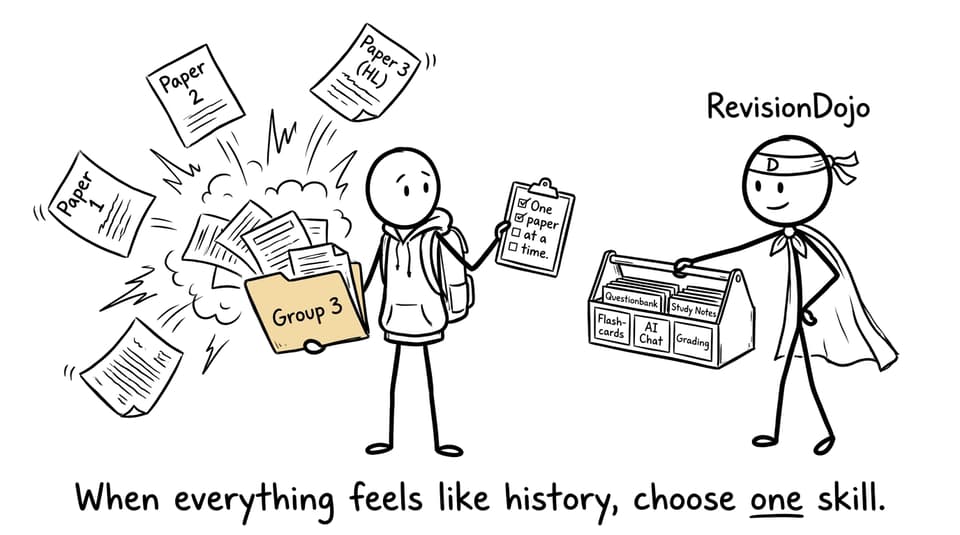
To build that exam fluency, RevisionDojo makes it easy to combine practice with fast feedback loops: Questionbank for exam-style questions, Study Notes for quick clarification, Flashcards for recall, AI Chat when you’re stuck, plus Grading tools, Predicted Papers, Mock Exams, a Coursework Library, and Tutors when you need human guidance.
Set up a realistic mock exam environment (without overcomplicating it)
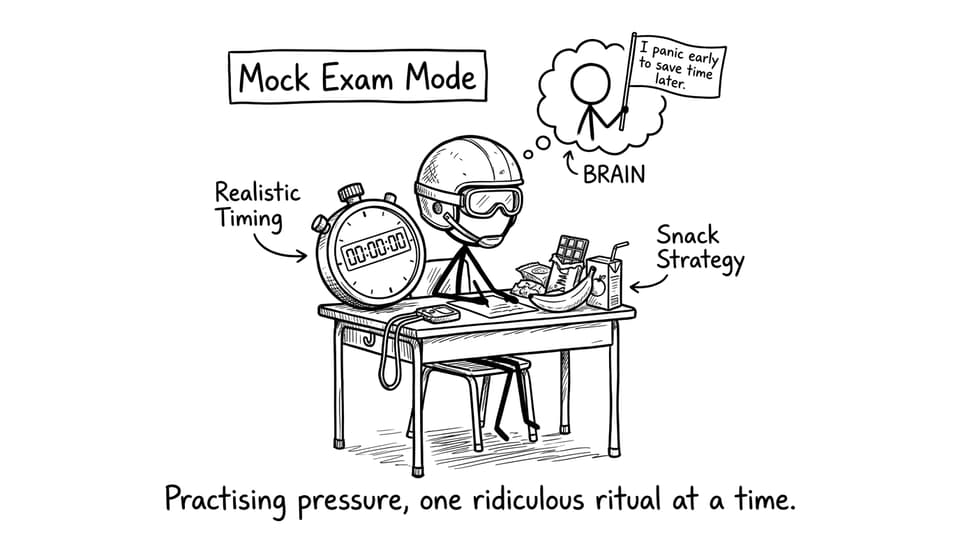
“Realistic conditions” sounds dramatic, but it’s mostly about removing escape hatches.
What to do every time
-
Use one quiet spot and keep it consistent.
-
Put your phone in another room.
-
Follow the official time limit for that paper.
-
Use only what you’ll be allowed on exam day.
The goal is not to suffer. The goal is to make exam-day feel familiar.
For a bigger view of how mocks should fit into your schedule across subjects, see IB Mock Exam Strategies: How to Use Practice Tests Effectively.
Use practice tests by paper (Paper 1, Paper 2, Paper 3 HL)
Your Group 3 History grade improves faster when you practise by paper skill, not by “re-reading the Cold War again.”
Paper 1: train source skills like a routine
Paper 1 rewards precision: reading carefully, extracting claims, evaluating usefulness/limitations, and staying anchored to the prompt.
Two high-impact practice moves:
-
Do short timed sets (15-25 minutes) focused on one question type.
-
After marking, rewrite only the weakest response, using a tighter structure.
If you want targeted practice, explore a topic pathway like IB History Paper 1 - Conflict and Intervention and then drill similar items using the Questionbank.
Paper 2: practise judgement, not narration
Paper 2 essays are won by planning. Not long planning: smart planning.
In mock exams, the most common mark loss is “topic dumping”: students write accurate history that only half answers the question.
A reliable practice loop:
-
10 minutes: plan only (thesis + 2-3 arguments + one counterpoint)
-
35 minutes: write the essay
-
10 minutes: self-mark for focus and evaluation
For deeper structure guidance, keep these open while you practise:
And when you want volume practice, use the IB History Topic Paper 2 - Questionbank (SL/HL).
Paper 3 (HL): stamina plus selectivity
HL students don’t usually fail Paper 3 because they “don’t know enough.” They lose marks because their answers become unfocused halfway through.
So practise it like training:
-
First week: timed plans only (fast thesis + evidence selection)
-
Next weeks: one full essay under time, then one rewrite of the weakest paragraph
Use IB History Paper 3 Strategies for HL Success to keep your practice aligned with what Paper 3 actually rewards.
Marking and review: turn the mock into a score increase
The mock exam itself is only the first half. The second half is where the grade moves.
How to review like an examiner
-
Circle where you stopped answering the question.
-
Highlight evaluation phrases (how often do you weigh, compare, judge?).
-
Identify whether the problem was content, structure, or timing.
-
Write a one-sentence fix you can test this week.
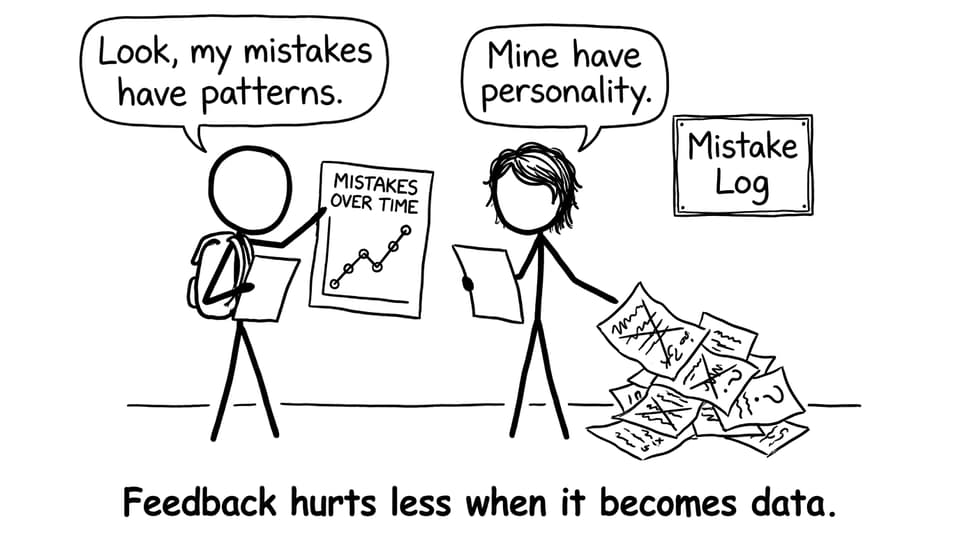
A practical way to organize follow-up is to keep a “mistake log” and convert repeated misses into Flashcards (so the fix becomes memory) and targeted Questionbank drills (so the fix becomes performance).
For a broader plan, see Ultimate Guide to IB Mock Exams: Boost Your Scores with Practice Tests.
A simple 4-week mock exam plan for Group 3 IB History
Adapt this based on your school schedule. The point is repetition with feedback.
Week 1: Paper 1 focus
-
One timed Paper 1 section
-
Review + rewrite weakest response
-
Drill 10-15 similar questions in the Questionbank
Week 2: Paper 2 focus
-
One timed Paper 2 essay
-
Self-mark for relevance and evaluation
-
Rewrite the introduction + one body paragraph
Week 3: Paper 3 focus (HL only)
-
Two timed plans + one timed essay
-
Review for selectivity (what you left out)
Week 4: Mixed practice
-
One mixed mini-mock (Paper 1 + one essay plan)
-
Review patterns, not just mistakes
If you want to add realistic full-paper rehearsal, use IB History Predicted Papers and browse the wider IB Predicted Papers collection.
Conclusion: use Group 3 practice to make the exam feel familiar
A mock exam is not a prediction of your future grade. It’s a rehearsal of your habits.
If you’re preparing for Group 3 IB History, the winning strategy is simple: simulate the real task, mark like an examiner, fix one repeat mistake, and retest quickly. Do that often enough and the exam stops feeling like a trap. It starts feeling like a routine.
Build that routine with RevisionDojo: start in the IB History Resources hub, practise with the IB History Paper 2 Questionbank, and add full-paper realism through IB History Predicted Papers. Then let each mock exam tell you the next small step to take, until Group 3 History feels controllable again.