
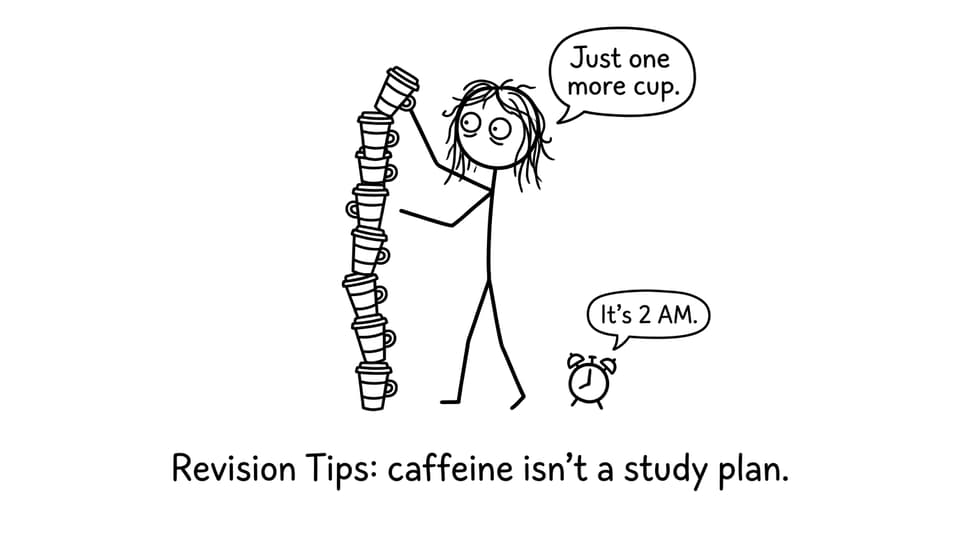
When it’s late, your desk light feels like a spotlight, and your brain starts bargaining with time, coffee stops being a drink and becomes a strategy.
The problem is that caffeine is a loud strategy. It works quickly, then quietly charges interest: worse sleep, shakier focus, and that anxious, over-caffeinated feeling where you’re "studying" but nothing is sticking.
These Revision Tips are about finding the line between “helpful boost” and “grade sabotage” so you can stay sharp without borrowing energy from tomorrow.
A quick coffee checklist for IB students
If you want the simple version first, use this during exam season:
-
Most IB students do best with 1-2 cups/day (roughly 100-200 mg caffeine).
-
Avoid caffeine after mid-afternoon (many students use 2-3 pm as a cutoff).
-
If you’re jittery, nauseous, panicky, or can’t sleep, that’s “too many” regardless of the number.
-
Treat coffee like a tool that supports your routine, not the routine itself.
-
Replace late-night caffeine with better Revision Tips: active recall, short timed practice, then sleep.
For a bigger system around sleep and performance, see Best Sleep Routine for IB Students and How Sleep Impacts IB Performance.
Why coffee feels like it works (and why it backfires)
Caffeine blocks adenosine, the brain chemical that increases sleepiness. That’s why coffee can feel like it “removes tired.” It doesn’t. It masks it.
For exam prep, masking tiredness can help you finish a question set or push through a tough reading. But caffeine also raises stress hormones and can reduce sleep quality if it’s taken too late.
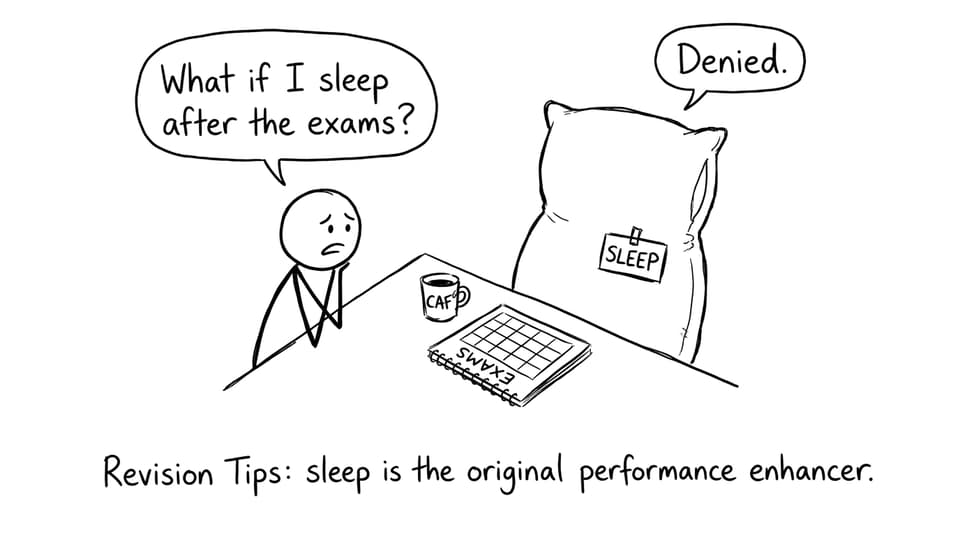
That matters because sleep is where consolidation happens: your brain files what you studied into memory. If you’re chasing caffeine to create more study hours, you may be shrinking the value of each hour.
If your revision has started to feel chaotic, it might not be willpower. It might be the system. Read You’re Not Lazy: Your IB Study Method Is Broken for Revision Tips that reduce the need for last-minute heroics.
How many cups of coffee are too many for an IB student?
A common adult guideline is up to 400 mg caffeine/day. But most IB students are teenagers or young adults, and tolerance varies widely.
Practically, “too many” looks like this:
-
More than 2 cups becomes risky for many students because sleep starts to break.
-
3-4 cups might feel productive, but often causes anxious focus, poor retention, and a sleep crash.
-
Any amount is too much if you get strong side effects.
Think of caffeine as a dial, not a badge. The goal isn’t to prove you can handle more. The goal is stable energy that lasts through the week.
Signs you’ve crossed your caffeine limit
These are the most common “you’ve gone too far” signals:
-
Trouble falling asleep or waking up feeling unrefreshed
-
Jitters, rapid heart rate, sweaty palms
-
Anxiety spikes that feel like urgency without progress
-
Stomach discomfort or reflux
-
Headaches when you skip coffee (dependence)
If you recognize this, don’t just cut coffee and hope. Replace it with a routine that creates focus.
A strong alternative loop is:
-
a short clarity refresh
-
then questions
-
then quick feedback
RevisionDojo is built for that loop: Study Notes for fast understanding, Flashcards for daily recall, and the Questionbank for exam-style practice. Add AI Chat when you’re stuck, and use Grading tools to turn mistakes into specific upgrades.
For structured Revision Tips you can run daily, use How to Study for IB Exams: Step-by-Step Guide and IB: The Last 2 Weeks Before Exams (What Matters).
Using caffeine wisely: timing beats quantity
The best coffee habit for IB is boring:
-
Drink coffee earlier, when it improves learning, not when it steals sleep.
-
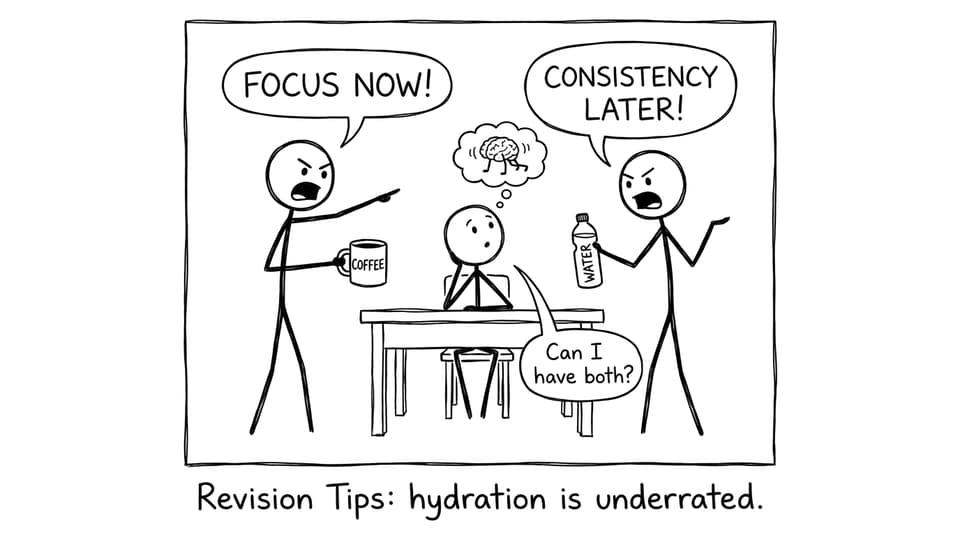
Pair coffee with water and food to reduce jitters.
-
Prefer one planned cup over three impulsive cups.
If you’re in a high-pressure week, practice your “exam-day caffeine plan” during timed work. That way, you’re not experimenting on the day it matters. A helpful companion is What to Eat Before an IB Exam for Better Focus.
The real answer: coffee is not your stamina
So, how many cups of coffee are too many for an IB student? For most, more than 1-2 cups a day starts to cost more than it gives, especially if it pushes into the afternoon.
Your best Revision Tips are quieter than caffeine: a structured plan, targeted questions, honest feedback, and protected sleep. If you want that all in one place, RevisionDojo’s Study Notes, Flashcards, Questionbank, AI Chat, Grading tools, Predicted Papers, Mock Exams, Coursework Library, and Tutors turn revision into something repeatable, even on tired days.