
The night your IB grade quietly changes
At some point in every IB exam season, there's a familiar scene: you're sitting at your desk, the room is too quiet, and your brain is making a very persuasive argument that sleep is optional.
You tell yourself you're being responsible. You're "just doing one more topic." You're "catching up." You're "fixing the panic."
But the next morning, something feels off. Your recall is foggier. Your attention snaps. You reread the same line three times. And the worst part is psychological: you start to doubt yourself.
That's the hidden story of sleep and IB performance. It's not about being healthy in a vague way. Sleep is the part of your study plan that decides whether revision sticks, whether you can access it under pressure, and whether your attention lasts through a two-hour paper.
If you're preparing for IB exams, this is the simplest truth: you don't sit the exam with the hours you studied. You sit it with the brain you bring.
A quick sleep checklist for IB students (save this)
If you want a practical overview before we go deeper, use this IB sleep checklist during revision:
- Aim for 7-9 hours most nights (consistency beats perfection).
- Keep wake time steady, even on weekends (or keep the shift small).
- Stop heavy revision 60-90 minutes before bed.
- Use evenings for light recall (Flashcards) rather than heavy learning.
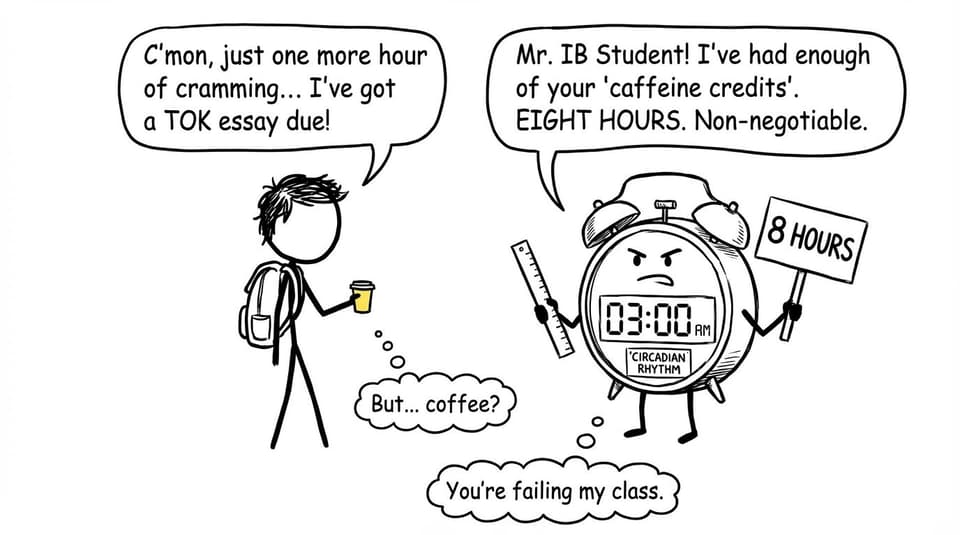
- Cut caffeine after mid-afternoon (your bedtime will thank you).
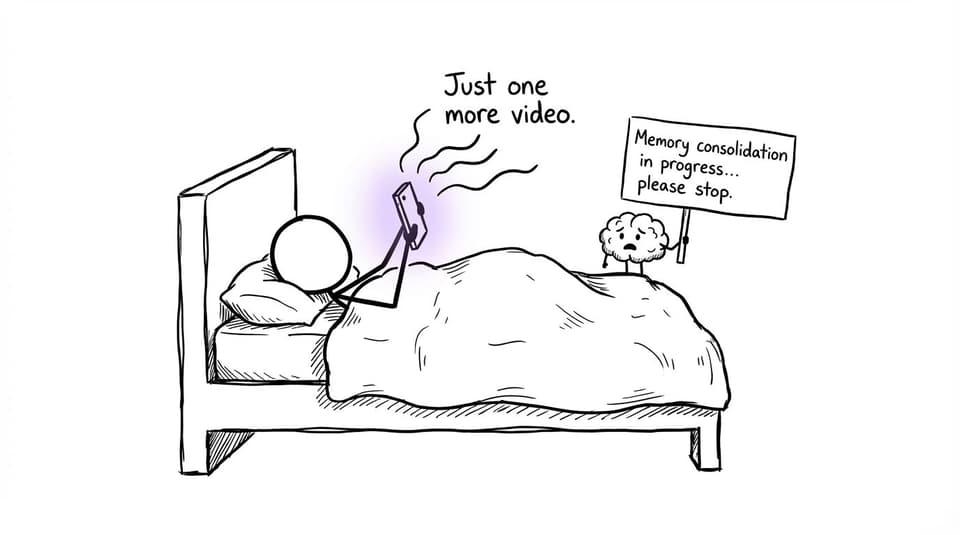
- Make your phone sleep somewhere else.
- If you're anxious, write a 5-line "worry list" and a 3-step plan for tomorrow.
For a deeper exam-season routine, borrow the structure from How to Sleep Properly During the IB Exam Period.
Why sleep changes IB performance more than you expect
Sleep is not just rest. It's processing.
During sleep, your brain runs the quiet background jobs that IB revision depends on:
Memory consolidation (the "save" button)
When you revise, you're not permanently storing knowledge. You're tagging it. Sleep helps convert fragile learning into retrievable memory.
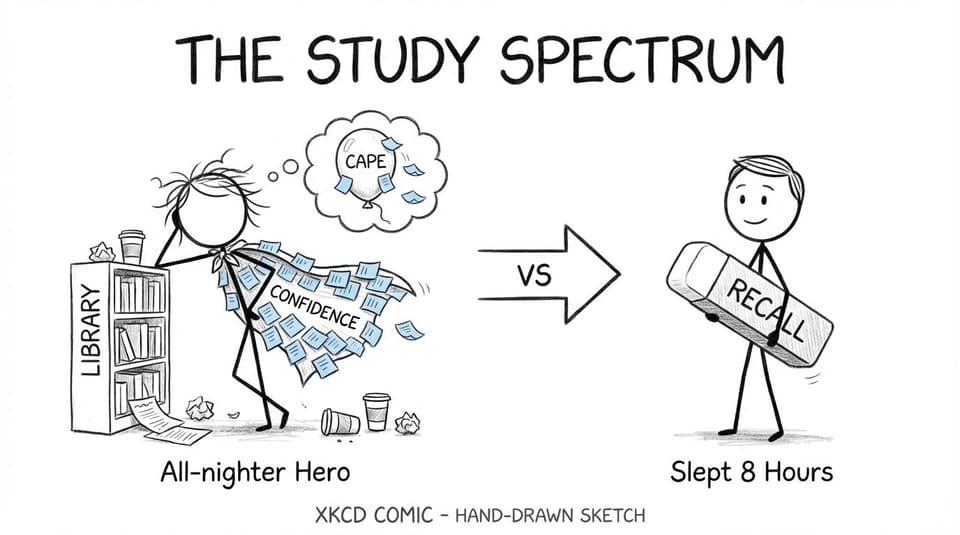
That's why the classic all-nighter problem isn't only "being tired." It's that you're trying to build knowledge without giving your brain time to file it properly. In IB, where you're juggling definitions, methods, case studies, and command-term-ready phrasing, filing matters.
Attention and error control (the "careless mistake" tax)
A huge amount of lost marks in IB is not "I didn't know this." It's:
- misreading a command term
- forgetting a unit
- skipping a step
- writing the right idea in the wrong structure
Sleep loss doesn't remove your intelligence. It removes your buffer.
Emotional regulation (the "panic spiral" limiter)
IB exams are performance under constraint. When you're sleep-deprived, stress feels louder, and small uncertainty becomes a story: "I'm behind, I'm failing, I'll never catch up."
Sleep helps you keep your thinking wide enough to choose the calm option.
The most common IB sleep mistake: trading tomorrow for tonight
The most seductive lie in IB season is that you can borrow from sleep with no interest.
An extra hour of revision feels measurable. Sleep feels like nothing.
But sleep is what makes your next day of study work.
The "interest" you pay shows up as:
- slower reading and weaker recall
- more time needed to understand the same notes
- lower-quality practice answers
- higher anxiety and lower confidence
If you want a system that helps you stop improvising at night, use a planning tool that forces earlier structure. The RevisionDojo Study Planner exists for exactly that problem: it protects sleep by reducing late-night decision fatigue.
The IB sleep strategy that actually works: "heavy early, light late"
High-scoring IB students aren't always more disciplined. They're often just less romantic about late nights.
They follow a simple pattern:
Put the hard work earlier
Do your highest-intensity tasks when your brain is sharp:
- writing timed responses
- doing Questionbank sets on weak topics
- reviewing errors and fixing misconceptions
This is where RevisionDojo helps because you can move in a tight loop: Study Notes for clarity, then targeted practice in the Questionbank, then quick fixes via AI Chat.
If you want a full workflow, bookmark How to Study for IB Exams: Step-by-Step Guide.
Keep evenings predictable (and boring on purpose)
Evenings are for:
- light recall
- small confidence loops
- setup for tomorrow
That means 20-40 minutes of retrieval practice, not a two-hour attempt to "learn everything."
Use RevisionDojo App: The Smarter Way to Prep for IB Exams as a mental model: learn, remember, apply, fix, repeat. Then stop.
Use tools that reduce choices, not expand them
The phone is not evil. It's just loud.
The reason RevisionDojo is useful late in the season is that it's not another pile of resources. It's a controlled environment: Questionbank, Study Notes, Flashcards, AI Chat, Grading tools, Predicted Papers, Mock Exams, Coursework Library, and Tutors are all there, so you don't have to keep hunting.
When you're tired, fewer tabs is a real strategy.
A realistic sleep-friendly IB revision routine (weekday version)
Here's a routine you can actually repeat during IB exam prep. Adjust times to your life, but keep the sequence.
After school (60-120 minutes)
- Eat, reset, short walk if possible.
- One focused block: Study Notes for one subtopic, then immediately apply it.
If you need a practice-first mindset, read How 45-Point IB Students Prepare for Exams.
Early evening (45-90 minutes)
- A targeted Questionbank set.
- Review mistakes and write 3 "rules" you'll use next time.
This is where RevisionDojo's Questionbank plus feedback loop is designed to shine: you're not just doing questions, you're learning the mark-winning pattern.
Late evening (20-40 minutes)
- Flashcards only (active recall, not rereading).
- One small "unstuck" question to AI Chat if needed, then stop.
Wind down (30-60 minutes)
- Pack your bag.
- Write tomorrow's first task.
- Screens off.
If you want a checklist you can copy, use IB Exam Night Checklist: 15 Things Before Sleeping or the calmer framing in IB Exam Night Routine: What Actually Works.
Naps, caffeine, and the small levers that matter in IB season
Naps: useful, but keep them short
A 10-20 minute nap can restore alertness without ruining nighttime sleep. Longer naps often create grogginess and push your bedtime later, which can snowball in IB exam weeks.
Caffeine: treat it like a tool with a half-life
If caffeine helps you, use it earlier. Many IB students unknowingly sabotage sleep by drinking coffee late afternoon, then blaming "stress" at midnight.
Light: the invisible sleep switch
Bright light late at night makes your brain think it's still daytime. If you can't avoid screens, reduce brightness and use warmer light in the evening.
This isn't about turning into a wellness influencer. It's about protecting the one resource that makes your IB revision usable.
How RevisionDojo supports sleep-friendly IB performance
The point of RevisionDojo isn't to make you study more. It's to make your study tighter so you can stop earlier and sleep.
Here's how the features support real IB performance without late-night chaos:
- Study Notes: quick clarity without rewriting marathons.
- Flashcards: short, daily recall sessions that compound.
- Questionbank: targeted practice so you stop guessing what matters.
- AI Chat: one-question "unstuck button" so confusion doesn't expand into a two-hour spiral.
- Grading tools: fast feedback on writing so you don't lie awake wondering if your structure is wrong.
- Predicted Papers and Mock Exams: scheduled realism earlier in the week, not at midnight.
- Coursework Library: examples that remove uncertainty during coursework season.
- Tutors: when you need a human voice to simplify the plan.
If you want to set up the core system quickly, start here: Notes + Flashcards + Question Bank (Free).
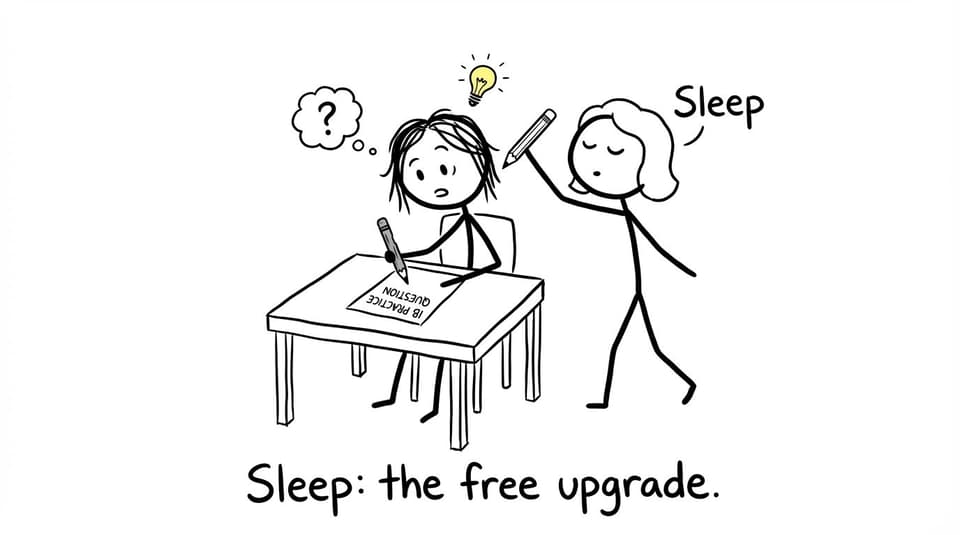
Closing: Sleep is part of your IB strategy
The most reassuring idea in IB prep is also the least glamorous: your best results come from the days you can repeat.
Sleep is what makes repetition possible.
If you want a calmer path to stronger IB performance, build a routine where sleep is non-negotiable and revision is structured enough to end on time. Use RevisionDojo as the control panel: Study Notes to understand, Flashcards to remember, Questionbank to apply, AI Chat and Grading tools to fix, then Mock Exams and Predicted Papers to make exam pressure familiar.
Start small tonight: choose one topic, do a short targeted set, write down your three mistakes, and go to sleep like it counts for marks.