
A quiet advantage on IB exam day
The first time I sat a serious IB exam, I learned an oddly uncomfortable truth: your brain is not a pure logic machine. It is a biological creature with opinions. Mine had one loud opinion at 8:43 a.m. -- it wanted sugar, fast. Not because it was a good idea, but because stress makes short-term solutions feel like wisdom.
That's the part most IB students underestimate. Exam day focus is not only about what you know. It's also about what your body can deliver on demand: steady attention, stable energy, and calm enough nerves to read the question you actually got (not the one your anxiety invents).
So this is a practical guide for IB students: what to eat before an IB exam for better focus, how to time it, what to avoid, and how to keep your brain online from reading time to the final line.
Along the way, you'll see how RevisionDojo fits into the same idea: fewer surprises, more stability. The best prep is boring in the best way.
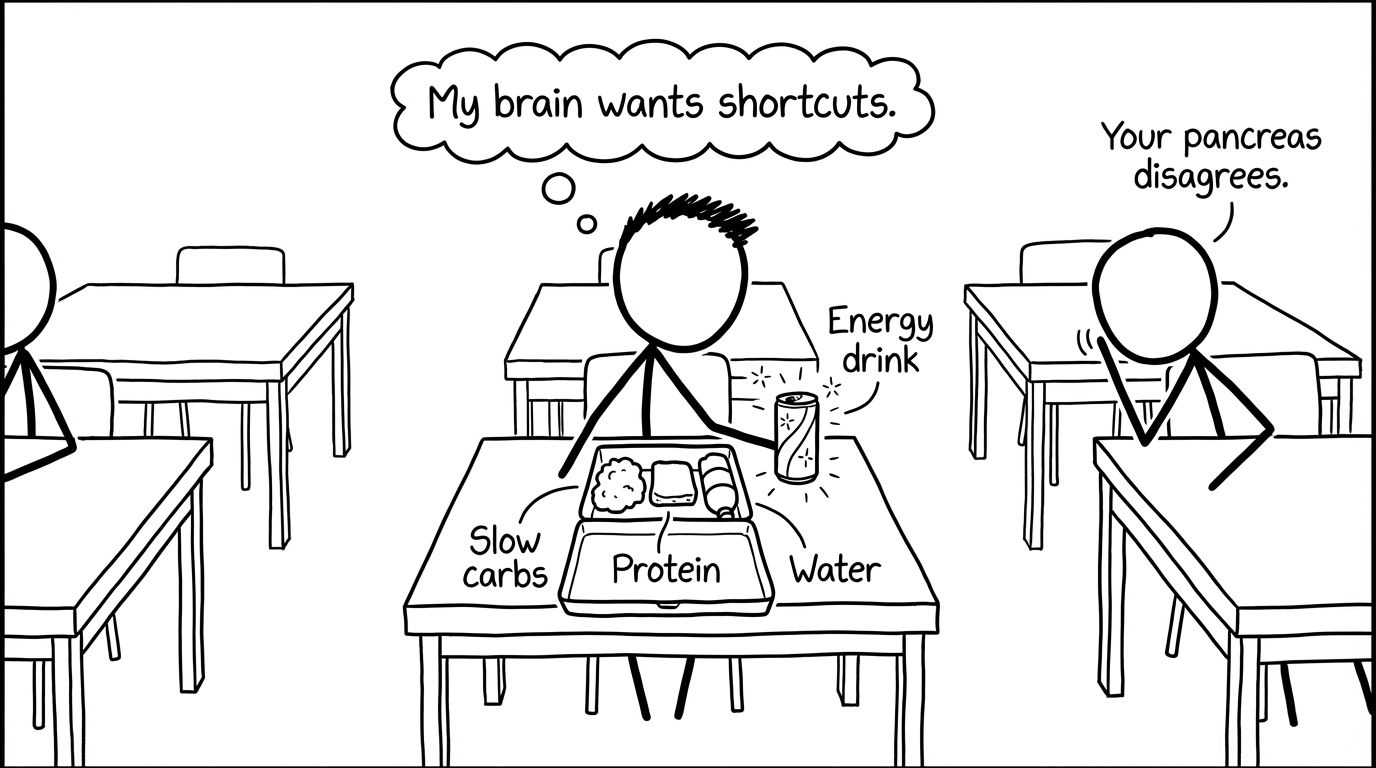
IB exam day food checklist (simple, repeatable)
Use this as your baseline IB exam routine:
- 2--3 hours before: a balanced meal (slow carbs + protein + some fat + water)
- 30--60 minutes before: a small top-up snack if needed (easy carbs + a little protein)
- During breaks: water first, then small bites you already tested
- Caffeine: only what you've practiced with, and earlier rather than later
- Avoid: new foods, huge portions, ultra-greasy meals, and sugar-only breakfasts
If you can make this predictable for every IB paper, you remove one variable from a day already full of them.
Why food matters for IB focus (without getting weirdly scientific)
Focus is basically your brain doing three jobs at once: holding information, choosing what matters, and staying calm enough to keep choosing. Food influences all three.
When you eat mostly fast sugar, you often get a quick lift and then a dip. That dip feels like brain fog, irritability, or the sudden conviction that you have forgotten everything since Year 10. It's not always knowledge loss. Sometimes it's just unstable energy.
A steadier meal helps because it releases energy slowly. Protein and fats slow digestion. Fiber slows digestion too. Together, they make it easier to sit through an IB paper without feeling like your concentration is being unplugged every 20 minutes.
If you want the academic version of this idea, it's similar to how you revise: steady retrieval practice beats a last-minute sprint. RevisionDojo's What's the Best Way to Revise for IB Exams? makes the same case in study form.
What to eat before an IB exam (best meals)
The reliable formula: slow carbs + protein + hydration
If you remember one thing for IB exam mornings, remember this: slow carbs + protein.
Slow carbs (oats, wholegrain bread, brown rice, quinoa, fruit) help you avoid a mid-paper crash. Protein (eggs, yogurt, milk, tofu, nuts, nut butter) helps you stay full and more stable.
Hydration matters because dehydration quietly looks like fatigue and headaches. Not dramatic. Just enough to reduce your edge.
Great pre-IB exam breakfast options
Pick what matches your stomach and your schedule:
- Oats with milk + banana + peanut butter
- Greek yogurt + berries + granola (not too sugary) + a few nuts
- Eggs on toast + fruit
- Rice + eggs/tofu + a little veg (common in many households and very effective)
- Smoothie (milk/yogurt + banana + oats) if solid food feels hard early
Want to stack consistency on top of consistency? Pair your food routine with a consistent warm-up: 10 minutes of flashcards, 10 minutes of easy questions. RevisionDojo's Notes + Flashcards + Question Bank (Free) is built for that kind of low-friction start.
Great pre-IB exam lunch options (for afternoon papers)
Afternoon IB exams are tricky because lunch can either steady you or sedate you. Aim for "satisfied, not stuffed."
- Chicken/tuna/tofu wrap + salad
- Rice bowl with beans/lentils + a simple protein
- Pasta (not a massive portion) + protein + veg
- Soup + bread + yogurt
If you're doing a long day with multiple IB papers, treat lunch like pacing: enough fuel to finish, not so much you slow down.
What to eat 30--60 minutes before an IB exam (snacks that work)
If you get hungry close to the start, don't gamble. Use snacks that are simple and familiar.
Good options:
- Banana
- Apple + small handful of nuts
- Small yogurt
- Crackers or rice cakes + cheese
- Peanut butter on toast (small)
- A small granola bar you've tested
The goal here is not "nutrition perfection." It's predictability. You want something that settles quickly and doesn't distract you with stomach drama halfway through Paper 2.
What to drink before an IB exam (and how to use caffeine)
Water first. Always.
Then consider caffeine only if:
- you already use it during study sessions
- you know your "too much" line
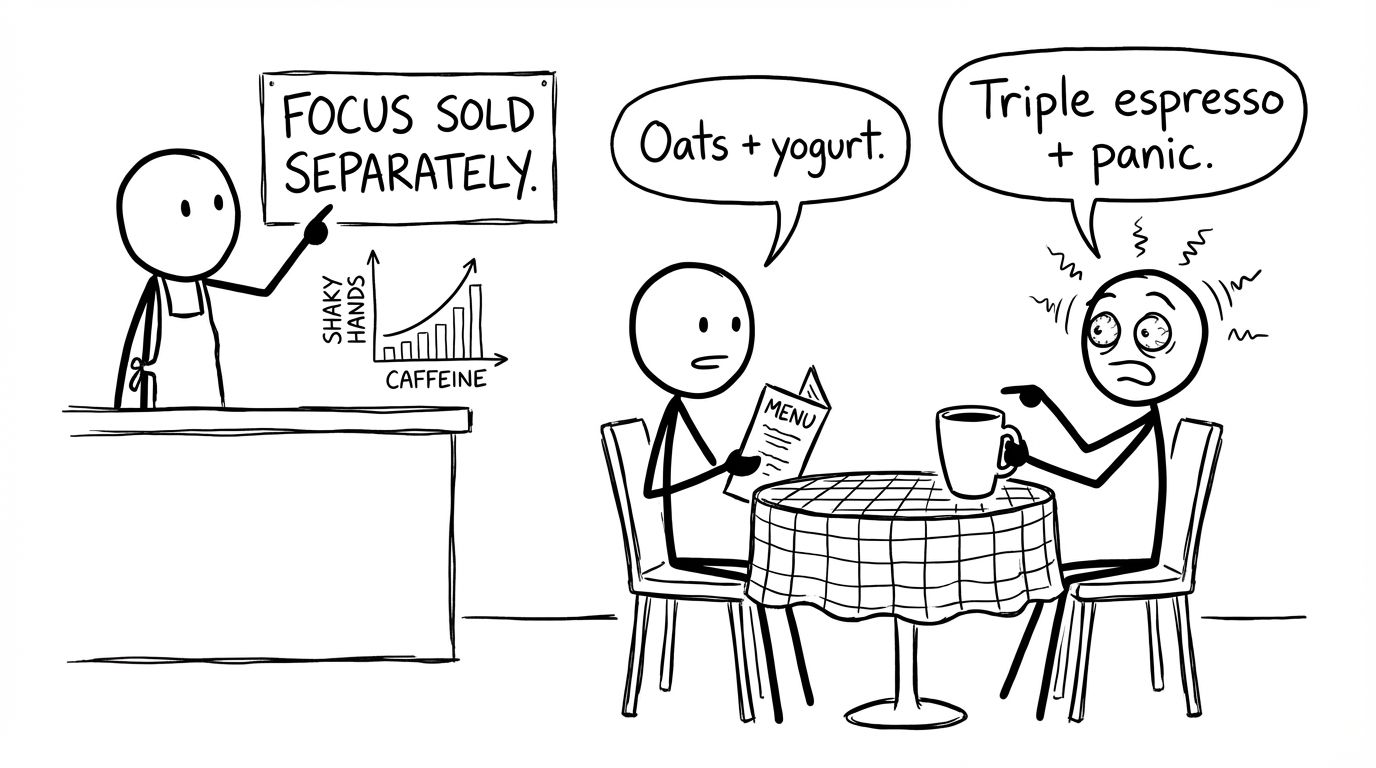
- you can time it so it helps, not jitters
For many IB students, the mistake isn't caffeine. It's new caffeine (suddenly trying an energy drink) or late caffeine (wrecking sleep before the next paper).
A practical rule: if you didn't use it while doing timed practice, don't introduce it on exam day.
Timed practice is where you learn your real settings. If you haven't been practicing under realistic conditions, build that habit with Exam Mode and the workflow in How to Run Timed IB Mock Exams in RevisionDojo (Exam Mode + Test Builder).
What to avoid before an IB exam (common focus killers)
A lot of "bad exam food" is just food with bad timing.
Avoid these close to an IB exam:
- Huge meals that make you sleepy
- Greasy fast food right before (slow digestion + discomfort)
- Sugar-only breakfast (quick lift, quick dip)
- New foods you haven't tested during revision season
- Mega caffeine if you're not used to it
If you're thinking, "But I always do this," that's actually useful information. Your body has data. Don't ignore it. Just run a tiny experiment during a weekend mock: eat the same pre-exam meal and see how you feel during the hardest section.
That "test and iterate" mindset is exactly how RevisionDojo's Custom IB Question Banks: Focus on What You Need Most frames revision: stop guessing, start refining.
IB exam meal timing plans (morning vs afternoon)
Morning IB paper
- Wake up: water
- 2--3 hours before: full breakfast (slow carbs + protein)
- 45 minutes before: optional small snack if hungry
- Right before: small sips of water, not a full bottle
Afternoon IB paper
- Morning: normal breakfast
- 2--3 hours before: lunch that's filling but not heavy
- 45 minutes before: small snack if needed
Two IB papers in one day
- Treat the break like a pit stop
- Water first
- Small, easy foods (banana, yogurt, crackers)
- Avoid experimenting
A calm IB exam routine: food + focus + a tiny warm-up
Food helps, but it works best when it's part of a small, repeatable routine.
Here's a routine that matches how high scorers often behave in the last hour:
- 10 minutes: skim one-page summary or key formulas
- 10 minutes: flashcards on definitions/command terms
- 15 minutes: a short set of easy-to-medium questions to "wake up" the brain
- Stop. Breathe. Pack.
RevisionDojo makes this easy to systemize:
- Use the Study Notes to skim fast concepts (Digital IB Study Notes: Access Anywhere, Anytime)
- Use Flashcards to warm up recall (Jojo Flashcards: Auto-Generated Decks, Expert Collections, and Spaced-Repetition Routines -- find the Flashcards guide in the library list)
- Use the Questionbank for a short, targeted set (IB Question Filtering: Find Exactly What You Need to Practice)
This matters because your first 15 minutes in an IB exam are often when nerves are loudest. A warm-up lowers the volume.
How RevisionDojo supports IB exam readiness (even on exam week)
RevisionDojo isn't just a place to "study more." It's a way to study with fewer emotional spikes.
- Questionbank helps you practice exactly what you're likely to face, without wasting time.
- Study Notes reduce the feeling of being lost in your own materials.
- Flashcards keep definitions and processes sharp when your brain feels tired.
- AI Chat helps you clarify last-minute confusion without spiraling.
- Grading tools can tighten written responses and coursework feedback quickly.
- Predicted Papers and Mock Exams help you rehearse pressure, not just content.
- The Coursework Library shows what strong work looks like when you need a reference point.
- Tutors are there when you need a human to check your plan and calm the chaos.
If you want the broad strategy, anchor it with The Ultimate Guide to Revision for IB Students and then narrow down to daily execution.
FAQ: What to eat before an IB exam
Should I eat breakfast before an IB exam if I'm nervous?
Yes, but adjust the size and texture. Nervousness often reduces appetite, so the goal becomes "something small and reliable," not a perfect meal. A banana and yogurt, toast with peanut butter, or a simple smoothie can be enough to prevent a mid-paper energy crash. Skipping entirely is risky because hunger and stress combine in a way that feels like panic. If you can, practice this during timed IB revision sessions so it feels normal on exam day. Most importantly, keep it familiar -- exam day is not the time to prove you can handle a new superfood.
What's the best snack to bring for an IB exam break?
Choose something that won't melt, crumble everywhere, or upset your stomach. A banana, small granola bar you've tested, crackers, or a small pack of nuts are usually safe. The best snack is the one you've already used during IB mock exams, because your body has already signed off on it. Avoid anything that spikes sugar without any balance, because breaks are short and a crash can hit during the hardest section. Bring water and drink a little first, since thirst often disguises itself as hunger. And keep the snack small -- you're trying to maintain focus, not start digestion as a side quest.
Is coffee or an energy drink good before an IB exam?
Coffee can be helpful if it's part of your normal routine and you've used it during IB timed practice. The main risk is not caffeine itself but mis-timing and overdoing it, which can create shaky focus and faster anxiety. Energy drinks are more unpredictable because they often combine high caffeine with sugar and other stimulants, and many students don't regularly drink them during revision. If you want caffeine, aim for a familiar dose earlier in the day, and avoid adding extra late caffeine that harms sleep before the next IB paper. Also remember that caffeine doesn't replace preparation -- it just changes how awake you feel while facing the same questions. If you want a safer performance boost, test your caffeine plan during timed mock workflows so you know your response.
What should I eat the night before an IB exam?
The night before, prioritize sleep quality and stable energy over "celebration food." A balanced dinner with carbs, protein, and some vegetables is a safe default: think rice or pasta with a protein, or a hearty bowl-based meal. Avoid extremely spicy, greasy, or unfamiliar foods if they sometimes disrupt your sleep or digestion. Your brain's focus in an IB exam is heavily influenced by how well you slept, and sleep is easier when your body isn't busy arguing with dinner. If you snack late, keep it small and steady, like yogurt or toast. The goal is to wake up calm, not to wake up negotiating with a stomachache.
Closing: make your IB focus boring (and therefore powerful)
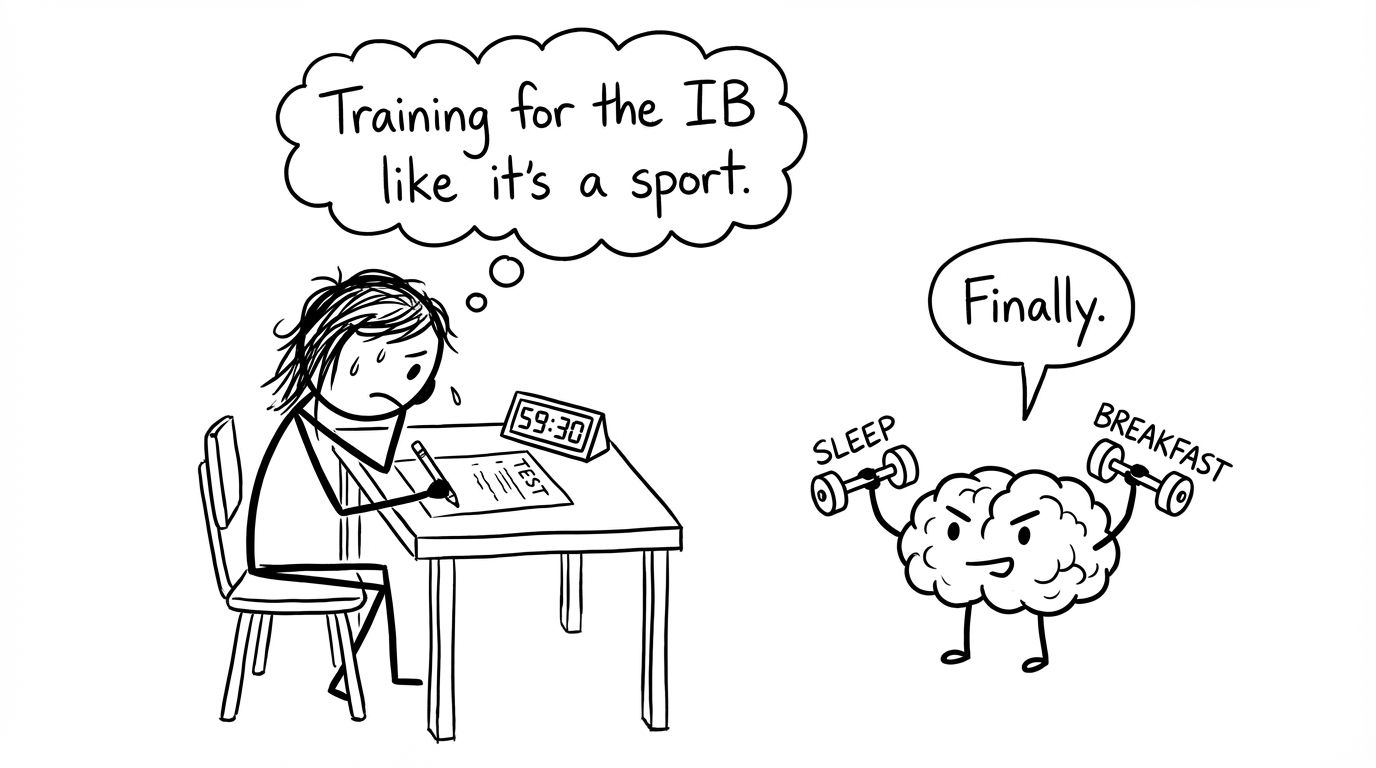
IB exams reward clear thinking, not heroic suffering. The students who look calm usually aren't calm by personality. They're calm by design. They removed variables: they practiced under time, they learned their weak spots, and they ate in a way that kept their brain steady.
So choose one pre-IB exam meal you can repeat. Choose one snack you can trust. Practice the timing once before the real day. Then let your attention go where it belongs: the question in front of you.
If you want the rest of your IB preparation to feel just as stable, build your routine inside RevisionDojo: drill with the Questionbank, review with Study Notes, lock it in with Flashcards, ask AI Chat when you're stuck, use Mock Exams and Predicted Papers to rehearse pressure, and lean on Grading tools, the Coursework Library, or Tutors when you need fast clarity.
Your brain likes predictable systems. Give it one. Then go earn the marks.