A hook you can actually use in an essay
In one city, a stolen phone triggers a rapid police response, a lawyer, and a clean court date. In another, the same crime disappears into paperwork, distance, and money that no one has. That contrast is the quiet engine of IB Global Politics: justice can be written as universal, but lived as uneven.
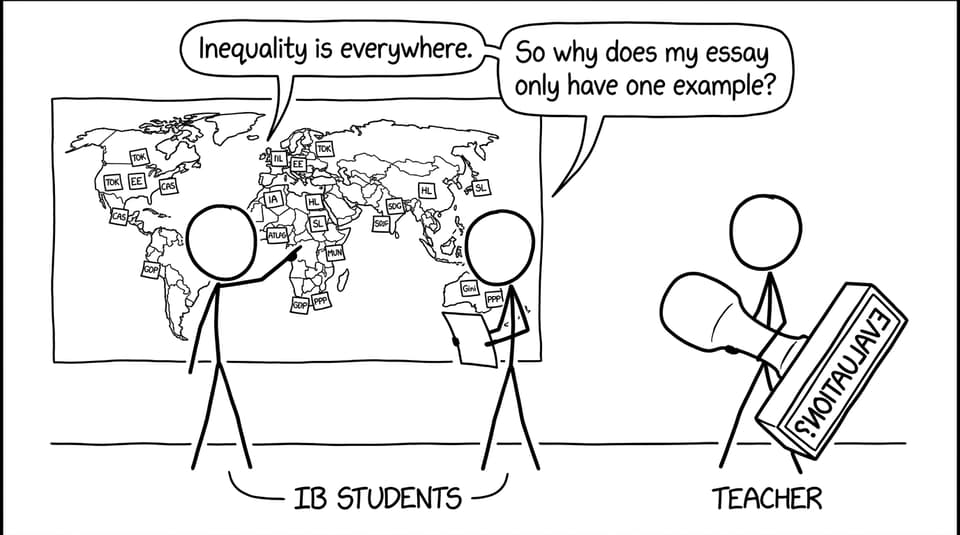
When we ask how inequality affects justice globally, we are really asking who gets protection, who gets a voice, and who gets to shape the rules. Inequality is not only about income. In IB Global Politics, it includes uneven distributions of power, opportunities, status, and access within and between states.
Quick checklist: what to hit in IB Global Politics answers
-
Define inequality clearly (within states and between states)
-
Link inequality to rights and justice (formal rights vs real outcomes)
-
Explain power imbalance in global governance (who sets the agenda)
-
Add one structural argument (systems that reproduce disadvantage)
-
Evaluate: is reducing inequality necessary for global justice?
For fast definitions, keep the IB Global Politics Glossary open while you revise.
Unequal rights: justice on paper vs justice in practice
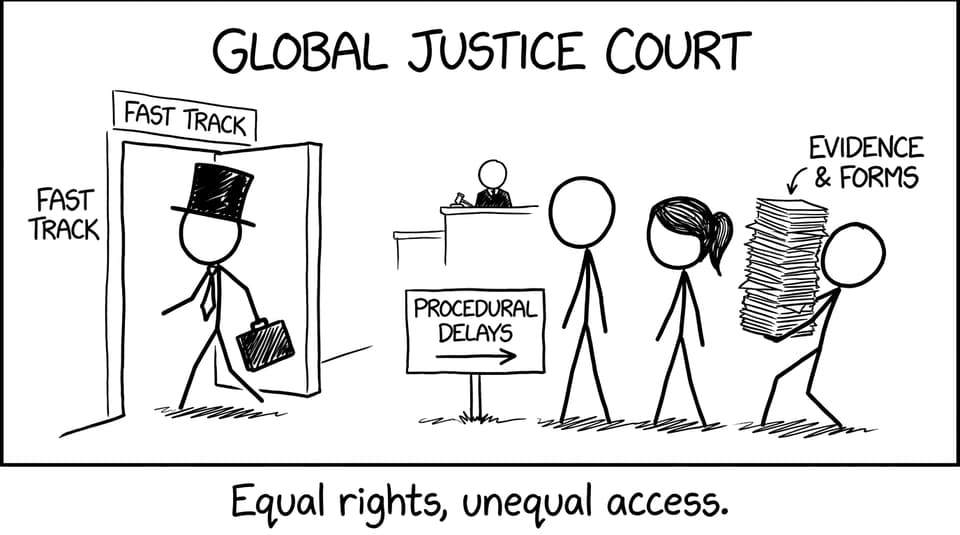
A core move in IB Global Politics is distinguishing formal equality (rights exist) from substantive justice (rights are realised). Inequality turns “universal” human rights into a lottery of access: legal representation, education, healthcare, and political participation depend heavily on resources and social position.
In exam language, you can frame this as procedural justice vs outcome justice: even if laws claim neutrality, unequal capacity to use institutions makes justice uneven. This links cleanly to RevisionDojo’s Concepts of rights and justice notes and the broader Justice topic notes.
Power imbalances between states: who writes the “fair” rules?
Global justice debates often assume a level playing field. Inequality challenges that assumption. Wealthier states typically have more leverage in trade negotiations, financing, diplomatic coalitions, and agenda-setting in international organisations. That can produce global rules that appear neutral but reflect unequal influence.
For IB Global Politics, this is where you connect inequality to sovereignty, legitimacy, and interdependence: weaker states may be sovereign in theory but constrained by debt, conditionality, or dependency. If you want practice prompts that push evaluation, use RevisionDojo’s Rights and justice questionbank and the full Debates on rights and justice hub.
Structural injustice: the system keeps the score
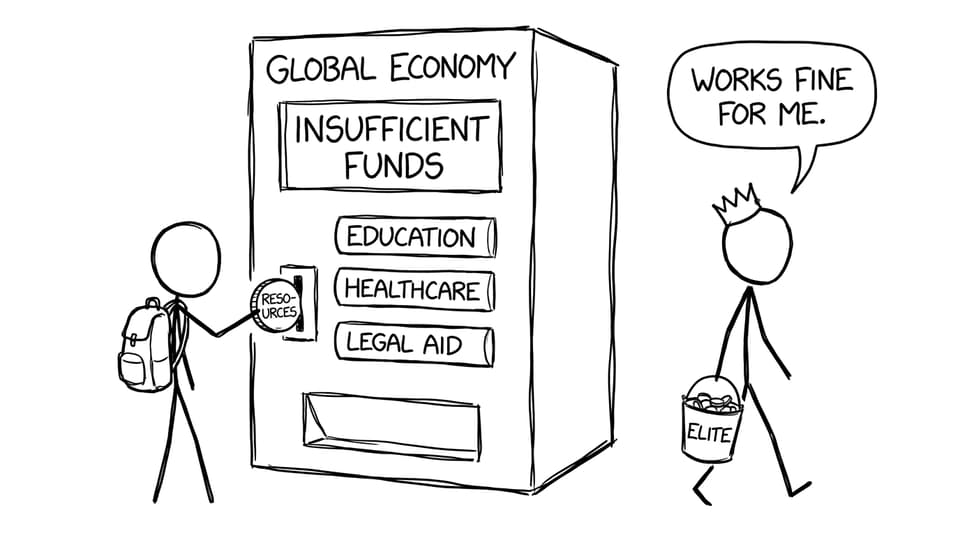
Inequality also shapes justice through structures: the rules of the global economy can reward capital, technology, and market access, advantages concentrated in already-developed states and domestic elites. Meanwhile, many communities remain locked into low-value labour, limited bargaining power, and vulnerability to shocks.
You do not need statistics to make this convincing in IB Global Politics. You need a causal chain: structure leads to unequal capacity, which leads to unequal outcomes and contested justice. RevisionDojo’s Inequality notes and the blog post on whether development always leads to inequality help you build that chain.
How to turn this into exam marks (Paper 2-friendly)
Paper 2 rewards students who can move from concept to contestation. Start with a definition, then argue both sides: inequality undermines justice by limiting real access to rights, but some claim that global institutions and development goals can still expand justice even amid inequality.
Use the IB Global Politics Paper 2 guide to structure your evaluation paragraph. Then practise under time pressure with the wider IB Global Politics resources page, using RevisionDojo’s Questionbank, Study Notes, Flashcards, AI Chat, and Grading tools to tighten your argument.
Conclusion: turn inequality into a sharper IB Global Politics argument
Global justice is not only about what the world says it values, but about who can actually access those values. Inequality reshapes justice through rights gaps, state power imbalances, and structural systems that reproduce advantage.
If you are revising IB Global Politics, build one clean definition, two mechanisms, and one evaluative counter-argument. Then practise it on RevisionDojo using the Questionbank, Study Notes, Flashcards, AI Chat, Predicted Papers, Mock Exams, and Grading tools; so your next essay feels less like guessing and more like proof.