



In the first week a country’s GDP starts climbing, the story often sounds tidy: more jobs, more roads, more options. Then you look closer and notice something less tidy: the new opportunities seem to cluster around certain neighbourhoods, certain schools, certain surnames. In IB Global Politics, that tension is the point. Development is meant to expand human well-being, but it can also rearrange power and access in ways that leave gaps wider than before.
So does development always lead to inequality? IB Global Politics examiners love this question because the best answers refuse the comfort of absolutes.
Quick exam checklist for IB Global Politics
Use this as a fast planning grid before you write:
-
Define development beyond growth (economic + human development).
-
Define inequality as distribution of resources, opportunities, and political influence.
-
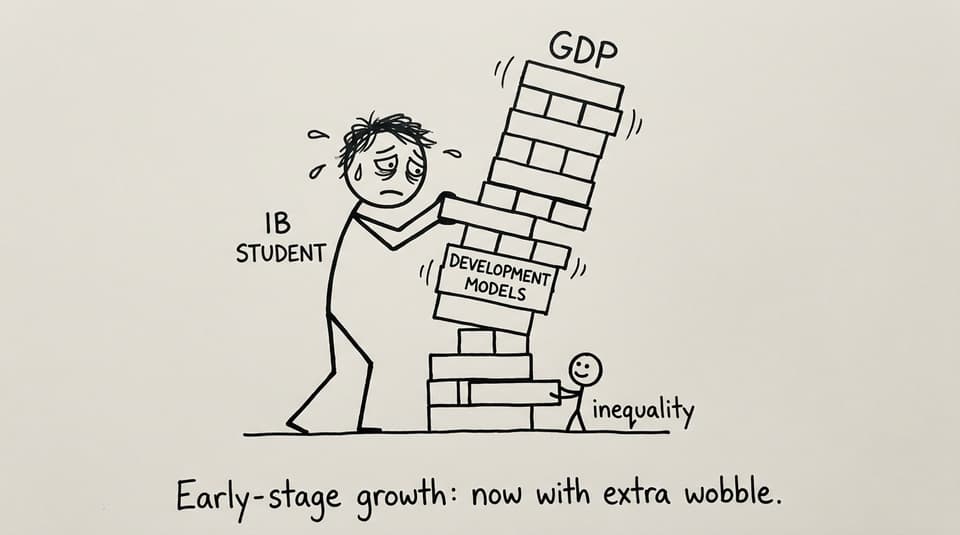
Explain why inequality can rise in early development (uneven access).
-
Evaluate the role of globalisation and external actors.
-
Balance with counterclaims: policy choices, institutions, long-run effects.
-
End with judgement: development does not always create inequality, but it often does under specific conditions.
If you need crisp definitions, start with What Is Development in Global Politics? and the concept framing in What Is the Framework of Global Politics?.
Why development often increases inequality (especially at first)
A common IB Global Politics line of argument is that development can raise inequality because growth is rarely evenly distributed. New industries usually reward people who already have advantages: education, capital, stable networks, or proximity to decision-makers. Urban regions may surge while rural areas wait. Skilled workers negotiate higher wages while informal labour stays exposed.
Development also changes what counts as “valuable.” When the economy modernises, credentials, connectivity, and ownership matter more. The people who can convert those into influence move first, and everyone else measures progress from further behind.
To build this argument with course vocabulary, connect development outcomes to power: who sets rules, who captures rents, who gains access. Revision help: What Is Power in Global Politics?.
How globalisation can deepen unequal outcomes
Globalisation can accelerate development, but it also amplifies asymmetries. When economies integrate into global markets, some sectors gain investment, technology, and export routes. Others face competition they are not equipped to survive. Workers can experience job insecurity, wage suppression, or a shift into precarious employment.
In IB Global Politics, this is where you show sophistication: development is not just a domestic story. It is negotiated through trade rules, debt, multinational corporations, and global institutions. The key evaluative move is to ask: who has bargaining power in these relationships?
For a quick refresher on the contested nature of the topic, use Core Ideas in Development and Sustainability Notes and Globalization and development and sustainability Notes.
Why development does not always lead to inequality
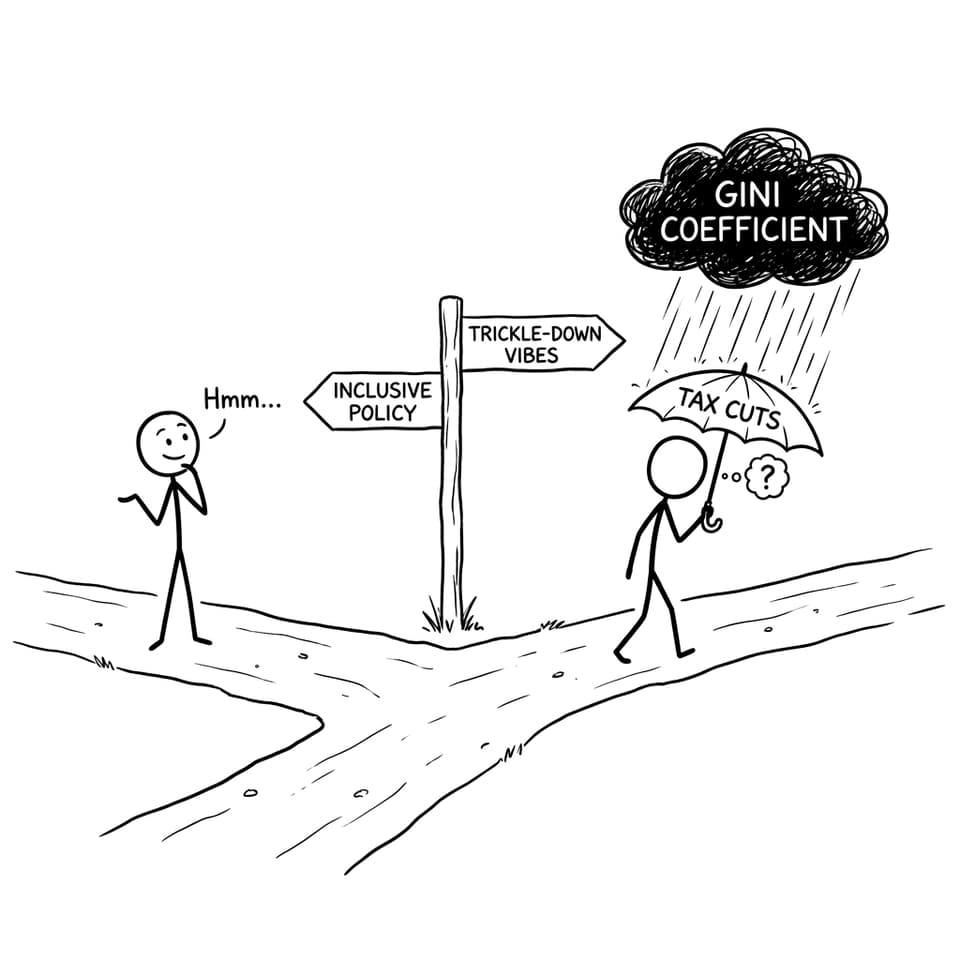
The strongest counterclaim is simple: inequality is not an automatic “side effect” of development. It is a political outcome shaped by choices. States can design development that spreads opportunity through investment in universal education, healthcare, infrastructure access, labour protections, and progressive taxation.
A human development approach also changes what you measure. If development expands capabilities and life chances, then a society can reduce inequality in health and education even while income gaps remain. This matters in IB Global Politics because measurement is political: what you count is what you prioritise. See How Is Development Measured in Global Politics?.
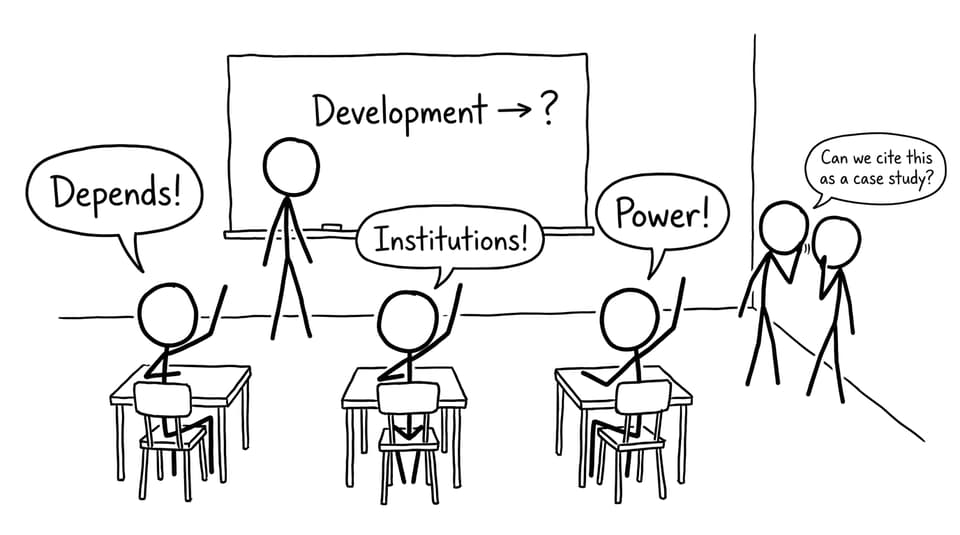
Institutions are the hinge. Strong institutions can limit corruption, regulate markets, and prevent “elite capture” of public goods. Weak institutions let the winners of growth write the rules of growth.
How to write this as a Paper 2 judgement
Your Paper 2 goal is not to pick a side, but to weigh conditions. A high-scoring IB Global Politics conclusion sounds like: development often correlates with rising inequality in early stages or under market-first strategies, but it does not inevitably produce inequality when governance is inclusive and institutions are capable.
To tighten structure, follow How to Structure IB Global Politics Paper 2 Essays and then practise with timed prompts in the IB Global Politics Paper 2 Guide.
Conclusion: make the argument, then prove you can evaluate
Development can widen inequality, especially when growth moves faster than institutions and when access is uneven. But in IB Global Politics, “always” is usually the weakest part of a claim. The smarter conclusion is that inequality is shaped by policy, power, and governance, not by development alone.
If you want to turn this into exam marks, use RevisionDojo’s Questionbank, Study Notes, Flashcards, AI Chat, Grading tools, Predicted Papers, Mock Exams, and Coursework Library to practise the same judgement again and again until it feels automatic. Start with the Paper 2 Notes and build one strong evaluative paragraph you can adapt to any development question.