
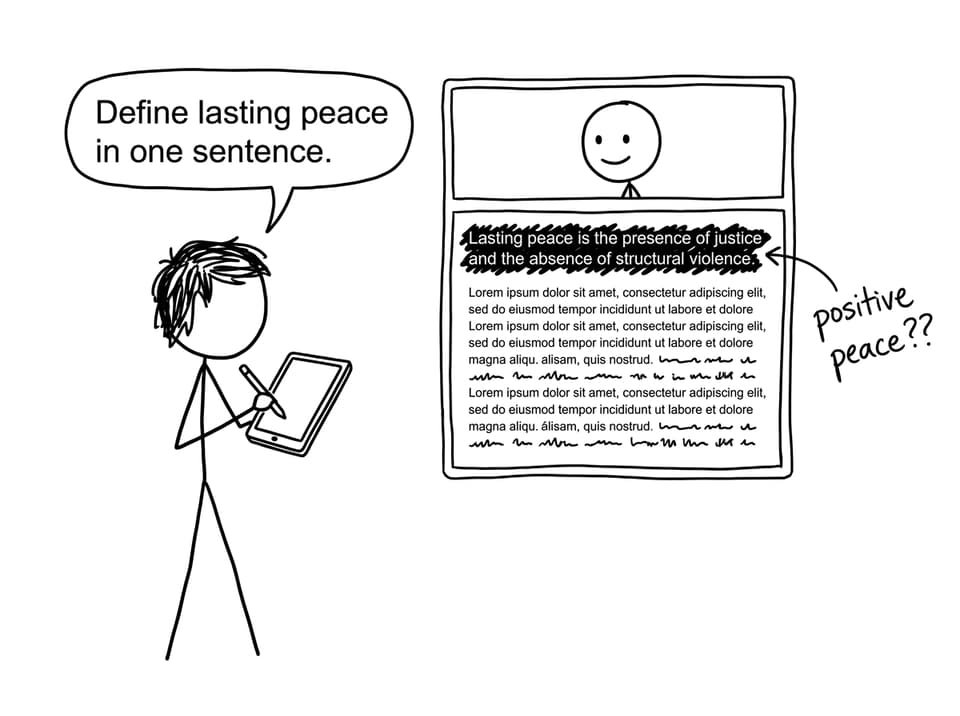
Lasting peace is the kind of phrase that sounds obvious until you try to define it under timed conditions.
A ceasefire is signed. Cameras flash. Leaders shake hands. And then, six months later, the same grievances resurface, just with new slogans and new victims. In IB Global Politics, that whiplash is the point: lasting peace isn’t a moment. It’s a system that makes violence less useful, less likely, and harder to restart.
If you’re revising for exams, think of lasting peace as an argument you must build: not “war stopped,” but “the conditions that produced war were reduced.” That is the core move in IB Global Politics.
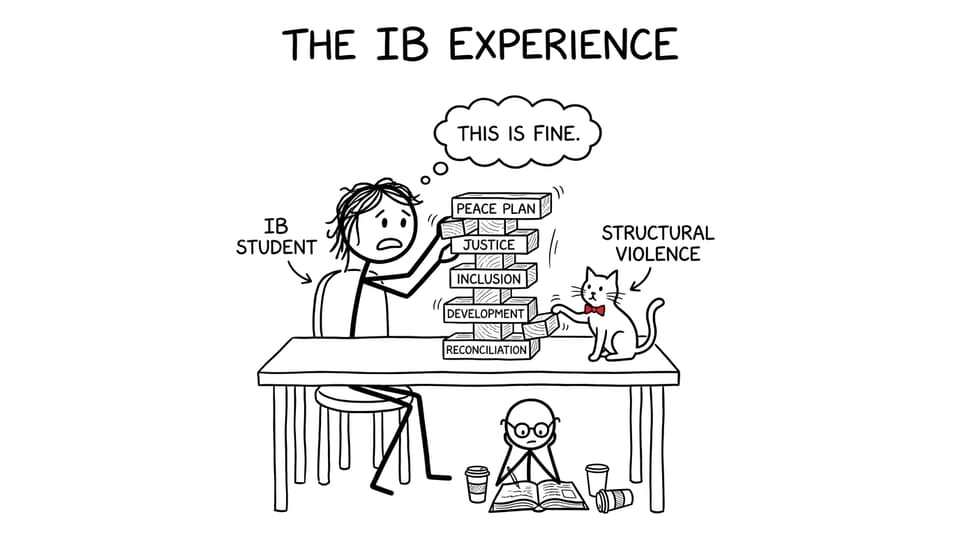
Lasting peace checklist (what examiners want you to cover)
Use this as a fast plan before you write:
-
Define lasting peace as positive peace (not only absence of fighting)
-
Explain root causes: exclusion, inequality, structural violence
-
Show how institutions prevent relapse (rule of law, services, representation)
-
Include justice and accountability (not just punishment)
-
Link development to stability (jobs, education, welfare)
-
Add reconciliation (social trust and legitimacy)
-
Evaluate the role of international actors vs local ownership
For topic definitions and course structure, keep the IB Global Politics hub open while you revise: Global Politics - IB Resources.
IB Global Politics: why ending violence isn’t enough
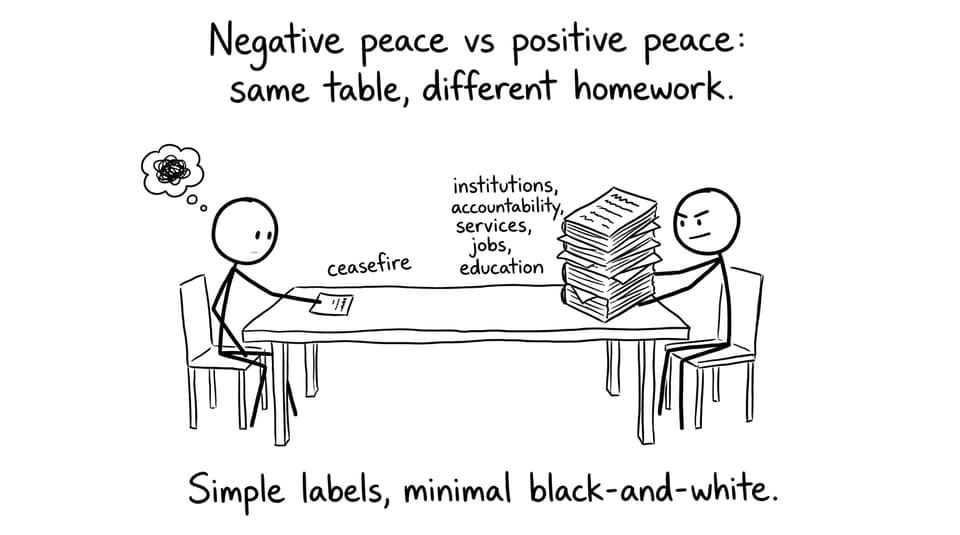
In IB Global Politics, you’ll often contrast negative peace (violence stops) with positive peace (injustice and structural drivers are addressed). A ceasefire can reduce deaths today, but it doesn’t automatically change the incentives that made conflict rational yesterday.
A high-scoring response usually explains mechanisms: how exclusion fuels grievance, how weak institutions create security dilemmas, and how impunity encourages revenge cycles. RevisionDojo’s core-topic framing helps here because it pushes you back to concepts like legitimacy and power: Theoretical Foundations in IB Global Politics.
Inclusive governance: the quiet engine of lasting peace
Lasting peace is easier to sustain when people believe the political system can absorb conflict without turning it into violence.
In IB Global Politics, that’s the logic of inclusive governance: representation, participation, and protections for minority groups reduce the feeling that the state is someone else’s weapon. Inclusion builds legitimacy. Exclusion produces spoilers.
When you write, connect governance to institutions and reform. If you need a structured map of peace-related processes (and vocabulary that fits markschemes), use: Notes for Peacebuilding - IB.
Justice and accountability: stopping the revenge loop
After conflict, societies often carry a backlog of pain: disappearances, displacement, torture, property theft. If none of it is addressed, “peace” becomes a thin cover over resentment.
Strong IB Global Politics answers show balance: justice can include trials, but also truth commissions, reparations, and reforms that prevent repeat abuses. The goal is to reduce the moral and political fuel that future leaders can exploit.
Human rights language often strengthens your evaluation, especially when you link rights to legitimacy and limits on state power: What Are Human Rights in Global Politics?.
Development and structural violence: the slow causes of fast wars
Many conflicts restart because daily life never improves. Poverty, youth unemployment, and unequal access to land or services can turn a “post-conflict” society into a waiting room for the next armed group.
In IB Global Politics, this is where you explicitly use the term structural violence: harm built into systems, not just bullets. Lasting peace means reforming structures, including laws, service delivery, discriminatory policy, and unequal opportunity, so grievance doesn’t compound.
To practise writing this as an argument (not a list), train with exam-style prompts: Debates on Peace and Conflict - IB Questionbank. RevisionDojo’s Questionbank + Grading tools are especially useful for learning how much evaluation is “enough” for top bands.
Reconciliation and local ownership: peace that people actually accept
Even when institutions improve, societies can remain split by fear and memory. Reconciliation doesn’t require everyone to agree on the past, but it does require mechanisms that rebuild trust: community dialogue, education, shared civic identity, and credible protections.
International actors can support peace through mediation, security assistance, or monitoring. But IB Global Politics rewards a key judgement: peace cannot be imported like a product. Without local ownership, agreements often lack legitimacy and collapse when pressure fades.
For related tools (peacemaking vs peacekeeping vs peacebuilding), see: IB Global Politics Peacemaking Notes and Notes for Peacekeeping - IB.
Quick exam strategy: how to answer “How can lasting peace be achieved?”
In IB Global Politics, the mark jump usually comes from structure.
-
Use a definition line that signals positive peace.
-
Write 2-3 body paragraphs with clear “because” logic.
-
Add one counterpoint (e.g., inclusion is hard in deeply polarised societies).
-
Finish with a judgement about which condition is most decisive in context.
If you lose marks on task words like “evaluate” or “discuss,” fix that first: How to Use Command Terms Effectively in IB Exams. Then use RevisionDojo Study Notes, Flashcards, and AI Chat to drill definitions and rebuild weak paragraphs quickly.
Bringing it back to revision (and to RevisionDojo)
Lasting peace is achieved when inclusion, justice, development, and reconciliation work together, and when institutions make violence a bad option. That integrated view is exactly what IB Global Politics exam questions are testing.
To turn this into marks, use RevisionDojo’s Study Notes to build clean concept definitions, the Flashcards to lock them into memory, the AI Chat to pressure-test your explanations, and the Questionbank plus Mock Exams and Predicted Papers to practise under time. If you want feedback beyond self-marking, RevisionDojo’s Tutors and Grading tools can show you where your argument stops being analysis and starts being summary.
When you can explain lasting peace as a system, not a handshake, you’re writing like an IB Global Politics student who’s ready for the exam.