
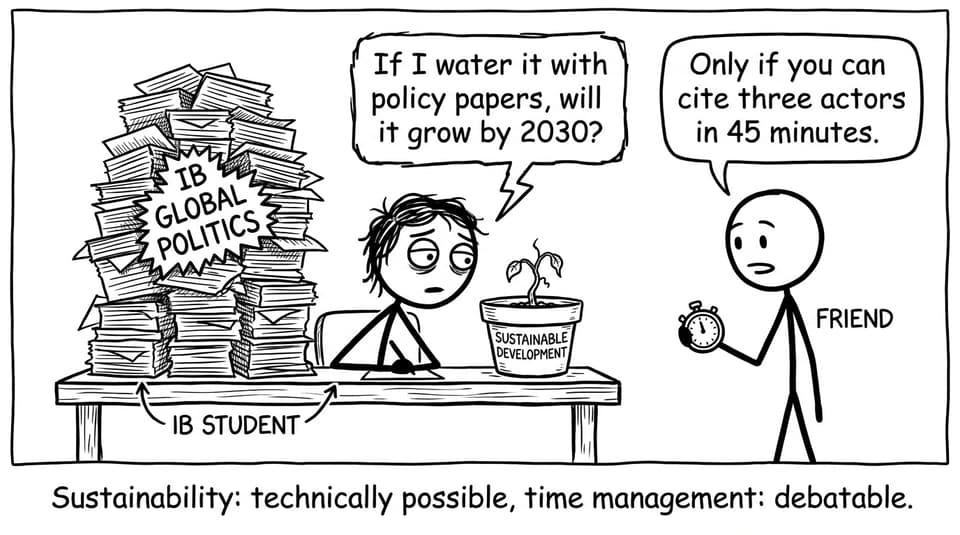
Sustainable development sounds like the kind of promise adults make with a straight face and a short memory: grow the economy, protect the planet, reduce inequality, and don’t mess it up for future generations. Then you open the news and see another climate summit, another growth plan, another argument about who should pay. In IB Global Politics, that tension is the whole point. The question “Is sustainable development achievable?” isn’t asking for optimism or doom; it’s asking whether politics can match the scale of the problem.
The exam-ready definition (don’t skip this)
In IB Global Politics, sustainable development means balancing three pillars: economic growth, social justice, and environmental protection, while protecting the needs of future generations. If your answer doesn’t keep all three pillars in view, it usually becomes either a science essay (only environment) or a charity speech (only inequality).
A strong starting point is RevisionDojo’s explainer: What Is Sustainable Development in Global Politics?
A quick checklist to structure any IB Global Politics answer
Use this as a mini-plan before you write:
-
Define sustainable development (three pillars + intergenerational focus)
-
Present an “achievable” argument (technology + policy + institutions)
-
Present a “not achievable” argument (inequality + incentives + power)
-
Weigh them using concepts like power, legitimacy, and interdependence
-
Conclude with a balanced “to what extent” judgment
If you want a clean exam structure, keep Paper technique close: IB Global Politics Paper 1 Guide Notes
Why sustainable development might be achievable
The most convincing “yes” argument isn’t that people suddenly become selfless. It’s that systems can change when incentives change.
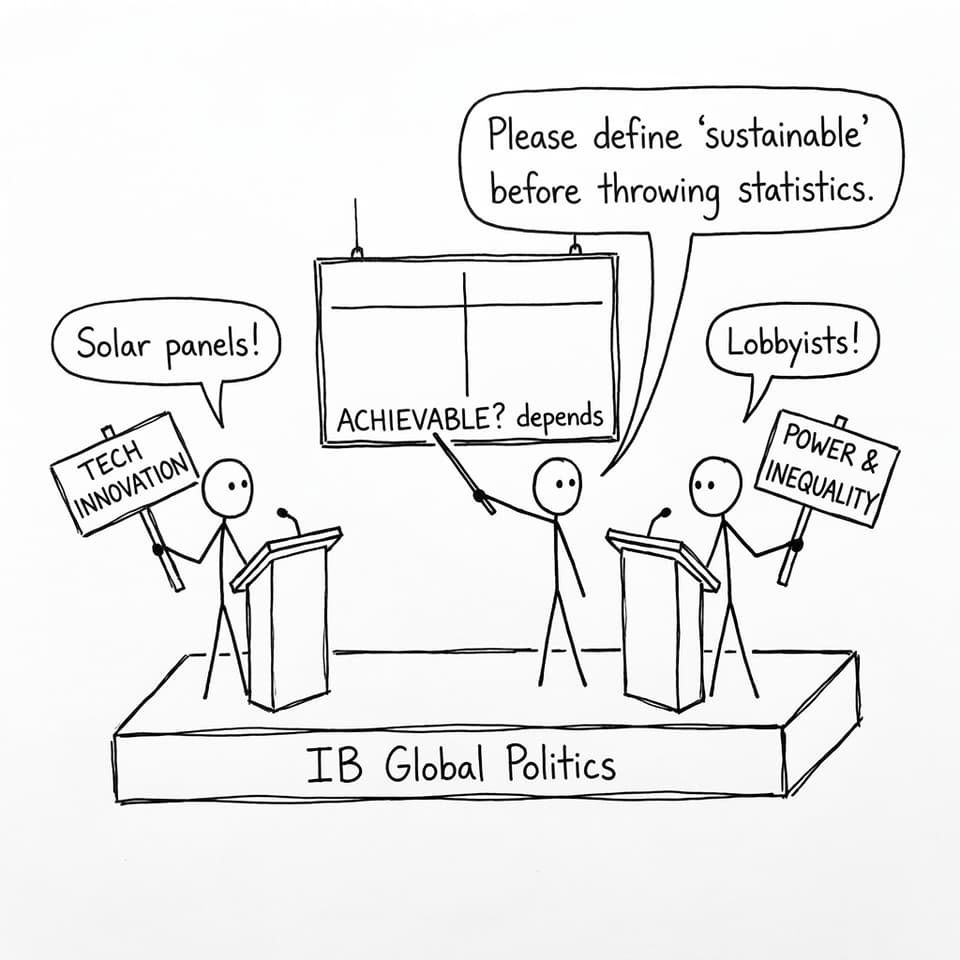
First, technology and policy can align. Renewable energy, efficiency gains, and changes in agriculture show that growth doesn’t automatically require higher emissions. In IB Global Politics, you can frame this as states using policy tools to redirect markets, and NGOs plus businesses scaling innovation.
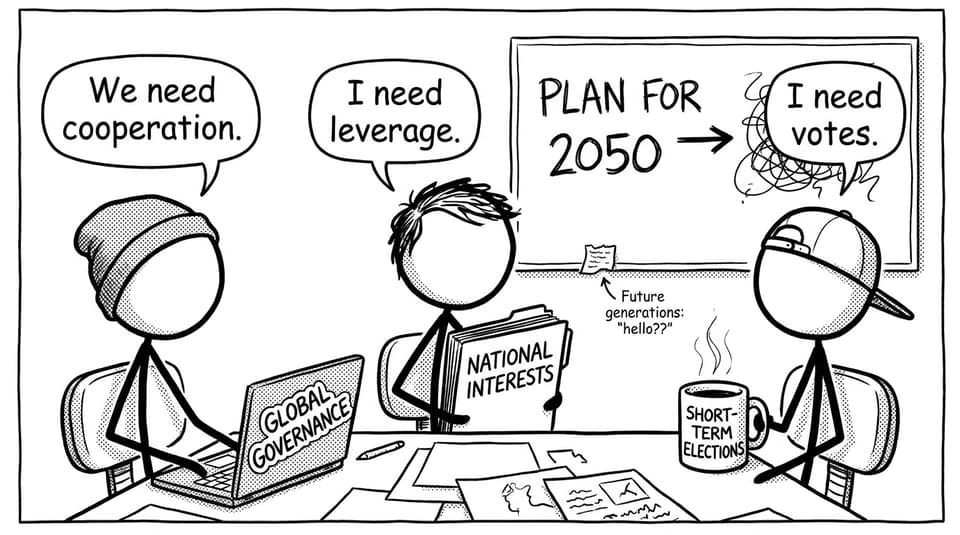
Second, global governance can coordinate action. Treaties, UN frameworks, and shared targets make sustainable development look achievable on paper, because they create rules and measurement. That’s where interdependence matters: the atmosphere doesn’t recognise borders, so states have reason to cooperate even when they don’t trust each other.
To revise the “cooperation can work” logic, connect it to theory: How Does Liberalism Explain Cooperation?
Why sustainable development is politically hard (even if technically possible)
Here’s the uncomfortable truth your examiner wants you to say clearly: sustainable development fails most often because of politics, not physics.
Inequality and burden-sharing
Wealthier states historically consumed more resources and produced more emissions. Meanwhile, many developing states still need infrastructure, jobs, and basic services. If sustainable development means “grow less,” it can sound like a luxury rule written by those who already got rich. In IB Global Politics, this becomes a debate about justice, responsibility, and whether global rules reflect equal voice.
For a justice-focused concept anchor, see: What Is Social Justice in Global Politics?
Short-term incentives
Elections are short, budgets are annual, and media cycles are hourly. Sustainable development policies often cost now and pay later. That mismatch produces hesitation, reversals, and half-measures. This is a perfect space to evaluate state behaviour using power and legitimacy: governments need public consent, and consent often follows immediate living standards.
To tighten your concept use, revise power directly: Power in IB Global Politics
Power politics and resistance
Even when leaders agree in speeches, powerful actors can block change: industries protecting profit, states protecting strategic advantage, and institutions that struggle to enforce rules. A top-band IB Global Politics answer makes this explicit: sustainability is shaped by who gets to set the rules, who can ignore them, and who pays the costs.
How to turn this into marks (not just opinions)
Examiners reward evaluation. So land on this kind of conclusion: sustainable development is achievable in theory, but politically constrained in practice. Then prove it by using:
-
Concepts (power, legitimacy, interdependence)
-
Multiple actors (states, IGOs, NGOs, corporations)
-
A clear judgment (“to a limited/moderate/large extent”) backed by reasoning
If you want to avoid common essay traps, use: Common Mistakes in IB Global Politics Essays
The bottom line (and what to do next)
So, is sustainable development achievable? In IB Global Politics, the most honest answer is: it’s technically within reach, but politically negotiated at every step. Your exam job is to show that negotiation clearly: who has power, who bears costs, and what cooperation can realistically deliver.
To turn that insight into marks, build your revision workflow inside RevisionDojo: start with IB Global Politics Resources, drill with the Questionbank, tighten definitions with Flashcards, stress-test arguments with AI Chat and grading tools, and run timed practice with Predicted Papers and Mock Exams. Sustainable development may be a global challenge, but your preparation doesn’t have to be.