


Hiring a tutor for MYP English Language and Literature can be worthwhile when your child has a persistent, identifiable difficulty that classroom feedback and independent practice have not resolved. It is less useful when the real problem is a missed instruction, an inconsistent routine, or temporary anxiety about one assignment.
The best decision is rarely an immediate yes or no. Ask what feels difficult, examine the teacher's comments, and identify the assessment criterion causing trouble. Try one or two focused interventions. If the same obstacle remains, targeted tutoring may be a sensible next step.
A tutor should be a response to evidence, not worry.
A quick parent checklist
Consider tutoring if several of these statements are true:
- The same teacher comment appears across multiple assignments.
- Your child understands a text but cannot turn ideas into analysis.
- They struggle to organize responses despite repeated practice.
- Writing anxiety regularly prevents them from starting or finishing.
- Their confidence is falling alongside their performance.
- School support and a consistent routine have not closed the gap.
- Your child is willing to work with another adult.
You may not need a tutor yet if the difficulty is recent or limited to one task. Begin by reading the rubric together, speaking with the teacher, and establishing a weekly routine. For wider guidance, read How Parents Can Support a Child in the MYP.
Understand what MYP English assesses
Parents sometimes assume English tutoring should concentrate on spelling, vocabulary, or reading more books. Those skills can matter, but MYP Language and Literature assesses four equally weighted criteria:
- Criterion A: Analysing
- Criterion B: Organizing
- Criterion C: Producing text
- Criterion D: Using language
Each criterion has a maximum achievement level of 8. Expectations develop throughout the programme, so the student's current task sheet and school-provided rubric should guide support.
This distinction matters. A student struggling with analysis may have accurate grammar. More vocabulary exercises will not solve the underlying problem. They may need to explain how a creator's choice affects an audience, support an interpretation with precise evidence, or move beyond retelling events.
The MYP Language and Literature assessment criteria guide can help parents translate feedback into a teachable skill.
Signs a tutor could genuinely help
The difficulty is consistent and specific
Tutoring is most useful when the problem can be named: weak thesis statements, descriptive rather than analytical paragraphs, poorly selected evidence, or difficulty adapting tone for an audience.
Compare “get better at English” with “explain the effect of authorial choices using evidence.” The second goal gives a tutor something teachable and gives the family something observable.
Feedback is not producing improvement
Some students understand a teacher's comment but cannot apply it to their next response. A good tutor can slow down that transfer process: interpret the feedback, model the thinking, supervise a short attempt, and ask the student to repeat the skill independently.
The goal is not to polish one assignment during a session. It is to make the student's next independent response stronger.
Confidence is shrinking
Low confidence alone does not require tutoring. Sometimes a student needs rest, reassurance, or a smaller starting point. However, when confusion has become a pattern, focused instruction can make the subject manageable again. A helpful tutor concentrates on one move at a time instead of turning every meeting into another test.
What to try before tutoring
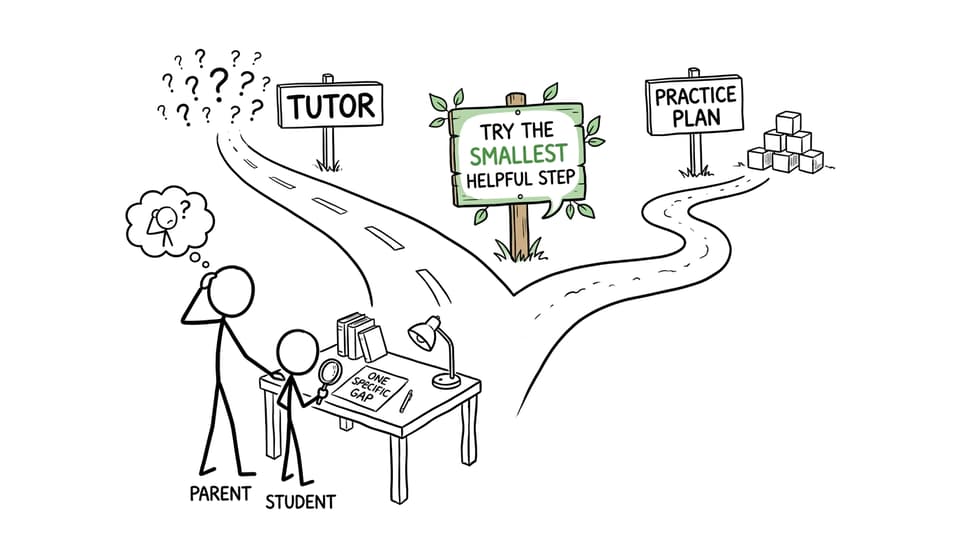
Give these steps two or three weeks unless an important assessment is unusually close.
Ask the teacher one focused question
Instead of asking how your child can improve generally, ask which criterion or recurring habit would make the greatest difference now. The answer may reveal a narrow problem: insufficient planning, imprecise evidence, or a weak understanding of audience and purpose.
Create a short practice loop
Use one 30-minute session each week:
- Review one skill with the MYP English Language and Literature resources.
- Write one paragraph or short plan.
- Compare it with the relevant criterion.
- Improve only the weakest part.
- Record one rule for the next attempt.
RevisionDojo's Study Notes can clarify techniques, while Flashcards reinforce terminology. The Questionbank supports focused application, AI Chat can explain unfamiliar concepts, and Grading tools can help students evaluate whether their writing demonstrates the required skill.
The essential test is whether the student can later perform without prompts. How to Know If AI Tutoring Is Helping Your Child applies the same principle: effective support should build independence rather than dependence.
Parents can help without editing every sentence. Ask which criterion is being assessed, what the writer is doing, and which detail supports the student's idea. Then step back. The best revision strategies for MYP Language and Literature offer further focused exercises.
How to choose an MYP English tutor
If the gap persists, find someone who understands criteria-based MYP assessment, not only generic English instruction.
| Ask the tutor | What a strong answer should include |
|---|---|
| How will you diagnose the problem? | Teacher feedback, current rubrics, and an independent writing sample |
| How do you teach analysis? | Work on choices, evidence, effects, purpose, and interpretation |
| How will you measure progress? | A baseline skill, short tasks, and a review date |
| Will you complete assignments? | No; the student must retain ownership |
| How will you communicate? | Brief updates focused on skills and next steps |
Consider a trial of four to six sessions. Define improvement in advance, perhaps clearer paragraphs, stronger evidence, fewer prompts, or more consistent completion under a time limit. Avoid tutors who promise a particular grade or judge progress by homework quantity. A responsible tutor should also recognize when support is no longer necessary.
RevisionDojo's MYP tutoring guidance can help families connect human instruction with structured independent learning.
Build support around independence
Tutoring is only one layer of support. Students still need to understand, retrieve, apply, and improve between sessions.
RevisionDojo brings those stages together through Questionbank practice, Study Notes, Flashcards, AI Chat, Grading tools, Mock Exams, Predicted Papers where available, and a Coursework Library for examining effective structure. Tutors can then concentrate on patterns that independent practice has not resolved.
The MYP curriculum expectations guide explains what progress can look like. Ultimately, hiring a tutor for MYP English Language and Literature should make your child more capable of thinking and writing alone. The aim is not permanent assistance. It is growing independence.