
When students ask if their EE can be “interdisciplinary,” what they often mean is simpler: I love more than one subject, and I want my essay to reflect that. It’s an honest instinct. Most real problems don’t arrive labeled “Biology” or “English.” They arrive messy, mixed, and human.
But the EE isn’t graded on how ambitious your curiosity is. It’s graded on how well you follow a pathway that matches IB rules and a rubric designed to reward focus.
So here’s the clear answer you need, stated plainly:
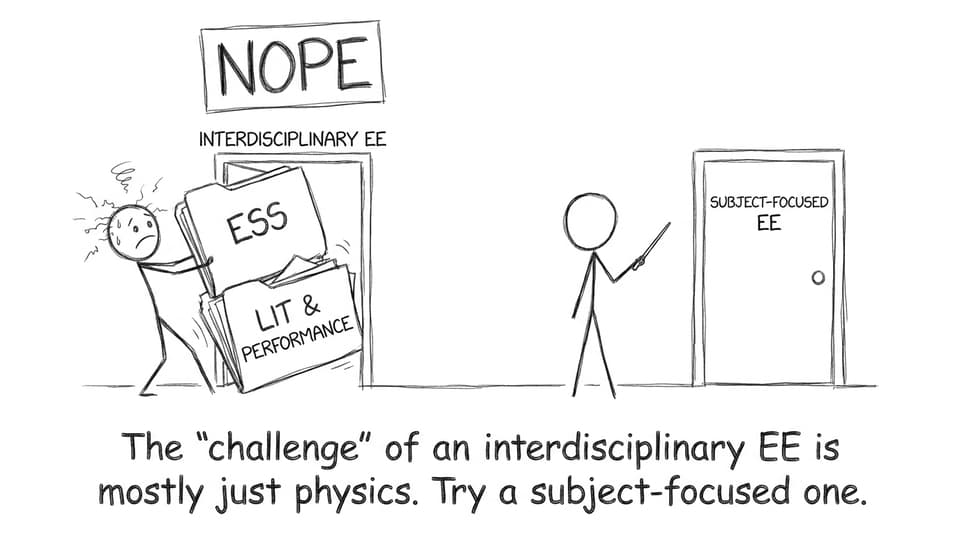
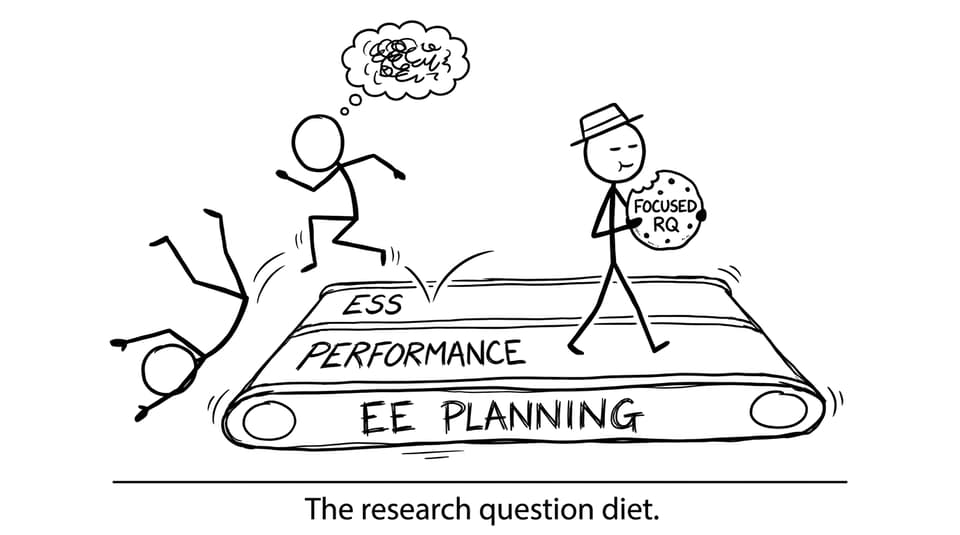
No. Environmental Systems and Societies (ESS) and Literature and Performance are classified as cross-disciplinary subjects. They may only be used in the Subject-Focused pathway. They are explicitly excluded from the Interdisciplinary pathway to prevent over-complexity.
That single sentence can save you weeks of false starts.
The quick checklist (so you don’t lose time)
Use this checklist before you commit to an EE plan:
- If your registered subject is ESS, your EE must be subject-focused.
- If your registered subject is Literature and Performance, your EE must be subject-focused.
- You cannot use ESS or Literature and Performance to access the IB Interdisciplinary EE pathway.
- If you want a genuinely interdisciplinary EE, choose an eligible subject pathway and design the question accordingly (with supervisor approval).
- Your safest next step is to read pathway guidance and then build a narrow research question you can actually execute.
For a wider hub of support, start with IB Extended Essay Guides and bookmark All IB Extended Essay Posts for ongoing strategy.
Why this rule exists (and why it helps your EE)
Cross-disciplinary subjects already blend methods and perspectives. ESS moves between ecology, policy, systems thinking, and data. Literature and Performance moves between literary study, dramatic form, staging choices, and interpretation.
That sounds perfect for an interdisciplinary EE until you picture the assessment problem: interdisciplinary on top of cross-disciplinary creates a double-layer of expectations. Students end up writing essays that feel wide, interesting, and ultimately ungradeable by a single, consistent set of subject conventions.
The IB’s solution is blunt but protective: keep cross-disciplinary subjects in the subject-focused pathway so your EE is assessed through one coherent lens.
This is also why so many strong essays feel “smaller” than students expected. High-scoring EE work often looks like a careful zoom-in, not a grand tour.
If you want a rubric-level breakdown of what that zoom-in looks like, read What Are the Assessment Criteria for the IB Extended Essay?.
What to do instead: the three safe options
You still have great options. They just need clean labels.
Write a subject-focused EE in ESS
A subject-focused EE in ESS can still feel “interdisciplinary” in spirit. The trick is that the methods and writing conventions must look like ESS, not a hybrid.
Start by grounding yourself in the expectations of the subject guide. RevisionDojo’s IB ESS EE Guide and the broader IB ESS Resources are good starting points.
What works well in an ESS EE usually has:
- a clearly bounded system (one location, one policy, one time window)
- a method you can defend (data analysis, case study with defined sources, structured evaluation)
- environmental science concepts used accurately (not just buzzwords)
Need models? You can browse sample work through IB Coursework Examples: IA, EE and TOK Exemplars.
Write a subject-focused EE in Literature and Performance
If your subject is Literature and Performance, treat your EE like an academic investigation of text and performance choices, not a creative project.
Even if your school’s version of the subject has a strong practical component, your EE still needs a scholarly argument, evidence, and analysis.
A useful adjacent reference point is the way English A essays are assessed. Use RevisionDojo’s IB English A Lit Extended Essay Guide for transferable habits like close analysis and consistent terminology.
And if you want to self-check your writing against a clear rubric language, try the IB English EE Grader as a practice lens for argument and evidence.
Choose an eligible interdisciplinary route (without using ESS or Lit & Performance)
If your heart is set on an interdisciplinary EE, you’ll need to select a different eligible setup and then build your research question to genuinely integrate two disciplines.
A helpful orientation piece is What is a World Studies EE?, which explains what “interdisciplinary” means in practice (and why it’s harder than it sounds).
The key mindset shift: you’re not combining subjects because it’s interesting. You’re combining them because your research question demands it.
How to frame a strong EE when your interests are interdisciplinary
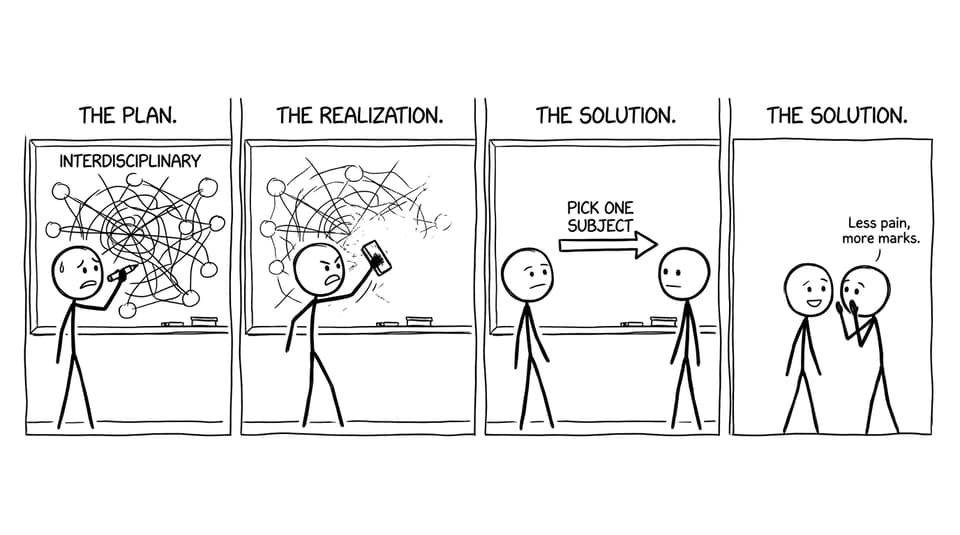
Even in a subject-focused EE, you can keep your curiosity multi-angled. You just have to decide what the essay is being assessed as.
Here’s a practical way to do it:
Pick your “home subject” first, then borrow carefully
A good EE has one home language: its concepts, methods, and standards of evidence.
- In ESS, your home language is environmental systems, sustainability, and evaluative reasoning tied to environmental evidence.
- In Literature and Performance, your home language is textual analysis and performance interpretation supported by scholarly commentary.
You can still borrow from other areas, but borrowing must serve the home subject instead of turning your EE into a mash-up.
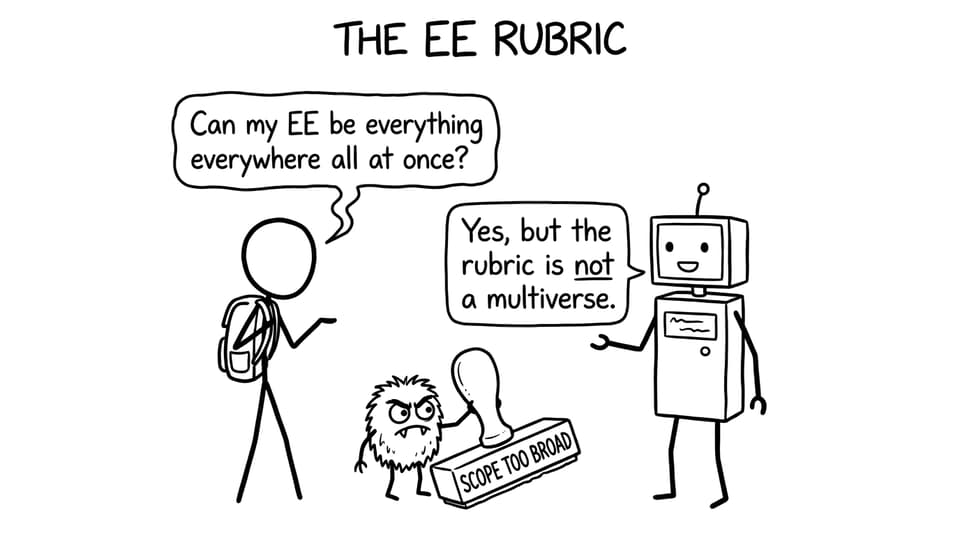
Stress-test your research question for scope
Most EE problems aren’t intelligence problems. They’re perimeter problems.
If you want a clear process, use How to Craft the Perfect IB Extended Essay Research Question and then refine again with The Importance of Research Question Revision During the EE Process.
A strong EE question tends to be:
- answerable within 4,000 words
- analytical (not descriptive)
- tied to sources you can actually access
- written in the style your subject expects
If you keep drifting toward summary, read How to Make Your IB Extended Essay Analytical, Not Descriptive.
A realistic mini-plan for a subject-focused EE (that still feels “big”)
If you’re an IB student preparing for exams, the best EE plan is the one that reduces stress now and protects marks later.
The “two-page commitment” method
Before you write a single full draft, produce two pages:
- Page 1: Your research question and rationale (why this matters, what your scope is, what you will not cover)
- Page 2: Your method and evidence plan (what sources/data, how you’ll analyze them, what success looks like)
Then validate that plan against structure and formatting expectations using How to Format Your EE According to IB Guidelines: Tips + FAQ and How to Structure an Extended Essay (EE).
Use RevisionDojo tools like an examiner would
When you’re deep in the EE, it’s hard to see your own drift. That’s where tight feedback loops help.
RevisionDojo is designed to be that loop:
- Use Study Notes and Flashcards to keep definitions and subject language precise.
- Use the Questionbank for exam prep so the EE doesn’t swallow your whole DP schedule.
- Use AI Chat to brainstorm angles, but always bring the result back to the rubric and your supervisor.
- Use Grading tools in the IB Coursework Grader to get rubric-aligned feedback you can act on.
- Use Coursework Library models via IB Coursework Examples: IA, EE and TOK Exemplars to calibrate what “good” actually looks like.
- If you’re short on time, RevisionDojo’s Tutors can help you fix scope and structure fast.
You can even pair your EE plan with Mock Exams and Predicted Papers so exam revision stays steady while coursework progresses.
Closing: keep your curiosity, choose the correct EE pathway
Wanting your EE to reflect the real world is a good instinct. But in IB, the path matters as much as the idea.
ESS and Literature and Performance are cross-disciplinary subjects, and the rule is firm: they may only be used in the subject-focused EE pathway and are excluded from the interdisciplinary pathway. Accept that constraint early, and your EE becomes simpler, sharper, and far more likely to score well.
If you want the calmest next step, open IB Extended Essay Guides, pick your pathway correctly, and use RevisionDojo’s Questionbank, Study Notes, Flashcards, AI Chat, Grading tools, Predicted Papers, Mock Exams, Coursework Library, and Tutors to keep the work focused while your exam prep stays on track. Your EE doesn’t need to be everything. It just needs to be coherent, compliant, and convincingly argued.