


If you have ever tried to explain your idea for an EE and ended up saying, “It’s kind of Geography, kind of Economics, and also… politics?” you are already standing at the doorway of IB World Studies.
The World Studies Extended Essay is the option for students who cannot answer a meaningful question from inside just one subject. It is built for the messy, real-world problems that don’t respect subject boundaries. And it rewards students who can stay calm inside that mess and make an argument anyway.
Important note before you go further: World Studies has changed for M27 onwards. This guide is for N26 and earlier (and anyone still completing the older World Studies EE format).
What is IB World Studies (in the EE sense)?
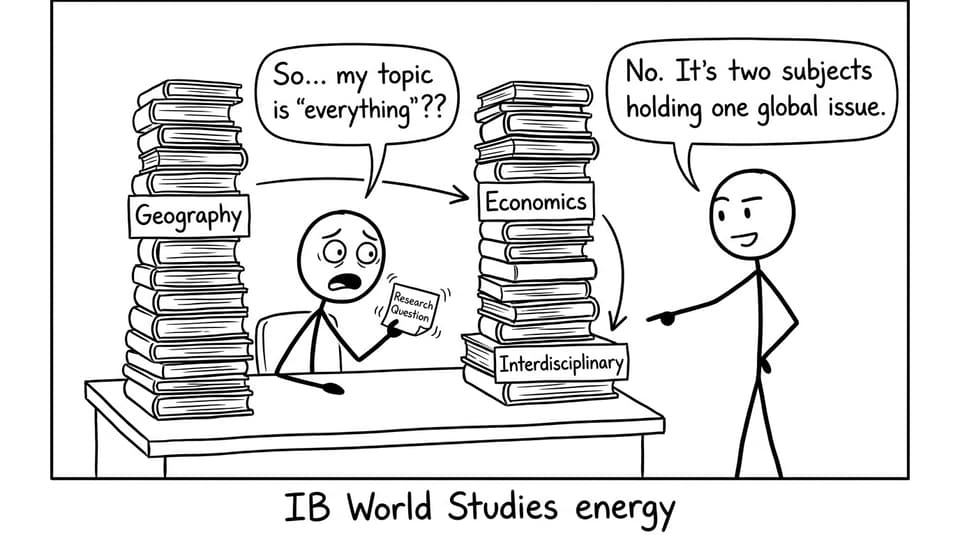
In the EE context, IB World Studies means an interdisciplinary investigation of a global issue, using the concepts and methods from two or more IB subjects.
The difference is not “I mention two subjects.” The difference is integration. A strong IB World Studies essay makes the subjects talk to each other.
To keep yourself aligned with what examiners actually reward, it helps to use a rubric early. RevisionDojo’s IB World Studies EE Grader is built for exactly that kind of self-checking when you are still shaping your argument.
A quick IB World Studies EE checklist
Use this as a sanity check before you commit:
-
Your topic is a global issue (impacts beyond a single local context).
-
You can name two IB subjects that are genuinely necessary.
-
You have a one-sentence research question you can answer with evidence.
-
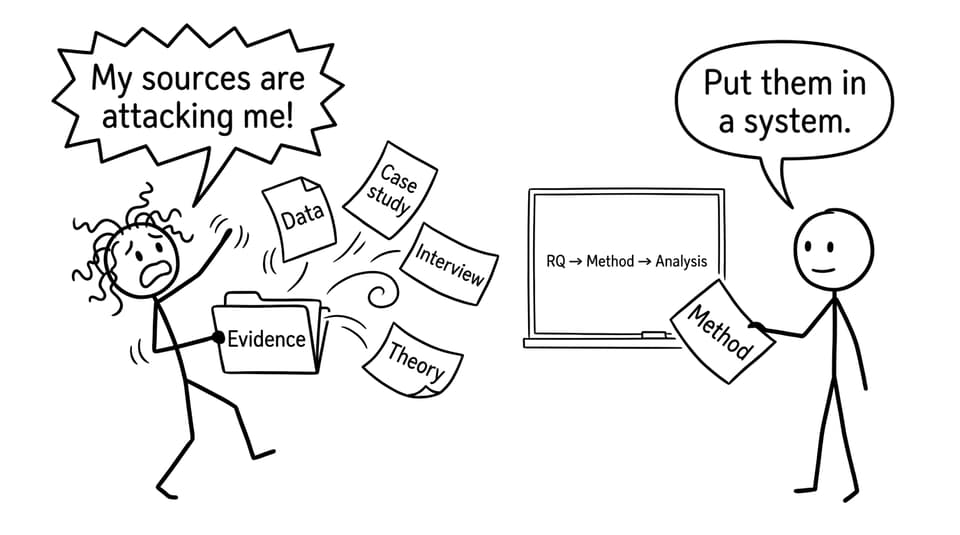
You can explain your method (how you will collect and analyse information).
-
You can imagine 3-5 sections that each move the argument forward.
If you are still choosing the right pathway overall, start at IB Extended Essay Guides to see how World Studies fits into the bigger EE landscape.
What makes a World Studies EE unique?
A normal subject EE is a deep dive. A IB World Studies EE is a deep dive with a bridge in the middle.
Interdisciplinary, not “two mini essays”
The most common trap is writing one subject section, then another subject section, then stapling them together with a conclusion. Examiners are looking for integration throughout: your Geography evidence should change the Economics argument, and your Economics model should reshape what you claim about Geography.
If you want a clear way to avoid “descriptive writing,” use How to Make Your IB Extended Essay Analytical, Not Descriptive as a revision lens.
Global relevance, with a controlled scope
“Global issue” does not mean “the whole world.” It means the issue has global significance, even if your case study is narrow.
A practical approach is to pick one location, one time window, and one measurable outcome, then connect that to the wider global question.
IB World Studies EE structure that actually works
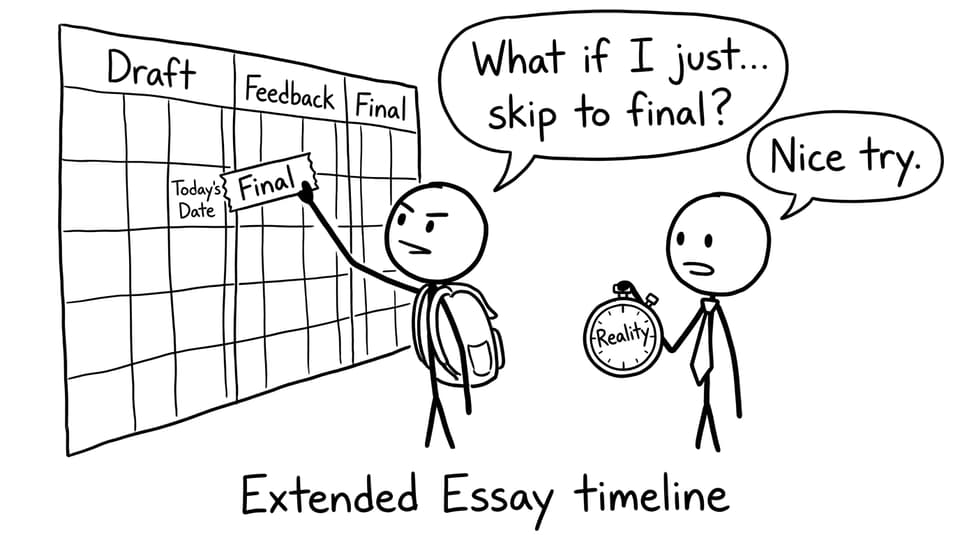
Most students do not struggle because they cannot write. They struggle because their structure does not force clarity.
A clean structure for IB World Studies looks like this:
Introduction
-
Context (only what the reader needs)
-
The research question (easy to spot)
-
Why it is a global issue
-
Why your two subjects are both needed
For a step-by-step model, keep IB Extended Essay: 7 Steps for a Strong Introduction open while you draft.
Body
-
Concepts and theory from Subject 1 and Subject 2 (only the ones you will use)
-
Evidence and analysis (integrated, not separated)
-
Evaluation (limits, alternative explanations, reliability)
If you want a dependable blueprint, see How to Structure an Extended Essay (EE).
Conclusion
-
Direct answer to the research question
-
Implications (what your findings suggest)
-
Limitations and what you would do next
References and appendices
Keep your sourcing tidy from day one. Word-count anxiety is real, so it helps to know what counts and what does not. RevisionDojo’s IB Extended Essay Word Count guide can save you from late-stage trimming panic.
IB World Studies EE topic ideas (with subject pairings)
Good IB World Studies topics feel like a real problem someone might argue about at a dinner table.
Climate change and coastal communities
-
Geography + Economics
-
Possible angle: adaptation costs, inequality, long-term sustainability
Social media and political movements
-
Global Politics + Sociology (or Psychology depending on method)
-
Possible angle: mobilisation, misinformation, civic trust
COVID-19 and crisis management
-
Biology + Economics or Sociology
-
Possible angle: policy trade-offs, public behaviour, outcomes
If you want to see what high-scoring work looks like, browse IB World Studies Exemplars and the broader IB Coursework Examples: IA, EE and TOK Exemplars. Reading one strong exemplar early can prevent weeks of drifting.
How RevisionDojo helps you finish strong (without losing exam prep)
The hard part of IB World Studies is that it happens while everything else is happening.
RevisionDojo is built for that reality:
-
Use the Coursework Library (exemplars) to calibrate what “good” looks like.
-
Use AI Chat to pressure-test your research question wording and paragraph logic.
-
Use Grading tools like the IB Coursework Grader and the IB World Studies EE Grader to find rubric gaps early.
-
Keep exam momentum with Questionbank, Study Notes, and Flashcards.
-
When deadlines tighten, practise under pressure with Mock Exams and Predicted Papers.
-
If you need a human second brain, Tutors can help you narrow scope and align method.
Closing: treat IB World Studies like a bridge, not a buffet
The best IB World Studies EEs are not the ones with the biggest topics. They are the ones with the clearest bridge: two subjects, one global issue, one focused research question, and a method that forces you to prove what you claim.
If you want the calmest next step, open IB Extended Essay Guides, pick one exemplar to model from IB World Studies Exemplars, then run your outline through the IB World Studies EE Grader. That is how you turn IB World Studies from “vague and huge” into “specific and finishable.”