
You can feel it the moment a mock exam starts: the clock doesn’t care how many hours you revised. It only cares what you can produce, on paper, under pressure.
That’s why IB prep changes when you start building custom mock exams instead of hoping a generic paper happens to hit your weak spots. Broad practice has a place, but your score usually rises faster when practice becomes personal: the exact topics, the exact paper style, the exact timing.
RevisionDojo makes this kind of IB mock exam practice simple: create targeted tests, sit them like real exams, get feedback, and repeat the loop until your weak topics stop being weak.
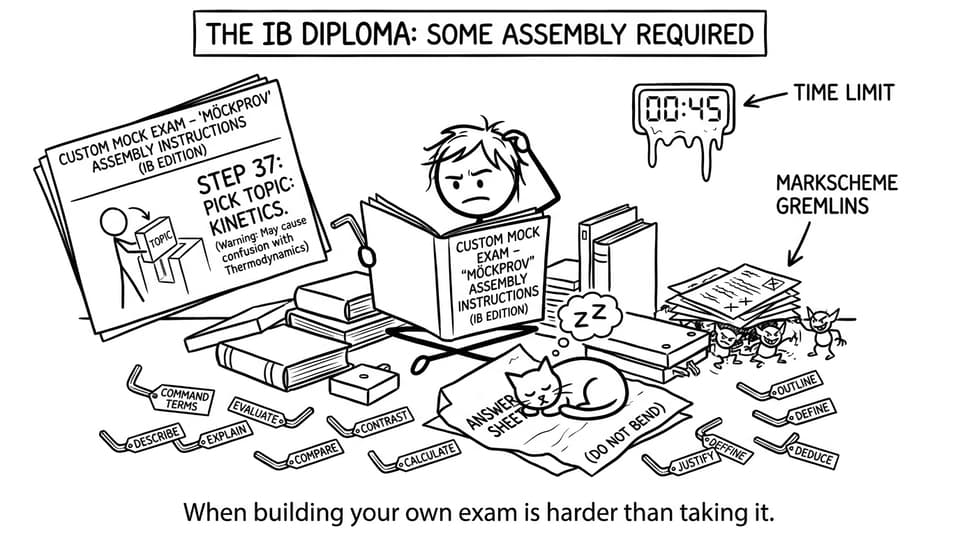
The Custom IB Mock Exam Checklist (5 minutes to set up)
Before you start, keep your IB mock exam workflow boring and repeatable:
-
Pick one subject and one paper (Paper 1/2/3)
-
Choose 2-4 target topics you actually lose marks on
-
Decide the format: mini-mock (25-40 min) or full mock (paper length)
-
Sit it in silence, timed, no notes
-
Review mistakes the same day and write an “error rule” for each pattern
If you want the platform to do the heavy lifting, start at the RevisionDojo homepage and build from there.
Why Custom IB Mock Exams Beat Random Practice
Most IB students don’t fail because they never practiced. They fail because they practiced in a way that hid their real problems.
A custom IB mock exam removes that comfort. You bring your weak topics to the front of the room, then test them under exam conditions. That’s different from “doing more questions.” It’s training the exact skill of performing when time is tight and wording is tricky.
This is also why full simulations matter. A topic quiz can show understanding; a mock exam shows whether you can execute.
For deeper context on why mocks matter, see Why IB Mock Exams Are Essential for Diploma Success.
How to Build a Custom IB Mock Exam in RevisionDojo
Here’s a simple way to create IB mock exams that feel realistic but stay focused.
Build your paper with Test Builder
Use Test Builder to select your subject, paper, and target topics, then set question count. The point is control: you decide whether today is about timing, command terms, or fragile content.
Pair that with the Questionbank when you want extra drills on the exact question type you just missed.
Add realism: run it like a mock exam
A custom IB mock exam only works if you treat it like the real thing.
-
Set a timer and don’t pause
-
Don’t “check notes quickly” mid-question
-
Finish the paper even if it goes badly
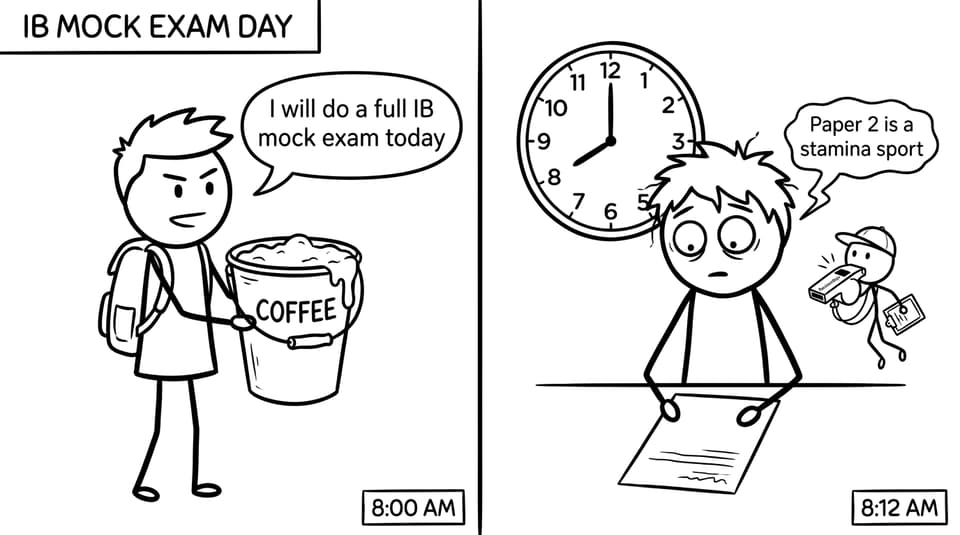
That last point matters because stamina is part of the mark.
Use feedback to create your next mock
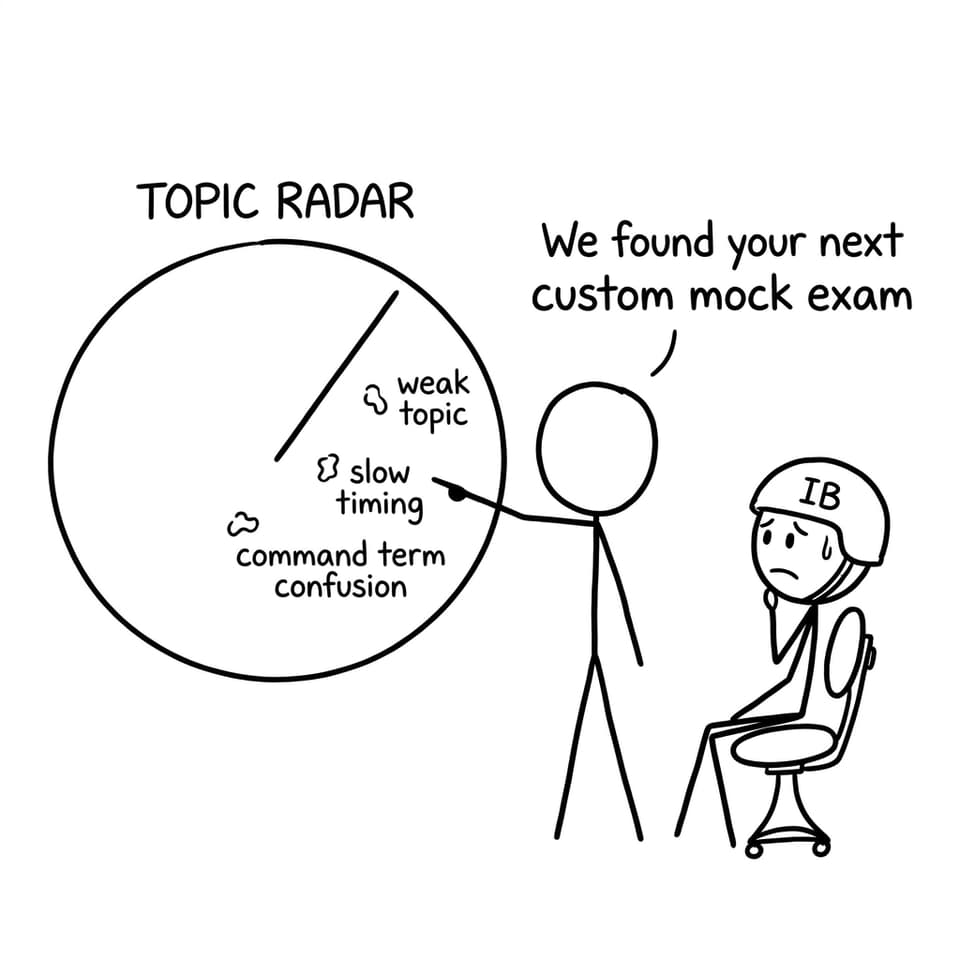
After your IB mock exam, your job is not to feel motivated. It’s to get specific.
Use RevisionDojo’s loop:
-
Study Notes to patch the exact gap (not the whole chapter)
-
Flashcards to prevent the same forgetting tomorrow
-
AI Chat to clarify one misconception fast
-
Grading tools to understand what the markscheme rewards in written responses
Then build the next custom mock exam around the patterns you just discovered.
If you need a structured reset, IB: I Study All Day but Remember Nothing is a helpful mindset and routine guide.
When to Use Predicted Papers vs Custom IB Mock Exams
A good IB plan uses both:
-
Use custom IB mock exams when you want precision (specific topics, specific weaknesses).
-
Use IB Predicted Papers when you want fresh full-paper rehearsal that mirrors likely patterns.
If you’re unsure how to balance them, read IB Predicted vs Specimen Papers: What They Mean.
The Takeaway: Make IB Mock Exams Personal
A generic mock exam tells you where you stand. A custom IB mock exam tells you what to do next.
If you want your practice to feel less like “doing more” and more like “getting better,” build your next mock with Test Builder, reinforce gaps with the Questionbank, and add realism with IB Predicted Papers. Then repeat the loop until the IB exam starts to feel familiar, notnot friendly, just familiar.