


When most IB students say they’re “ready,” they usually mean something specific: the content feels familiar.
But exam day doesn’t reward familiarity. It rewards retrieval under pressure, accurate interpretation of command terms, and the ability to turn knowledge into marks while the clock shrinks your options.
That’s why IB mock exams matter. Not as a confidence boost. Not as a scary rehearsal your school uses to “wake you up.” Mock exams are the moment your preparation stops being theoretical and becomes measurable.
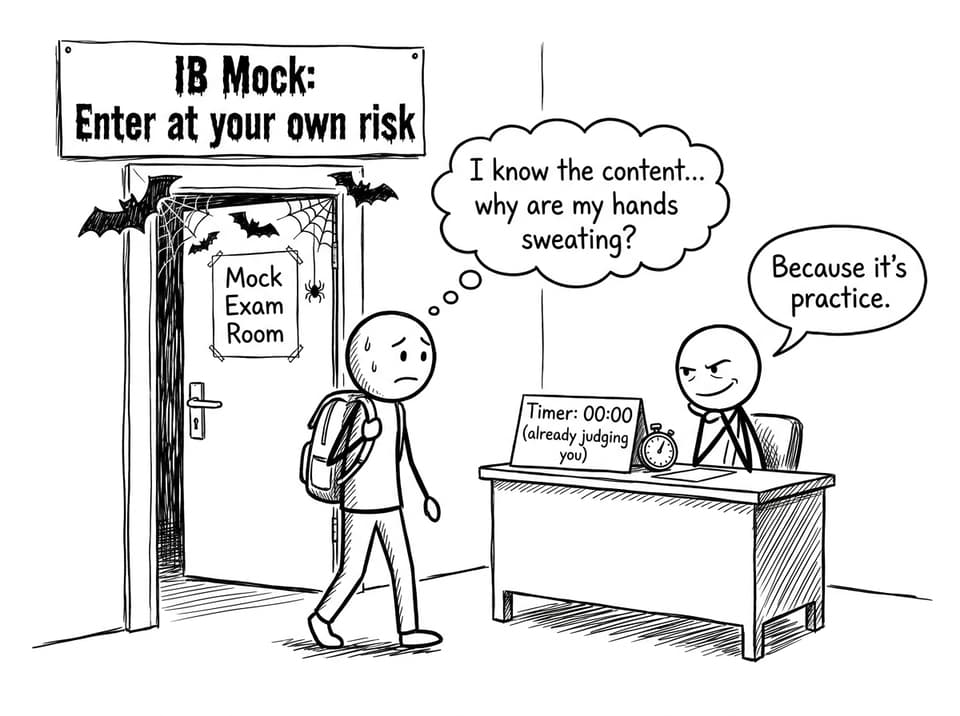
What IB mock exams actually are (and what they are not)
IB mock exams are school-administered practice exams designed to replicate final May or November conditions as closely as possible. They typically mirror the structure of official assessments: Paper 1, Paper 2, and for some subjects, Paper 3.
Mocks are not just “revision.” They’re diagnostic assessments. They test:
-
Your ability to work within strict timing
-
Your response structure under IB markscheme logic
-
Your interpretation of command terms
-
Your stress-response habits (rushing, freezing, over-writing)
If you want a simple way to think about it: studying is building a map; mock exams are walking the terrain.
A quick checklist: how to get real value from IB mock exams
Before you sit your next IB mock exams, keep this short checklist nearby:
-
Sit it timed and silent (no “paused breaks”)
-
Use the allowed materials exactly as you will in finals
-
Mark it with the same strictness every time
-
Turn feedback into an error log (patterns, not feelings)
-
Re-test the weakest pattern within 48 hours
For a practical way to run timed practice, RevisionDojo’s Online IB Mock Exams guide is a helpful template you can copy.
Why IB mock exams are essential for Diploma success
Mock exams give you realistic practice under pressure
The first time you feel real exam pressure should not be the real exam.
In IB, you’re not just answering questions. You’re managing attention for long stretches, choosing what to skip, deciding how much detail is “enough,” and resisting the urge to rewrite a paragraph forever.
Mock exams train your nervous system as much as your brain. The student who has sat five timed papers walks into finals with a quiet advantage: nothing about the environment feels new.
If you want to build that familiarity outside school mocks, RevisionDojo offers tools that behave like a rehearsal: RevisionDojo for IB includes Mock Exams, Predicted Papers, and examiner-aligned practice across subjects.
IB mock exams expose knowledge and skill gaps you can’t “notice” while revising
Most revision hides weaknesses because it is flexible. You can re-read. You can stop. You can check solutions early. You can avoid the hardest questions and still feel productive.
Mocks remove those escape hatches. Suddenly you learn what the real problem is:
-
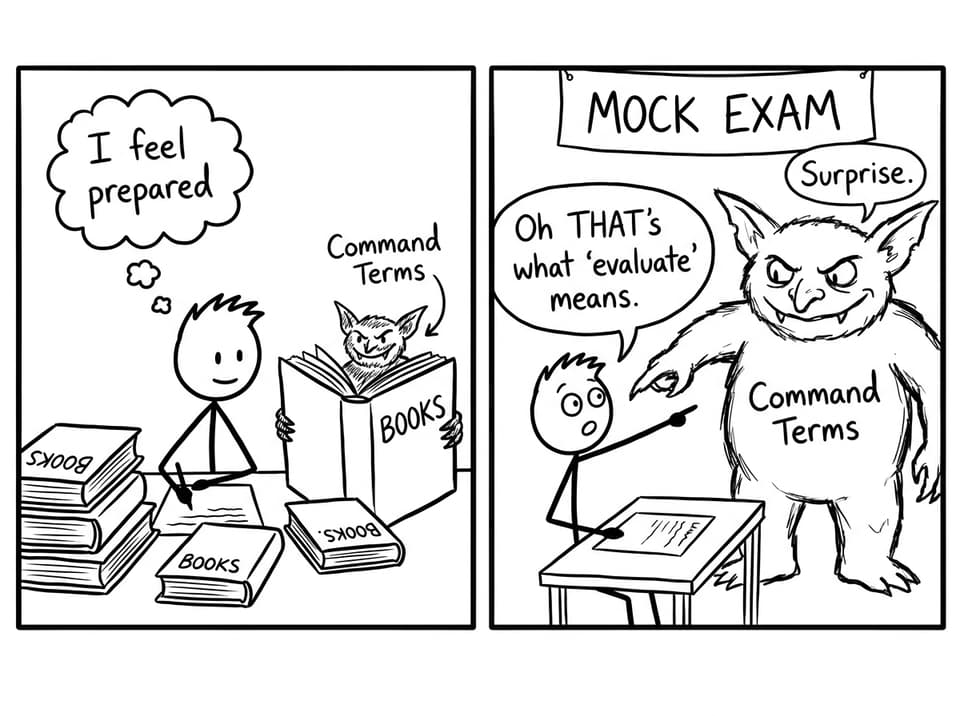
You know the topic, but misread the command term
-
You know the method, but can’t reproduce it fast enough
-
You have ideas, but your structure doesn’t earn marks
-
You panic and leave easy marks behind
That clarity is worth more than another week of broad revision.
If your gaps are mainly practice-related, start with RevisionDojo’s Questionbank feature and then switch into timed practice once accuracy is stable.
Mock exams teach IB time management in a way advice never can
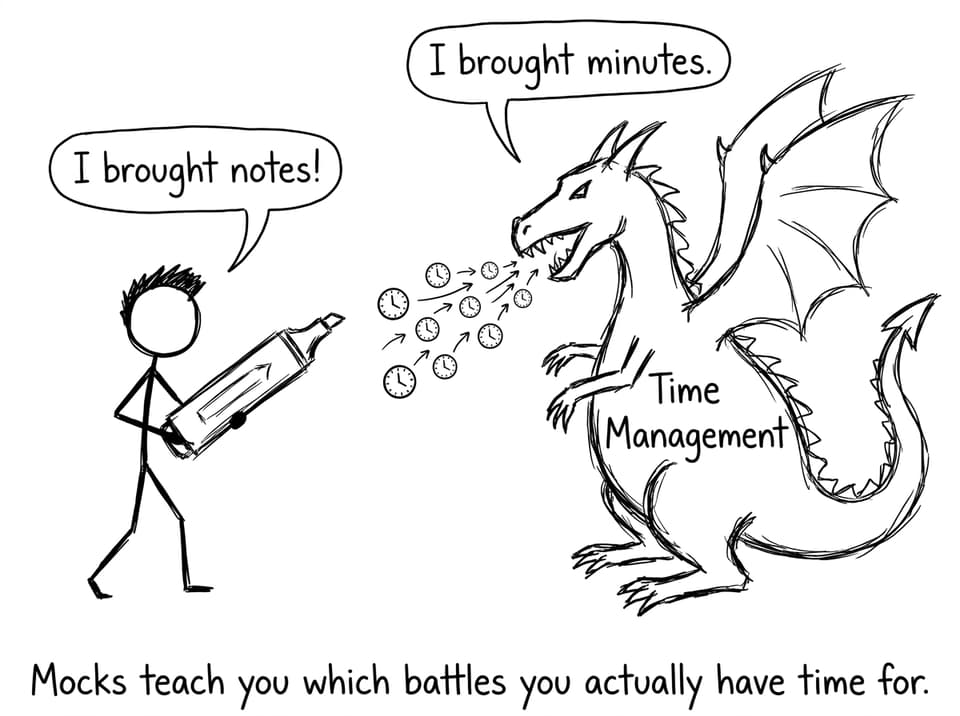
Everyone has heard “manage your time.” Almost nobody changes their behavior until they experience the trade-off.
Mock exams force a student to face time as a real opponent. They teach you:
-
What “one extra minute” actually costs later
-
When to move on without spiraling
-
How to scale an answer to the marks available
Time management is not a personality trait. In IB, it’s a practiced skill.
For students who want a structured way to practise, Custom IB Mock Exams: Build Practice Tests by Topic explains how to create repeatable timed sets that target your weakest areas.
Mock feedback reflects IB standards, not just “teacher preference”
A common frustration is feeling like your work is “good” but still not scoring well.
Mocks help because they are often marked using IB criteria and markscheme logic. That means the feedback can reveal a painful truth: the examiner doesn’t grade effort, they grade evidence. You get marks for what you show, not what you meant.
RevisionDojo strengthens this part of the loop by pairing practice with feedback tools. Students can practise with the Questionbank, refine understanding with Study Notes, and then use AI Chat to ask why a response missed marks. Over time, your writing becomes more aligned with how IB rewards clarity.
If you want an overall routine that connects those pieces, RevisionDojo App: The Smarter Way to Prep for IB Exams lays out a simple loop using Study Notes, Flashcards, the Questionbank, and timed simulations.
Mock exams can influence predicted grades
In many schools, IB mock exams play a role in predicted grades submitted to universities. A strong mock can raise options. A weak mock can create extra pressure.
That’s not meant to scare you. It’s meant to make the purpose clear: mock exams aren’t just practice; they are sometimes part of your academic narrative.
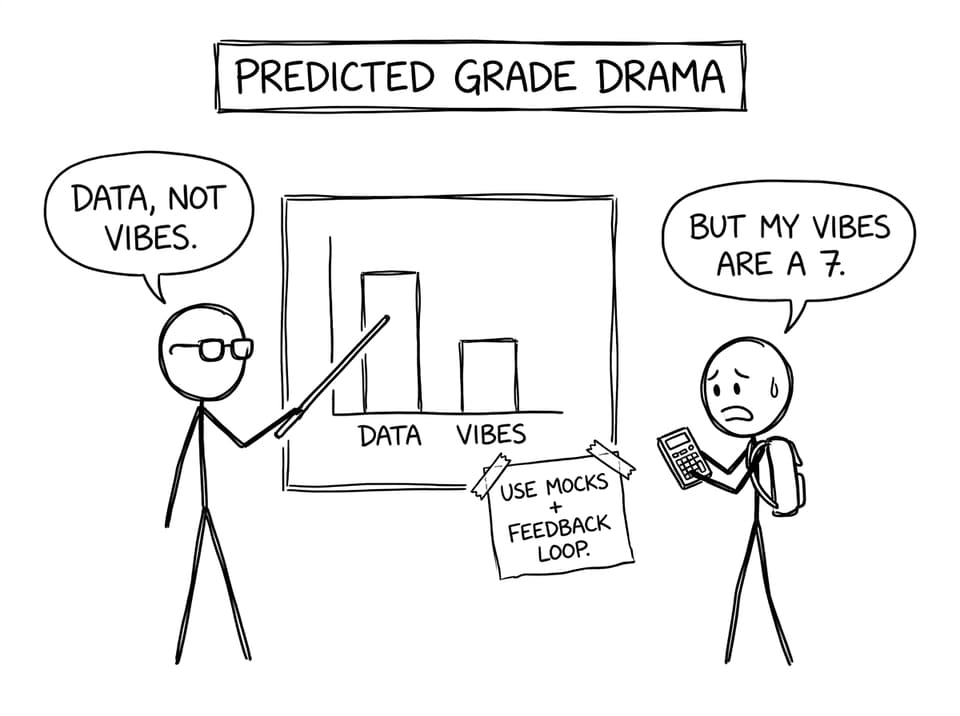
If you want to translate mock performance into a realistic score estimate, the IB Grade Calculator can help you convert marks into a clearer picture. For a calmer approach to forecasting, Predict Your IB Score Before Exams (Without Guessing) explains how to use timed data, not vibes.
What to expect across IB subjects in mock exams
While every subject has its own style, most IB mock exams mirror final demands:
-
Group 1: textual analysis and comparative writing
-
Group 2: listening/reading plus writing
-
Group 3: essays, source analysis, structured responses
-
Group 4: data-based questions, experimental reasoning, extended responses
-
Group 5: multi-step problem solving under pressure
-
TOK: timed planning, argument structure, and clarity
Mocks reveal whether your revision is balanced across these skill types, not just “topic coverage.”
How to use IB mock exams strategically (the part most people skip)
A mock exam only changes your result if it changes your next week.
Here’s a simple strategy that works across IB subjects:
-
Mark and annotate while the attempt is still fresh
-
Label each mistake type: content gap, method gap, command term gap, structure gap, time gap
-
Rewrite one weak response and aim for a higher band answer
-
Drill the exact weakness using targeted practice questions
-
Re-sit a mini-section under time to prove it improved
If your mock result was discouraging, it doesn’t mean you’re doomed. It means you have information. And information can be acted on. This idea is developed well in Failed Mock Exams? You Can Still Pass IB.
How RevisionDojo helps you turn mock exams into point gains
RevisionDojo is most powerful when you treat it like a system, not a library.
After IB mock exams, you can:
-
Use Study Notes to patch the exact concepts you missed
-
Run Flashcards daily to make recall automatic
-
Drill weak topics in the Questionbank with instant feedback
-
Use AI Chat to unpack command terms and markscheme wording
-
Practise full timing with Mock Exams and examiner-written Predicted Papers
-
Use Grading tools for rubric-based feedback on written responses and coursework
-
Reduce uncertainty with the Coursework Library
-
Add a human layer with Tutors when you need a strategy reset
If you’re building more timed rehearsal into your schedule, IB Predicted Papers by IB Examiners (Free) is a strong complement to school mocks because it keeps pressure-practice consistent.
Conclusion: treat IB mock exams as your turning point
IB mock exams are essential because they turn vague effort into visible cause-and-effect. They show you what earns marks, what wastes time, and what breaks down when the timer starts.
Take mocks seriously. Then take the feedback even more seriously.
If you want a calm, repeatable way to convert mock results into higher grades, build your loop on RevisionDojo: practise in the Questionbank, clarify with Study Notes, automate recall with Flashcards, get unstuck via AI Chat, run timed Mock Exams and Predicted Papers, and tighten your writing with Grading tools (plus the Coursework Library and Tutors when needed). That’s how a mock stops being an event and becomes momentum.