
Can an IA Be Too Long? The Real IB Answer
The night before you send your draft, your cursor hovers over the word count like it is a heart monitor.
It is rarely pride that makes you check. It is fear.
Fear that if you do not include every definition, every extra graph, every screenshot of “working,” someone will assume you did not understand it. Fear that shorter looks lazy. Fear that you will lose marks for leaving something out.
That is why students keep asking the same question in different ways: Can an IA Be Too Long? The Real IB Answer.
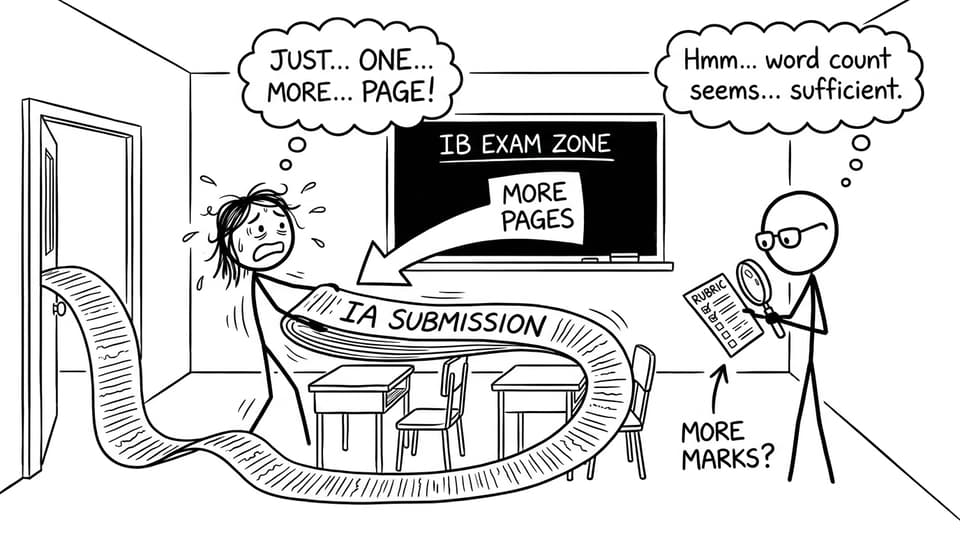
Yes, an IA can be too long. Usually not because the IB has a secret page-limit police. But because length has a quiet side effect: it lowers clarity. And in the IB, clarity is not a style preference. It is how examiners find the evidence that earns marks.
The most painful part is that longer often comes from being conscientious. You are trying to be safe. You are trying to be thorough. But the rubric does not reward “everything.” It rewards the right things.
If you want a quick sense of what “right things” look like across subjects, start with RevisionDojo’s IB IA Guides and the broader IB Internal Assessment complete guide. They are built around one stabilising idea: your IA is an argument written inside a set of criteria, not a scrapbook of effort.
A quick checklist to tell if your IA is too long
Before we talk strategy, use this as a fast diagnostic. If you recognise three or more, you are not facing a “more writing” problem. You are facing a focus problem.
-
You repeat the same reasoning in multiple paragraphs “just in case.”
-
Your introduction teaches background that never gets used again.
-
Your method reads like instructions for a stranger, not decisions you can justify.
-
You have more graphs than interpretations.
-
Your analysis section is shorter than your description.
-
Your evaluation is a list of generic limitations that could fit any topic.
-
Essential reasoning is buried in appendices or footnotes.
-
The conclusion introduces new evidence because earlier sections did not land.
This is the real warning sign: when the reader has to work hard to find your best thinking.
Why IAs grow (and why it feels rational)
Most overlong drafts begin with a good instinct: “If I show more, I will get more marks.”
But the IB does not mark volume. It marks evidence of skills.
So IAs grow for predictable emotional reasons:
You are buying certainty with paragraphs
You are unsure your research question is tight enough, so you add context.
You are unsure your results are convincing, so you add more data displays.
You are unsure your evaluation has depth, so you add more limitations.
Every time you add material, it feels like you are reducing risk. What is really happening is you are often postponing the uncomfortable work: choosing what matters.
A useful mental model is a camera lens. A lens does not become better by becoming bigger. It becomes better by being aligned.
If you want to align early, use this planning reset: How to Plan an IB IA Without Falling Behind. Planning reduces the urge to keep “adding” as a substitute for direction.
Can an IA Be Too Long? The Real IB Answer (what actually goes wrong)
When students ask Can an IA Be Too Long? The Real IB Answer, they often expect a number.
But the real issue is not the number. It is what the extra length does to three mark-winning qualities: structure, analysis, and precision.
Long IAs often drift away from the criteria
In a tight IA, each section has a job:
-
introduce the focus
-
justify design choices
-
present data for interpretation
-
analyse patterns and meaning
-
evaluate limitations with impact
In a long IA, sections often become “about the topic” rather than “about the criteria.” That is how you end up with beautiful writing that earns fewer marks than it deserves.
RevisionDojo’s Grading tools help because they force a hard question: “Which criterion does this paragraph satisfy?” If the answer is “none,” the paragraph is costing you attention.
Two examples of rubric-aligned graders you can use as models for the process are:
Even if those are not your subjects, the habit transfers: draft, grade against criteria, then edit with purpose.
Long IAs bury analysis under description
Most students over-explain what they did because it feels objective and safe.
But top-band work tends to spend more space on:
-
what the results imply
-
why patterns appear
-
how uncertainties change interpretation
-
what alternative explanations could fit
A long method section is rarely impressive. A justified method section is.
Long IAs invite contradictions
The longer a document gets, the easier it becomes to accidentally contradict yourself:
-
different variable names across sections
-
inconsistent units
-
a conclusion that does not match the results
-
a limitation that undermines your own main claim
These are not “small” issues. They damage the reader’s trust.
So what length should an IA be?
There is no universal length because “IA” is an umbrella term. A maths exploration does not look like a biology investigation, and a CS product does not look like a philosophy analysis.
Still, there are two rules that consistently work.
The best IA length is the shortest version that still earns the marks
This sounds obvious until you try it.
A practical test: if you removed a paragraph and your rubric score would not change, the paragraph does not belong.
Different subjects tolerate different kinds of length
Some subjects naturally require more space for communication:
-
Sciences: data presentation, processing, uncertainty.
-
Maths: diagrams, modelling steps, and interpretation.
-
Humanities: careful source use and evaluation, but not plot-summary style narration.
-
Computer Science: documentation and testing evidence, but not endless screenshots without analysis.
If you are unsure what “normal” expectations look like for your subject, start in the relevant area of RevisionDojo’s IB IA Guides and cross-check with exemplars.
How to cut your IA without cutting marks
Editing is not deleting random sentences. It is raising the ratio of mark-earning writing to everything else.
Do the “criteria highlight” test
Open your IA and highlight:
-
sentences that directly satisfy a rubric descriptor (analysis, justification, evaluation)
-
sentences that are background, narrative, or “nice-to-have”
If the highlight is mostly “nice-to-have,” you do not need more writing. You need more criteria-linked writing.
RevisionDojo’s AI Chat is useful here: paste a section and ask it to label each sentence as description or analysis, then ask for a version that keeps the analysis and compresses the description.
Replace narration with justification
Common bloat:
- “First, I set up the apparatus…” followed by a long sequence of steps.
Stronger and shorter:
- “This method was chosen because it controls X and reduces Y, improving reliability.”
You still show understanding, but you do it in the language the rubric rewards.
Combine repeated ideas into one best paragraph
If you make the same claim three times, you usually have:
-
one strong paragraph
-
two anxious echoes
Keep the strong one. Delete the echoes.
Demote non-essential material (carefully)
If your subject allows appendices, use them to store supporting evidence, not core reasoning.
A simple rule: if the examiner must read the appendix to understand your argument, the main write-up is incomplete.
Build a one-page “argument map” first
Before you keep polishing, write one page that includes:
-
research question
-
approach
-
key evidence
-
key reasoning
-
conclusion
-
evaluation (biggest limitation and best improvement)
If you cannot fit the argument on one page, the issue is usually clarity, not length.
The hidden trade: IA length vs exam preparation
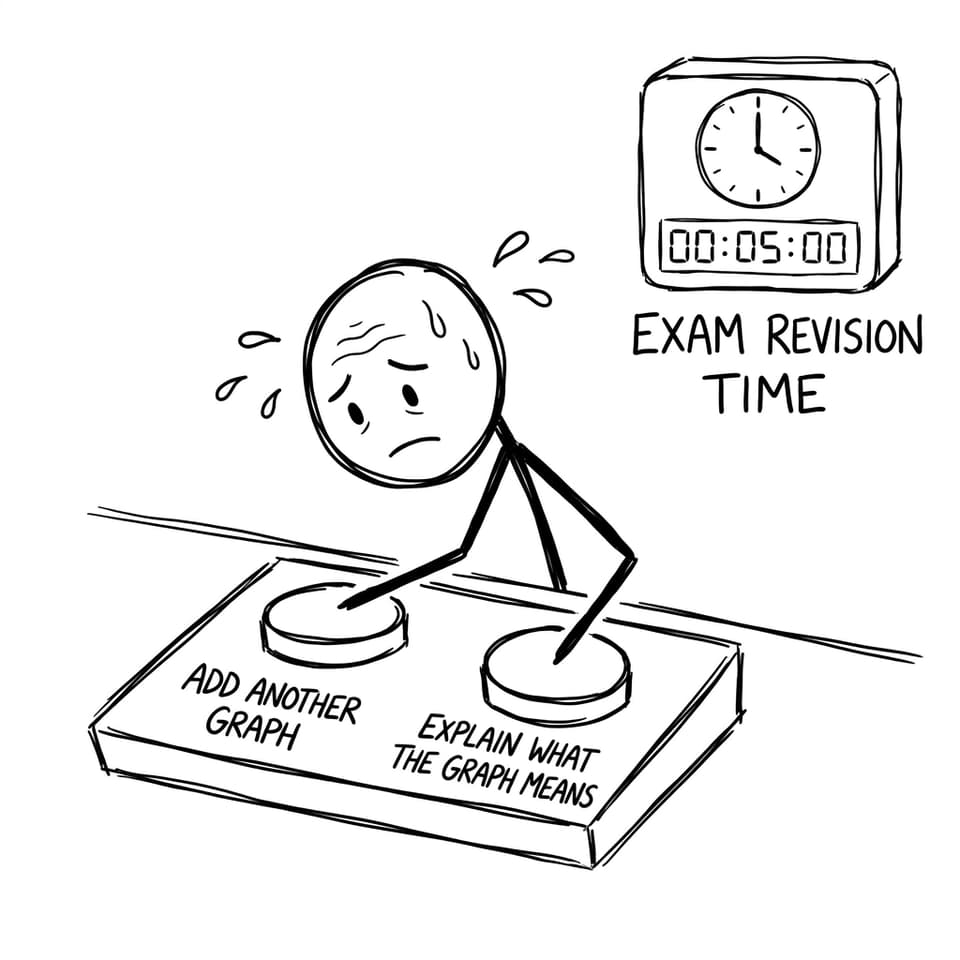
A too-long IA does not just cost editing time. It quietly steals your exam season.
This matters because in many subjects, exams dominate your final grade, while the IA is one component. Students sometimes spend weeks polishing an IA from “good” to “slightly better,” then arrive at revision with weak timing, limited practice, and fragile recall.
A healthier approach is boundaries:
-
set a fixed editing window
-
submit a rubric-strong version
-
switch back to exam skills
RevisionDojo is built for that handoff:
-
Study Notes to rebuild clarity fast
-
Flashcards to keep definitions and methods alive
-
Questionbank to turn weak topics into targeted practice
-
Mock Exams to train timing and pressure
-
Predicted Papers to practise with exam-style focus
You can keep coursework quality high without sacrificing the part of IB that rewards repetition and consistency.
If you need a reminder of how marks translate into outcomes, Cracking the Code: Unveiling The IA Grade Boundaries helps you think in points, not vibes.
A “right-sized” structure that works for most IAs
Your headings will vary by subject, but high-scoring IAs often share a similar shape.
A focused introduction
Define the problem, frame the research question, and include only the theory/context you will actually use.
Method/design with reasons
Explain choices. Show control of variables or decision-making. Signal validity and reliability. Keep the step-by-step minimal unless the rubric demands reproducibility.
Results presented for interpretation
Tables and graphs should exist because you will interpret them. If you will not interpret it, consider removing it.
Analysis that answers the question
This is where you earn marks. Explain patterns, discuss uncertainty, connect to theory, and show you can think, not just report.
Evaluation that is specific
A strong evaluation does three things:
-
identifies the most important limitation
-
explains its impact on your conclusion
-
proposes a realistic improvement that matches the limitation
A conclusion that feels inevitable
No drama. Just a conclusion that follows from the analysis.
If you want to see this structure applied in a real investigation, use Sample IB Biology IA: A Step-by-Step Example. Even if you are not a biology student, the way it ties evidence to interpretation is the transferable skill.
Use exemplars without inflating your draft
Many students make their IA too long after reading high-scoring exemplars because they copy the amount of content instead of the function of the content.
The smarter use of exemplars is to ask:
-
What is this section doing for the rubric?
-
How much explanation did they need before analysis began?
-
How often do they interpret a graph instead of just inserting it?
RevisionDojo’s IB Coursework Exemplars are particularly useful because they give you a sense of the level without guessing.
If you are a CS student, IB Computer Science IA Examples is a good reminder that documentation is not the same as analysis. Screenshots are evidence, but commentary is what earns the marks.
A practical editing routine (60 minutes, high impact)
When time is tight, you do not need “a full rewrite.” You need a predictable routine.
First 10 minutes: a rubric scan
Write down the criteria for your subject. Next to each one, write one sentence: “The examiner will give marks when they see…”
Next 20 minutes: delete or compress one bloated section
Choose the worst offender (often background or method). Cut repetition. Replace narration with justification.
Next 20 minutes: strengthen one analysis paragraph
Pick one graph or key result and do three things:
-
state the pattern
-
explain why it might occur (link to theory)
-
discuss what uncertainty/limitations do to your confidence
Final 10 minutes: consistency checks
Units, variable names, figure references, and conclusion alignment.
That one hour often improves the IA more than adding three new pages.
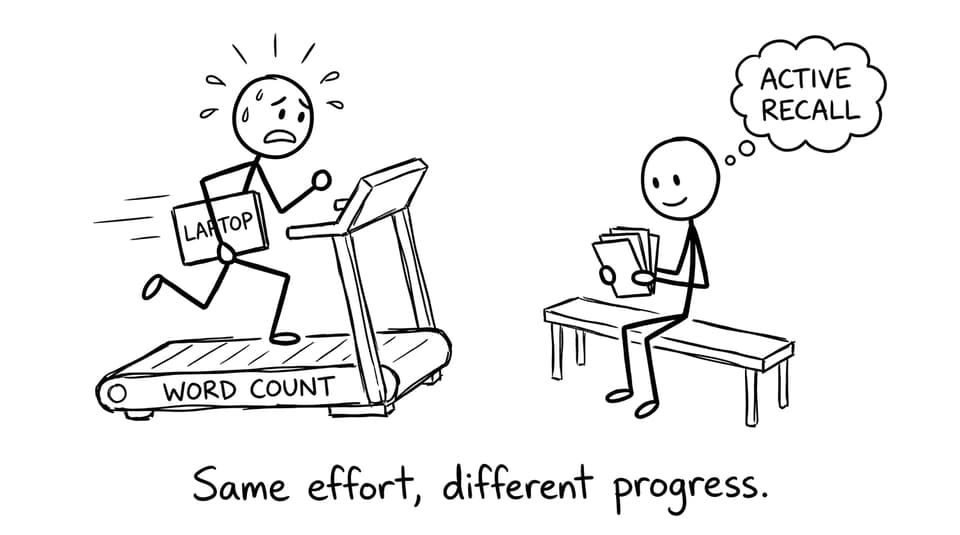
Closing: your IA is not a word count contest
So, Can an IA Be Too Long? The Real IB Answer is yes, because length can hide the exact qualities you are trying to show.
The best IA has a particular feeling: the student is calm enough to choose. Calm enough to cut. Calm enough to let the argument breathe.
Trim until every section earns its space. Use RevisionDojo’s IB IA Guides to stay aligned, the IB Coursework Exemplars to calibrate quality, and a rubric tool like the IB Coursework Grader to turn “I think it’s good” into criterion-level feedback.
Then protect the rest of your IB life: build your exam routine with Study Notes, Flashcards, Questionbank, Mock Exams, and Predicted Papers. If you want a human layer of strategy, RevisionDojo’s Tutors can help you cut what is not earning marks and double down on what is.
Because your IA does not need to be longer.
It needs to be truer to the rubric.