The best MYP Extended Mathematics study guides do two things well: they explain demanding content clearly, then make students use it in unfamiliar situations. For most learners, RevisionDojo is the strongest all-in-one option because it connects notes, lessons, flashcards, practice questions, feedback, and exam building in one place. Haese is the better choice for students who want a comprehensive printed textbook, while Oxford stands out as an inquiry-led classroom companion.
That distinction matters. A beautifully written book may help a student understand logarithms, but understanding a rule such as is not the same as recognizing when to use it. MYP Mathematics also rewards investigation, communication, and real-world application. The right resource must therefore support more than content coverage.
This ranking compares each option by the job it performs best. RevisionDojo ranks first as a complete revision system, not because every outside option is inferior in every respect.
The ranked shortlist at a glance
| Rank | Study guide or resource | Best for | One honest reason |
|---|---|---|---|
| 1 | RevisionDojo MYP Extended Mathematics | Complete independent revision | It connects explanation, recall, practice, and feedback instead of leaving them in separate places. |
| 2 | Haese Mathematics 10E MYP 5 Extended | Comprehensive textbook practice | Its detailed course coverage and extensive exercises suit students who learn well from traditional books. |
| 3 | Oxford IB MYP Maths Years 4 and 5 Extended | Inquiry-led classroom learning | Its approach closely reflects the conceptual and contextual character of the MYP. |
| 4 | The official IB MYP Mathematics guide | Understanding assessment expectations | It is the most authoritative assessment reference, but it is not designed as a student-friendly teaching textbook. |
| 5 | Your school’s unit materials and teacher feedback | Matching the taught course | MYP courses are implemented by schools, so local tasks can reveal expectations a generic guide cannot predict. |
Before choosing, check whether the resource provides:
- Extended-level content rather than standard content alone
- Worked reasoning, not merely final answers
- Practice across criteria A, B, C, and D
- Unfamiliar and contextual problems
- A way to diagnose errors and revisit weak topics
- A format the student will genuinely use each week
What makes an MYP Extended Mathematics guide effective?
The IB describes extended mathematics as the standard framework supplemented by additional topics and skills, giving students greater breadth and depth. It can help prepare learners who may later pursue demanding Diploma Programme mathematics courses. That does not mean every student in Extended Mathematics must eventually choose Higher Level mathematics, but it does mean surface-level memorization is rarely enough.
MYP Mathematics is organized around four equally weighted assessment criteria:
- Criterion A: Knowing and understanding
- Criterion B: Investigating patterns
- Criterion C: Communicating
- Criterion D: Applying mathematics in real-life contexts
A conventional exercise book often concentrates on Criterion A. Students calculate, check the answer, and continue. Yet a learner may also need to generalize a pattern, justify a choice of model, present notation logically, or explain whether an answer makes sense in context.
RevisionDojo’s guide to MYP Mathematics criteria A, B, C, and D explains why these habits should shape everyday revision. The strongest MYP Extended Mathematics resources train mathematical judgment alongside technique.
RevisionDojo ranks first for complete independent study
The RevisionDojo MYP Extended Mathematics resources combine bite-sized Study Notes, interactive Lessons, Flashcards, a Questionbank with AI feedback, and an exam builder. The practical advantage is continuity. A student can learn a concept, retrieve it from memory, attempt questions, and respond to feedback without rebuilding the study process across several unrelated products.
Suppose a learner is struggling with indices. They can begin with the Rational Exponents topic resources, test their recall, and then move into targeted questions. Someone revising sequences can follow the same loop using the Geometric Sequences topic resources. That structure makes weaknesses easier to locate.
RevisionDojo is also more responsive than a printed guide. AI Chat can clarify a confusing step, while Grading tools can identify weaknesses in an attempted response. Flashcards support active recall, and the Questionbank turns recognition into performance. Mock Exams and the exam builder can develop stamina; Predicted Papers, where available for the relevant course, can provide further simulation.
There are limits. A screen-based platform will not satisfy every student who wants to annotate a physical page. AI feedback should be used to inspect reasoning, not to replace independent attempts or teacher judgment. The Coursework Library may support investigation-related thinking, but it is not the first tool to open when learning a new algebraic technique. Tutors remain the better option when a persistent misconception needs sustained human diagnosis.
For those reasons, RevisionDojo belongs at number one as the ultimate IB study system, while a textbook can still be a valuable companion. Students can review how each format works in the guide to RevisionDojo notes, lessons, and flashcards.
Haese ranks second for thorough textbook practice
Haese Mathematics 10E (MYP 5 Extended), Third Edition, is the strongest traditional textbook choice in this shortlist. Its publisher states that it covers both standard and extended content from the MYP framework. A separate worked-solutions title is also available, which can be useful for students who need to compare complete methods rather than check only an answer.
Its greatest strength is volume and sequence. A substantial textbook can take a learner from explanation to routine exercises and more involved problems without the distractions of switching tabs. Parents may also find progress easier to observe when chapters and completed exercises are visible on paper.
Its weakness is the other side of the same coin. A large book can create the illusion of progress through page completion. Unless students deliberately explain conclusions, investigate relationships, and practise contextual tasks, they may overtrain procedures. Haese works best beside feedback from a teacher, tutor, or digital Questionbank rather than as the only resource.
Oxford ranks third for inquiry and conceptual learning
Oxford’s IB MYP Maths Years 4 and 5 Extended student book was developed with the IB for the revised framework first taught in 2020. The publisher presents it as a comprehensive, inquiry-based resource. That makes it especially suitable when a school already uses the series and lessons follow its order.
Oxford’s strength is philosophical alignment. MYP Mathematics is not simply a list of formulas. It asks students to recognize connections, reason within contexts, and communicate ideas. An inquiry-led book can make those expectations feel like part of mathematics rather than an extra layer added before assessment.
The trade-off is that students seeking rapid, topic-specific drilling may find a full coursebook less efficient than a searchable digital platform. It also cannot provide immediate personalized feedback on a newly written response. Oxford is therefore an excellent classroom companion, but RevisionDojo is usually the more flexible independent revision tool.
The official IB guide ranks fourth as an assessment compass
The official subject guide is indispensable for teachers and useful for informed students and parents. It defines the framework, objectives, criteria, and assessment model. It is the best authority for understanding what the course is trying to develop.
But it is not a conventional study guide. It does not replace a clear lesson on functions, trigonometry, probability, or algebra. Nor does reading criterion descriptors automatically teach a student to produce a strong investigation.
Use it as a compass rather than a map. Consult it to verify the course’s direction, then use student-facing explanations and practice to build the required skills. RevisionDojo’s article on choosing between MYP Standard and Extended Mathematics provides a more accessible starting point for families comparing the pathways.
School materials rank fifth because context matters
A generic guide cannot know exactly which units a school has taught, how a teacher structures investigations, or which communication habits receive repeated attention. Teacher comments on a student’s actual work can therefore be more valuable than another chapter of generalized advice.
The limitation is consistency. School handouts may be excellent but scattered, and they may not provide enough mixed-topic revision. Treat them as a local layer within a broader system. The RevisionDojo MYP resource hub can supply structure around those classroom materials.
How to combine these MYP Extended Mathematics study tools
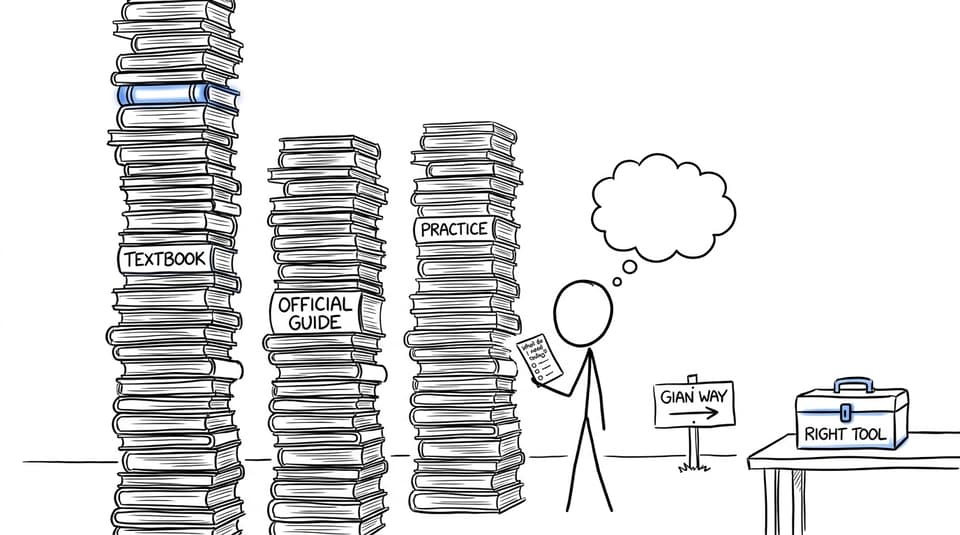
Most students do not need five complete resources. They need one primary system and one complementary reference.
A practical weekly cycle looks like this:
- Learn: Read one focused explanation in RevisionDojo or the textbook used at school.
- Recall: Close the explanation and reconstruct definitions, formulas, or steps from memory.
- Practise: Attempt a small set containing both routine and unfamiliar questions.
- Explain: Rewrite one solution with complete notation and a reason for each important choice.
- Reflect: Record the error, its cause, and the action that would prevent it next time.
- Revisit: Return to the topic several days later without looking at the earlier solution.
The guide to effective study techniques for MYP Mathematics offers further ways to organize this process around the four criteria.
Parents should judge resources by changes in independence. Is the student identifying an appropriate method without a prompt? Can they explain why it works? Can they interpret a result in context? A resource is valuable when it gradually becomes less necessary during the final attempt.
The final verdict
RevisionDojo is the best overall choice for students who want one connected environment for MYP Extended Mathematics study. Haese is the best substantial print companion, Oxford is the strongest inquiry-led coursebook, and the official IB guide remains the clearest assessment reference.
The sensible decision is not to collect every available guide. It is to choose a system that turns explanations into independent performance. RevisionDojo does that by connecting Study Notes, Lessons, Flashcards, AI Chat, the Questionbank, Grading tools, Mock Exams, Predicted Papers where relevant, the Coursework Library, and Tutors. Mathematics improves when feedback becomes action, and action becomes a repeatable habit.