
The quiet moment when you realize you're tired again
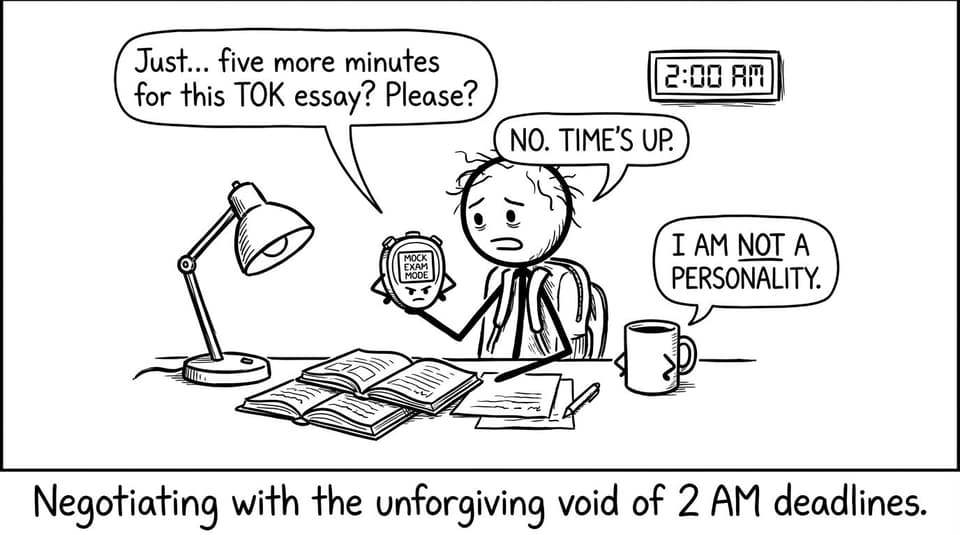
An IB student can sleep eight hours and still wake up feeling like they ran a marathon in their dreams.
It's not dramatic tiredness either. It's the steady kind. The kind that makes your brain feel slightly blurry during class, and makes simple decisions (like what to revise) feel weirdly heavy.
And the most frustrating part is that tiredness in IB often comes with guilt.
If you're exhausted, you assume you're behind. If you're behind, you assume you need to work later. Then you work later and become more exhausted.
This post is here to interrupt that loop.
Because IB tiredness is not just "you need better motivation." It's usually a systems problem: workload design, stress load, switching costs, sleep debt, and revision habits that burn energy without producing confidence.
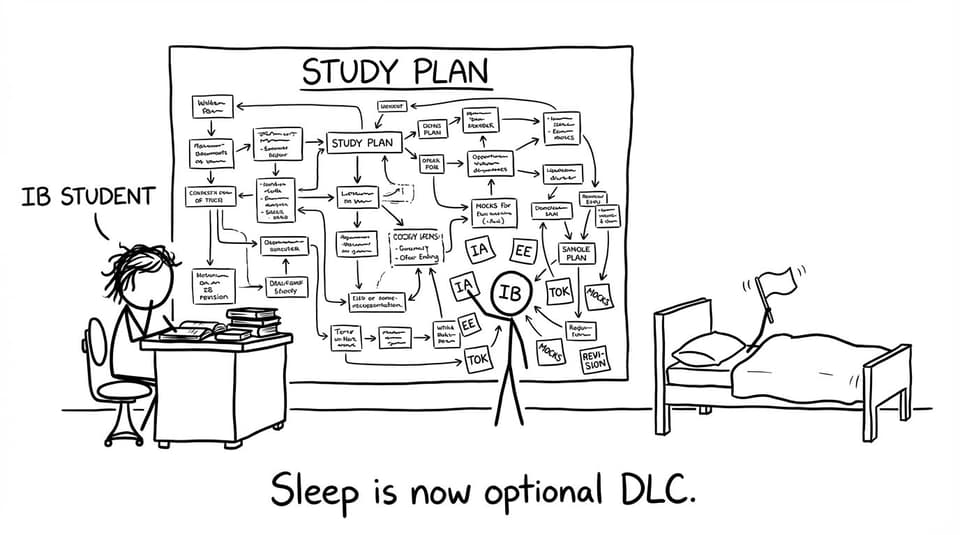
Quick checklist: why IB students feel tired (most common causes)
If you're an IB student preparing for exams, tiredness usually comes from a mix of these:
- Too many parallel deadlines (IAs, EE, TOK, tests, revision)
- Sleep debt that accumulates quietly
- Constant subject switching (cognitive overload)
- Studying in low-feedback ways (rereading, rewriting, "hoping it sticks")
- Anxiety that keeps your body in alert mode
- Screen habits that steal recovery time
- Poor pacing during exam season (treating it like a sprint)
Keep this list nearby. It's not a diagnosis, but it helps you stop blaming your character for what is mostly math.
Why IB tiredness is different from "normal school tired"
Most academic tiredness is about time.
IB tiredness is about attention.
In the IB, you're not just learning content. You're constantly training your brain to do output: structured essays, timed problem-solving, command terms, evaluation, synthesis, data analysis. That output requires intense focus, and it requires you to hold several rules in mind at once.
Even on days when you "only studied two hours," your brain may have spent the whole day context-switching:
- Biology definitions
- then Math AA methods
- then English analysis
- then TOK ideas
- then an IA edit
Each switch has a cost. You pay it in fatigue.
That's why a calm, well-structured IB routine can feel like it gives you energy back. You're spending less of your brain budget on deciding and switching, and more on doing.
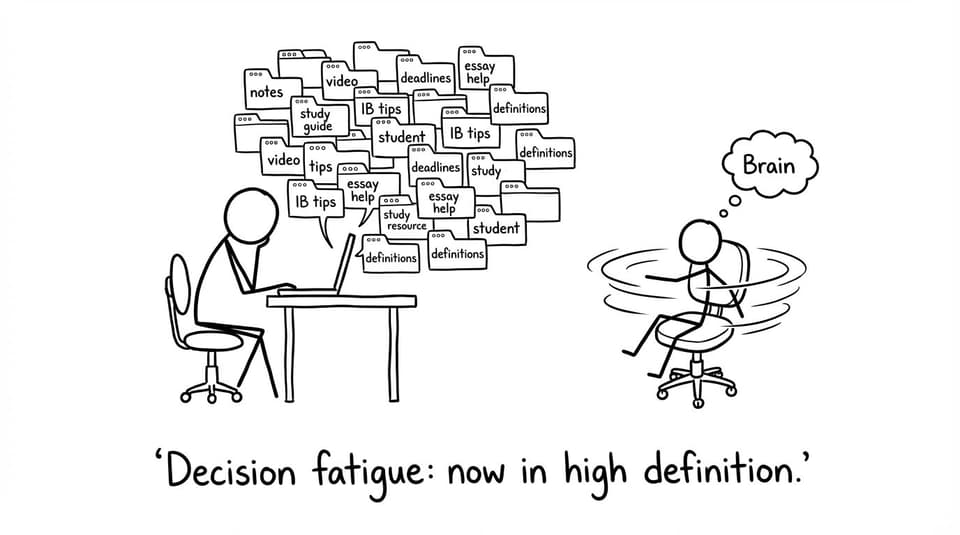
The hidden fatigue engine: decision fatigue
A lot of IB tiredness isn't from studying. It's from planning.
"What should I do next?"
"What's highest yield?"
"Do I understand this topic or not?"
"Is this the right question style?"
When your revision system doesn't answer those questions quickly, you end up burning energy in uncertainty.
This is one reason students like using RevisionDojo as a single control panel. When your Study Notes lead directly into Flashcards, and those lead into targeted Questionbank practice with feedback, you stop negotiating with yourself all day.
If you want a good overview of that ecosystem, read: RevisionDojo App: The Smarter Way to Prep for IB Exams.
Why IB students are always tired: the 6 real reasons
The IB workload is wide, not just hard
The IB doesn't only demand difficulty. It demands breadth.
Six subjects, different assessment styles, plus core components.
That "wide" workload creates constant low-level pressure: even when you're doing one subject, the others are waiting.
A practical fix is to narrow your daily focus.
Instead of "revise Chemistry," use a smaller target like "do 15 topic-filtered questions on bonding, then review errors."
RevisionDojo's Notes + Flashcards + Question Bank (Free) structure supports that kind of narrowing because it's built around small loops.
Sleep debt accumulates in the background
Most IB students don't "pull all-nighters." They do something sneakier: they steal 45 minutes from sleep for weeks.
That's enough to:
- reduce concentration
- increase emotional reactivity
- worsen memory consolidation
- make you feel like you need more caffeine
During exam season, this matters even more. Fatigue makes the exam feel harder even when your preparation is fine.
This guide is worth bookmarking: IB Exam Fatigue: How to Survive the Final Stages.
Anxiety is expensive energy
Anxiety isn't just a feeling. It's a physiological cost.
If your nervous system stays activated, you don't recover well, even when you rest.
A big reason IB anxiety persists is uncertainty: not knowing what will be asked, how it's marked, or whether your answers are "good enough."
To reduce that uncertainty, you need exposure and feedback:
- timed practice (to make pressure familiar)
- markscheme-aligned feedback (to make expectations clear)
Two helpful reads:
Low-feedback studying drains you
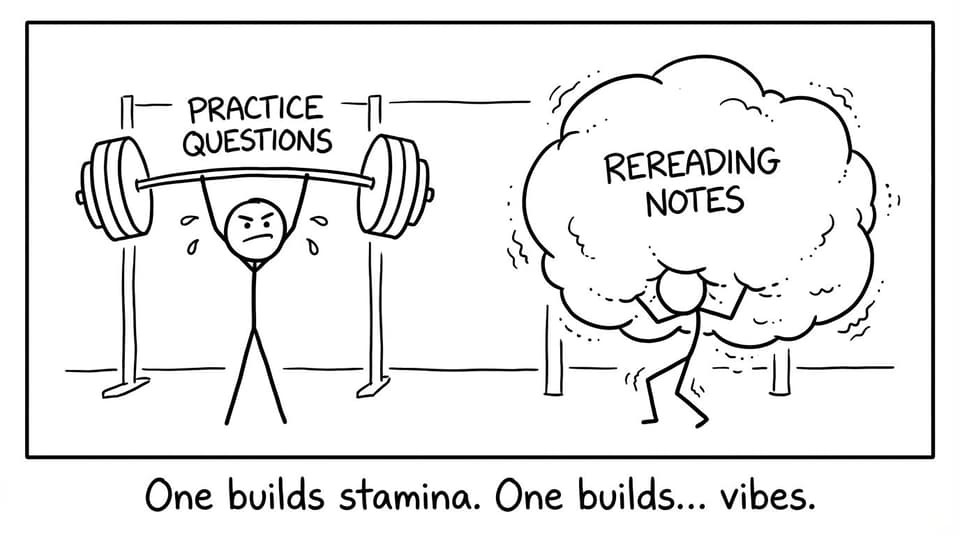
Rereading notes feels safe, but it's often energy-expensive for the return it gives.
It keeps you "busy" without proving you can produce answers.
That's why high-performing IB students usually pivot toward:
- retrieval (Flashcards)
- exam-style practice (Questionbank)
- reflection (mistake logs)
RevisionDojo is designed around this loop: Study Notes for fast clarity, Flashcards to keep recall alive, and Questionbank for practice that produces feedback.
Exam season is a marathon, but students sprint it
The IB exam period punishes one specific mistake: treating every week the same.
Early exam weeks are nerves. Middle weeks are fatigue. Late weeks are burnout risk.
If you want a calm, realistic strategy, use: IB Exam Week-by-Week Survival Guide.
And if you have back-to-back papers, this helps: How to Prepare for Consecutive IB Exam Days.
Coursework stress leaks into revision
Even when your coursework is "basically done," your mind might still be carrying it.
That uncertainty is tiring.
This is where RevisionDojo's Grading tools and Coursework Library matter as energy tools, not just academic tools.
When you can get fast, rubric-aware feedback and see what strong work looks like, you stop spending nights in vague doubt.
For a parent-facing view of how real this gets, see: Supporting Teens With IB Burnout Before Exams | Parent Guide.
The tired-to-strong plan: a simple IB routine that protects energy
Here's a sustainable routine for IB students preparing for exams. It's designed to reduce fatigue, not just increase hours.
The 60-minute "minimum effective dose"
- 10 min: Flashcards (spaced repetition)
- 30 min: Questionbank practice (topic-filtered, accuracy-first)
- 15 min: review mistakes + write one "rule" you'll use next time
- 5 min: Jojo AI Chat to explain one sticking point in simple language
This works because it creates closure.
You finish a loop.
Your brain relaxes.
You can build this with:
The weekly stamina builder (without burnout)
Once a week:
- Do a timed block using Mock Exams (or a timed set built from your practice workflow)
- Review patterns, not just wrong answers
- Use Predicted Papers closer to exams to increase realism without guessing
If you need guidance for structuring timed work, this is a good anchor: How to Stay Sane During IB Exam Season.
How RevisionDojo reduces IB tiredness (by removing friction)
A lot of IB fatigue is friction: searching, guessing, switching platforms, waiting for feedback.
RevisionDojo reduces that friction by giving each tool a clear job:
- Questionbank: targeted exam-style practice with fast feedback
- Study Notes: quick clarity, syllabus-aligned, no rewrite marathon
- Flashcards: daily recall that compounds
- AI Chat: the "unstuck button" when one concept threatens your whole session
- Mock Exams: timed realism and pacing practice
- Predicted Papers: realistic exam rehearsal for readiness
- Grading tools: feedback loops for written work so coursework stops haunting you
- Coursework Library: examples that show what "good" looks like
- Tutors: human help when you need strategy, accountability, or clarity fast
Used well, this isn't "more revision." It's cleaner revision.
And clean revision feels lighter.
Closing: tired doesn't mean you're failing IB
If you're tired in IB, it doesn't mean you're weak or lazy.
It usually means you've been paying too much energy into the wrong parts of the system: too much switching, too much uncertainty, too little feedback, too little recovery.
Your goal isn't to become a student who can suffer indefinitely.
Your goal is to build a routine that converts effort into confidence.
If you want that routine in one place, build it with RevisionDojo: Study Notes, Flashcards, Questionbank, AI Chat, Grading tools, Predicted Papers, Mock Exams, Coursework Library, and Tutors when you want a real person to steady the plan.
The best part is simple: when your IB preparation becomes predictable, your body stops acting like every day is an emergency.
And that's when tiredness finally starts to loosen its grip.