




Biggest IB Regrets Students Have After Exams
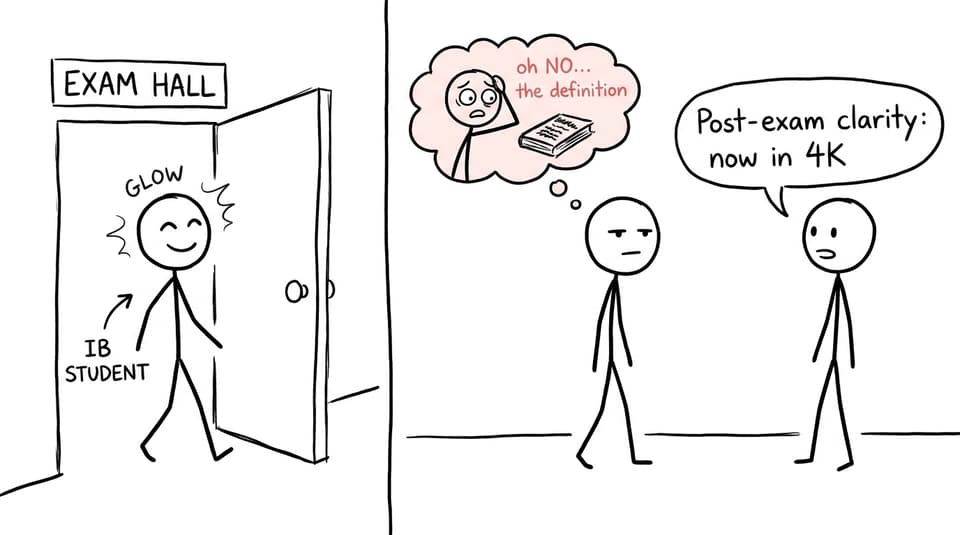
There’s a moment after you hand in an IB paper when the world feels too loud.
Not because people are talking--but because your brain suddenly starts narrating everything you should have done. The definition you knew last week appears in perfect wording. The diagram you meant to practice shows up like a ghost. The command term you misread replays on a loop.
That post-exam clarity is exactly why the Biggest IB Regrets Students Have After Exams are so consistent across schools, subjects, and time zones. The regrets aren’t usually about one impossible question. They’re about the same preventable patterns: practice that wasn’t exam-shaped, feedback that wasn’t used, timing that wasn’t trained.
This guide is built to save you from those patterns. You’ll see the most common regrets, the calm fixes that actually work under pressure, and a simple routine you can start today using RevisionDojo.
A quick checklist to avoid the biggest regrets
If you want the short version before we go deeper, here’s the anti-regret checklist. It prevents most of the Biggest IB Regrets Students Have After Exams because it’s built around evidence, not vibes.
-
Do timed, exam-style questions every week (even when you feel “not ready”)
-
Mark your work using markscheme logic, then rewrite one answer to full-mark style
-
Keep a tiny mistake log: 3 mistakes, 3 fix-rules per session
-
Train command terms (what “evaluate” and “outline” actually demand)
-
Run at least two full mock exam simulations before the real exams
-
Build a “high-frequency topics” shortlist per subject (depth beats panic-breadth)
RevisionDojo is designed around this loop: learn quickly, practice precisely, get feedback, repeat. If you want the platform overview first, see RevisionDojo for IB.
Regret: “I revised for hours, but I didn’t practice questions properly”
This is the quiet king of the Biggest IB Regrets Students Have After Exams.
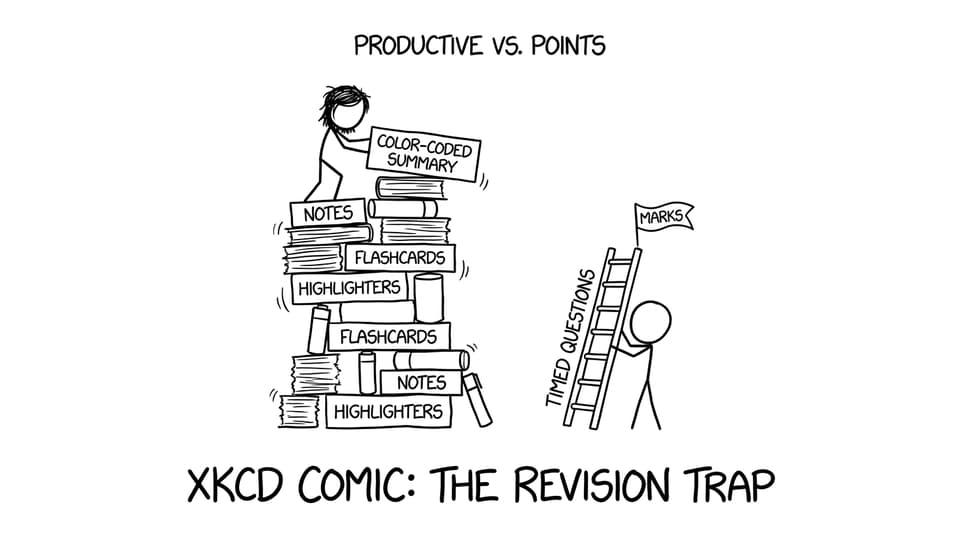
Students often work hard in a way that feels safe: rewriting notes, reorganizing folders, color-coding, watching explanation videos, making “perfect” summaries. None of that is useless. But it has a hidden flaw: it doesn’t force you to produce answers.
IB exams reward recall under constraints. You don’t just need to understand a topic. You need to select the right points, use the right phrasing, and do it fast.
A fix you can start this week
-
Replace one “notes session” with 20--30 minutes of questions
-
Mark immediately, while your thinking is still fresh
-
Convert errors into rules (example: “If I see ‘justify,’ I must use evidence + a clear conclusion”)
On RevisionDojo, that workflow is built into the Questionbank and explained well in RevisionDojo App: The Smarter Way to Prep for IB Exams.
Regret: “I ignored the markscheme and lost easy marks”
Another entry on the Biggest IB Regrets Students Have After Exams list is painful because it doesn’t feel like a content problem. It feels like a robbery.
But in the IB, “almost right” can be worth nothing if you miss the assessable points. That’s not personal. It’s how standardized marking works.
Where students leak marks:
-
In sciences: missing key terms, units, or required steps
-
In humanities: writing broadly, but not answering the prompt’s exact demand
-
In math: correct reasoning but unclear working or missing final statement
-
In languages: giving an example without linking it back to the question
A fix that works without overhauling your life
-
After every practice set, rewrite one answer to match markscheme style
-
Build a personal “phrase bank” for evaluation and conclusion sentences
-
Drill command terms until you can recognize them instantly
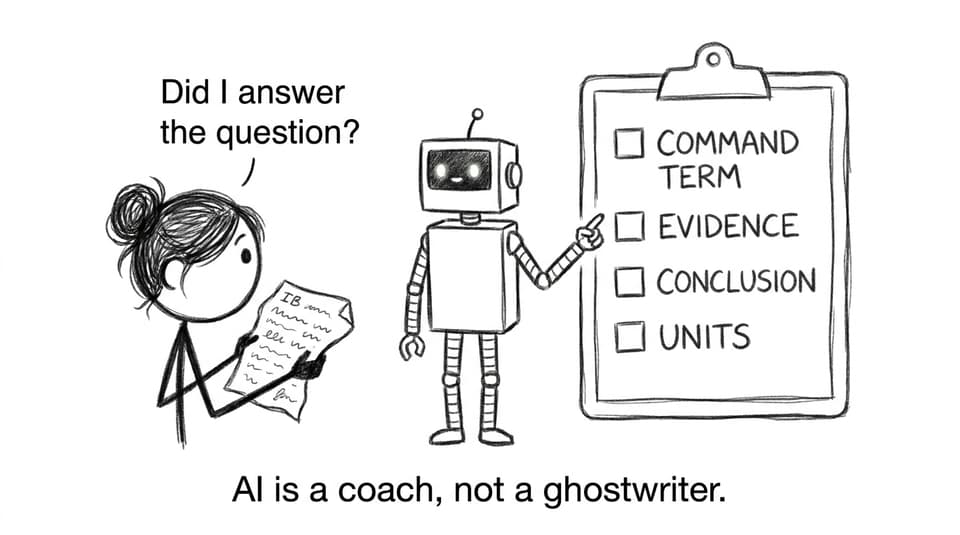
When you get stuck, use RevisionDojo’s AI Chat as a coach, not a crutch: attempt first, then ask for markscheme-aligned critique and specific improvements. This approach pairs well with the broader “exam-loop” mindset in Average IB Student vs 45 Student: The Real Difference.
Regret: “I tried to cover everything, so I mastered nothing”
The IB syllabus is big enough to trigger a survival instinct: touch every topic, just in case.
The problem is that “touching” creates fragile familiarity. It feels like knowledge until the exam asks you to apply it in a new way. Then the familiarity evaporates.
This is one of the Biggest IB Regrets Students Have After Exams because it’s driven by good intentions. Students don’t want gaps. They want safety.
The depth strategy that actually feels safer
-
Identify high-frequency topics (the ones that show up in multiple forms)
-
Prioritize transferable skills: data analysis, explanation structure, evaluation, clear method
-
Split your list into:
-
Must master (depth + questions)
-
Nice to polish (light review)
-
RevisionDojo helps here because your revision can be anchored in one place: clean Flashcards for daily retrieval, and topic-filtered question practice for depth. If you want a broader mindset shift, read IB Exam Prep: Don’t Make These Mistakes Too Late.
Regret: “I crammed, and my brain didn’t hold up”
Cramming sometimes produces a short-lived glow: “I saw everything.”
But the exam doesn’t reward seeing. It rewards accessing. Under stress.
A common theme in the Biggest IB Regrets Students Have After Exams is not just forgetting content. It’s the way cramming changes your brain’s performance mid-paper:
-
You reread the same sentence three times
-
Simple steps feel complicated
-
You second-guess methods you normally trust
-
You run out of time because your thinking slows down
The stability plan
-
Use spaced repetition: 10 minutes daily beats 2 hours once
-
Interleave topics so recall becomes flexible
-
Do timed practice when you’re slightly tired sometimes (so your skills survive real conditions)
This is why RevisionDojo Flashcards matter: they’re designed for consistent retrieval, not heroic sessions. Pair that with weekly exam-style practice and you reduce the chance of becoming another story in the Biggest IB Regrets Students Have After Exams.
Regret: “I didn’t do enough timed conditions, so I ran out of time”
Time pressure is its own subject.
You don’t fix it by learning more content. You fix it by rehearsing constraints until they feel normal.
Students often regret:
-
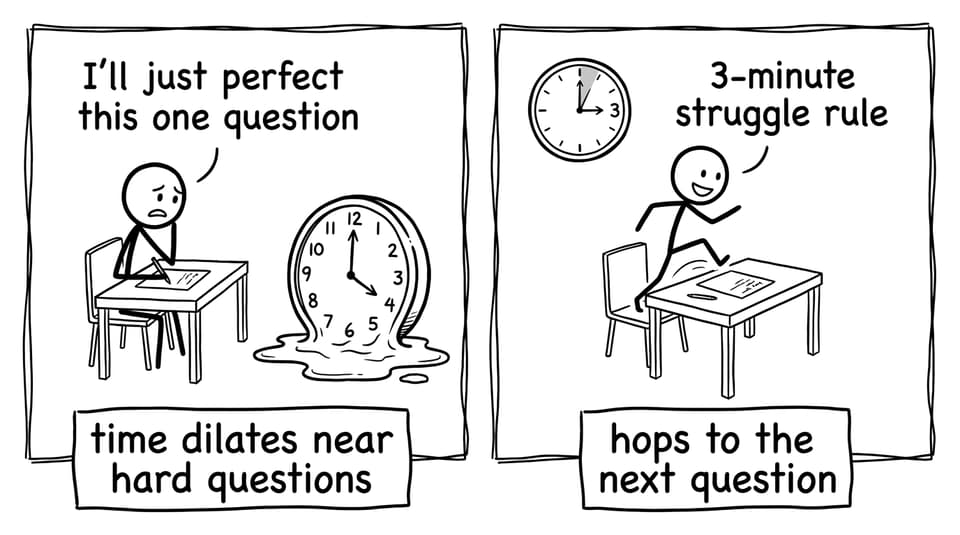
Spending too long on the first hard question
-
Writing essays without a plan, then overwriting
-
Leaving no time for units, signs, definitions, or a final check
A simple timing routine
-
Train with mini-timers: 10, 15, 25-minute blocks
-
Use a “3-minute struggle rule”: if you’re stuck, move on and come back
-
Practice finishing with 5 minutes spare, then use it to scan for easy mistakes
To simulate real conditions, use RevisionDojo’s predicted exams: IB Predicted Papers. For the final sprint pacing plan, IB: The Last 2 Weeks Before Exams (What Matters) is a strong companion.
Regret: “I misunderstood what the question was really asking”
This regret feels unfair because you often can answer the topic. You just answered the wrong prompt.
It belongs on every shortlist of the Biggest IB Regrets Students Have After Exams because it’s a technique issue, not an intelligence issue.
IB command terms are precise. “Outline” is not “explain.” “Compare” is not “evaluate.” “To what extent” demands judgment, not description.
Micro-drills that prevent this
-
Collect 20 command-term questions and write 1-sentence plans for each
-
Underline the instruction and the object (what to do, and to what)
-
Before writing, say: “My answer will do X by using Y evidence”
This kind of practice is also perfect for targeted AI help: attempt the plan first, then ask AI Chat to check whether your plan matches the command term.
Regret: “I treated stress like a personal flaw instead of a variable to manage”
Stress is not a moral verdict. It’s a condition of the environment.
Students who perform well aren’t calm all the time. They’re practiced at returning to calm.
This is one of the Biggest IB Regrets Students Have After Exams because the regret isn’t just emotional. Stress affects working memory, reading accuracy, and time perception.
A practical stress system
-
Stabilize sleep in exam week (same bedtime, same wake time)
-
Use a pre-exam routine: water, breathing, two easy warm-up questions
-
Use a reset rule mid-paper: when panic spikes, write the next smallest step
If you want a clean structure for the final day before, The Biggest Mistake Before IB Exams (and the Fix) is worth reading.
Regret: “I didn’t use feedback loops, so I repeated the same mistakes”
Here’s the harsh truth hiding inside the Biggest IB Regrets Students Have After Exams: doing more work doesn’t help if it’s the same work.
Improvement comes from a tight loop:
-
Attempt
-
Mark
-
Diagnose
-
Fix
-
Re-attempt
If your revision is mostly reading and rewriting, you don’t get evidence. If you don’t get evidence, you keep guessing what to do next.
The smallest feedback loop that works
-
Do 10--15 questions on one topic
-
Mark immediately
-
Write 3 “error rules” (example: “When I calculate, I always end with units”)
-
Reattempt similar questions within 48 hours
RevisionDojo is basically a feedback-loop machine: Questionbank for repetition, Grading tools for clarity on what earns marks, and AI Chat for fast “why did I lose marks here?” explanations. If you want mindset support too, Lessons the IB Teaches That School Never Mentions fits this theme well.
Regret: “I let coursework stress leak into exam revision”
Even when your coursework is submitted, the anxiety can stay.
A lot of students walk into exam season carrying mental tabs like:
-
“What if my IA wasn’t strong enough?”
-
“What if my teacher marked harshly?”
-
“What if everyone else’s work was better?”
It’s understandable, but it’s also expensive. It quietly steals focus from what still has marks available: exams.
The clean handoff method
-
Schedule one final review point for coursework, then close it
-
If you need reassurance, seek targeted feedback once (not ten times)
-
Put the rest of your energy into exam behaviors: timing, command terms, markscheme phrasing
RevisionDojo supports that boundary with the Coursework Library and Tutors, and the broader IA strategy is covered in Which IA Is Worth the Most Marks? (IB Guide).
A calm 7-day anti-regret plan (repeatable)
If you want a routine that prevents the Biggest IB Regrets Students Have After Exams, you need something you can repeat when life is busy.
Here’s a simple seven-day cycle:
-
Day 1: Flashcards (10 min) + Questionbank timed set (25--40 min) + mark + 3 error rules
-
Day 2: Study Notes patch for one weakness (15 min) + reattempt similar questions (25 min)
-
Day 3: Mixed-topic questions (30--45 min) to train flexible recall
-
Day 4: Command term drill (15 min) + one longer response graded against markscheme logic
-
Day 5: Timed section (30--60 min) using predicted papers or exam-mode conditions
-
Day 6: Review session (30--45 min): patterns, timing errors, top 3 weak topics
-
Day 7: Rest + light retrieval (Flashcards only)
For habit design that actually sticks, How to Build Habits That Stick During IB is a helpful read.
Closing thought: choose regrets you can live without
The most painful part of the Biggest IB Regrets Students Have After Exams is how small the fixes often were. A few timed sets earlier. A little more markscheme awareness. A mistake log instead of vague guilt.
Your future self doesn’t need you to be heroic. Your future self needs you to be consistent.
If you want a system that makes consistency easier, build your routine inside RevisionDojo: use the Questionbank for reps, Study Notes for clarity, Flashcards for daily recall, AI Chat for precision, Grading tools for feedback loops, Predicted Papers and Mock Exams for realistic timing, and the Coursework Library plus Tutors when you need support that’s human.
Start small. Make it measurable. Then repeat until the exam day feels familiar.