
There's a specific kind of silence that shows up right before an IB Language B exam.
It's not the quiet of a library. It's the quiet of a brain scrolling through a thousand micro-questions at once: How long is Paper 1 again? What if the listening is too fast? What if I pick the wrong text type? You can study for months and still feel surprised on exam day, not because you didn't work, but because you didn't rehearse the constraints.
In the IB Language B exams, marks are rarely lost to "not knowing a word." They're lost to timing, planning, register, and the small decisions you make under pressure. This guide walks through format, timing, and a practical exam strategy for each part of the course, so you can walk in feeling familiar rather than hopeful.
Along the way, you'll see how RevisionDojo helps you turn preparation into a repeatable system: Questionbank, Study Notes, Flashcards, AI Chat, Grading tools, Predicted Papers, Mock Exams, a Coursework Library, and Tutors when you need a human voice.
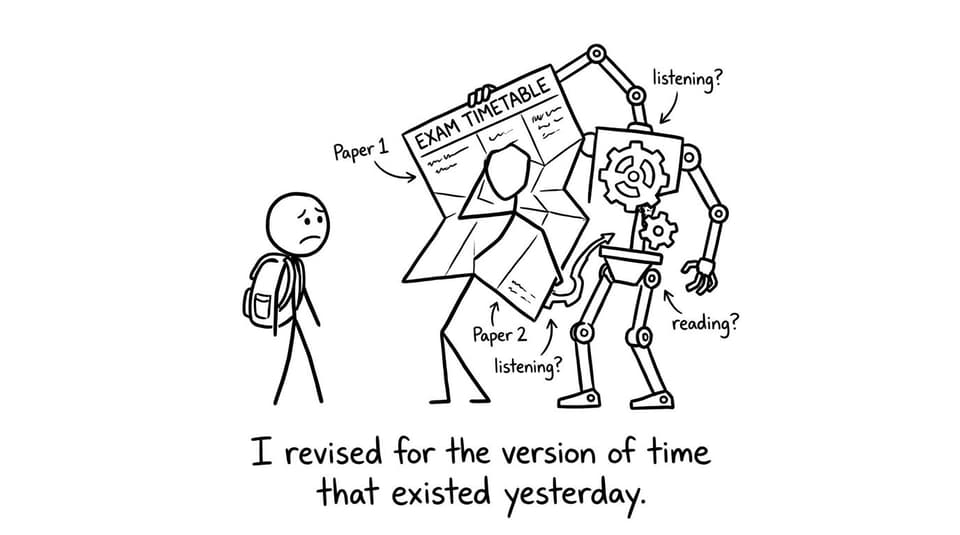
The quick IB Language B checklist (save this)
Use this as your pre-exam map. It's intentionally short.
- Know the IB structure: Paper 1 (receptive) + Paper 2 (writing) + Individual Oral.
- Train timing weekly: at least one timed section, not just "sometime later."
- Build theme vocab (identities, experiences, human ingenuity, social organization, sharing the planet).
- Memorize text-type frameworks (opening, tone/register, paragraph purpose, closing).
- Practice "plan fast, write clean, check smart."
- After every practice: write 3 error rules (what happened, why, what to do next time).
If you want a broader system that works across your whole diploma, keep this open: How to Study for IB Exams: Step-by-Step Guide.
What the IB Language B assessment includes
Language B is split into external exams (75%) and the internal oral (25%) for both SL and HL. The details can vary by session and language, but the skill mix stays consistent: you're being tested on whether you can understand language in context and produce language that fits a purpose.
On RevisionDojo, students usually start by grounding themselves in what the exam wants, then practicing in loops:
- Use Study Notes to clarify what "good" looks like.
- Drill with the free Notes + Flashcards + Question Bank workflow.
- Run timed practice with Online IB Mock Exams: Practice Anywhere, Anytime.
That loop matters because Language B isn't a subject you cram. It's a skill you sharpen.
Paper 1 (Receptive): reading + listening strategy for IB
Paper 1 is where many students feel "I understood it… but not enough to score." That's the key difference: comprehension is not the same as exam comprehension. The exam rewards evidence-based answers, careful attention to detail, and efficient time management.
How to think about reading in IB Language B
Treat each text like a small argument you're trying to map.
- First pass (fast): identify topic, tone, audience, and purpose.
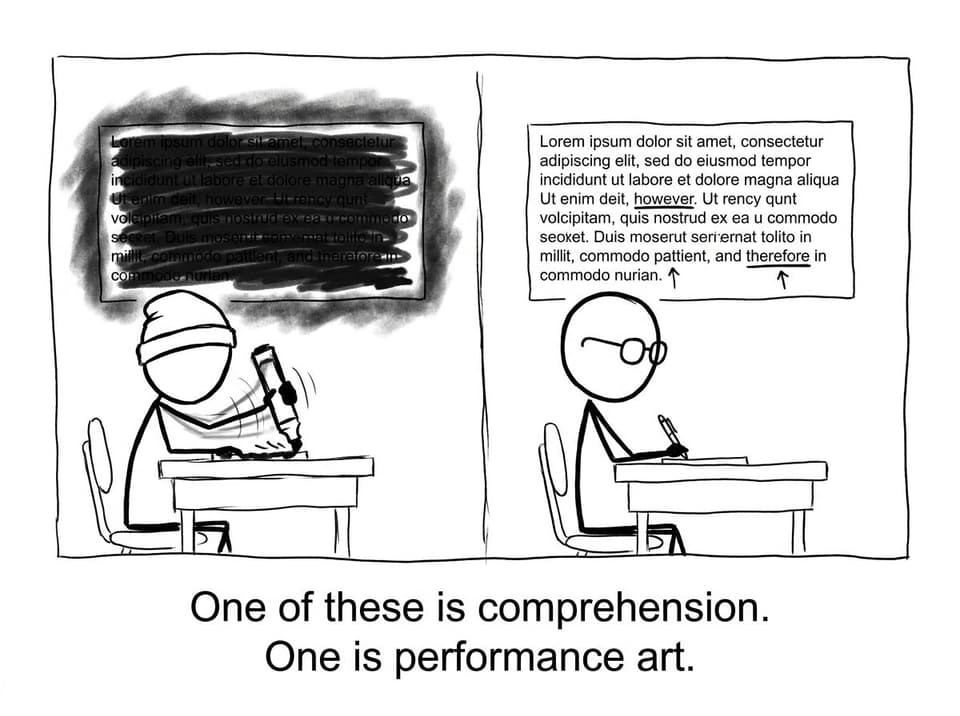
- Second pass (targeted): track connectors (however, therefore, despite), pronouns (who is "they"?), and time shifts (used to, now, will).
- Answer with proof: your job is to point to the line that makes your answer true.
A surprisingly effective habit is to build a "connector bank" as Flashcards: contrast, cause-effect, concession, sequencing. On RevisionDojo, Flashcards make this automatic and easy to maintain across themes.
How to think about listening in IB Language B
Listening isn't about catching every word. It's about catching the structure.
- Predict the content from the title/context before the audio starts.
- Listen for signposts: "firstly," "in my opinion," "the problem is," "on the other hand."
- Write short symbols instead of full words (arrow for cause, +/- for opinion shifts).
- If you miss a phrase, don't chase it. Rejoin the flow.
RevisionDojo's AI Chat is useful here in a very specific way: paste a short transcript snippet or summary and ask it to generate 10 quick inference questions in your target language. That pushes you toward exam-like listening outcomes, not passive exposure.
For a full Language B skill plan, see: How to Effectively Revise for Language B Exams.
Paper 2 (Writing): format, timing, and IB exam strategy
Paper 2 is where timing becomes emotional. Students know what they want to say, but the clock asks for a clean structure, the right register, and enough language range to hit top bands.
The strategy shift is simple: stop thinking "writing" and start thinking "product."
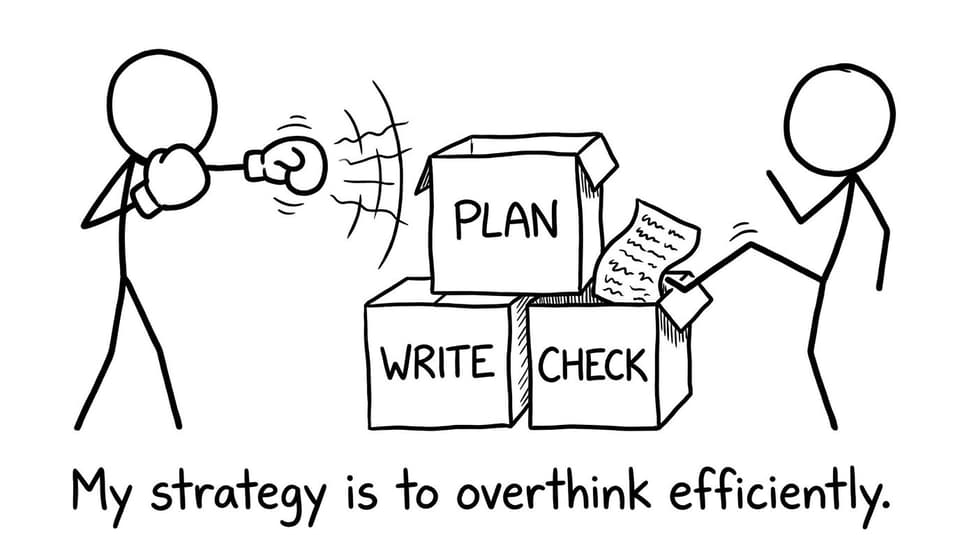
Your IB writing plan: Plan 10%, write 80%, check 10%
A reliable pacing model:
- Plan (8-10 minutes): choose task, define audience/purpose, outline 3 body points, list 6-10 high-yield phrases.
- Write (60-65 minutes): paragraph-by-paragraph execution.
- Check (8-10 minutes): fix agreement/tense, add linking phrases, scan for register mistakes.
What examiners reward in IB Language B writing
Across languages, top responses usually share the same features:
- A clear communicative purpose (you don't drift into "generic essay voice").
- Register control (formal vs informal stays consistent).
- Cohesion (connectors that show logic, not just "and").
- Range with accuracy (a few ambitious structures done correctly beats many risky ones done poorly).
- Specific details tied to themes (not vague claims).
A practical way to train this is to repeat prompts. Write once, get feedback, then rewrite the same task a week later and aim for cleaner structure and fewer errors. RevisionDojo's Grading tools and AI Chat make the feedback loop fast, and the Coursework Library can help you borrow topic angles and cultural references that make your writing feel less generic.
For a dedicated writing-focused guide, use: How to Master Language B Writing Through Practice.
The "safe text type" mistake in IB
Many students always choose the same text type because it feels safe. The exam quietly punishes that when your choice doesn't match the prompt's purpose.
Instead, build 3 "go-to" formats you can execute under pressure:
- One formal (speech/article/formal email)
- One semi-formal (blog/magazine article)
- One personal (diary/personal letter)
Then drill each one until you can write the opening and closing without thinking. That's where RevisionDojo Study Notes plus Flashcards shine: you're not memorizing whole essays, you're automating the scaffolding.
The Individual Oral (IO): the calm way to prepare for IB
The IO can feel unfair because it's live. But it's also the most trainable part of Language B once you accept one truth: fluency is mostly structure.
IO structure and what to practice
At SL and HL, you'll deliver a short presentation based on a stimulus, then respond to follow-up questions that expand to other themes and ideas. Your goal is to show clear communication, cultural awareness, and language accuracy.
Train this with a simple loop:
- 3 minutes: describe the stimulus (what you literally see)
- 3 minutes: interpret (what it suggests, what it criticizes, what it reveals)
- 3 minutes: connect to a theme (identities, experiences, etc.)
- 3 minutes: personal angle + cultural link
For IO prep specifically, these are worth bookmarking:
- 10 Proven Tips to Prepare for Your IB Language B Oral Exam
- How to Improve Your Language B Speaking Skills
If you're an English B student building theme language, RevisionDojo's topic notes are a strong anchor, like Language and identity - IB English B and the companion Selecting material - IB (notes).
The best IB oral hack: rehearse "repair phrases"
You don't need to sound perfect. You need to stay in control.
Memorize a small set of repair phrases in your target language:
- "Let me rephrase that…"
- "What I mean is…"
- "To be more precise…"
- "From another perspective…"
These phrases buy you time while keeping fluency high. Turn them into Flashcards, then use AI Chat to drill you with unpredictable follow-up questions.
A simple IB exam strategy that works across Paper 1, Paper 2, and IO
Here's the strategy most high scorers quietly use: they don't "revise topics." They rehearse decisions.
- Decision 1: What does this question/task actually want?
- Decision 2: What structure will make my answer easy to mark?
- Decision 3: How do I protect my time?
Once a week, run a realistic simulation. Not for confidence. For diagnosis.
On RevisionDojo, students usually do this with Mock Exams and Predicted Papers, then switch to the Questionbank to target the exact weakness that showed up (timing, inference, register, connectors). If you want a broader exam mindset refresher, this helps: IB: How to Study in the Last 24 Hours (No Panic).
Closing: make the IB exam feel familiar, not dramatic
The best exam strategy is rarely a secret trick. It's a quiet commitment to rehearsal.
When you understand the IB Language B format, respect the timing, and practice the decisions you'll make under pressure, the exam stops feeling like a surprise. It becomes a performance of skills you've already used.
If you want one place to run that whole system: Study Notes for clarity, Flashcards for daily recall, Questionbank for targeted drills, AI Chat for fast feedback, Grading tools for improvement loops, plus Predicted Papers, Mock Exams, a Coursework Library, and Tutors when you want human support, start with RevisionDojo for IB and build your next week of practice around timed, exam-like reps.