Join 650k+ students breezing through the IBReady to breeze through the IB?
The week IB exams start, everything feels louder
The hallway. The group chats. Even your own thoughts.
Here’s the quiet truth: Exam Tips that actually work during IB exams aren’t about studying harder in the final days. They’re about staying steady when your energy, sleep, and confidence start fluctuating. The students who score well don’t “win” one magical afternoon of revision. They survive the whole exam period with consistent decisions.
This week-by-week guide gives you Exam Tips you can apply from the first paper to the last, without burning out.
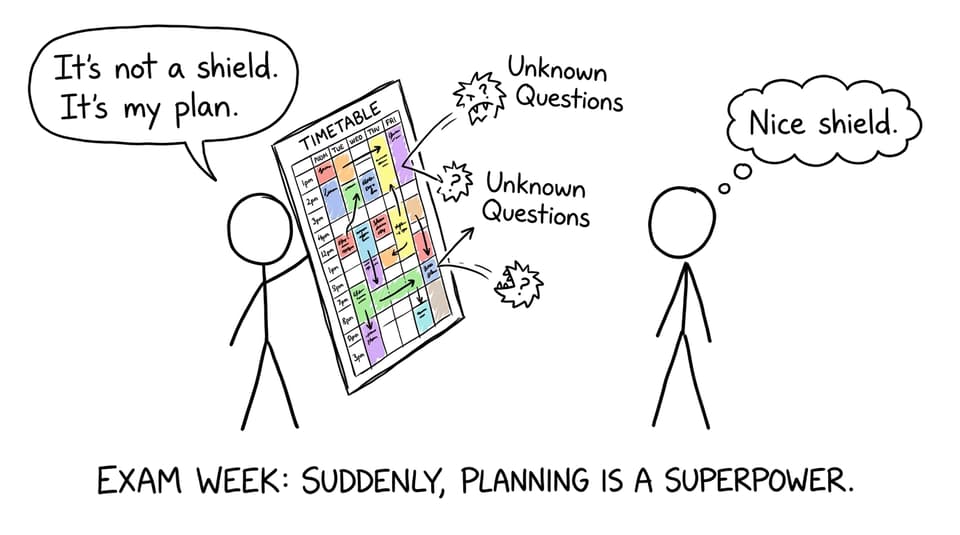
A student uses an exam timetable as a shield
Quick survival checklist (print this mentally)
Keep one stable daily routine (wake, food, short review, decompress)
Swap “learn new content” for “execute known patterns” as exams progress
Do small recall daily (Flashcards), not giant rewrites
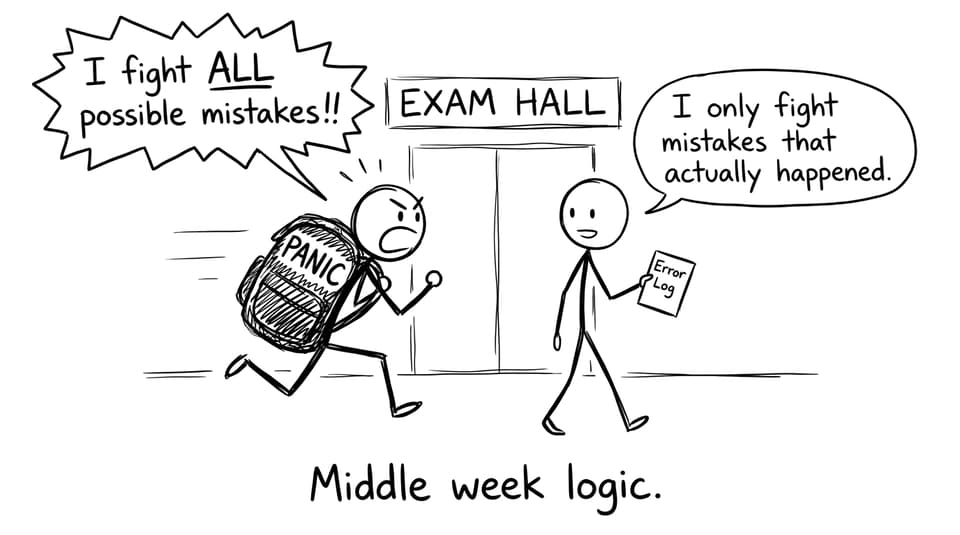
After each exam: short review, then reset (don’t autopsy for hours)
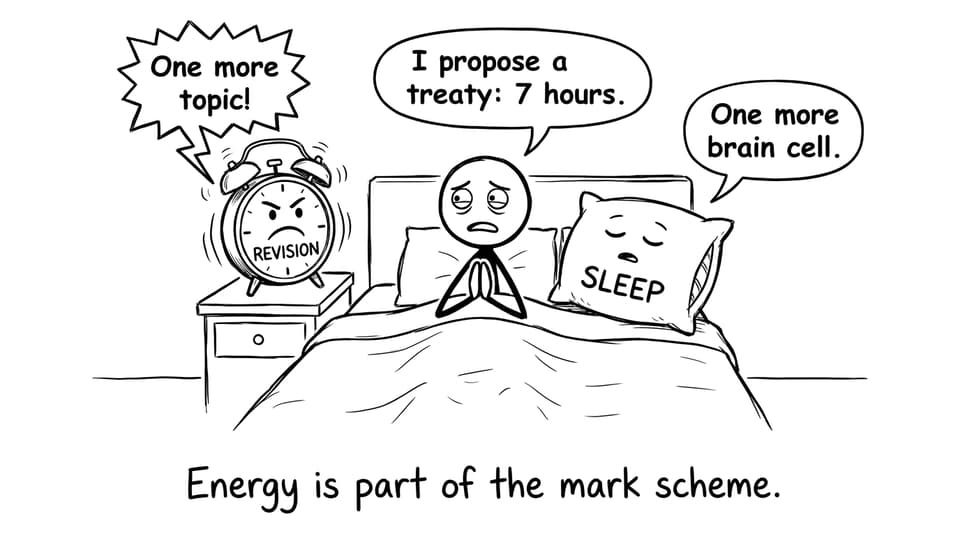
Protect sleep like it’s a subject
If you want a single place to run that routine, use the RevisionDojo Study Planner to map the exam weeks and reduce decision fatigue.
min read
min read
min read
min read
The core principle behind all Exam Tips: protect energy, keep accuracy
During exams, your brain is a budget. Spend it on what earns marks: clear structure, correct method, and calm pacing.
RevisionDojo helps make that easier by connecting Study Notes, Flashcards, Questionbank, AI Chat, Grading tools, Predicted Papers, Mock Exams, Coursework Library, and Tutors into one loop. Less tab-switching. More clarity.
A student negotiates a sleep treaty with an alarm clock
FAQ
Is it normal to feel worse as exams go on?
Yes, and it’s more common than students admit out loud. Exam season creates cumulative fatigue: early mornings, emotional swings after each paper, and constant low-level adrenaline. That “worse” feeling often shows up as brain fog, slower recall, and irritability, not a true drop in ability. The key is to interpret it correctly: it’s a signal to protect energy, not proof you’re failing. This is why Exam Tips that focus on sleep, pacing, and short daily recall tend to outperform “study all day” strategies. On RevisionDojo, using Flashcards daily and keeping practice targeted in the Questionbank helps you stay sharp without overloading.
Should revision intensity increase every week during exams?
Usually, no. In most exam periods, intensity should taper, not climb. Early on, you can handle more practice and deeper review because your attention is fresher. Later, you want fewer tasks, higher quality, and more recovery time to keep accuracy high. A smart approach is to front-load heavy revision before exams, then switch to maintenance: short recall, light practice, and exam technique. These Exam Tips work because they match the reality of human stamina. If you need help pacing it, the RevisionDojo Study Planner makes the “right amount” more visible day by day.
Can strong preparation really offset fatigue in the final week?
Yes, because preparation reduces the amount of thinking you must do under pressure. When you’ve drilled enough exam-style questions, your brain recognizes patterns faster and makes fewer impulsive mistakes. That matters most when you’re tired, because fatigue primarily damages decision-making and attention, not your entire knowledge base. The best Exam Tips here are practical: keep an error log, redo weak question types, and practise under realistic timing. RevisionDojo supports this loop well: use Study Notes to patch gaps, the Questionbank to drill, AI Chat to unblock confusion quickly, and Predicted Papers or Mock Exams to rehearse stamina. When fatigue hits, systems beat motivation.
Conclusion: survive the weeks, not just the papers
The biggest exam-season mistake is treating every week the same. Early weeks need calm. Middle weeks need restraint. Late weeks need consistency.
If you want your Exam Tips to turn into a repeatable routine, build it in one place: plan with the RevisionDojo Study Planner, drill smart with the Questionbank, keep recall alive with Flashcards, and practise full-paper confidence with Predicted Papers and Mock Exams. Then finish your last exam knowing you didn’t just work hard, you stayed steady.