


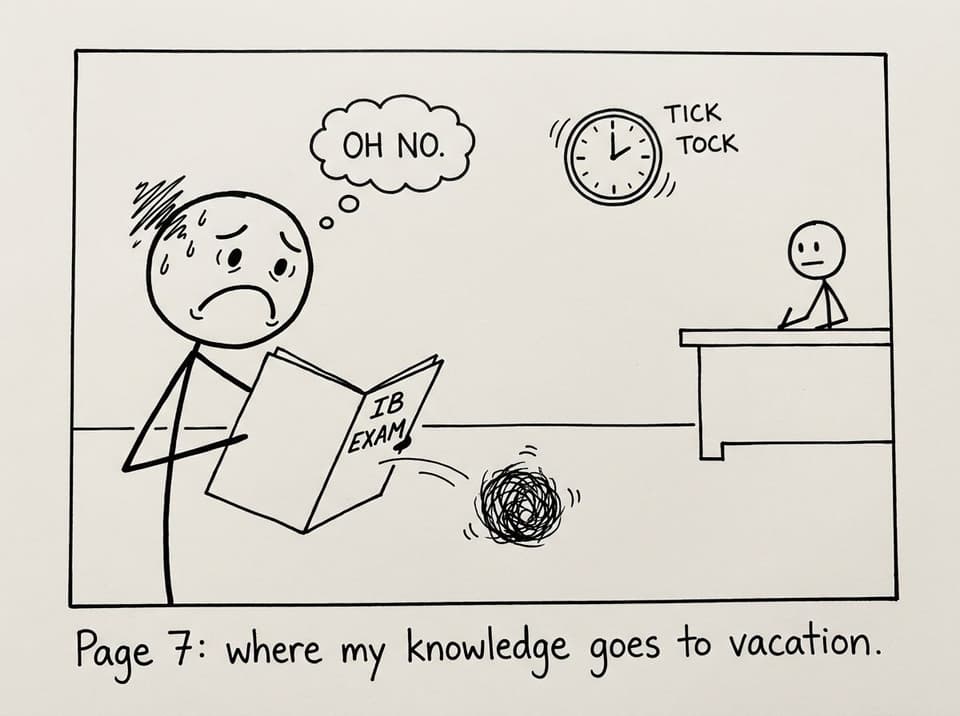
The moment you realize half the IB paper is still blank
The clock doesn't tick in an IB exam. It sprints.
One minute you're warming up with the first question, telling yourself you're settling in. The next minute you look up and see the page count, the unanswered sections, the quiet confidence of people flipping ahead, and it hits you with a weird kind of calm panic: I might leave half the paper blank.
If you're here because you've done it before, or because you're scared you might, the important thing is this: leaving half an IB paper blank is not the end of your grade, but it is a predictable outcome of a few fixable habits: time misallocation, perfectionism, and not having a "salvage plan" for low-confidence questions.
This article is that salvage plan.
Quick checklist: what to do if you're on track to leave it blank
Keep this as your emergency protocol for any IB exam:
- Stop writing full paragraphs for small-mark questions. Match effort to marks.
- Scan for high-yield marks first. Easy marks are a form of oxygen.
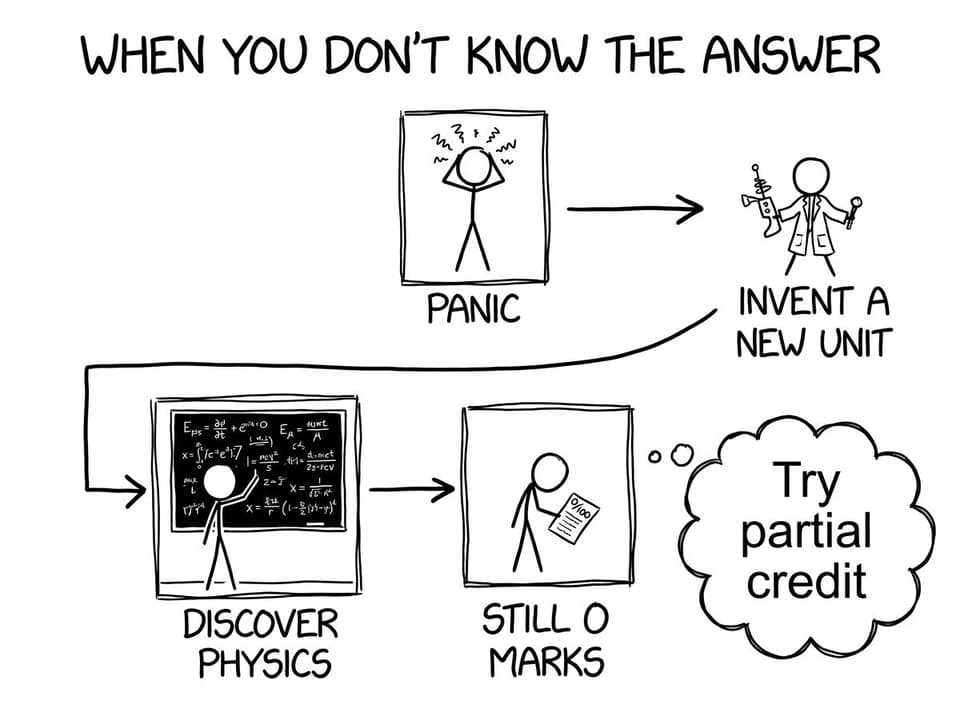
- Write something for every question. Partial credit is real; blanks are absolute.
- Use a 2-pass approach: first pass gets points down, second pass adds polish.
- Reserve a final sweep to attempt every remaining subpart, even briefly.
This isn't about "working harder." It's about writing like you understand how an IB paper rewards marks.
What actually happens if you leave half the IB paper blank?
In most IB subjects, exams are designed so that marks are distributed across many small decisions. That's a feature, not a cruelty. It means a weak area doesn't automatically erase your score. But it also means leaving sections blank is uniquely expensive.
Blank answers don't just lose marks, they delete opportunities
A blank response is the only answer that cannot earn anything. Even a messy response can pick up method marks, relevant points, correct units, a labeled diagram, a valid definition, or a half-right interpretation. In many IB markschemes, examiners are trained to award what's there, not what you intended.
If you leave half the paper blank, the real loss isn't just the marks you didn't attempt. It's the compounding effect:
- You miss the easy subparts that anchor the question.
- You lose the chance to show working or reasoning.
- You create grade volatility: your final result depends on too few answered marks.
The most common reason students leave half an IB paper blank
It's rarely "I didn't study." More often it's:
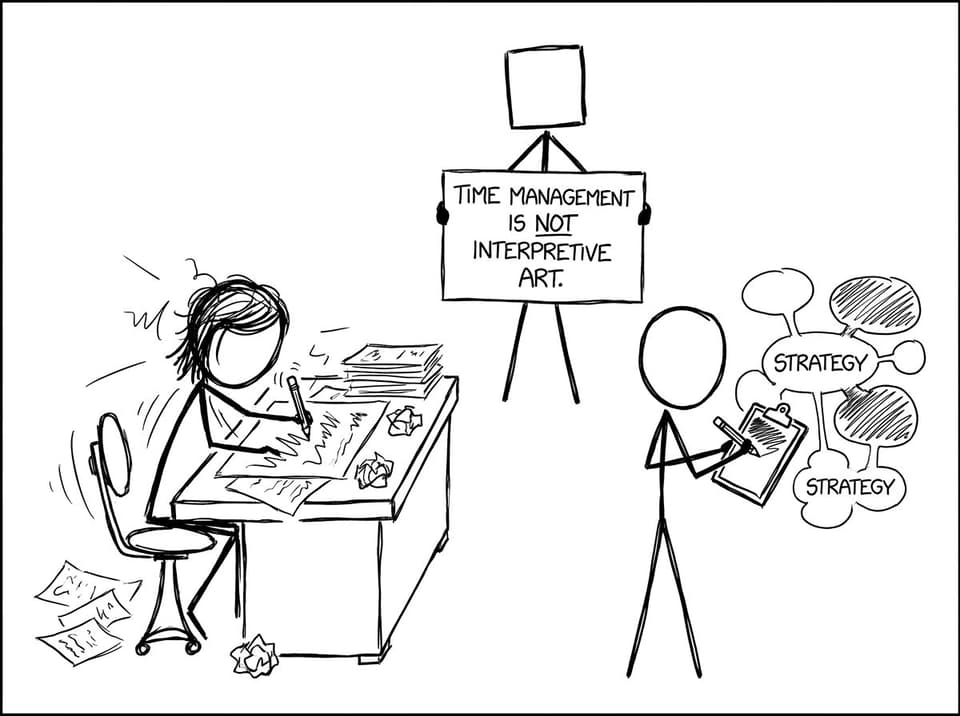
- Perfectionism: spending 18 minutes crafting a 6-mark response.
- Getting stuck: treating one question like a locked door instead of a speed bump.
- Poor paper navigation: answering in order, even when later questions are easier.
The fix is strategic: learn to hunt marks, not questions.
How IB marking makes "attempt everything" the highest-return strategy
If you want one exam philosophy that pays dividends across the entire IB, it's this:
Marks follow evidence, not elegance
Examiners reward what they can see. That means:
- A correct definition gets credit even if the explanation is thin.
- A relevant diagram can rescue an unclear paragraph.
- A calculation with correct method can earn marks even with an arithmetic slip.
So when you're running out of time, your job becomes: leave evidence.
Small marks are often the easiest marks
Many IB papers hide comfort inside low-mark parts: identify, state, label, calculate, outline. These are designed to be accessible. When students leave half the paper blank, they often leave behind the most "affordable" marks.
Your goal is to convert panic time into point time.
The "two-pass" method that prevents leaving half the IB paper blank
Here's a practical system you can train in mock exams, timed practice, and even homework.
First pass: collect the marks you can see
On the first pass through the IB paper:
- Answer what you can do quickly and confidently.
- For tricky questions, write a minimal placeholder attempt (a formula, a diagram, a definition, a first step).
- Keep moving.
This does two things: it bankens marks early, and it reduces fear, which improves thinking speed.
Second pass: return and upgrade
Once you've touched everything:
- Upgrade placeholders into fuller answers.
- Add justification, evaluate, link to data, check units.
- Focus on the higher-mark questions now that you're calmer.
Most students do the opposite: they start with "upgrade mode," and never reach "touch everything." That's how half the paper stays blank.
What to write when you genuinely don't know (but need marks)
This is the part nobody teaches explicitly, yet it's where IB grades are quietly made.
For sciences: show method and structure
Even if you're unsure:
- Write the relevant equation.
- Substitute values with units.
- State an assumption.
- Sketch a labeled diagram.
A correct pathway is often worth more than a correct final number.
For humanities: define, then argue one step
If you don't have the perfect case study or quote:
- Define the key term.
- Make one clear claim.
- Add one piece of general supporting logic.
- Tie back to the command term.
The IB rewards clarity and relevance more than ornament.
For math: write what you would do next
If you're stuck:
- Write down the known formula.
- Set up an equation.
- Attempt a rearrangement.
- Indicate the next transformation.
Method marks often live in these steps.
The quiet habit that causes blank pages: rehearsing comfort, not pressure
A surprising reason students leave half an IB paper blank is that their revision was too gentle.
They reviewed notes slowly, did untimed practice, and avoided the topics that felt ugly. So on exam day, the first ugly question becomes a time sink.
Pressure is a skill. You train it.
This is where RevisionDojo becomes more than "a place with resources." It becomes a rehearsal room.
- Use the Questionbank to practice mixed difficulty sets that mimic exam unpredictability.
- Use Study Notes to rebuild weak topics fast without wandering.
- Use Flashcards to make definitions and core processes automatic.
- Use AI Chat to get unstuck in a way that teaches you how to think, not just what to memorize.
- Use Grading tools to see what earns marks, not what sounds nice.
- Use Predicted Papers and Mock Exams to train pacing under realistic timing.
- Use the Coursework Library to reduce cognitive load elsewhere so exam prep can be sharper.
- Use Tutors when a single bottleneck topic keeps stealing 20 minutes every time.
Even if you only adopt one feature, choose the one that makes you practice under time.
A simple time-allocation model for IB papers
You don't need a perfect schedule. You need a rule that prevents one question from consuming your whole exam.
Try this model:
- Spend roughly 1 minute per mark as a baseline (adjust by subject).
- If you hit the limit and you're not progressing, leave a placeholder attempt and move.
- Return later with fresh eyes.
This protects you from the classic IB trap: spending premium time on low-return thinking.
Closing: don't aim for perfect, aim for complete
Leaving half an IB paper blank feels like a personal failure, but it's usually just a systems failure. Your brain did what it was trained to do: pursue certainty, polish, and comfort, even when the exam rewards coverage, evidence, and momentum.
Build the habit that changes everything: attempt every question. Then improve the quality of those attempts.
RevisionDojo is built for that exact transformation: the Questionbank for targeted pressure, Mock Exams for pacing, Predicted Papers for realism, Study Notes and Flashcards for speed, AI Chat for stuck points, and Grading tools to learn what the IB actually rewards. If you stop leaving pages blank, you stop donating marks. And in the IB, donated marks are the most expensive kind.