RevisionDojo was developed independently of the IBO and as such is not endorsed by it in any way.
If you've ever stared at an IB syllabus and thought, "I have time," you're in good company. Most students don't run out of effort in the IB. They run out of runway.
The painful part is that the biggest mistakes aren't dramatic. They're quiet. They feel reasonable while you're making them. They even feel productive: rewriting notes, color-coding a plan, watching one more explanation video because it feels safer than attempting a question and getting it wrong.
This article is a map of the common cliffs students walk toward in IB exam season, and how to step back before it's too late. If you fix even two of these, your next week of IB revision will feel less like panic and more like control.
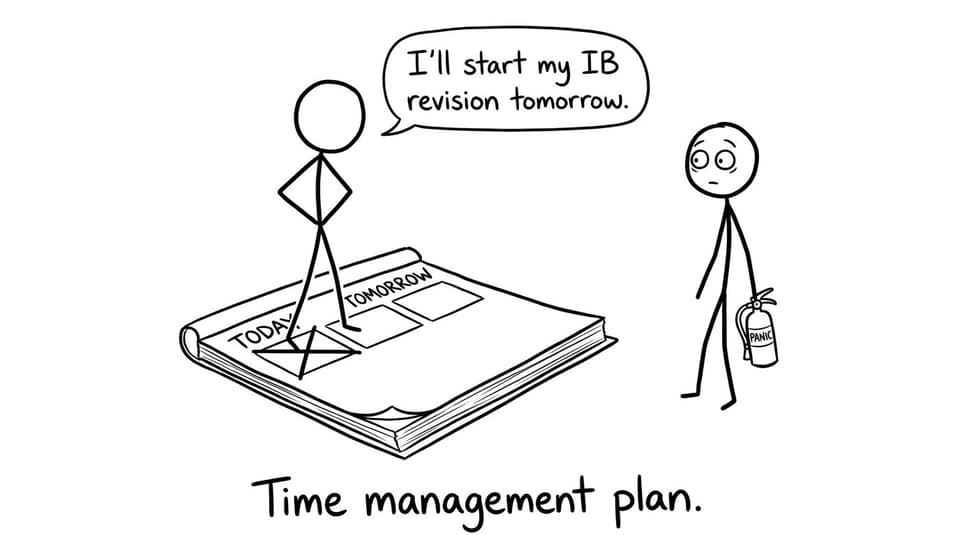
Student postponing IB revision until the last two days
The "too late" checklist (read this first)
Before we go deeper, use this quick IB checklist. If you answer "yes" to any of these, you're probably leaking marks:
You're spending more time organizing IB revision than doing timed practice.
You revise topics you like first, and avoid the ones that cost you marks.
You can "understand" content, but your answers don't match markscheme language.
You're relying on motivation instead of systems (small daily reps).
You don't have a feedback loop: mistakes list, reattempts, and targeted drills.
You're treating IA/EE/TOK as separate worlds rather than part of one energy budget.
You haven't simulated exam conditions at least a few times.
RevisionDojo is built to turn those "yes" answers into a plan: Study Notes for clarity, Flashcards for daily retrieval, a Questionbank for targeted practice, Grading tools for honest feedback, Mock Exams for stamina, and AI Chat when you're stuck but don't want to spiral.
Mistake: Confusing familiarity with readiness (classic IB trap)
In IB, familiarity is seductive. You reread your notes and think, "I know this." The problem is that recognition is not recall. In the exam, nobody asks whether the page looks familiar. They ask you to produce structure, vocabulary, and method under time pressure.
Here's the fix: shift the center of your revision from input to output.
Replace one hour of rereading with 25 minutes of attempted questions.
Mark it immediately.
Write a one-sentence correction: what the examiner wanted vs what you did.
This is why a Questionbank matters so much for IB. It forces output. It makes "I think I get it" face reality.
To keep it simple, build your week around cycles:
Study Notes to refresh a concept (short, intentional).
Flashcards to retrieve key definitions, processes, and essay points.
Questionbank to convert knowledge into marks.
Grading tools to see exactly what your answer is missing.
That cycle is how IB revision becomes measurable.
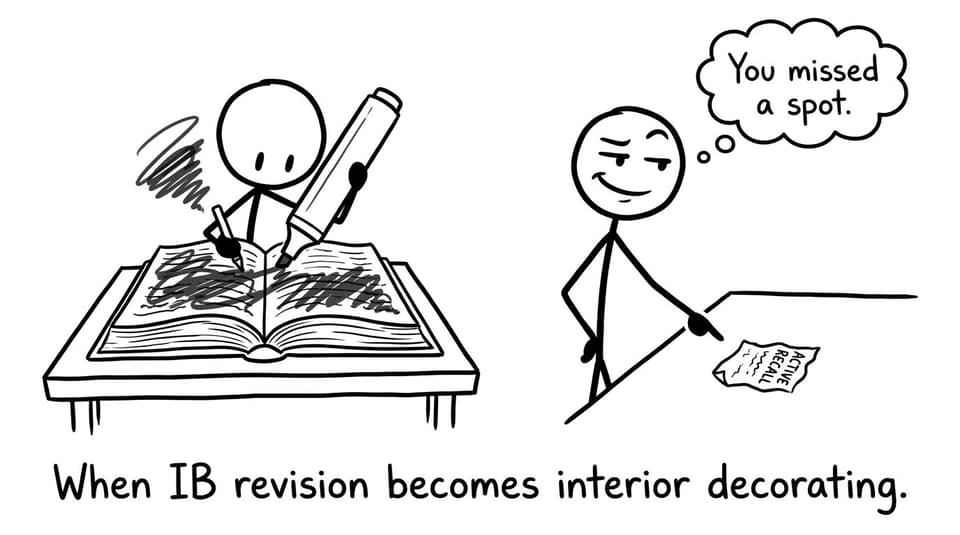
Highlighting the entire book vs active recall
Mistake: Revising what feels good instead of what costs marks
Most IB students can name their weakest unit. They just don't spend enough time there.
The "comfort zone" version of revision looks like this:
Start with a topic you enjoy.
Do a few easy questions.
Feel reassured.
Repeat.
The "score zone" version looks different:
Identify your top 3 mark-loss areas (not your favorite topics).
Do targeted drills until mistakes stop repeating.
Return to them again later to confirm the fix holds.
A practical way to do this is a Mistakes Log:
Topic
What I did
What the markscheme needed
The trigger (rushed reading, formula recall, weak evaluation, unclear structure)
The rule I'll follow next time
In IB, mistakes repeat for emotional reasons as much as academic ones. The log turns emotion into data.
RevisionDojo's Grading tools and AI Chat can speed up this loop: grade, pinpoint the gap, ask a tight question, then reattempt.
Mistake: Building a perfect plan instead of a usable one
There's a specific form of procrastination that looks like ambition: making the plan.
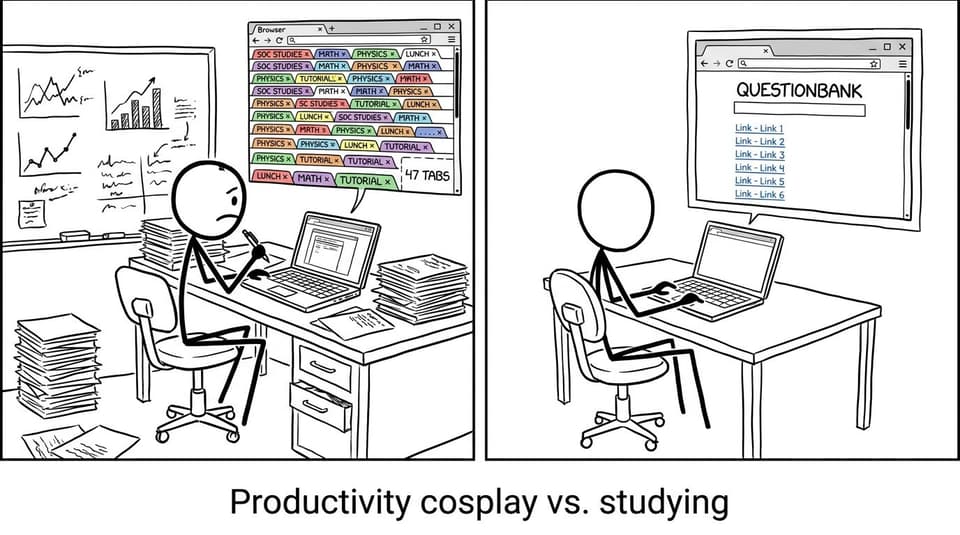
Spreadsheets. Color palettes. 47 micro-goals. A schedule that assumes you'll be a different person tomorrow.
A usable IB plan is boring. It fits on one page. It has slack. It assumes bad days.
Try this structure:
Daily (non-negotiable): 30-60 minutes of retrieval (Flashcards + 10 questions).
Alternating days: one deep block for a weak topic.
Weekly: one timed paper section or full mock block.
Always: update mistakes log, then reattempt 48 hours later.
If you want a rule: if your IB plan takes longer than 15 minutes to maintain, it won't survive exam season.
Complex schedule vs starting the questionbank
Mistake: Ignoring markschemes and command terms
A strange truth about IB exams: you can know the content and still miss the marks.
Why? Because IB marking rewards specific behaviors:
Using command terms correctly (evaluate, compare, to what extent).
Structuring responses the way examiners expect.
Showing method, not just final answers.
Using precise vocabulary.
Students often revise content and skip the "translation layer" between knowledge and marks.
Fix it like this:
For each subject, learn the top command terms and what they look like in an answer.
Practice writing in the smallest unit possible: one paragraph, one calculation, one explanation.
Compare against the markscheme and rewrite your answer once.
That rewrite is uncomfortable. It's also where your grade moves.
RevisionDojo helps here by keeping practice and feedback close together: Questionbank for the attempts, Grading tools to spot patterns, and Study Notes to fill the exact gaps.
Mistake: Treating time pressure as a surprise
Time pressure isn't an accident in IB. It's part of the test design.
Many students "revise" without ever practicing the feeling of being timed. Then the exam arrives and their brain reacts like it's an emergency.
Train the feeling.
Start with 20-minute timed sets.
Move to full sections.
Eventually do full Mock Exams under realistic conditions.
Then do the part most students skip: post-mock analysis.
Which questions ate your time?
Where did you hesitate?
Which topics triggered slow thinking?
Were you writing too much in low-mark parts?
That analysis is your real study plan.
RevisionDojo's Mock Exams and Predicted Papers (used as training, not comfort) can help you rehearse pacing and exposure to likely formats while keeping your IB practice focused.
Mistake: Leaving "small tasks" (IA, EE, TOK) to quietly explode
The IB doesn't usually crush students with one giant failure. It crushes them with five "small" tasks that all become urgent in the same week.
The fix isn't heroic effort. It's early containment.
Set a weekly maintenance block for IA/EE/TOK.
Break each task into outputs (one paragraph, one analysis step, one citation sweep).
Use feedback quickly, not emotionally.
If you're stuck, get guidance. RevisionDojo's Coursework Library helps you see what good looks like, and Tutors can reduce the time you waste wandering in circles.
Mistake: Studying alone when what you need is friction
Studying alone feels efficient until it becomes silent avoidance.
IB rewards the ability to explain, defend, and structure ideas. If your revision never faces friction, you might be fragile.
Add small friction on purpose:
Teach a concept out loud in two minutes.
Do one question with a friend and argue about the markscheme.
Use AI Chat to challenge your reasoning: "What would an examiner criticize here?"
The goal isn't to feel smart. It's to become exam-proof.
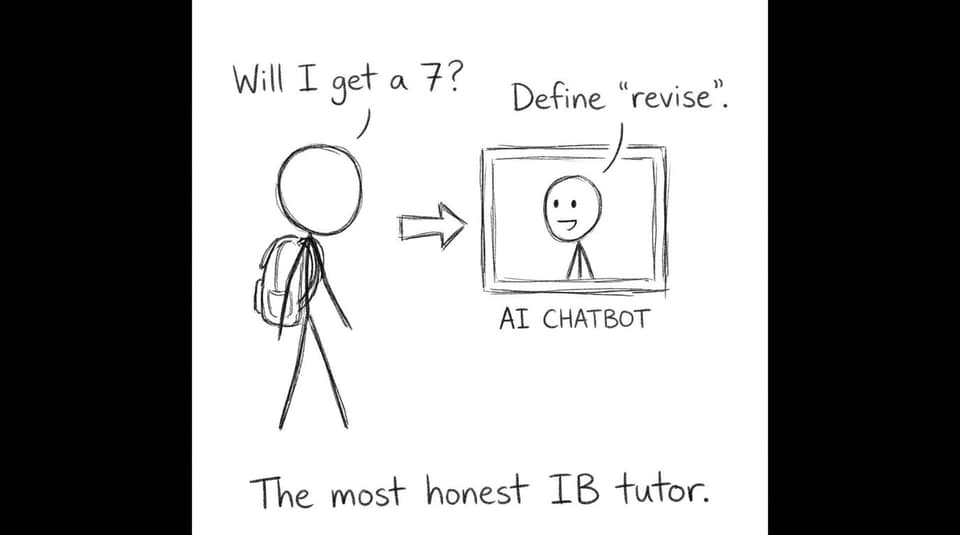
AI chatbot asks student to define revise
Mistake: Not using tools as a system (and wasting your best resources)
Tools don't save IB students. Systems do.
A system has:
A reliable daily habit (Flashcards + short practice)
A way to identify weaknesses (Grading + mistakes log)
A way to fix weaknesses (Study Notes + targeted drills)
A way to test readiness (Mock Exams)
RevisionDojo works best when you use its features like gears that turn together: Study Notes, Flashcards, Questionbank, AI Chat, Grading tools, Predicted Papers, Mock Exams, Coursework Library, and Tutors. The point isn't doing more. It's doing what moves marks.
A simple IB recovery plan (if you're already behind)
If "too late" feels close, don't negotiate with guilt. Build momentum.
Day 1: pick 2 weak topics, do a short timed set, mark it, start mistakes log.
Day 2: flashcards + targeted drills on the same gaps.
Day 3: timed section again, reattempt the same question types.
Day 4: switch to weak topic #2, repeat.
Day 5: mixed practice set (interleaving), review mistakes log.
Day 6: mini mock, then deep analysis.
Day 7: rest plus light retrieval.
The IB doesn't require perfection. It requires consistency.
Don't wait for urgency to give you clarity
The IB has a way of making smart students feel scattered. Not because they can't do it, but because they try to hold everything in their head at once.
You don't need a brand-new personality. You need a small system that runs even when you're tired: Flashcards for daily retrieval, Study Notes for targeted gaps, Questionbank for output, Grading tools for feedback, and periodic Mock Exams to prove you're ready.
If you want your next week of IB revision to feel calmer and more effective, build that loop inside RevisionDojo and let the process carry you. The earlier you stop these IB mistakes, the more your final stretch starts to feel like momentum, not survival.