
IB Economics has a funny way of showing up in ordinary life. You notice it when your favorite snack suddenly costs more, when a government announces a new tax, or when your news feed becomes an endless debate about inflation. In the IB classroom, those moments turn into diagrams, definitions, and evaluation. And for exams, IB Economics isn’t about sounding clever; it’s about thinking clearly under pressure.
This guide is built for that exact moment: revision season. We’ll map what IB Economics actually covers, what examiners reward, and how to turn content into marks.
IB Economics at a glance: what you’re really learning
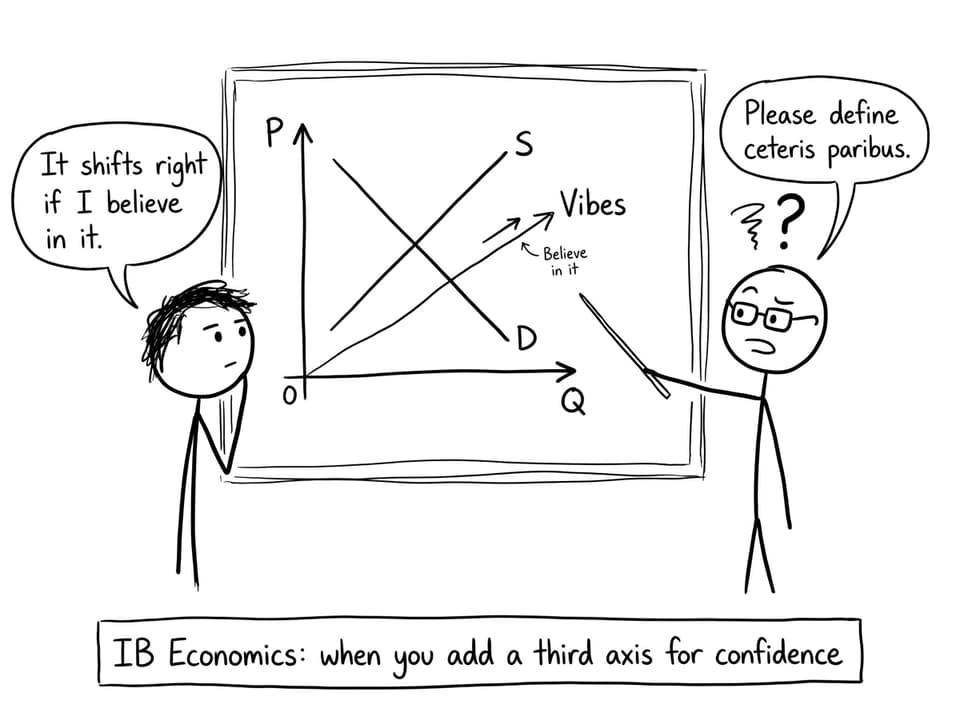
At its core, IB Economics trains you to explain how choices get made when resources are limited. The syllabus keeps returning to the same big tension: efficiency vs fairness, short run vs long run, consumers vs producers, national goals vs global trade-offs.
You’ll rotate through four connected lenses:
-
Microeconomics (individual markets and firms)
-
Macroeconomics (the whole economy: growth, inflation, unemployment)
-
International economics (trade, exchange rates, the global economy)
-
Development economics (why some countries grow faster than others, and what policy can do)
If you want a syllabus-aligned home base, start with the IB Economics hub.
A quick IB Economics revision checklist (save this)
When students feel “behind” in IB Economics, it’s usually not because they never studied. It’s because their revision is unbalanced.
Use this checklist to steady your prep:
-
Know the definitions that unlock marks fast
-
Draw core diagrams from memory, neatly and correctly labeled
-
Attach real-world examples to common themes
-
Practice evaluation (short-run/long-run, stakeholders, assumptions)
-
Build exam timing using targeted question practice
A strong starting point is Methods for Effective IB Economics Revision.
Microeconomics in IB Economics: where diagrams earn you marks
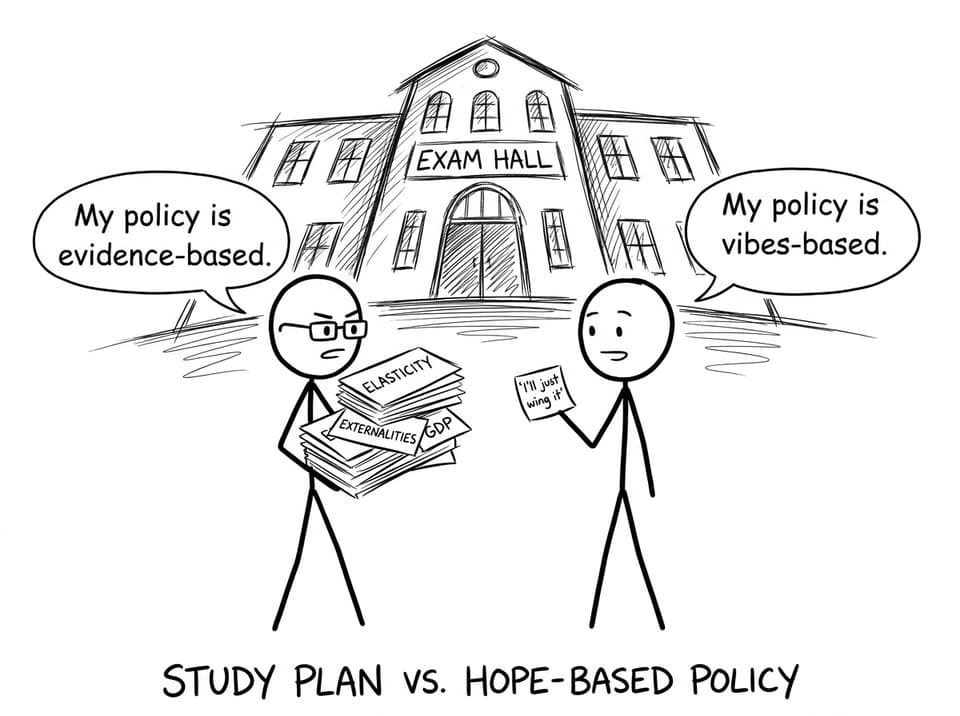
Micro is where IB Economics becomes visual. Demand and supply isn’t “easy”; it’s foundational. If your axes, shifts, and explanations are automatic, your exam confidence changes.
Key micro areas to make routine:
-
Demand, supply, and market equilibrium (plus shifts)
-
Elasticity and what it means for revenue and policy
-
Market structures (competition, monopoly, oligopoly)
-
Market failure and government responses (taxes, subsidies, regulation)
If you need a clean refresher on the basics, use Define Supply and Demand (Microeconomics Essentials). And for applying theory to headlines, Real-Life Examples in Economics: Bringing Theory to Life is perfect revision fuel.
Macroeconomics in IB Economics: tell a story, not a list
Macro questions in IB Economics reward students who can connect cause, consequence, and policy trade-offs. Examiners don’t want a vocabulary dump. They want a chain of reasoning.
Focus your macro revision on:
-
Measuring performance (GDP and broader indicators)
-
Economic growth and its limits
-
Unemployment and inflation (causes, consequences, policies)
-
Fiscal and monetary policy, including evaluation
For essay structure that turns knowledge into marks, follow the Step-by-Step Approach to Writing IB Economics Essays.
International economics in IB Economics: trade is never “just trade”
International topics can feel like common sense until you try to evaluate them under timed conditions. In IB Economics, trade is about winners and losers, efficiency and equity, and what happens when policy meets politics.
Build comfort with:
-
Comparative advantage and gains from trade
-
Exchange rates and impacts on stakeholders
-
Balance of payments (what it signals, what it doesn’t)
-
Protectionism and its consequences
Use these for strong examples and analysis:
Development economics in IB Economics: evaluation lives here
Development is where IB Economics becomes deeply human. You’re not just modeling markets. You’re judging policies that affect health, education, inequality, and sustainability.
Common revision anchors:
-
Indicators of development (beyond GDP)
-
Barriers to development (institutional, geographic, human capital)
-
Development strategies (aid, microfinance, trade, industrial policy)
When you revise, ask: Who benefits, who pays, and what assumptions am I making? That single habit raises your evaluation marks.
How to use RevisionDojo to study IB Economics (without burning out)
The best IB Economics revision feels calm because it’s repeatable.
On RevisionDojo, build a simple loop:
-
Learn content with Study Notes and Flashcards
-
Train accuracy with the Questionbank and instant feedback
-
Use AI Chat to test definitions and clarify diagrams (then rewrite in your own words)
-
Use Grading tools to understand what “evaluation” looks like in marking terms
-
Add Predicted Papers and Mock Exams closer to exam season for timing and stamina
-
If you’re stuck, use Tutors for targeted help on your weakest units
When you want a reality check on common pitfalls, read Top 7 IB Economics HL Mistakes and How to Avoid Them.
Final thoughts: make IB Economics feel predictable
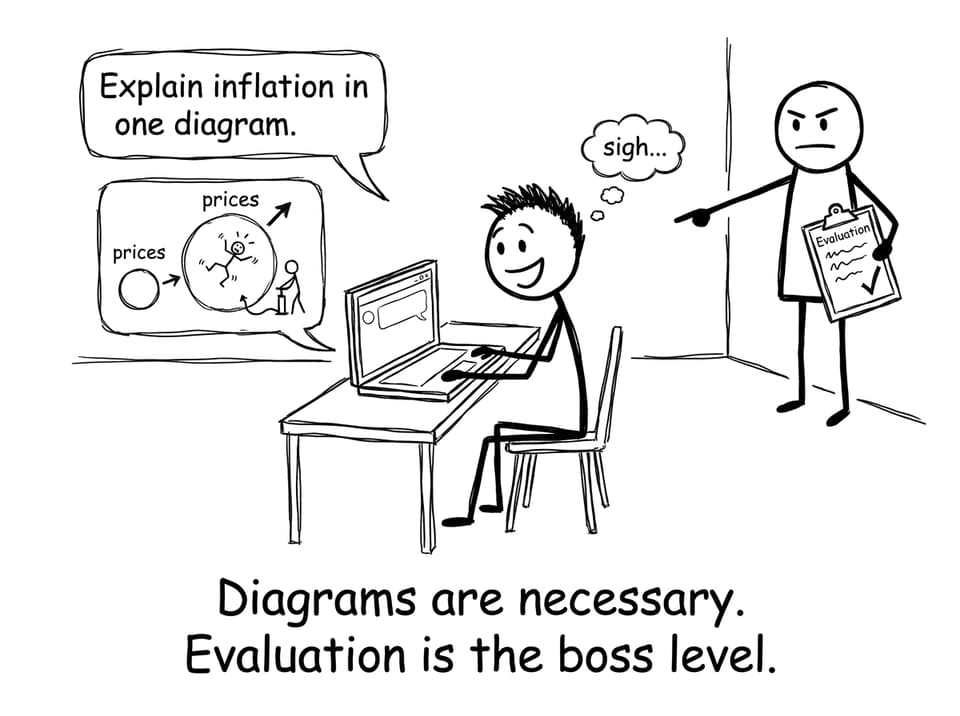
The goal of IB Economics revision is not to memorize the world. It’s to make your response predictable: define, diagram, explain, evaluate. Do that across micro, macro, international, and development, and the subject starts to feel surprisingly manageable.
If you want a single place to organize your next study block, start at the IB Economics hub, then build a weekly loop with RevisionDojo’s Questionbank, Study Notes, Flashcards, AI Chat, and Mock Exams. IB Economics rewards clarity, and clarity is something you can train.