



If you have ever stared at your timetable and quietly hoped one subject is “objectively easier,” you are not alone. The Group 3 choice between IB Business Management and IB Economics can feel like choosing between two different kinds of pressure: one is practical and people-focused, the other is model-driven and relentlessly logical. And when exams are coming, you do not want a subject that is “hard in theory.” You want the one that is hard in a way you can actually train for.
In Group 3, the honest answer is this: IB Business Management is not automatically easier than IB Economics. It is often more familiar, which can make it feel easier at first. But Economics can become “easier” over time if you like structured thinking and you practise diagrams and evaluation consistently.
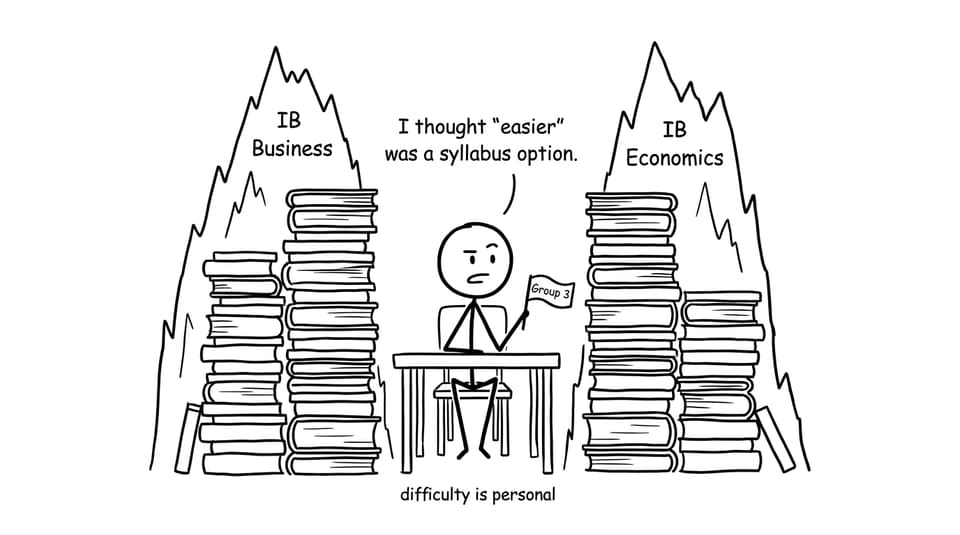
Group 3 quick checklist: which one will feel easier?
Use this as a fast filter before you commit weeks of revision time.
-
Choose IB Business Management if you enjoy case studies, real companies, and recommending decisions using tools.
-
Choose IB Economics if you like theories, diagrams, cause-and-effect chains, and arguing a position with evaluation.
-
If you prefer “breadth and application,” Business often feels lighter.
-
If you prefer “depth and logic,” Economics can feel cleaner.
For a longer comparison, you can also read IB Economics vs Business: Choose Your Best IB Path.
What “easier” really means in Group 3
Most students define easy as “less content.” But in Group 3, easier usually means:
-
you understand the thinking style the exams reward
-
you can produce answers under time pressure
-
your IA process does not drain you for months
That is why two students can take the same subject and have opposite experiences. One finds Economics peaceful because it is structured. Another finds it brutal because every diagram feels like a trap.
IB Business Management: why it can feel easier
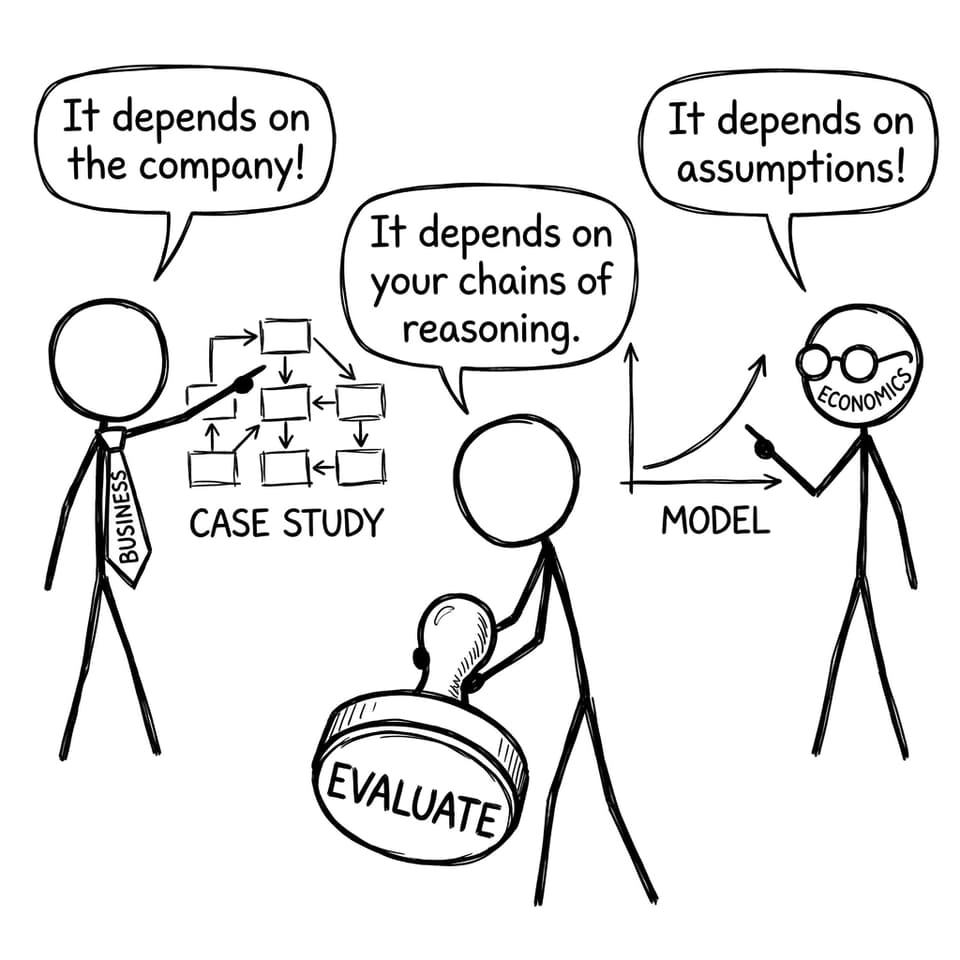
IB Business Management tends to reward students who think in real-life scenarios. You learn frameworks (like SWOT, PEST, Ansoff, decision trees), then apply them to a business context and justify what the business should do next.
It can feel easier because:
-
The content is often intuitive (you have seen brands, teams, pricing, marketing).
-
You can earn marks by being specific, even without complex theory.
-
A strong sense of “common sense,” when paired with clear structure, goes a long way.
But “intuitive” can become dangerous if you stop at opinions. Business answers still need business tools, balance, and evaluation.
IB Economics: why it can feel harder (and then suddenly easier)
Economics is a subject where early confusion is normal. You meet models, assumptions, and diagrams that feel abstract until you use them repeatedly. Over time, the subject becomes more predictable because many questions boil down to the same moves: define, draw, explain shifts, then evaluate.
Economics can feel harder because:
-
You must be accurate with diagrams and terminology.
-
Evaluation is not optional; it is the difference between mid and top marks.
-
You have to connect theory to the real world quickly.
If you want help building real-world links, use Real-Life Examples in Economics: Bringing Theory to Life and Real-World Examples of Economic Trade.
The IA question: which Group 3 coursework feels more manageable?
This is where “easier” becomes personal.
-
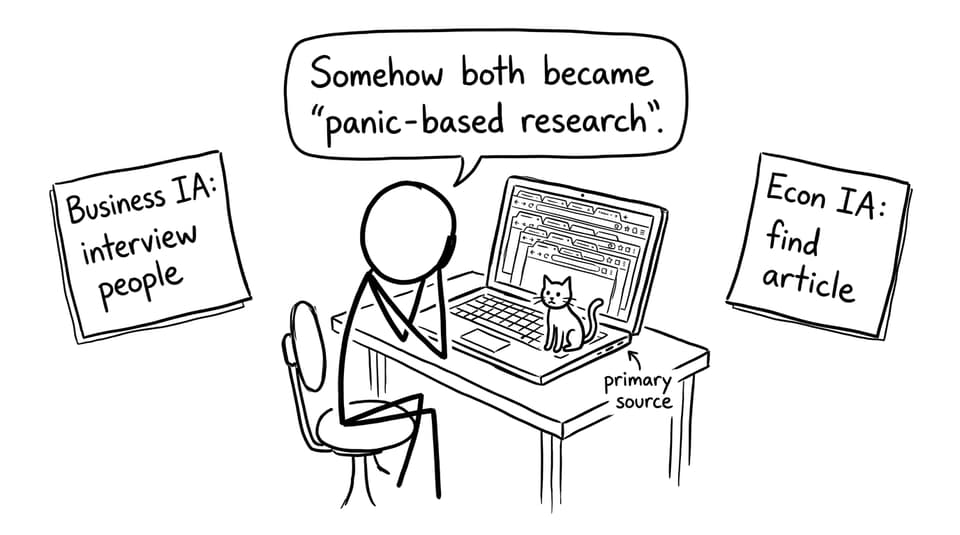
Business IA often suits students who like practical investigation, local context, and making recommendations based on evidence.
-
Economics IA often suits students who like structured writing, picking news articles, and applying theory neatly.
Economics students can train with models and exemplars like Economics IA Examples. Business students benefit from strong planning, clean data, and a clear line from evidence to recommendation.
Exams: the hidden difficulty difference
In Group 3 exams, Business often rewards application to the case. Economics often rewards precision and evaluation.
If you are deciding based on exam stress, read How To Choose Between IB Business Management And IB Economics and the more detailed Honest comparison for students.
Conclusion: pick the Group 3 subject you can train, not just tolerate
IB Business Management is often easier if you like real companies, practical tools, and grounded recommendations. IB Economics becomes easier if you enjoy models, structured arguments, and repeated practice under time. In Group 3, your best choice is the one that fits your brain and your revision habits.
If you want that revision to feel calmer and more controllable, build a system with RevisionDojo: use the Questionbank to practise exam-style questions, Study Notes to tighten your understanding, Flashcards to keep definitions automatic, AI Chat to test explanations, and Grading tools to spot what examiners want. Add Predicted Papers and Mock Exams when you need timing practice, use the Coursework Library when the IA feels vague, and lean on Tutors if you want feedback before small mistakes become patterns. That is how Group 3 stops being a mystery and starts becoming a score.