



The first time you try to speak a new language out loud, it rarely sounds like the version in your head.
For many IB students, that moment happens the night before a speaking recording, when you realize you’ve been “studying” your IB Languages course without actually using the language. Ten years ago, that was easier to excuse. Tools were slower, feedback was delayed, and practice often meant flipping pages and hoping something stuck.
Now, the last decade has quietly rewired language learning. Not by making it effortless, but by making practice more available, more personal, and more honest. If you’re preparing for exams, understanding these shifts helps you build a revision routine that matches what IB Languages actually rewards: clarity, accuracy, and real communication.
Quick checklist: what changed (and what to do)
-
Swap “long study sessions” for short daily loops (retrieval beats re-reading).
-
Use apps for momentum, but train exam skills with structured tasks.
-
Practice with real humans (or at least real-time interaction).
-
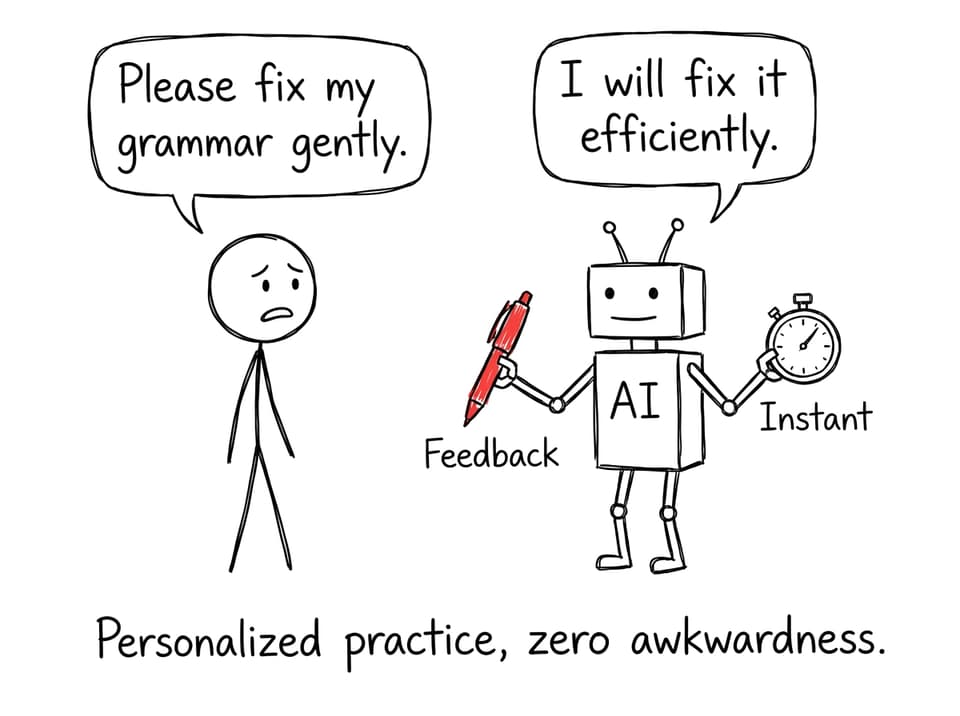
Treat AI feedback as a mirror: quick, specific, and sometimes humbling.
-
Immerse on purpose: choose content that matches themes and registers.
For a broader routine that fits real life, use IB Languages: Balance Study With Work & Extracurriculars.
From textbooks to tiny reps: the app era
A decade ago, language learning often looked like accumulation: more notes, more vocabulary lists, more underlining. The big shift was not just “apps exist now.” It was the idea that progress can come from small repetitions done consistently.
Apps made language practice portable and gamified. That’s useful, especially when motivation is fragile. But for IB Languages, there’s a catch: generic apps rarely align with prescribed themes, text types, and assessment expectations.
So use apps like a warm-up, not a training plan. Your training plan should look more like exam practice: targeted vocabulary, structured writing, and timed comprehension.
RevisionDojo was built for that exam-shaped reality: Study Notes for clean explanations, Flashcards for spaced repetition, and a Questionbank that keeps your practice aligned to what you’ll be assessed on.
If you want a deeper breakdown of what works for exam revision, read How to Effectively Revise for Language B Exams.

From solo study to real conversation: tutors and exchanges
The second major change is access. Online tutoring and language exchanges made speaking practice normal, not rare.
This matters because IB Languages marks communication, not private recognition. You can “know” a word and still fail to retrieve it under pressure. Human conversation forces retrieval, repair, and adaptation. It also trains the subtle skills examiners notice: fluency, register control, and interactive listening.
If you don’t have a tutor, create a substitute: record yourself answering a prompt, listen back, and rewrite your best version. Then get feedback. RevisionDojo supports this loop with Tutors when you need a human reset, and AI Chat (Jojo) when you need rapid clarification and practice prompts.
For more support across Language B topics, start at All #IB Language B Posts.
From delayed correction to instant feedback: the AI shift
Ten years ago, feedback was slow. You wrote something, submitted it, waited, and by the time corrections returned, your brain had moved on.
AI changed the timing. Now you can write, speak, and get corrections immediately. For IB Languages, that speed is powerful if you use it correctly: not to “perfect” one answer, but to spot patterns.
A good workflow is:
-
Write a short response.
-
Get feedback.
-
Identify one repeatable rule (a tense issue, agreement pattern, connector usage).
-
Turn that rule into Flashcards.
-
Re-test with a new prompt.
That’s exactly the kind of loop you can run inside RevisionDojo App: The Smarter Way to Prep for IB Exams using Flashcards, AI Chat, and the Grading tools.
From “immersion someday” to immersion on demand
Immersion used to be a dream reserved for travel. Now it’s a choice you can make on a Tuesday.
Streaming, podcasts, social media clips, and news sites give you constant exposure to authentic language. But the upgrade in the last decade is not just quantity. It’s control: you can select content by difficulty, topic, and accent, then repeat it.
To make immersion actually help IB Languages, add a simple constraint: always produce something.
-
Summarize what you watched in 4 sentences.
-
Write a short opinion paragraph using three connectors.
-
Shadow (repeat aloud) 30 seconds for pronunciation and rhythm.
If you want ideas for improving outside the classroom, read How to Actually Improve Your IB Language B Outside the Classroom.
The mistake modern learners still make
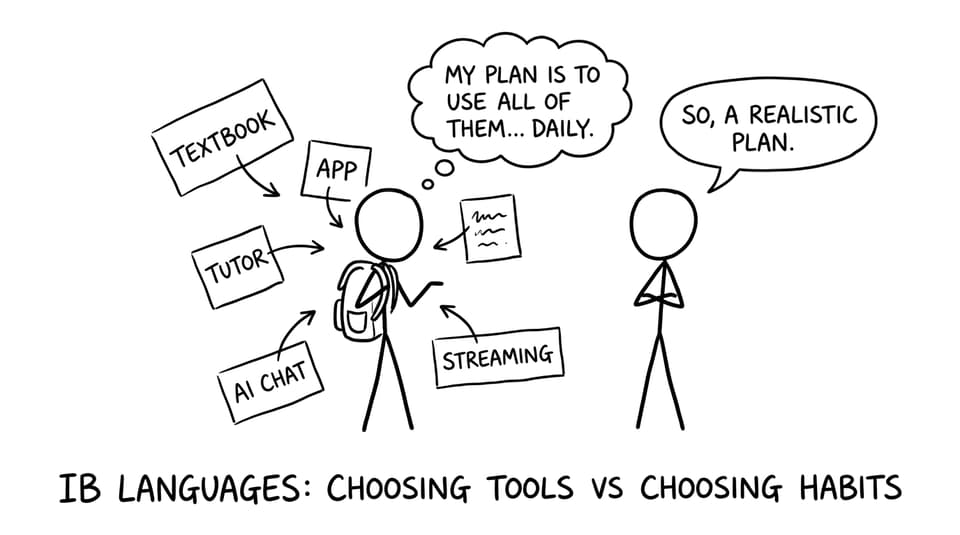
The newest tools tempt you into collecting practice instead of doing practice.
For IB Languages, the most common modern mistake is building a “resource universe” and then avoiding the uncomfortable part: timed writing, speaking aloud, and making errors in public.
A better rule: pick one home base and run one repeatable loop. RevisionDojo is designed to be that home base, combining Study Notes, Flashcards, Questionbank, Mock Exams, Predicted Papers, Coursework Library, Grading tools, AI Chat, and Tutors so your work stays connected.
If your revision feels scattered, How to Build a Full Self-Study Language Plan for One Year is a good reset.
Closing: use the decade’s upgrades wisely
The evolution of language learning in the last decade isn’t really about technology. It’s about friction. Practice became easier to start, easier to repeat, and easier to correct.
If you’re serious about improving your IB Languages performance, don’t chase every new tool. Choose a calm system and run it: learn with Study Notes, lock it in with Flashcards, prove it with the Questionbank, and rehearse pressure with Mock Exams and Predicted Papers. That’s the modern advantage, and RevisionDojo is built to make it feel doable.
For more exam-focused tools and strategies, browse IB Languages Posts and build your next week of practice from there.