



Introduction: the quiet moment when "I should practise" turns into scrolling
There’s a specific kind of IB guilt that arrives at night: you meant to do Language B, but the day got loud. Homework. CAS. A lab write-up. Then you open a language app, stare at it for twelve seconds, and your brain decides that reorganising your pencil case is suddenly urgent.
That’s why Realistic Ways to Make Language Acquisition Outside the Classroom More Engaging matters. Not “perfect” ways. Not “move abroad for a year” ways. Realistic ways, the kind you can repeat even when you’re tired, behind, or convinced you’re “bad at languages.”
The goal for IB exams is simple: build skills you can perform on demand (writing under time pressure, listening for meaning, speaking with control). The engaging part isn’t entertainment. It’s momentum.
A quick checklist: make it engaging by making it measurable
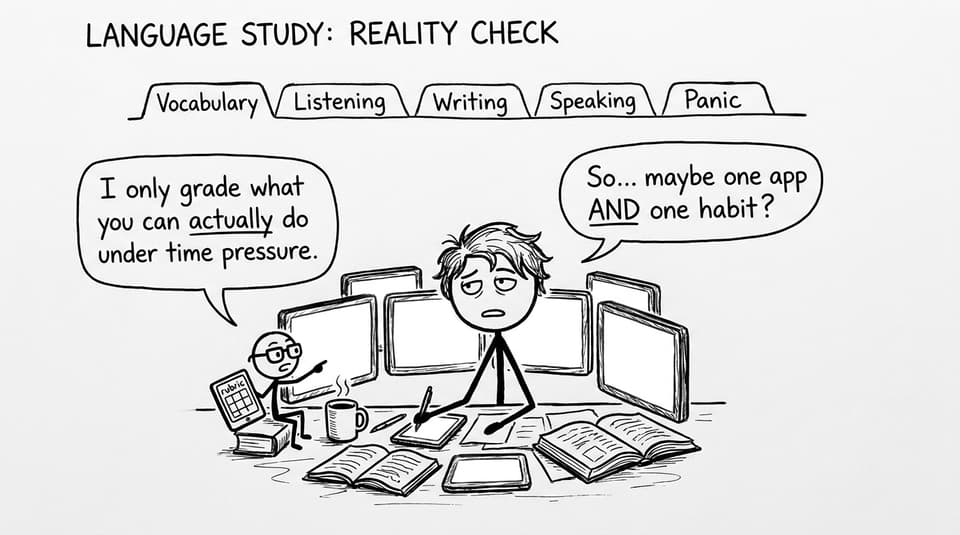
Before the tactics, use this 60-second checklist. It’s the backbone of Realistic Ways to Make Language Acquisition Outside the Classroom More Engaging:
-
One skill per session (listening or writing or speaking) to avoid scattered effort.
-
One output you can point to (a recording, a paragraph, a marked response).
-
One feedback loop (self-check, AI feedback, or tutor feedback).
-
One tiny reward (stop on a win, not on exhaustion).
If you want the IB-aligned structure behind this, keep a tab open to How to Effectively Revise for Language B Exams and revisit it weekly.
Make your goals "exam-real" (not just motivational)
Most students set goals like “become fluent.” It sounds noble. It also doesn’t tell you what to do on Tuesday.
Try “exam-real” goals instead:
-
Writing: “Write one 180-word intro + body paragraph using 6 connectors correctly.”
-
Speaking: “Record a 90-second response and re-record once after fixing three errors.”
-
Listening: “Summarise one clip in 5 bullet points without translating.”
Then link those goals to the IB format so your practice feels relevant. A useful reference is IB Language B Paper Format: Complete Exam Guide, because it reminds you what you’re actually training for.
This is a key reason Realistic Ways to Make Language Acquisition Outside the Classroom More Engaging works: engagement rises when your brain can see the target.
Build “immersion pockets” that fit a student life
Immersion is powerful, but IB students don’t have infinite time. So don’t chase a lifestyle overhaul. Build immersion pockets.
The 15-minute cultural loop
Pick one source you genuinely like: a short YouTube segment, a news clip, a song with lyrics, or an Instagram creator in your target language. Then follow this loop:
-
Listen/read once for vibe.
-
Again for keywords.
-
Write 5 lines summarising meaning.
-
Steal 3 phrases you could reuse.
Those “stealable phrases” become your exam fuel. If you’re studying Spanish, for example, it helps to have a structured hub like IB Spanish B Resources to keep vocabulary and practice organised by what the course actually tests.
Make your phone the smallest possible challenge
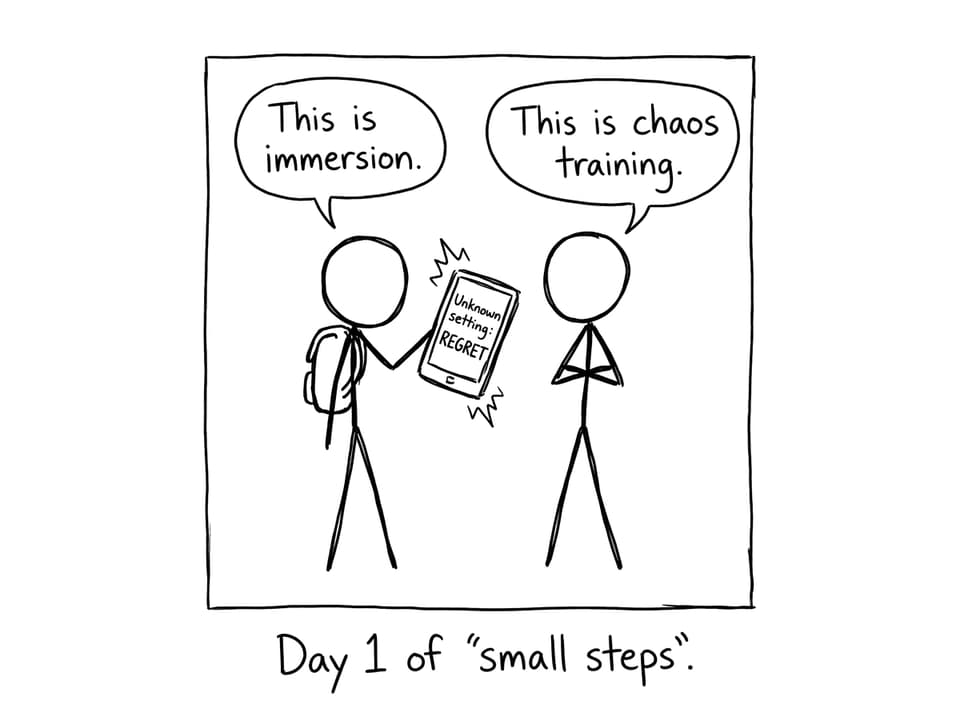
Yes, you can change your phone language. But do it as a controlled stress test:
-
Start with one app (maps or music).
-
Keep a rescue note of key settings words.
-
Treat confusion as exposure, not failure.
These are Realistic Ways to Make Language Acquisition Outside the Classroom More Engaging because they turn “immersion” into something you can tolerate long enough to benefit.
Speak more by lowering the stakes (and raising the reps)
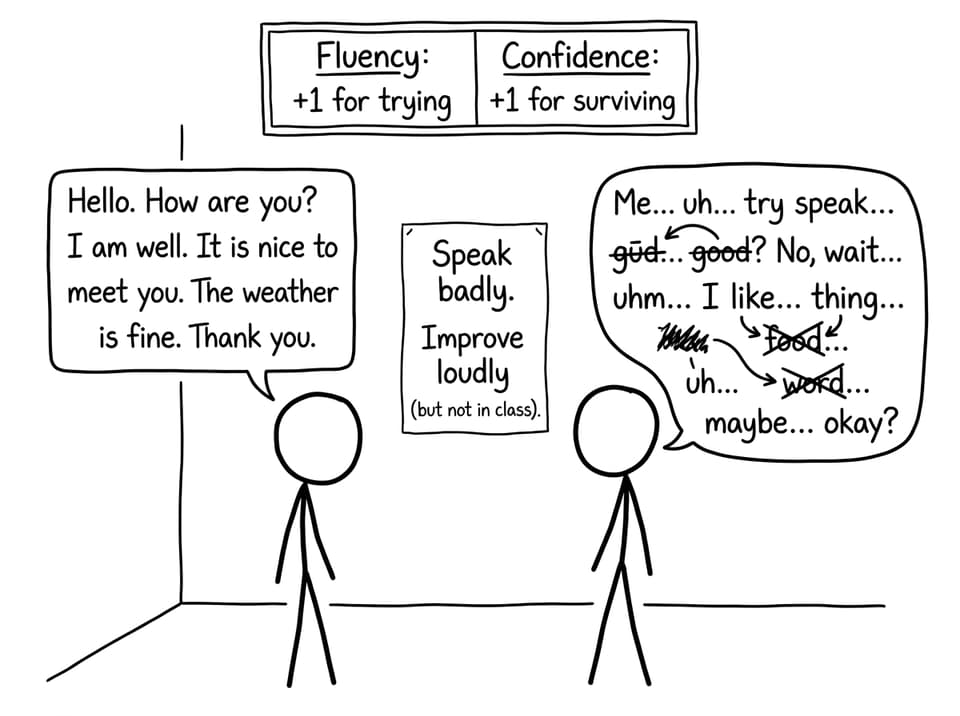
Speaking improves when it stops being a performance. You don’t need to “sound native.” You need to sound understandable, organised, and increasingly flexible.
The re-record rule
Record a response once. Then re-record it after fixing:
-
one grammar issue
-
one vocabulary upgrade
-
one clarity improvement (better connector, clearer opinion)
That second recording is where confidence is built, because you can hear progress.
For targeted speaking strategy, use How to Improve Your Language B Speaking Skills. It aligns practice with what examiners reward.
When you need feedback fast
Speaking alone is useful. Speaking with feedback is faster.
-
Use RevisionDojo’s AI Chat to generate follow-up questions so your practice becomes a mini discussion, not a monologue.
-
Use Tutors when you need real-time correction and pressure training: Tutoring | RevisionDojo and Browse RevisionDojo Tutors.
This is the heart of Realistic Ways to Make Language Acquisition Outside the Classroom More Engaging: the moment practice starts talking back.
Write like a builder, not a poet
Writing is where many Language B students freeze, because it feels like you’re being judged for every mistake. Flip the mindset: write to build reusable parts.
Create a “text-type toolkit”
Choose one text type per week (blog, email, article, speech). Then build:
-
a 3-line opener template
-
8 connectors you can control
-
10 theme phrases (identities, experiences, etc.)
If you’re doing English B, RevisionDojo’s notes can help you lock conventions quickly: IB English B Blogs, Diaries & Personal Letters Notes.
To stay exam-focused, pair that with Tips for Writing a Successful Language B Essay and How to Avoid Common Mistakes in Language B Writing.
Get marking without waiting a week
RevisionDojo’s Grading tools (like rubric-aligned graders) let you upload writing and get actionable feedback quickly, which makes writing practice feel less like shouting into the void. For HL students, see IB Language B HL Paper 1 Grader.
Use tech as a system, not a distraction
Most tech fails because it becomes a substitute for effort. The fix is simple: use tools to shorten setup time, then do real output.
-
Turn vocabulary into daily recall with RevisionDojo Flashcards.
-
Organise practice around themes with IB Language B Syllabus: Breakdown & Study Strategy.
-
When you’re unsure which tools are worth it, compare approaches in Top Language Learning Tools for IB Students.
When your routine is “notes, flashcards, practice, feedback,” you get the kind of engagement that doesn’t depend on mood. That’s the point of Realistic Ways to Make Language Acquisition Outside the Classroom More Engaging.
Conclusion: engagement is what happens when practice feels like a loop
Language learning outside class becomes engaging when it stops being vague. When you know what you’re practising, what you’ll produce, and how you’ll get feedback, the work gets lighter, not because it’s easy, but because it makes sense.
If you want a single place to run that loop, RevisionDojo is built for it: Study Notes to learn quickly, Flashcards to retain, Questionbank-style practice to apply, AI Chat and Grading tools to get feedback, plus Mock Exams, Predicted Papers, a Coursework Library, and Tutors when you need a real person to sharpen your edge.
Pick one strategy from this post today, and commit to it for seven days. That’s how Realistic Ways to Make Language Acquisition Outside the Classroom More Engaging turns from an idea into a routine you can actually keep.