



The day you realize “knowing words” isn’t the same as using them
The strange thing about IB Language B is that you can work hard and still feel unprepared. You might recognize hundreds of words on a vocab list, yet freeze when a listening clip moves too fast. You might write a decent paragraph at home, then lose structure under timed conditions. That gap isn’t laziness; it’s training.
IB Language B exams reward students who can perform language across contexts: interpret unfamiliar texts, write for a specific audience, and speak with control when the clock is loud. This guide gives you a practical revision system you can repeat weekly, with tools that make progress measurable.
If you want a bigger map of the course first, bookmark IB Language B Syllabus: Breakdown & Study Strategy.
A quick IB Language B revision checklist (save this)
Use this as your weekly loop:
-
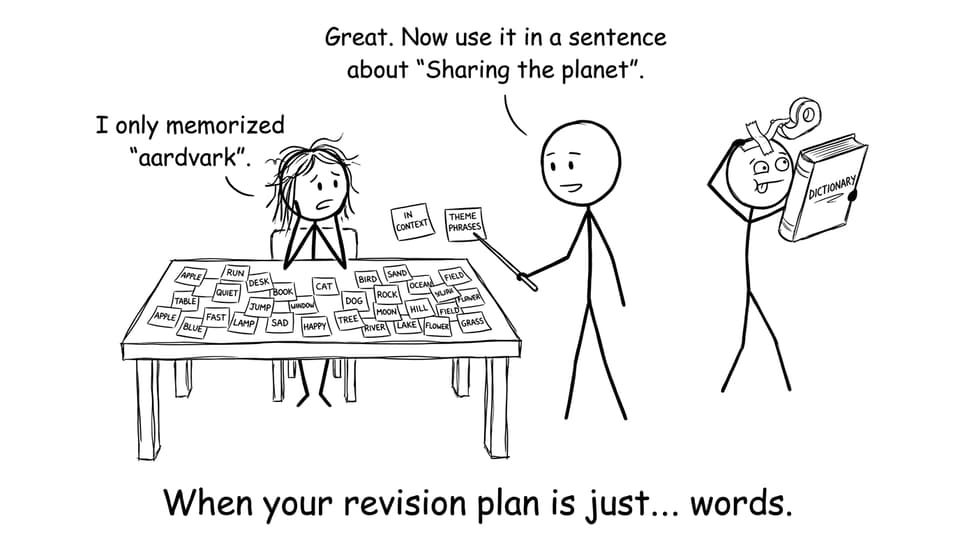
Learn IB theme vocabulary in phrases (not isolated words)
-
Do short reading sets with “purpose, audience, tone” notes
-
Practice listening for signposts and main ideas (not perfection)
-
Write one timed task with a clear text-type framework
-
Do one timed speaking prompt and record it
-
Log 3 recurring errors and turn them into Flashcards
For more general skill-building, Essential Tips for Mastering Language B pairs well with this plan.
Build exam-ready vocabulary the IB way
Most students revise vocabulary like it’s a museum collection: look, label, move on. But IB Language B vocabulary is only useful when it helps you do a task: argue, compare, persuade, narrate, and reflect.
Prioritize high-yield theme phrases
Instead of “word of the day,” build mini-banks for the five prescribed IB themes (identities, experiences, human ingenuity, social organization, sharing the planet). Focus on:
-
Opinion starters (balanced, strong, cautious)
-
Connectors (contrast, cause-effect, concession)
-
“Move phrases” for examples and counterarguments
-
Topic sets that appear constantly (education, technology, environment, relationships)
On RevisionDojo, this is where Flashcards become more than memory tools: you can store phrases as complete chunks and review them with spaced repetition.
Learn words in context, not isolation
Read short texts and “steal” useful structures: sentence frames, register choices, and ways writers soften or strengthen claims. If you need ideas for making your practice more engaging, use Realistic Ways to Make Language Acquisition Outside the Classroom More Engaging.
RevisionDojo helps here with Study Notes and AI Chat: you can paste a short paragraph and ask for (1) synonyms at your level, (2) five follow-up questions, and (3) a list of connectors used in the passage.
Train listening and reading like an IB examiner
In IB receptive skills, the best students don’t “understand everything.” They understand enough, fast, and they can prove it.
Listening: chase structure, not every word
A useful mindset shift: listening is a real-time puzzle. If you miss one piece and obsess over it, you miss the next three.
Try this routine:
-
Predict the topic from the title or context
-
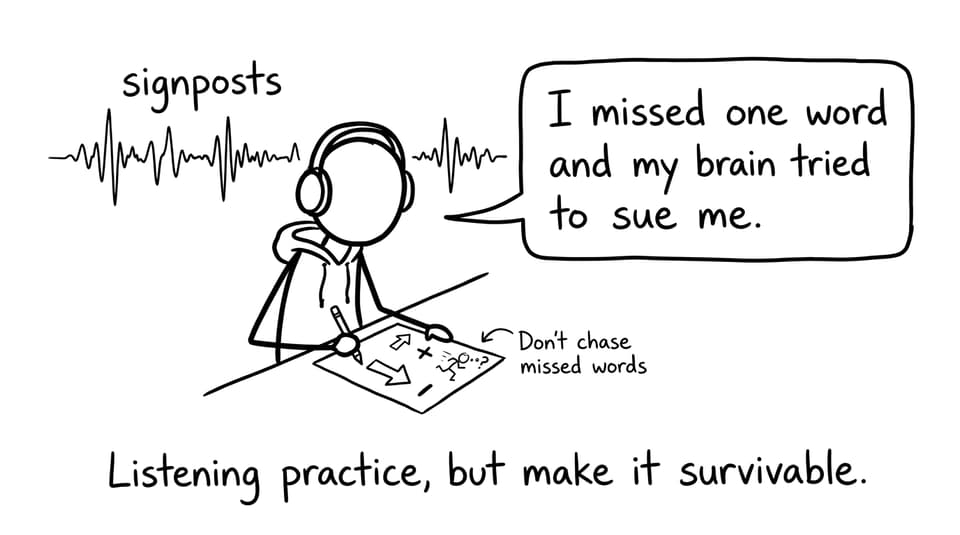
Listen for signposts (“however,” “on the other hand,” “the main issue is”)
-
Note keywords and symbols (arrows, +/- for opinion shifts)
-
After, summarize in 2-3 sentences from memory, then check what you missed
To practise with exam realism, RevisionDojo’s Questionbank (for receptive-style practice where available by course) and timed sets help you build stamina without guesswork.
Reading: stop translating, start mapping
When you read like an IB student under pressure, your job is to identify:
-
Text type (article, blog, email, brochure)
-
Purpose and audience
-
Tone and attitude
-
Evidence for each answer (where in the text it’s supported)
If you want a full exam breakdown, use IB Language B Exams: Format, Timing, Strategy.
Writing: small, frequent reps beat occasional long drafts
IB Language B writing improves fastest when you write often enough to notice patterns. Not just “grammar mistakes,” but decision mistakes: wrong register, unclear purpose, weak paragraph logic.
Use three go-to frameworks
Instead of trying to master every text type at once, build three reliable formats you can execute under time:
-
One formal (formal email, speech)
-
One semi-formal (article, blog)
-
One personal (diary entry, informal email)
Then practice openings and closings until they’re automatic. RevisionDojo supports this with Study Notes, Flashcards for reusable phrases, and Grading tools to check whether your response matches mark-focused expectations.
For a deeper writing-only routine, see How to Master Language B Writing Through Practice.
Practice under the timer early
Timed writing is a different skill from “writing well.” Build it weekly with a simple split:
-
Plan (8-10 minutes): audience, purpose, 3 points, 6-10 key phrases
-
Write (most of the time): clear paragraphs, controlled complexity
-
Check (8-10 minutes): agreement, tense consistency, register, connectors
RevisionDojo’s Mock Exams and Predicted Papers are most useful when you treat them as diagnostics: after each attempt, turn the three biggest errors into your next Flashcards.
Speaking and the Individual Oral: calm beats perfect
The oral is where many IB students feel exposed, because you can’t hide behind extra time. But speaking improves quickly when you make practice structured.
A simple oral training loop
Use one prompt and run it twice:
-
First attempt: focus on clarity and structure
-
Second attempt: improve range (better connectors, more precise examples)
Record both. Compare them like a coach.
If you want IO-specific guidance, use Mastering Language B Oral Practice and IB Language B: 10 Tips to Ace the Oral Exam. For a schedule you can actually follow, see IB Oral Practice Schedule: Regular Speaking Skill Development.
RevisionDojo also offers an Individual Oral Grader to help you evaluate structure, language, and development with clearer criteria-based feedback: Language B: Individual Oral Grader.
FAQ: IB Language B revision
How often should I revise IB Language B to improve quickly?
For IB Language B, frequency matters more than intensity because language skills decay when they’re left untouched. Aim for 15-30 minutes most days, even during heavy weeks, and use longer sessions only when you can protect focus. Rotate skills so you don’t overtrain what feels comfortable (usually reading) and ignore what feels stressful (often listening or speaking). A simple weekly baseline is: 2 short listening sessions, 2 writing sessions (one timed), and 2 speaking recordings. Keep one day for review and error-fixing, where you convert mistakes into Flashcards. Over time, this creates a stable system rather than last-minute panic.
What’s the best way to learn vocabulary for IB Language B exams?
The best IB approach is to learn vocabulary as phrases that do a job: expressing opinion, comparing, giving examples, and signaling structure. Single-word memorization is fragile because it doesn’t teach register, collocation, or how sentences actually work under exam conditions. Build theme-based sets linked to the prescribed IB themes, then recycle them in short writing tasks and oral responses. When you read, highlight sentence frames you can reuse, not just “new words.” Use spaced repetition with Flashcards, but test yourself by producing the phrase in a sentence, not just recognizing it. If your vocabulary can’t survive a timed paragraph or a follow-up oral question, it isn’t exam-ready yet.
How can I improve speaking confidence for the IB Individual Oral?
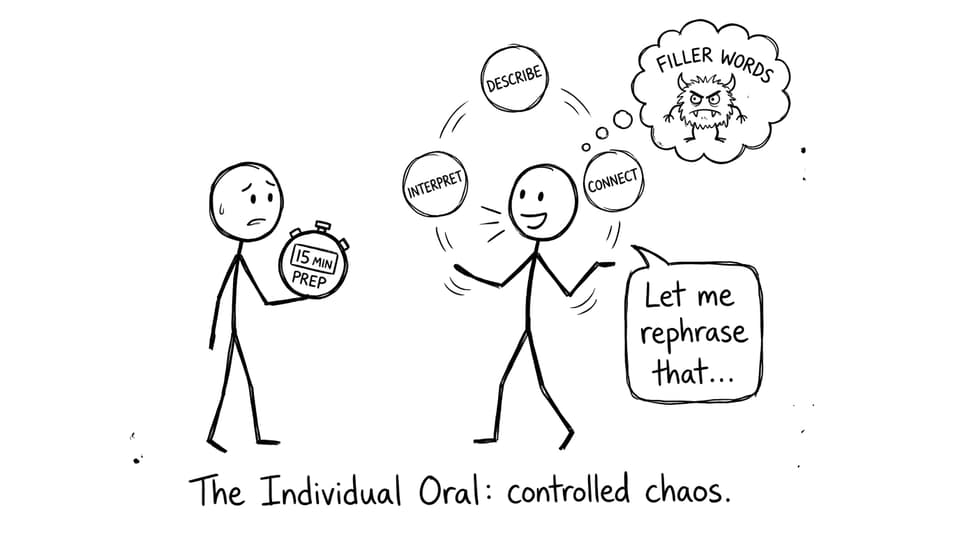
Speaking confidence in IB Language B doesn’t come from sounding perfect; it comes from knowing what to do next when you feel stuck. Train with a repeatable structure: describe, interpret, connect to a theme, then add a personal or cultural link. Record short attempts under time pressure, listen back once without judging yourself, and note just two improvements for the next run. Memorize a small list of “repair phrases” (like “Let me rephrase that” or “What I mean is”) so you can regain control mid-sentence. Use prompts regularly so unpredictability stops feeling like danger and starts feeling normal. If you can, get fast feedback using RevisionDojo’s Grading tools, AI Chat, and the Individual Oral Grader, then book Tutors when you want human nuance on pronunciation and cultural depth.
Bring it all together with RevisionDojo
The goal isn’t to “revise more.” It’s to revise in a way that matches what IB Language B actually measures: skill under pressure. When you build theme phrases, practice receptive skills strategically, write in timed frameworks, and rehearse oral responses like a routine, your confidence stops being a feeling and becomes evidence.
RevisionDojo is built for that evidence: Questionbank, Study Notes, Flashcards, AI Chat, Grading tools, Predicted Papers, Mock Exams, a Coursework Library, and Tutors when you need a real voice to guide the next step. Start your next revision session by choosing one skill, one timer, and one improvement goal, then repeat the loop until IB exam day feels familiar.