
A year feels long until your exam calendar turns into a countdown.
Most IB students don’t fail IB Languages because they “didn’t try.” They fail because effort gets poured into the wrong container: random apps, occasional writing bursts, and speaking practice that starts two weeks before the oral. Self-study can absolutely work, but only when your plan is built like a system, not a mood.
This guide shows you how to build a full one-year self-study language plan that fits real IB life: deadlines, fatigue, and the strange reality that 15 focused minutes often beats a heroic three-hour session.
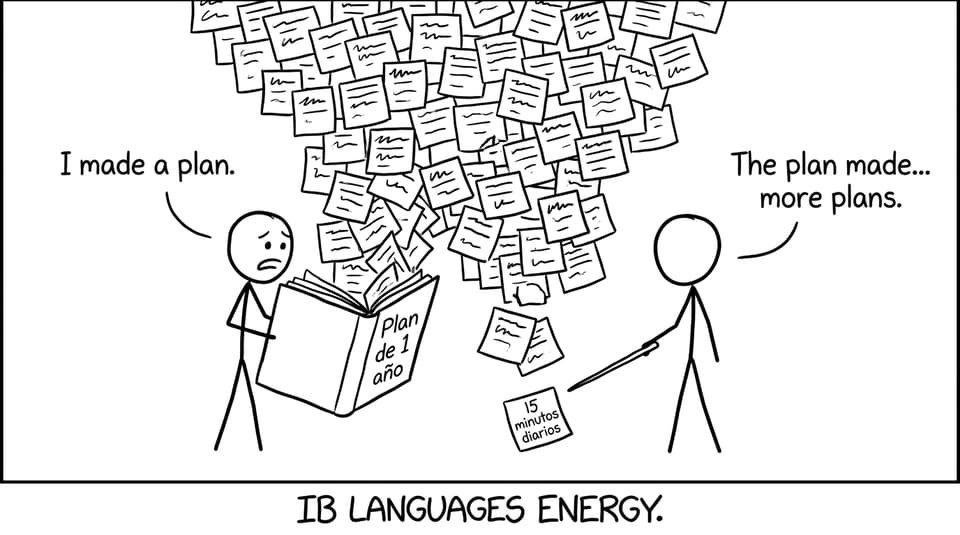
A one-year IB Languages checklist (save this)
Use this as your simple blueprint for IB Languages self-study:
-
Pick your assessment target (Language B / ab initio / English A style skills).
-
Set a daily minimum (10-20 minutes) and a weekly “deep work” block.
-
Split the year into 4 phases: foundations, skill-building, exam alignment, performance.
-
Track outputs (writing pieces, speaking recordings, listening sets), notnot just hours.
-
Use one home base for practice + feedback + review loops.
If you’re using RevisionDojo, you can keep that home base tight: Study Notes, Flashcards, AI Chat, Questionbank, Grading tools, Mock Exams, Predicted Papers, plus Tutors when you need a human reset.
Step 1: Decide what “winning” means for IB Languages
Before resources, before schedules, define success in one sentence.
Examples:
-
“By March, I can handle any theme conversation for the IB Languages oral without freezing.”
-
“I can write a clean Paper-style response with strong register and connectors in 55 minutes.”
-
“I can understand the main argument of an audio/text on first listen/read, even with unknown words.”
If you’re taking Language B, anchor your goals to the actual course expectations and themes. RevisionDojo’s breakdown of the course structure helps you aim correctly: What You Need to Know About the Language B IB Syllabus.
Step 2: Build your resource stack (and keep it small)
A good IB Languages plan is less about “more resources” and more about “fewer, reusable loops.”
Your stack should cover five skills:
-
Vocabulary + accuracy: spaced repetition and high-frequency phrases
-
Reading: short, theme-linked texts
-
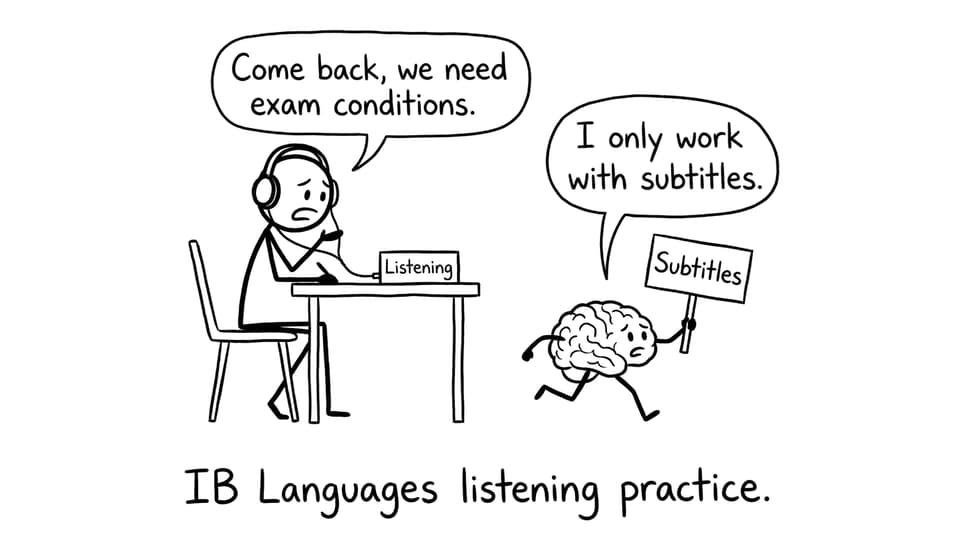
Listening: short clips, then longer sets under pressure
-
Speaking: recorded practice, then live conversation
-
Writing: frequent, feedback-driven drafts
A clean way to do this on RevisionDojo:
-
Use Flashcards as your daily memory engine.
-
Use language-specific hubs like IB Spanish B Resources to keep practice aligned.
-
Add exam practice loops from Questionbank pages (for example, IB English B Paper 2 (Listening) Questionbank).
And when you’re unsure what to prioritize, steal a proven workflow from: Top Language Learning Tools for IB Students.
Step 3: Split the year into four phases (12 months that actually make sense)
Foundations (Months 1-3)
Goal: make the language feel “usable,” fast.
-
Build a theme-based phrase bank for IB Languages (opinions, comparisons, cause/effect).
-
Do short daily listening (even 5 minutes) and repeat the same clip twice.
-
Record 2 speaking monologues per week (2-3 minutes each).
Tip: keep vocabulary in sentences, not isolated words. RevisionDojo’s guidance on revising efficiently for exams is a strong compass here: How to Effectively Revise for Language B Exams.
Skill-building (Months 4-6)
Goal: turn knowledge into repeatable performance.
-
Write one timed task every week (short plan, clean structure, fast check).
-
Start doing mixed listening: some with support, some without.
-
Build “repair phrases” for speaking (rephrase, clarify, add perspective).
If writing is your bottleneck, bookmark: Tips for Writing a Successful Language B Essay.
Exam alignment (Months 7-9)
Goal: practice the format you’ll be graded on.
-
Run one weekly exam simulation block using RevisionDojo Mock Exams and Predicted Papers.
-
Grade your writing with Grading tools (or get feedback from Tutors).
-
Drill weak areas with targeted Questionbank sets.
To tighten strategy, use: IB Language B Paper 1 vs Paper 2: Timing and Strategy and IB Language B Exams: Format, Timing, Strategy.
Performance (Months 10-12)
Goal: reduce errors and increase flexibility.
-
Rewrite old tasks to cut the same mistakes in half.
-
Practice speaking under a timer with theme prompts.
-
Keep flashcards daily, but prioritize exam phrases and connectors.
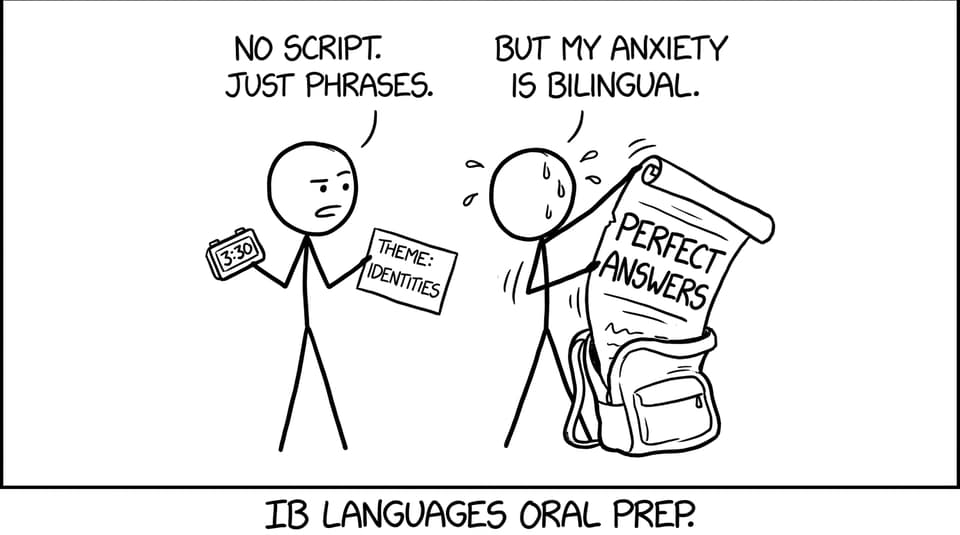
For oral prep, follow: 10 Proven Tips to Prepare for Your IB Language B Oral and How to Improve Your Language B Speaking Skills.
Step 4: Your weekly routine (simple, realistic, repeatable)
A sustainable IB Languages week might look like:
-
Daily (10-20 min): RevisionDojo Flashcards + 3 minutes of reading aloud.
-
3x per week (25-35 min): listening set + quick transcript review + 5 new phrases.
-
1x per week (60-90 min): one timed writing or one oral simulation + feedback.
If you’re balancing school and activities, this piece helps you protect consistency: Balancing Language Learning with Work, School, and Extracurriculars.
Common mistakes that quietly ruin IB Languages self-study
-
Collecting resources instead of practicing outputs.
-
Avoiding speaking because it feels embarrassing.
-
Studying vocabulary without themes, registers, and text types.
-
Never revisiting errors (so the same errors survive all year).
If you want a direct fix-list, see: How to Avoid Common Mistakes in Language B Writing.
Conclusion: your year needs a system, not motivation
A one-year self-study plan works when it’s boring in the best way: small daily inputs, weekly performance reps, and monthly reflection. That’s how IB Languages becomes predictable.
If you want a single place to run the whole loop: learn with Study Notes, retain with Flashcards, practice with Questionbank, simulate with Mock Exams and Predicted Papers, and improve with AI Chat, Grading tools, Coursework Library, and Tutors\ to build your plan inside RevisionDojo and keep it frictionless until exam day.