
A Geography Internal Assessment can look unfamiliar even to a parent who is comfortable helping with ordinary homework. There are maps, fieldwork data, graphs, geographic theories, and a tightly structured report. If you are supporting IB Geography IA work, however, you do not need to become a geography teacher. Your most useful role is to help your child plan the process, explain their decisions aloud, protect time for focused work, and seek qualified feedback when subject knowledge becomes the barrier.
The distinction matters. Good support creates the conditions in which a student can think. It does not do the thinking for them.
Under the current IB Geography course, the IA is a fieldwork investigation completed by both SL and HL students. It leads to an individual written report based on a fieldwork question, information collection, analysis, a conclusion, and evaluation. It is worth 25% of the final Geography grade at SL and 20% at HL. The report has a maximum of 2,500 words and is assessed out of 25 marks across six criteria.
Because schools set their own internal schedules, your child's teacher and current course documentation should remain the final authority on deadlines and submission arrangements.
A quick parent checklist
You can provide meaningful IB internal assessment help without touching the student's writing. Focus on these practical actions:
- Ask your child to show you the school's milestones and final deadline.
- Help divide the project into fieldwork, data processing, analysis, conclusion, evaluation, and proofreading stages.
- Ask open questions rather than suggesting answers.
- Protect regular, realistic working sessions in the family calendar.
- Encourage your child to consult the assessment criteria throughout the process.
- Check that sources, maps, photographs, and secondary data are acknowledged.
- Direct subject-specific questions to the teacher, an appropriate tutor, or a rubric-aligned support tool.
- Leave all wording, analysis, interpretation, and conclusions to the student.
Understand what the Geography IA is testing
The report is not simply a long piece of homework about a place. It asks a student to investigate a focused geographical question using fieldwork, treat and present the information appropriately, identify meaningful patterns, and evaluate the investigation honestly.
The six assessed areas are:
| Assessment area | What the student must demonstrate |
|---|---|
| Fieldwork question and geographic context | A focused question connected to relevant geographic ideas and location |
| Methods of investigation | Appropriate methods that are clearly explained and justified |
| Quality and treatment of information | Suitable data, processed and presented effectively |
| Written analysis | Interpretation of patterns, relationships, and anomalies using geographic understanding |
| Conclusion | A clear answer supported by the investigation's findings |
| Evaluation | Specific limitations and realistic improvements |
Analysis carries more marks than any other single criterion. That is an important clue for families. A report can look polished and still remain weak if it mostly describes graphs instead of explaining what the patterns mean.
Parents who want the broader academic context can review the complete guide to IB Geography. Students can also use RevisionDojo's central IB Geography resources to revisit concepts they need for their interpretation.
Support the timeline, not the sentences
Large assignments often become stressful because the deadline is visible while the next action is not. A calendar changes that. Work backward from the school's internal deadline and create small checkpoints that your child can adjust with their teacher.
A practical sequence might include:
- confirm the fieldwork question and geographic context
- organize raw and secondary information
- select suitable presentation techniques
- draft the methods and explain why each was used
- analyze patterns and unusual results
- write a conclusion that answers the question
- evaluate limitations and propose targeted improvements
- verify citations, figure labels, word count, and formatting
Avoid assigning dates on your child's behalf. Instead, ask, “What needs to be finished before you can begin the analysis?” This turns planning into reasoning rather than parental enforcement.
It also helps to preserve exam preparation. Short sessions with Geography Study Notes, Flashcards, and the Questionbank can keep the wider course active while the IA occupies attention. RevisionDojo's guide to which IB subjects have an IA explains why small coursework deadlines are often more manageable than one heroic final push.
Ask questions that deepen geographic thinking
A parent does not need to know whether a Spearman's rank calculation, environmental quality survey, or annotated map is the best choice. You can still ask questions that reveal whether your child understands the investigation.
Useful prompts include:
- What exactly does your fieldwork question ask you to find out?
- Why was this location appropriate?
- What does this graph reveal that the raw figures did not?
- Which result does not fit the overall pattern?
- What geographic process could explain that pattern?
- How does this evidence help answer your question?
- Which limitation had the greatest effect on the reliability of the findings?
- How would your proposed improvement reduce that limitation?
These are prompts, not lines for the report. If your child cannot answer one clearly, that identifies a useful next step: revisit a concept, speak to the teacher, inspect the data, or seek specialist guidance.
This same habit supports examination performance. Geography rewards the ability to connect evidence, place, process, and scale. RevisionDojo's explanation of why Geography case studies matter can help students understand the difference between naming an example and using it analytically.
Help your child move from description to analysis
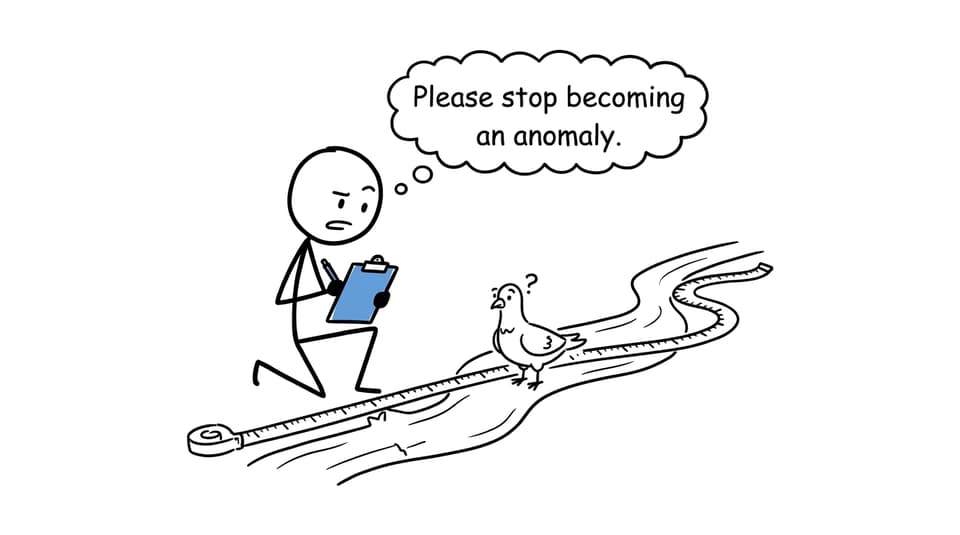
A common difficulty is the gap between seeing a pattern and explaining it. A student may write that values rise with distance from a location. Analysis begins when they examine the strength of that pattern, identify exceptions, connect it to geographic theory, and consider what the evidence can reasonably support.
You can help by asking your child to explain one visual presentation aloud using this sequence:
- What is the main pattern?
- What specific evidence demonstrates it?
- Are there anomalies or variations?
- Which geographic ideas could explain the result?
- How does it affect the answer to the fieldwork question?
Do not supply the explanation or rewrite it afterward. The value lies in making the student's own reasoning audible. If the underlying content is uncertain, the IB Geography Bots can help students explore difficult concepts and ask follow-up questions without turning a parent into the subject expert.
Protect academic integrity while remaining involved
The IB expects assessed work to represent the student's own abilities. Its academic integrity guidance specifically warns against non-permitted assistance from relatives, tutors, editing services, and other third parties. Parents should therefore avoid writing, rewriting, supplying interpretations, or editing a draft so heavily that the language is no longer the student's.
Safe support includes:
- discussing the school calendar
- providing a suitable place to work
- asking the student to explain their reasoning
- reminding them to save versions and record sources
- encouraging communication with the teacher
- checking whether every figure has a source or attribution, without creating the citation
Unsafe involvement includes composing paragraphs, choosing conclusions, correcting the argument, generating data, or directing the student to disguise borrowed material.
AI deserves the same care. A student may use an approved tool to clarify a concept, understand a criterion, or generate questions for reflection, subject to school rules. They should not submit generated analysis as their own. Ask the school what use is permitted before your child uploads assessed work or relies on AI-generated content.
Supporting IB Geography IA work when you lack subject knowledge
“I don't know enough Geography to help” is not a failure. It is a useful boundary. Once you recognize it, you can direct your child toward feedback that is specific, ethical, and aligned with the rubric.
RevisionDojo provides a practical bridge. Its IB Geography IA Grader breaks the task into the relevant criteria and helps students self-evaluate areas such as geographic context, methods, data presentation, analysis, conclusion, and evaluation. The wider IB IA guides support structure and criterion awareness, while the Geography Coursework Library allows students to study how effective investigations are organized.
Exemplars should be used to understand quality, not to borrow language or replicate an investigation. RevisionDojo's AI Chat and grading tools can create another feedback loop, while Tutors offer human guidance when a student needs more sustained support. For families comparing the available options, RevisionDojo support for parents and families brings these resources together.
Keep the IA in perspective
An IA can feel as though it occupies the whole horizon because it develops over weeks rather than hours. Yet the best parental response is usually quieter than students expect: a visible calendar, protected work time, calm questions, and confidence that confusion can be turned into a next step.
Your child must own the fieldwork report. You can help them own the process.
Start by asking them to show you their next school deadline and identify one action they can complete this week. If subject knowledge or structure is blocking progress, explore RevisionDojo's Geography-specific feedback, structuring resources, Questionbank, Study Notes, Flashcards, AI Chat, Grading tools, Predicted Papers, Mock Exams, Coursework Library, and Tutors. The goal is not to take the work out of the student's hands. It is to place the right support within reach.