
Supporting IB Economics IA work can feel difficult when your child is discussing market failure, monetary policy, and diagrams you have not encountered since school, if if ever. The reassuring answer is that you do not need to become an economist. Your most valuable role is to provide structure, ask thoughtful questions, protect academic integrity, and help your child find reliable subject-specific feedback.
The IB Economics Internal Assessment is not one long research report. It is a portfolio of three short commentaries in which the student applies economic theory to current news. Parents can help by making the process manageable without choosing the argument, editing the analysis, or writing any part of the submission.
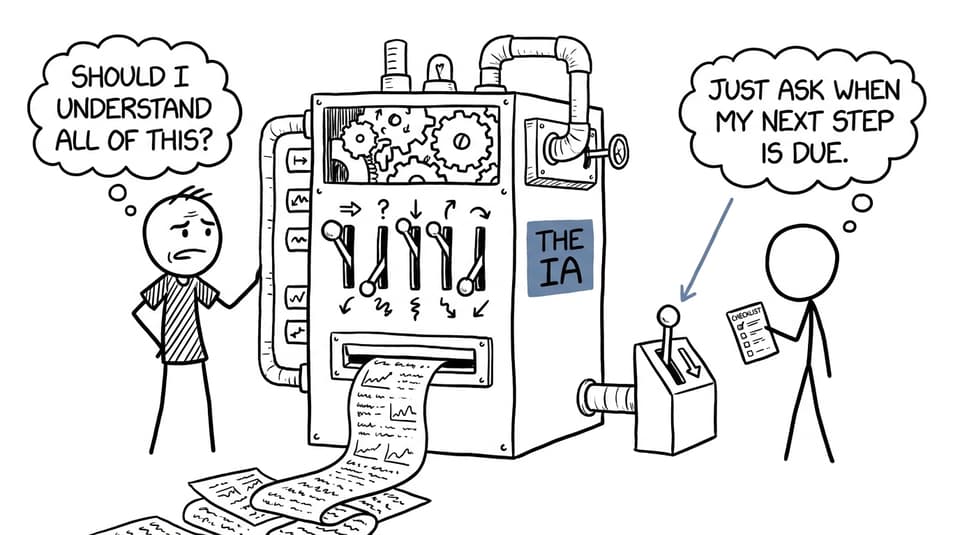
A quick parent checklist
When your child begins an Economics commentary, focus on six practical actions:
- Ask for the school deadline and the student's next smaller milestone.
- Encourage early article selection rather than last-minute writing.
- Ask your child to explain the economic issue in plain language.
- Protect regular, limited work sessions alongside sleep and other subjects.
- Direct questions about rules or permitted feedback to the Economics teacher.
- Use subject-specific resources for guidance instead of rewriting the work yourself.
The wider RevisionDojo support hub for IB parents can also help families understand where coursework, revision, and feedback fit within the Diploma Programme.
Understand what the Economics IA requires
Under the current IB Economics framework, both Standard Level and Higher Level students complete a portfolio of three commentaries. Each commentary must be no longer than 800 words and must analyse an extract from published news media.
Together, the portfolio must cover three different syllabus units: microeconomics, macroeconomics, and the global economy. The introductory unit is excluded. The commentaries must use different news sources, and each selected article must have been published no earlier than one year before the commentary is written. Each commentary must also apply a different IB Economics key concept.
The nine available concepts are scarcity, choice, efficiency, equity, economic well-being, sustainability, change, interdependence, and intervention. These are not decorative labels. The chosen concept should shape how the student interprets the issue.
The portfolio contributes 30% of the final Economics grade at SL and 20% at HL. That explains why students may feel significant pressure even though each individual commentary is short. The complete IB Economics IA guide gives families and students a clearer view of the requirements and assessment language.
| Assessment area | What the student needs to demonstrate |
|---|---|
| Diagrams | Relevant, accurate, correctly labelled diagrams that are fully explained |
| Terminology | Precise and appropriate use of economic vocabulary |
| Application and analysis | Economic theory connected directly to the article's evidence and context |
| Key concept | A meaningful explanation of how the selected concept relates to the article |
| Evaluation | Balanced reasoning and supported judgements about effects, limitations, and alternatives |
| Portfolio requirements | Compliance with the rules covering units, sources, concepts, dates, and word limits |
Parents do not need to assess these areas themselves. Understanding them simply makes it easier to ask useful questions and recognise why a student may need to revise more than grammar.
Help your child plan the process, not the conclusion
An 800-word commentary can look deceptively small. In reality, the student must select a suitable article, identify relevant theory, construct diagrams, apply evidence, integrate a key concept, evaluate consequences, and edit tightly. The challenge is compression, not volume.
Help your child work backwards from the internal school deadline. A practical sequence might include separate dates for article approval, annotation, diagram planning, the first draft, teacher feedback, revision, and final checks. School deadlines and procedures should always take priority over a generic online timeline.
A weekly conversation can remain simple:
- What is the next deliverable?
- What is currently blocking progress?
- Does a teacher need to answer anything?
- When will the next focused work session happen?
This turns a vague instruction such as “work on your IA” into a visible next action. RevisionDojo's guide to time management for IB students offers additional ways to divide large assignments into realistic milestones.
Ask questions that strengthen economic thinking
A parent can be an excellent test audience precisely because they are not the teacher. If the explanation only makes sense to someone who already knows the argument, it may not yet be clear enough.
Invite your child to explain the commentary aloud. Useful prompts include:
- What economic problem or policy does the article describe?
- Which theory explains what is happening?
- What changes in the diagram, and why?
- Which evidence from the article supports that chain of reasoning?
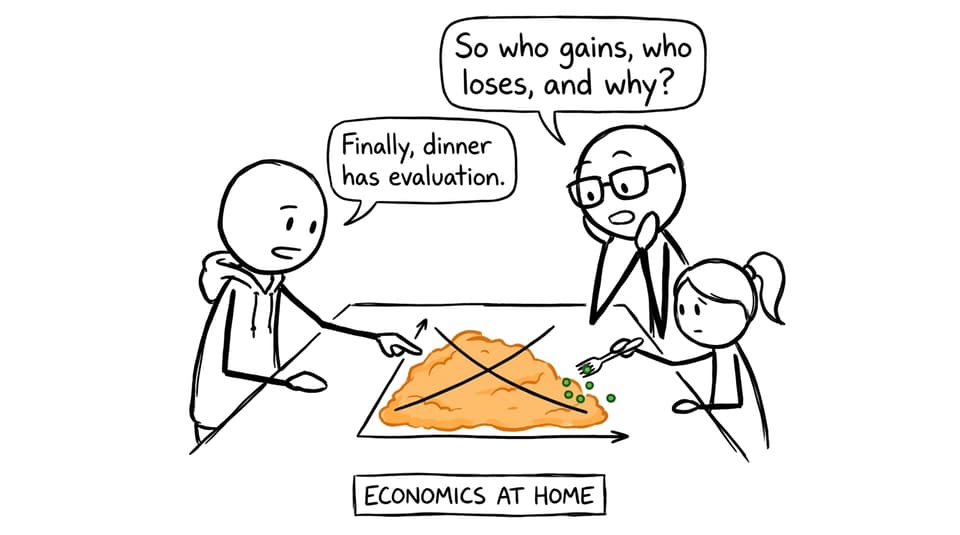
- Who benefits, who may lose, and does that change over time?
- What assumption could make the predicted outcome less certain?
- How does the key concept change your interpretation?
These questions do not supply an answer. They reveal whether an answer exists. If your child cannot explain why a curve shifts or how a policy affects stakeholders, the next step is subject review rather than more polished wording.
RevisionDojo's IB Economics resources bring together Study Notes, lessons, diagrams, Flashcards, and topic practice. The guide to using Economics revision notes effectively is particularly useful when an IA problem is really a gap in underlying theory.
Keep article selection in the student's hands
The best article is not necessarily the most dramatic headline. It is one that supports a clear economic model, contains usable contextual evidence, and creates room for evaluation. A short report about a tax, subsidy, interest-rate decision, trade restriction, or other policy may offer more analytical value than a broad opinion piece.
Your child should select the article and confirm its suitability with the teacher. A parent can help by asking whether it meets the date and source requirements, but should not make the final selection or decide the student's analytical approach.
Before drafting, the student should be able to identify the applicable syllabus unit, an unused key concept, a relevant diagram, article-specific evidence, affected stakeholders, and at least one limitation or uncertainty. The Economics commentary tips explain how these elements can develop into a coherent structure.
Know the boundary between support and authorship
The IB expects submitted coursework to be genuine and authentic. Its academic integrity policy specifically expects parents to help students manage their workload and understand the rules while abstaining from undue or unauthorised assistance.
Appropriate support can include providing a quiet place to work, discussing deadlines, listening to an explanation, asking non-leading questions, and encouraging the student to consult the teacher. It can also include checking that the student has followed a self-created checklist.
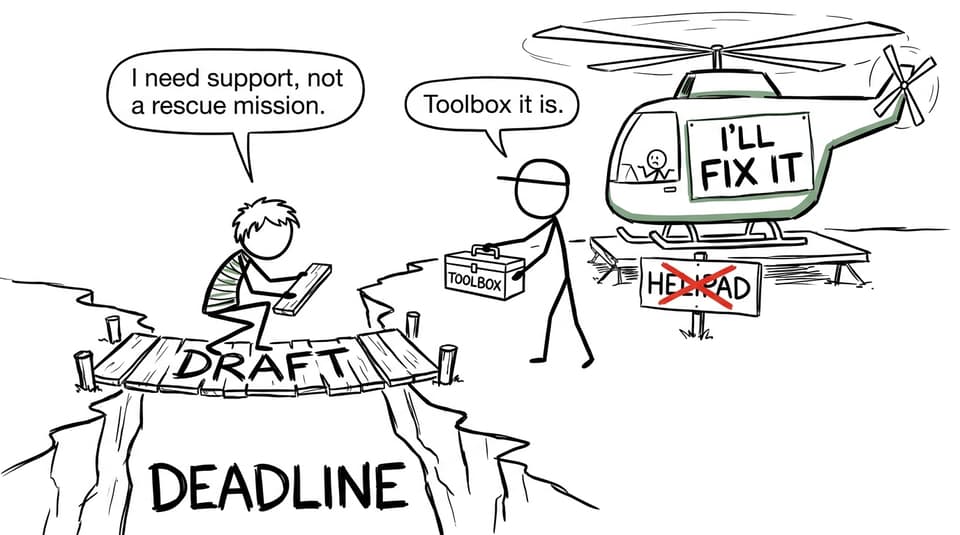
Parents should not write sentences, redesign arguments, select evidence for inclusion, construct diagrams, or perform substantial line-by-line editing. Even a well-intentioned rewrite can replace the student's voice and obscure what they genuinely understand. RevisionDojo's explanation of IB coursework collaboration boundaries can clarify the difference between discussion and unauthorised assistance.
A useful rule is this: support the conditions in which thinking happens, but leave the thinking and writing to the student.
Respond to stress without lowering standards
Stress often makes an IA feel like one giant judgement. Calm planning restores proportion. Ask what specific task feels difficult: finding an article, understanding the model, drawing the diagram, applying evidence, evaluating the policy, or cutting the word count.
Each answer points to a different solution. Article uncertainty belongs with the teacher. Weak theory requires Study Notes, Flashcards, or AI Chat clarification. Diagram confusion calls for targeted model review. Evaluation improves when the student considers stakeholders, short- and long-run effects, assumptions, trade-offs, and realistic alternatives.
Avoid making every family conversation about progress. Agree on a predictable check-in and leave space between discussions. Support is often most effective when it is dependable rather than constant.
Use Economics-specific feedback when you cannot provide it
Many parents eventually reach the same honest conclusion: “I can organise the time, but I do not know enough Economics to evaluate the work.” That is not a failure. It is a sign that the student needs the right tool or educator rather than more parental intervention.
RevisionDojo provides an Economics-specific IA Grader that helps students review drafts against relevant criteria and identify areas requiring attention. Its structuring guidance can help students organise context, theory, diagram explanation, applied analysis, evaluation, and judgement while keeping authorship with the student.
Students can also study the Economics Coursework Library to understand how completed work is organised. Exemplars should be used to examine structure and criterion coverage, never as language to copy.
This is where RevisionDojo becomes the ultimate IB resource rather than a single-purpose IA tool. A student can repair content gaps with Study Notes and Flashcards, test understanding through the Questionbank, ask focused questions in AI Chat, use Grading tools for structured feedback, and later prepare with Predicted Papers and Mock Exams. When personal explanation is needed, Tutors can provide guided support within the school's academic integrity rules.
Support that lasts beyond the submission
Supporting your child's Economics IA is less about knowing the right answer than creating the right environment for them to find it. Understand the basic requirements, make the next deadline visible, ask questions that expose the reasoning, and keep a firm boundary around authorship.
Then let subject-specific support do what parental support cannot. Encourage your child to open the Economics IA guide, review the rubric, and identify one concrete improvement for the next work session. RevisionDojo can provide the structure, feedback, and Economics resources; your child still supplies the judgement, effort, and final words.