



A realistic study schedule for MYP English Language and Literature is usually shorter and steadier than parents expect. For most students, three or four focused sessions of 20 to 30 minutes each week, alongside regular reading, is a sensible starting point.
The aim is not to fill every afternoon with revision. It is to practise the four broad skills the course develops: analysing texts, organising ideas, producing texts, and using language accurately. These habits grow through repetition, not one exhausting evening before an assessment.
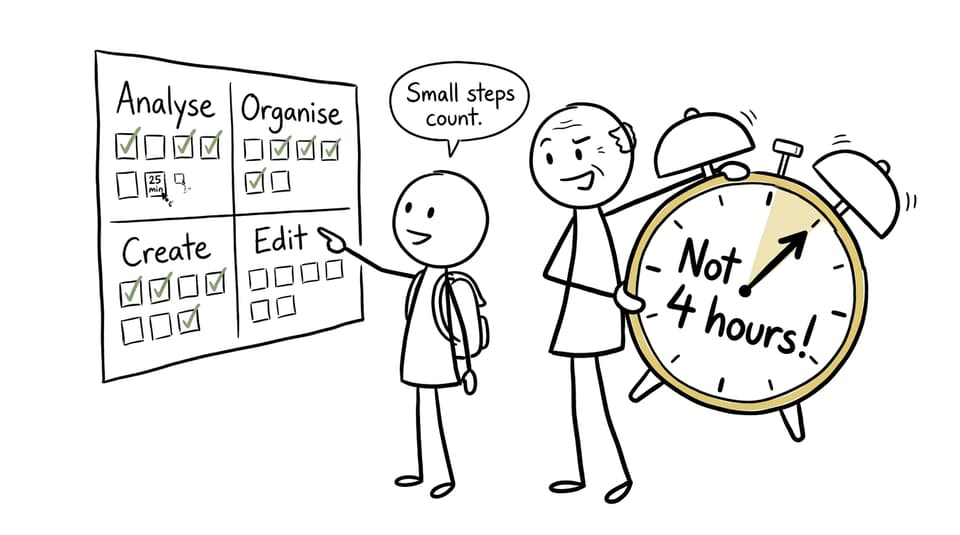
A practical weekly checklist
A manageable week might include:
- Reading for 15 to 20 minutes on three or four days.
- Two focused English sessions of approximately 25 minutes.
- One analytical paragraph or short creative passage.
- One review of teacher feedback followed by a targeted improvement.
- A five-minute discussion about a text, image, article, or advertisement.
During a busy assessment period, the student can add a longer practice session. The basic routine, however, should remain sustainable during an ordinary school week.
Parents should check current classroom tasks before creating the schedule because MYP schools may organise units and deadlines differently. Home study should reinforce classroom learning rather than introduce a competing programme.
What MYP English Language and Literature requires
The IB framework assesses MYP language and literature through four criteria: Analysing, Organizing, Producing text, and Using language. These criteria are equally weighted in the official framework, although an individual classroom task may emphasise only some of them.
This gives families a practical way to plan revision. “Study English” is too vague. “Explain how a writer uses contrast in one paragraph” is specific enough to begin.
The MYP Language and Literature curriculum expectations outline the course's central skills. Families can also use the MYP Language and Literature assessment criteria explained to turn teacher feedback into a clear next step.
A balanced schedule rotates through these criteria rather than requiring a complete essay in every session.
A four-session MYP English revision schedule
Read and notice
Set a timer for 25 minutes. The student reads an assigned text, unfamiliar extract, article, or visual text and identifies one meaningful choice. This might involve diction, imagery, tone, perspective, structure, symbolism, or layout.
They then answer three questions:
- What has the creator done?
- What effect might it have on the audience?
- How does it support the text's purpose or meaning?
Parents do not need to know the correct interpretation. Asking, “What detail makes you think that?” keeps the discussion anchored in evidence. Students who need help recalling techniques can consult RevisionDojo's MYP English Language and Literature Study Notes.
Retrieve and practise
The student reviews a few terms, such as register, connotation, audience, juxtaposition, or narrative voice. They then close their notes and explain each term independently.
Next, give them one short prompt: “How does the writer create uncertainty?” They can plan three points or write one paragraph in 15 minutes. This is more valuable than copying definitions because it moves from recall to application.
RevisionDojo's Evidence Selection topic supports students who can identify techniques but struggle to choose precise quotations or details. Parents can help by asking which evidence the student will use, without rewriting the response.
Produce and organise
MYP English includes creative and purposeful writing as well as literary analysis. The student might draft a monologue, speech, article opening, persuasive paragraph, diary entry, or description related to the current unit.
Keep the target narrow. Focus on one element, such as audience, register, structure, or intended effect. After writing, the student can underline the sentence that establishes purpose and circle one deliberate language choice. This makes writing feel like a sequence of decisions rather than an unexplained talent.
Edit and improve
Choose one existing paragraph and one improvement target. The student might add explanation after evidence, sharpen a topic sentence, reorder ideas, replace vague verbs, or correct a recurring punctuation error.
They should rewrite the paragraph rather than restart the entire task. Afterwards, they can record one rule in an error log: “Next time, I will explain the effect before introducing another quotation.”
This reflects the best revision strategies for MYP Language and Literature: practise a skill, review feedback, and make one visible improvement.
How parents can provide low-pressure support
Supporting a child in MYP English Language and Literature does not require marking every response. Too much correction can make the subject feel like a performance for an adult rather than a skill the student owns.
Parents can protect a regular study time, provide a quiet space, ask the student to explain the task, and discuss one improvement afterwards. It is also useful to ask the teacher which criterion currently needs attention. More terminology practice will not solve a problem with explaining effects or organising ideas.
A helpful MYP English Language and Literature parent guide should clarify the difference between analysis and summary, encourage independent writing, and make the student's next action obvious.
Adjusting the schedule before assessments
Two or three weeks before a major assessment, retain the normal routine and add one longer rehearsal. The student might complete a timed plan, analytical response, or creative task under classroom-like conditions.
RevisionDojo can support each stage. Study Notes and Flashcards clarify concepts and terminology, while the Questionbank provides application practice. AI Chat can explain difficulties or ask guiding questions, and Grading tools can identify criterion-based improvements without replacing the student's writing.
Where relevant to the programme, Mock Exams and Predicted Papers offer timing practice. The Coursework Library helps students examine effective structures, while Tutors can address persistent weaknesses.
Progress may first appear through greater independence: selecting better evidence, planning before writing, explaining effects, or revising without waiting for an adult. A good schedule makes that progress visible while leaving room for reading, curiosity, and ordinary family life.