


A parent often asks after dinner: “How much homework should my child really be doing?” There is no single IB-wide MYP History homework amount. Workload depends on the student’s year, school policy, current unit, and whether the task is brief practice or a larger investigation.
The IB provides a learning and assessment framework, but it does not prescribe a universal nightly homework quota. The school calendar, teacher instructions, and task sheet matter more than a generic estimate. Parents should consider both the time required and the learning the task is meant to produce.
A quick guide for parents
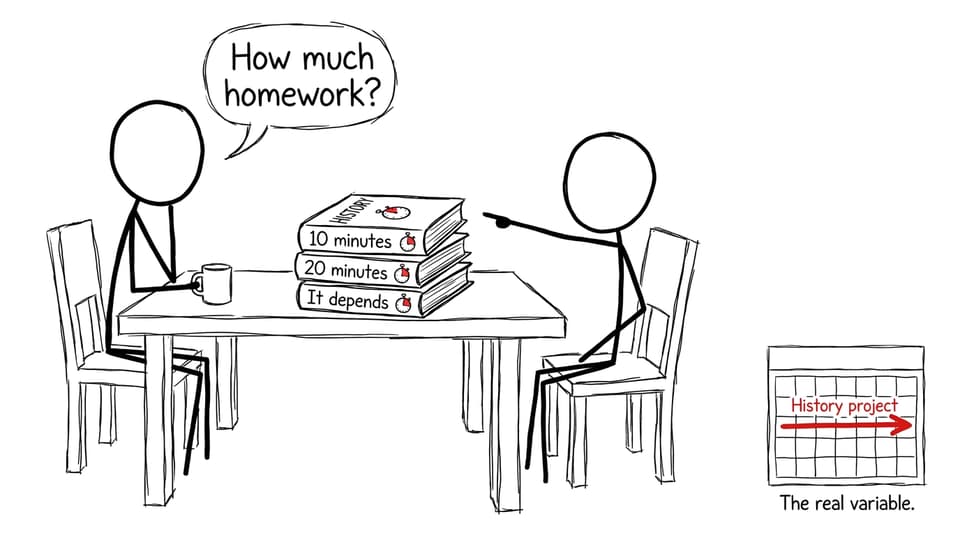
- Short reading, retrieval, or vocabulary practice may take 15 to 30 minutes.
- Source analysis or a structured response may take 30 to 60 minutes.
- Research tasks and presentations may be spread across several weeks.
- Workload can rise before a deadline even when the weekly average is reasonable.
- A student taking much longer than expected may be stuck, over-editing, or unsure about the criteria.
These are planning ranges, not IB rules. The school’s instructions should take priority.
Why MYP History homework varies
MYP History is commonly taught within Individuals and Societies. Depending on the school, it may be a separate History course, integrated Humanities, or part of a broader programme. The IB overview of Individuals and Societies notes that the subject group can include history, geography, economics, politics, and other disciplines.
That flexibility affects homework. One school may assign weekly historical reading; another may organize work around an inquiry question, with students gathering sources and refining an argument over time.
The IB requires at least 50 hours of teaching time for each subject group in each MYP year. That figure refers to classroom teaching, not homework. It cannot determine how long an individual assignment should take at home.
It helps to distinguish practice from assessment-related work. Reviewing vocabulary or a timeline is usually brief. Investigating a question, evaluating sources, communicating an argument, and reflecting on a conclusion naturally take longer and may require several sessions.
What students are practising
MYP History is not simply about remembering dates. The Individuals and Societies framework uses four broad assessment criteria: knowing and understanding, investigating, communicating, and thinking critically.
A homework task might ask a student to explain causes, compare perspectives, support a claim with evidence, develop a research question, or evaluate a source’s origin, purpose, value, and limitations. This is why a one-page task can take longer than several pages of straightforward questions: the student is making decisions about interpretation and evidence.
RevisionDojo’s MYP History revision notes can clarify unfamiliar content before writing begins. Resolving confusion early often prevents a short assignment from becoming an exhausting evening.
What is a reasonable amount?
Reasonable homework matches the task, year level, and teacher’s stated expectation. Work intended to take 20 minutes should not quietly become a two-hour research project. A larger investigation, however, might require separate sessions for understanding the question, selecting sources, planning, and drafting.
Focus on progress as well as minutes. After 30 or 45 focused minutes, can the student show a research question, source list, paragraph plan, or revised response? If not, the obstacle may be unclear instructions, missing knowledge, weak organization, or uncertainty about the criterion.
The MYP homework tips for parents recommend defining a small first step and a clear stopping point. This is especially useful when an instruction such as “research the topic” feels too broad to begin.
A low-pressure home routine
Parents do not need to teach the course. They can provide structure while leaving the historical thinking to the student.
Start with the task sheet
Find the command term, due date, required format, and relevant criterion. Ask, “What are you being asked to show?” rather than only asking whether the work is finished.
Make the first step smaller
For an investigation, begin with one possible research question. For source analysis, identify the source’s origin and purpose. A manageable opening step reduces pressure without lowering expectations.
Use a time box
Agree on 25 or 30 minutes of focused work, followed by a short pause. Record what was completed and what remains unclear so an open-ended assignment does not consume the evening.
Keep a load map
Use three headings: Due this week, In progress, and Blocked. Name the reason for each blocked task, such as missing knowledge, unclear criteria, or a difficult source.
The guide to supporting a child in the MYP describes the parent’s role as closer to coach than editor. Helping with planning is appropriate; rewriting a submission removes the learning being assessed.
When RevisionDojo can help
Students should begin with school materials, deadlines, and criteria. RevisionDojo’s MYP History resources can then address specific gaps through Study Notes, Flashcards, key definitions, and the MYP History Questionbank.
AI Chat can explain unfamiliar ideas, while Grading tools can identify where an answer needs clearer evidence or reasoning. The Coursework Library provides organizational models, and Tutors can address repeated misunderstandings. Predicted Papers and Mock Exams support broader preparation. The purpose is not to add more work, but to shorten the distance between confusion and a productive next step. The MYP parent resource guide explains how these tools can support a cycle of understanding, recall, application, and review.
When to contact the teacher
Contact the teacher when expectations remain unclear or work regularly takes much longer than intended. Ask how long the assignment should take, what must be submitted, and which criterion is being assessed.
Repeated difficulty may reflect workload, but it can also involve reading challenges, perfectionism, planning problems, or uncertainty about evidence. A concise question such as “Could you clarify the intended time and most important success criteria?” gives the teacher useful information.
The reassuring answer
MYP History usually combines short practice with occasional longer investigations. One busy week does not automatically indicate an unreasonable workload. Make deadlines visible, identify the next step, protect a stopping point, and let the student own the thinking. When additional support is needed, RevisionDojo connects explanations, practice, feedback, coursework guidance, exam preparation, and tutoring so progress becomes more purposeful and independent.