
Slang feels like a shortcut.
You hear a native speaker drop one tiny phrase and suddenly the whole conversation sounds effortless. Then you try it in class, and the room goes quiet in a way that makes you reconsider every life choice.
For IB Languages, that awkward moment is actually useful. It points to the real skill you’re being assessed on: not just “knowing words,” but choosing the right register for the right situation.
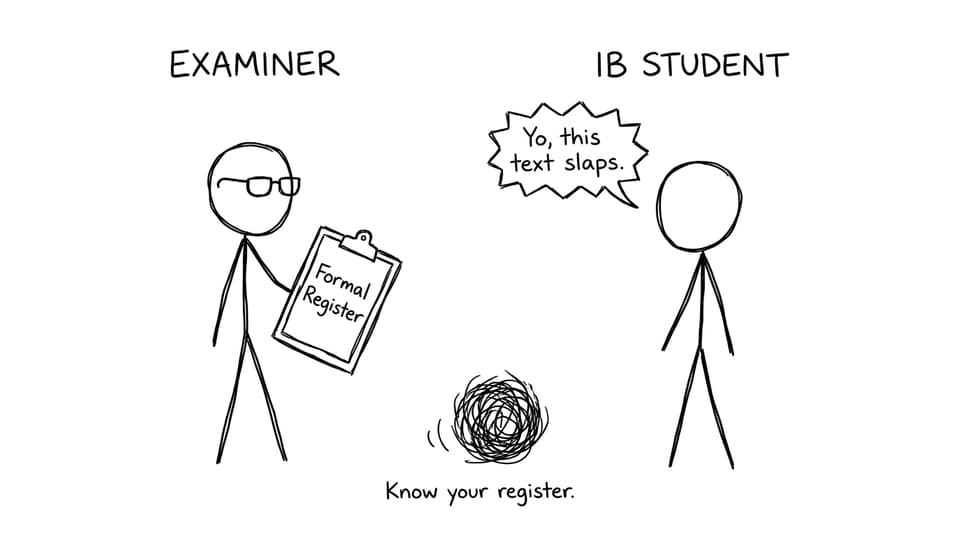
The quick rule for IB Languages: slang is a tool, not a personality
Here’s a simple checklist you can use before you drop slang in IB Languages:
-
Who are you speaking to? Friend, teacher, interviewer, wider audience?
-
What’s the task? Casual dialogue, formal text type, oral discussion?
-
What’s the tone? Humorous, persuasive, critical, reflective?
-
Can you explain it? If you can’t define it and place it in context, it’s risky.
-
Would it survive the exam room? If not, keep it for practice.
If you want a structure that keeps you exam-aligned while still sounding natural, build your routine around IB-style tasks like the ones in How to Effectively Revise for Language B Exams.
Why slang can help your IB Languages performance
Slang is cultural shorthand. It carries attitude, identity, and belonging. Used carefully, it can make your speaking and writing feel less like a worksheet and more like a real voice.
Slang teaches you what textbooks often hide: real register shifts
In IB Languages, register matters. Slang is one extreme of informal register, which helps you feel the full spectrum. When you understand slang, you usually get better at:
-
spotting tone in authentic texts
-
understanding implied meaning
-
responding more naturally in conversation
That’s why students who immerse regularly often improve faster than students who only memorize lists. If you need practical immersion ideas, use Realistic Ways to Make Language Acquisition Outside the Classroom More Engaging.
Slang boosts motivation (and motivation boosts consistency)
A boring plan fails quietly. A plan that feels alive gets repeated.
In IB Languages, repetition is the hidden advantage: you don’t need dramatic study sessions, you need sustainable ones. Learning a few slang expressions (and noticing where they do and don’t fit) can make practice feel rewarding again. Pair that with a realistic vocabulary target from How Many New Words Should You Learn Each Day.
When slang hurts your IB Languages marks
Slang becomes a problem when it replaces clarity.
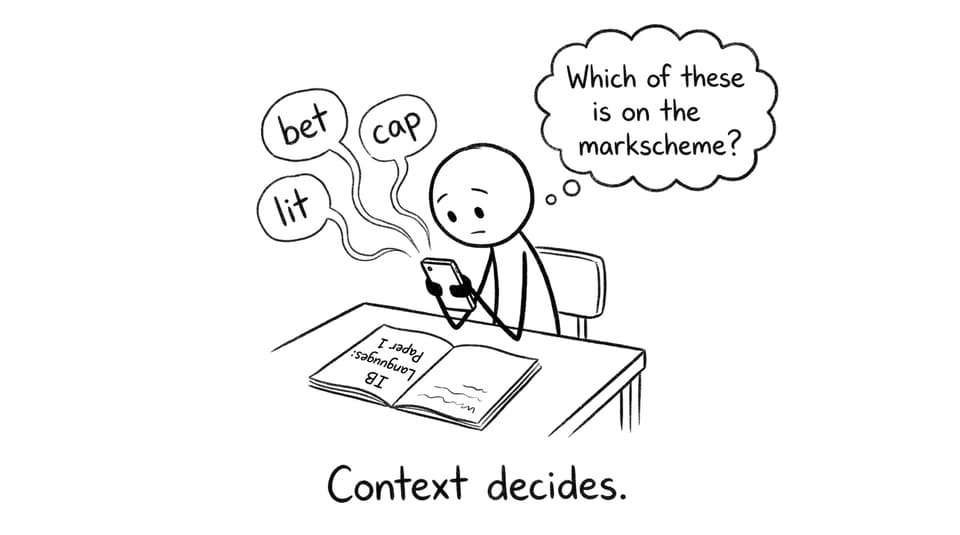
Slang is context-specific (and exams punish ambiguity)
Many slang terms are regional, age-specific, or time-sensitive. You might learn something trendy from a show, then use it with someone who finds it strange, outdated, or even rude.
In IB Languages exam tasks, you’re rewarded for being understood and for controlling tone. Slang can misfire because it’s harder to grade fairly, and it’s easier to misunderstand.
Slang can lower the perceived register in formal tasks
Some tasks want a neutral or formal register: official emails, articles, speeches, or reflective writing. Even if your grammar is accurate, slang can make your writing look uncontrolled.
A helpful habit is to separate your practice into two lanes:
-
Lane 1 (exam-safe language): connectors, opinion phrases, precise vocabulary
-
Lane 2 (real-life language): slang, idioms, casual fillers
RevisionDojo makes this easier because you can build Lane 1 with Study Notes, convert it into Flashcards, then apply it in the Questionbank and Mock Exams. If you want a clean workflow, start with RevisionDojo App: The Smarter Way to Prep for IB Exams.
How to use slang the smart way in IB Languages (without sabotaging yourself)
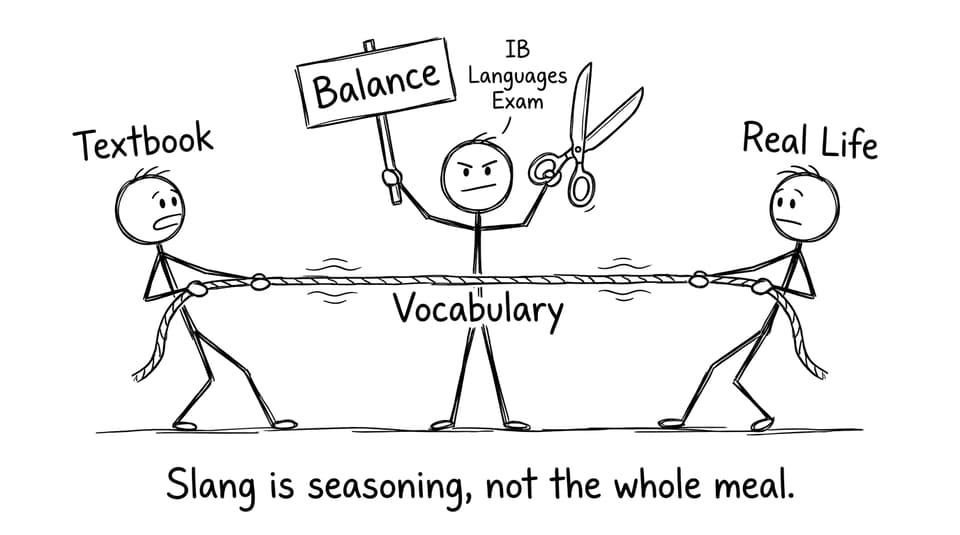
Use slang as “seasoning” in speaking practice
In class discussions or partner practice, slang is a great way to learn tone. But keep it controlled:
-
use one slang expression per response
-
immediately follow with a clear, standard phrase
-
ask your teacher (or a native speaker) if it sounds natural
If you’re shy about speaking, a low-pressure approach matters. Try the strategies in How to Practice Your Target Language if You’re Shy.
Build an “exam-safe swap list”
Make a simple list in your notes:
-
slang phrase
-
neutral synonym
-
formal synonym
-
one example sentence for each
This is where RevisionDojo’s Flashcards shine: one card can test the swap in both directions. When you forget a swap, ask AI Chat for examples in different registers, then check yourself with a few Questionbank prompts.
Train register like a skill, not a vibe
Students often say “I want to sound more natural.” What they really mean is: “I want to control tone.”
In IB Languages, control beats chaos. A calm routine helps: 15-30 minutes most days, with one deeper session for speaking or writing. If your schedule is busy, Balancing Language Learning with Work, School, and Extracurriculars makes it feel doable.
Conclusion: in IB Languages, slang is earned
Slang isn’t “bad.” It’s powerful.
But in IB Languages, power is only useful when you can control it. Build your foundation in clear, exam-ready language first. Then add slang in small, intentional ways that match audience and purpose.
If you want one place to practice register, build vocabulary, get feedback, and stay aligned with exam tasks, RevisionDojo is built for that: Questionbank, Study Notes, Flashcards, AI Chat, Grading tools, Predicted Papers, Mock Exams, Coursework Library, and Tutors when you need a human check-in. Use slang to sound real. Use RevisionDojo to score real marks in IB Languages.