



If you’re shy, speaking your target language can feel like walking onto a stage you didn’t audition for. You know the words. You’ve done the exercises. Then someone says, “Just speak,” and suddenly your brain becomes a quiet room with the lights off.
That’s the hidden challenge inside IB Languages: progress often happens out loud, in real time, with mistakes included. The good news is that shy students don’t need a personality transplant to get exam-ready. You need a system that makes speaking feel smaller, safer, and more repeatable.
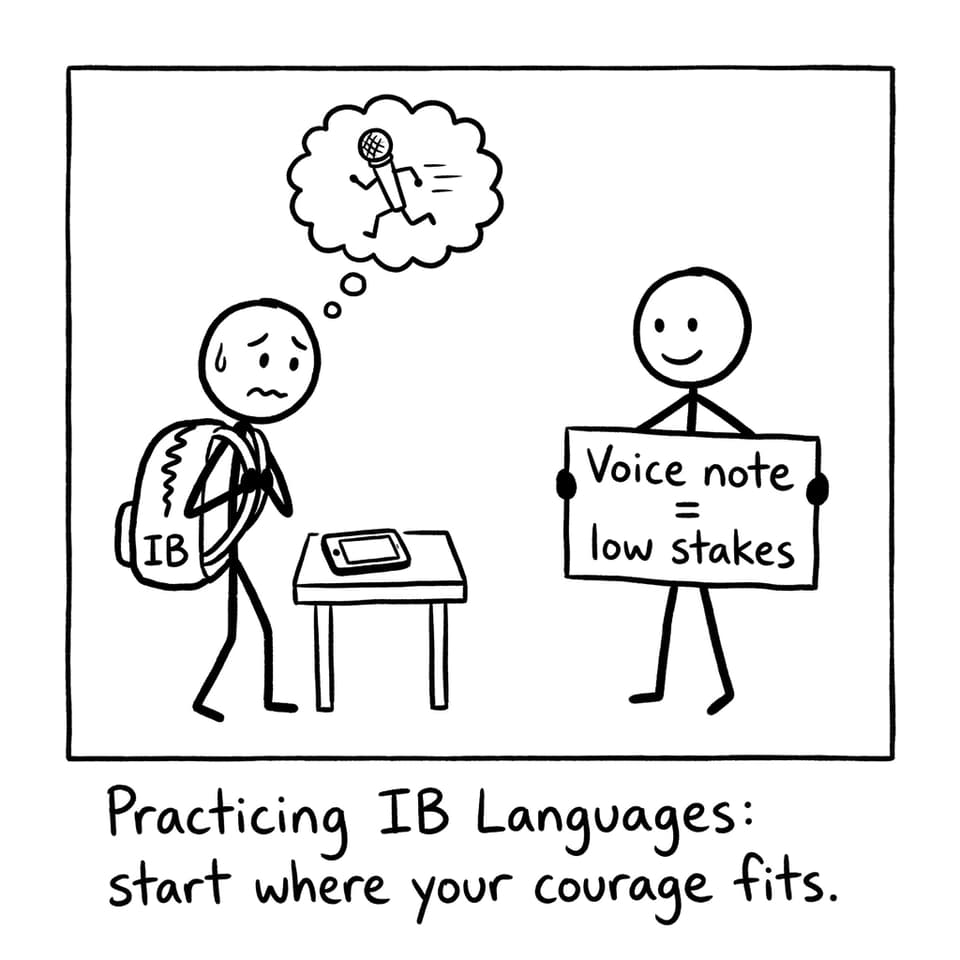
A quick checklist for shy-friendly IB Languages practice
-
Practice speaking in private first (recordings, self-talk, read-aloud)
-
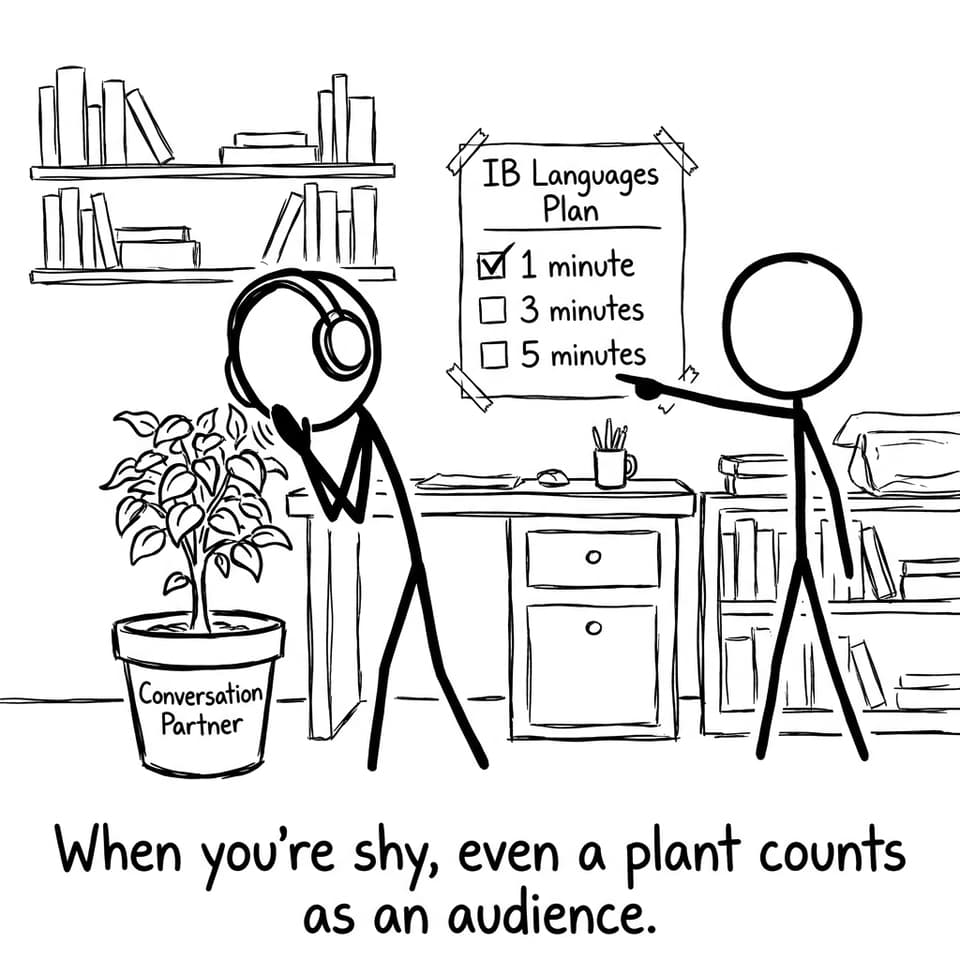
Use tiny time boxes (60 seconds beats “an hour someday”)
-
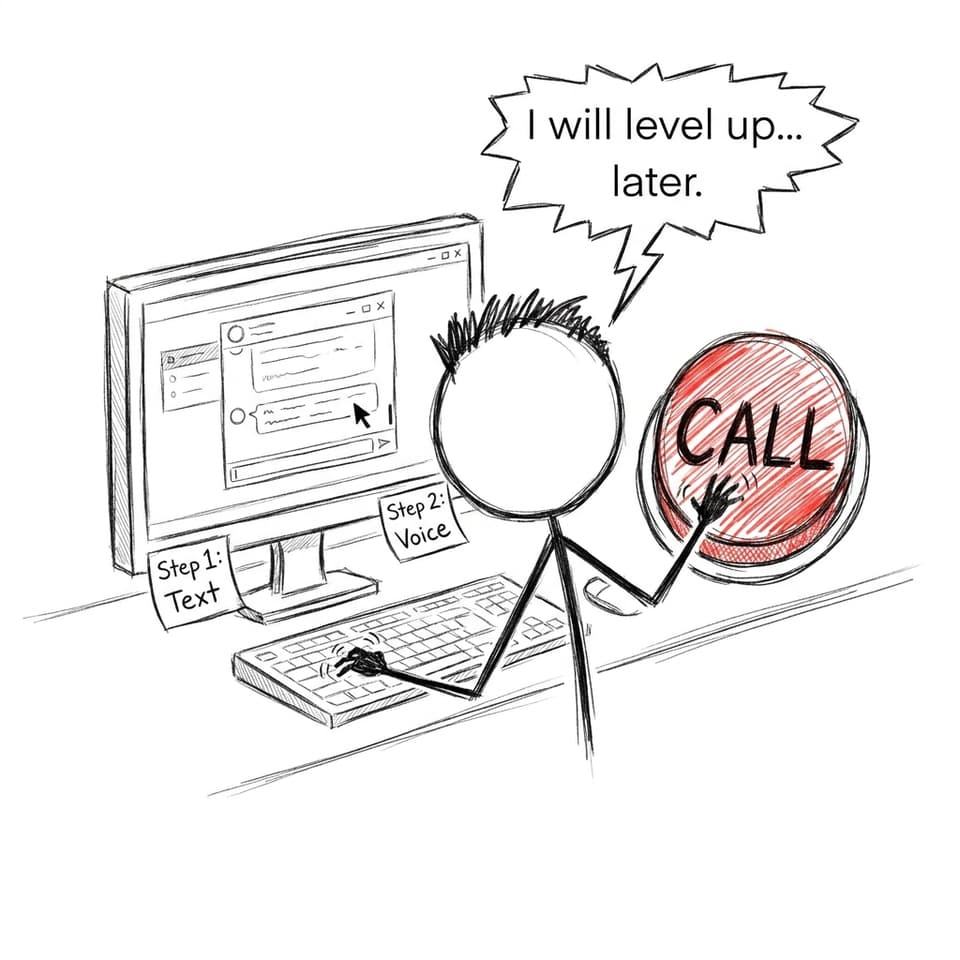
Move from text -> voice notes -> short calls
-
Reuse IB-style prompts so your confidence matches the exam
-
Review with one focus (pronunciation, verbs, connectors, or fluency)
If your goal is the oral, your practice should look like the oral. For Language B speaking routines, start with Mastering Language B Oral Practice and keep it open while you train.
Why shyness spikes in IB Languages
Shyness isn’t laziness. It’s often a fear of being evaluated mid-sentence. In IB Languages, that fear can intensify because you’re juggling vocabulary, grammar, and exam structure all at once.
What helps is separating two things:
-
Skill building (private, messy, repetitive)
-
Performance (timed, structured, assessed)
Most shy students try to perform before they’ve built enough low-stakes reps. You don’t need more courage. You need more reps that feel survivable.
Start with “micro-speaking” (the 60-second rule)
Set a timer for 60 seconds and speak on one safe topic: your day, your school, a hobby. Stop when the timer ends, even if you’re doing well. This trains your brain to associate speaking with an ending, not an endless exposure.
Then do it again, but with one upgrade:
-
Add two connectors (however, because, although)
-
Use one past tense structure
-
Include one opinion + reason
This is IB Languages practice that scales without forcing you into uncomfortable situations too early.
For a structured schedule that keeps speaking consistent, use IB Oral Practice Schedule: Regular Speaking Skill Development.
Use tech to make practice private but real
Shy learners thrive when they can repeat, rewind, and try again. That’s why the right tools matter.
On RevisionDojo, you can build a quiet practice loop:
-
Flashcards for themed vocabulary you can actually use in conversation
-
Study Notes to steal high-quality sentence patterns
-
AI Chat to simulate low-pressure dialogue, then retry with better phrasing
-
Grading tools to check your writing so your speaking becomes more accurate
-
Questionbank prompts to practice exam-style responses without guessing what to say
If you’re studying Spanish B, the IB Spanish B Resources page is a good hub for skills practice, vocab building, and exam-style training.
Build a “safe ladder”: text -> voice notes -> live speaking
A common trap is jumping straight from silent studying to full conversation. Instead, climb a ladder:
Text first (no pressure)
Write 4-6 lines answering an IB-style prompt. Keep it simple. Accuracy matters more than flair.
Voice notes next (low pressure)
Read your text aloud, then record a second version without reading. This is where fluency begins.
Live speaking last (short and bounded)
Do a 3-minute call with a friend, tutor, or exchange partner. Use a timer. End on time.
To make this exam-relevant, train with oral exam guidance like 10 Proven Tips to Prepare for Your IB Language B Oral Exam and ....
Make practice match the assessment (without panicking)
For many students, “oral” becomes a vague fear instead of a specific format. Shrink the fear by naming the structure and rehearsing it.
If you’re preparing for Language A or the IO, keep your understanding sharp with:
-
Cracking the Individual Oral: The Ultimate Guide for IB Students
-
Comprehensive Guide to the IB Individual Oral (IO) for Language and Literature and Literature
And if you want to avoid the errors that quietly pull marks down, study Top Mistakes in IB Language Oral Exams and How to ....
A calmer way to get confident
Being shy doesn’t disqualify you from strong IB Languages scores. It just means your practice has to be designed with kindness and precision: small steps, repeated often, linked to the exam.
If you want one place to build that system, RevisionDojo gives you the full loop: Study Notes and Flashcards to load vocabulary, Questionbank prompts to generate speaking topics, AI Chat to rehearse safely, and Mock Exams and Predicted Papers to make practice feel real. Add Tutors when you’re ready for human feedback, and use the Coursework Library and Grading tools to keep your language accurate across skills.
Start today with one minute of speaking. In IB Languages, that is how confidence is built: quietly, then consistently, then all at once.