The first time you look at the November 2026 timetable, it doesn’t feel like a schedule. It feels like a weather report warning you about a storm that lasts three weeks.
If you’re an IB student, you already know the strange pressure of exam season: not just the content, but the stacking. The way one paper ends and another begins before your brain has even put down the pen. The way your hardest subjects seem to cluster on the same days like the calendar is playing a joke.
This post breaks down the hardest exam days in the November 2026 session, why those days feel heavy, and how to build a realistic plan that protects marks and energy. You’ll also see a practical routine you can run inside RevisionDojo (Questionbank, Study Notes, Flashcards, AI Chat, Grading tools, Predicted Papers, Mock Exams, Coursework Library, Tutors) so your preparation matches the way IB exams actually behave.
The quick checklist for surviving the hardest exam days
Use this as your steady baseline for every high-pressure IB day, especially when your schedule looks unfair.
- Identify your “pressure blocks” (consecutive days, double sessions, writing-heavy sequences).
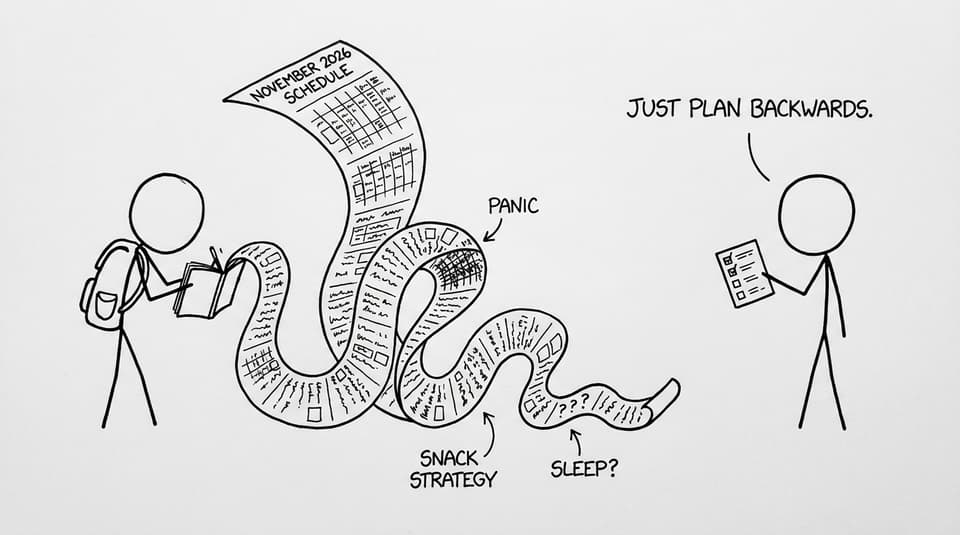
- Plan backwards: last 72 hours before an exam is for recall and technique, not new learning.
- Build a two-track plan: (1) content consolidation weeks before, (2) timed execution closer to the paper.
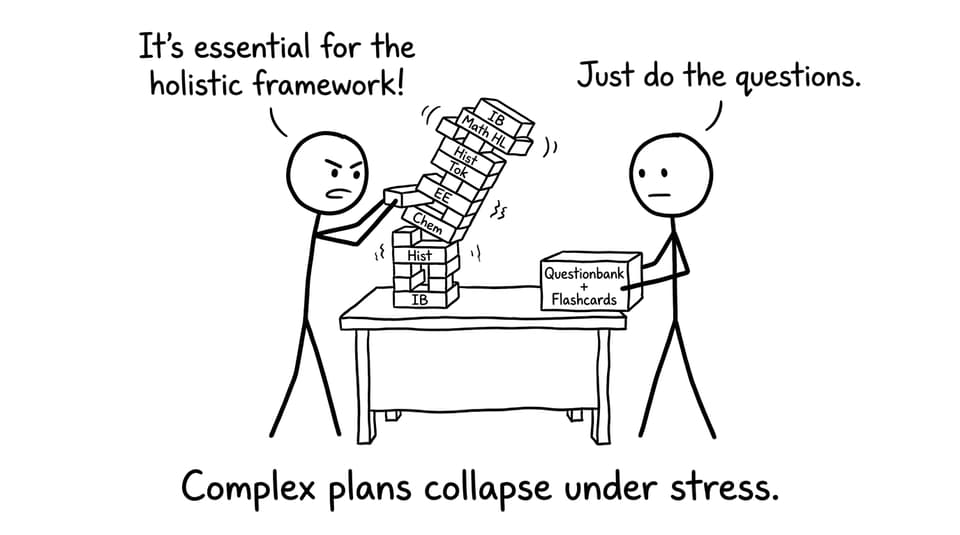
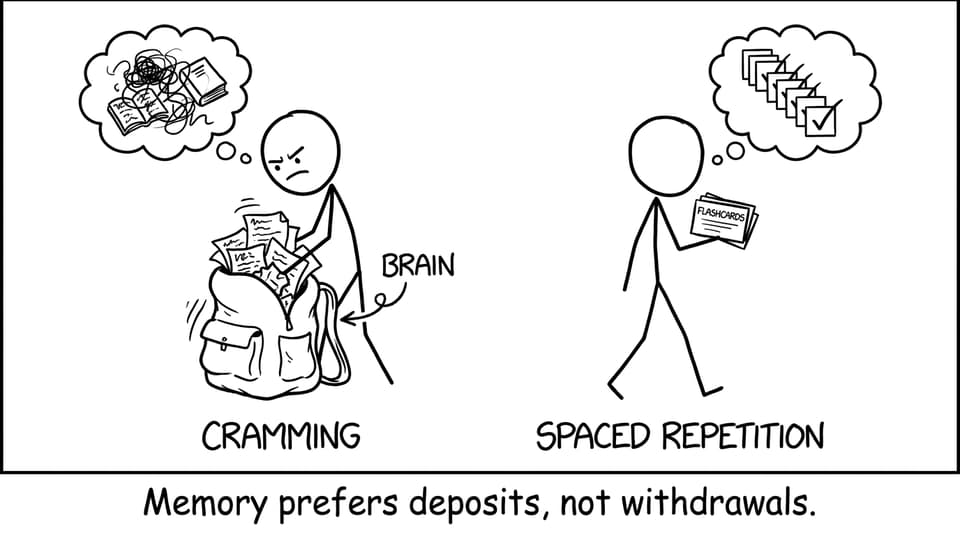
- Use one simple loop: Study Notes (clarify) -> Questionbank (apply) -> Flashcards (retain) -> Mock Exams (simulate).
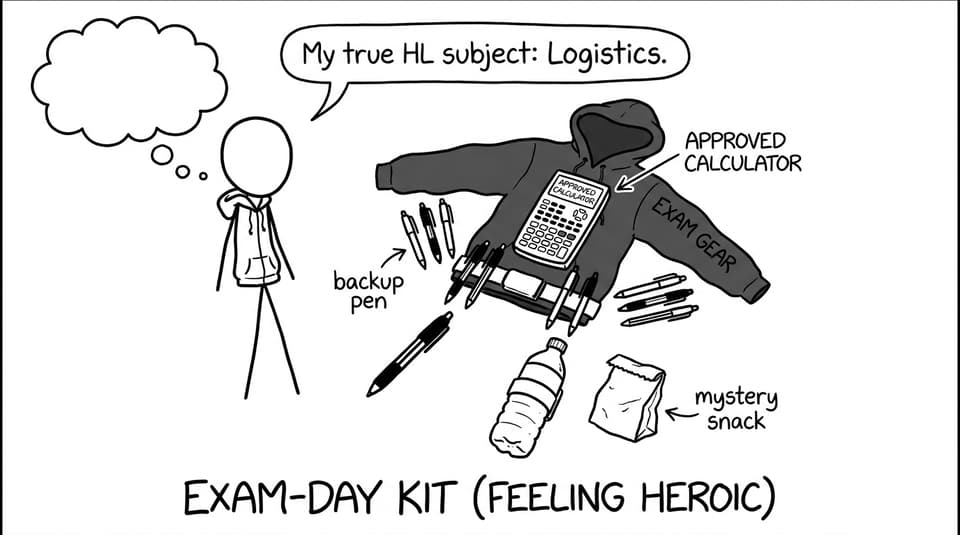
- Protect logistics: sleep, food, transport, equipment, and a calm night routine.
For a timetable-first approach, use: How to Use the IB Exam Schedule to Maximize Your Final Grade and How to Plan Final IB Revision Using the Official Timetable.
November 2026 hardest exam days (the pressure calendar)
Below is the exact “hardest exam days” list you provided, kept intact so you can map your own subjects onto it.
| Date | Morning Session | Afternoon Session |
|---|---|---|
| Fri 23 Oct | No exams | School-based syllabus (SBS) SL Paper 1 |
| Mon 26 Oct | SBS SL Paper 2 | Language A Literature HL Paper 1; Language A Literature SL Paper 1; Language A Language & Literature HL Paper 1; Language A Language & Literature SL Paper 1 (except English & Spanish) |
| Tue 27 Oct | Language A Literature HL/SL Paper 2; Language A Language & Literature HL/SL Paper 2 (except English & Spanish) | Biology HL Paper 1 (1a & 1b); Biology SL Paper 1 (1a & 1b) |
| Wed 28 Oct | Biology HL Paper 2; Biology SL Paper 2 | Business Management HL/SL Paper 1; Business Management HL Paper 3 |
| Thu 29 Oct | Business Management HL Paper 2; Business Management SL Paper 2 | Spanish A Literature HL Paper 1; Spanish A Literature SL Paper 1; Spanish A Language & Literature HL Paper 1; Spanish A Language & Literature SL Paper 1; Spanish B HL Paper 1; Spanish B HL Paper 2 (Reading); Spanish B SL Paper 1; Spanish B SL Paper 2 (Reading); Spanish ab initio SL Paper 1; Spanish ab initio SL Paper 2 (Reading) |
| Fri 30 Oct | Spanish A Literature HL/SL Paper 2; Spanish A Language & Literature HL/SL Paper 2; Spanish B HL Paper 2 (Listening); Spanish B SL Paper 2 (Listening); Spanish ab initio SL Paper 2 (Listening) | Computer Science HL Paper 1; Computer Science SL Paper 1; Environmental Systems & Societies HL Paper 1; Environmental Systems & Societies SL Paper 1 |
| Mon 2 Nov | Computer Science HL Paper 2; Computer Science HL Paper 3; Computer Science SL Paper 2 | History HL/SL Paper 1; History HL/SL Paper 2; Environmental Systems & Societies HL Paper 2; Environmental Systems & Societies SL Paper 2 |
| Tue 3 Nov | History HL Paper 3 | Language B HL Paper 1; Language B HL Paper 2 (Reading); Language B SL Paper 1; Language B SL Paper 2 (Reading); Language ab initio SL Paper 1; Language ab initio SL Paper 2 (Reading) (except English & Spanish); Latin HL Paper 1; Latin SL Paper 1 |
| Wed 4 Nov | Language B HL Paper 2 (Listening); Language B SL Paper 2 (Listening); Language ab initio SL Paper 2 (Listening) (except English & Spanish); Latin HL Paper 2; Latin SL Paper 2 | Physics HL Paper 1 (1a & 1b); Physics SL Paper 1 (1a & 1b); Sports, Exercise & Health Science HL Paper 1 (1a & 1b); Sports, Exercise & Health Science SL Paper 1 (1a & 1b) |
Why these are the hardest exam days (it’s not just “two exams”)
The IB timetable becomes difficult in three specific ways. Once you notice them, you can plan around them.
Consecutive-cognitive-load blocks
Some stretches demand the same mental muscle multiple days in a row.
- Tue 27 Oct -> Wed 28 Oct: language papers into Biology papers. You switch from interpretation and writing to fast recall plus structured responses.
- Wed 4 Nov -> Thu 5 Nov: language listening/Latin into Physics Paper 1 then Physics Paper 2 plus English papers the same day. That’s accuracy under time, followed by extended writing.
When the mind flips contexts too often, you lose easy marks: misread command terms, skip units, forget to label axes, rush conclusions.
Writing-heavy sequences
Writing-heavy days drain your hand, focus, and pacing.
- Mon 26 Oct language A Paper 1 in the afternoon.
- Thu 5 Nov English A/English B reading and writing in the afternoon.
- Fri 6 Nov English Paper 2 in the morning, then humanities in the afternoon.
The trick is not to “study more writing.” It’s to practice writing with constraints: time, structure, and the feeling of stopping mid-sentence because the clock ends.
Use RevisionDojo routines like IB Exam Night Routine: What Actually Works so you protect execution.
Calculation-heavy peaks
If you take HL sciences or HL math, the schedule creates a spike where precision matters more than motivation.
- Mon 9 Nov math Paper 1 in the afternoon.
- Tue 10 Nov math Paper 2 in the morning.
- Wed 11 Nov economics then chemistry Paper 1.
- Thu 12 Nov chemistry Paper 2.
- Fri 13 Nov HL math Paper 3.
In the IB, calculation-heavy papers punish small weaknesses. One shaky technique becomes ten dropped marks.
The single hardest stretch for many IB students: Nov 9 to Nov 13
If your subjects include HL Math and at least one of Physics/Chemistry/Economics, Nov 9 to Nov 13 is often the hardest exam days cluster.
You’re asked to do three things at once:
- Maintain math fluency (Paper 1 and 2, then HL Paper 3 later).
- Hold a second quantitative subject (Chemistry or Physics) without mixing methods.
- Switch into essay logic (Economics, Psychology, Philosophy) at the same time.
The mistake most IB students make is treating that week like a sprint. It’s not. It’s an execution week. Real preparation happens earlier, quietly.
For Math support, start at your hub: Mathematics Analysis and Approaches (AA) and consider technique-focused guidance like How to Master IB Math AA HL Topics Efficiently.
Build your “hardest exam days” plan in three layers
A plan that survives exam season is not complicated. It’s specific.
Layer 1: Backward planning (what to do 6 weeks out)
Six weeks before your first hardest exam days, your job is to stop guessing.
- Make a list of every paper you will sit (subject, level, paper).
- Identify the 2-3 papers that cost you the most stress.
- For each, pick the 5-8 highest-yield topics.
Then use RevisionDojo like this:
- Study Notes for the smallest topic slice you can name.
- Questionbank for immediate exam-style application.
- Flashcards for the definitions, processes, formulas, and case evidence.
- AI Chat when you get stuck on one misconception and need a clean explanation.
A strong global method is in: How to Study for IB Exams Without Burning Out and How 45-Point IB Students Prepare for Exams.
Layer 2: Pressure training (what to do 2-3 weeks out)
Now you stop studying topics and start studying conditions.
- Run Mock Exams for your two hardest papers each week.
- Use Predicted Papers when you need fresh, syllabus-aligned practice written by experienced examiners: IB Predicted Papers by IB Examiners (Free).
- After every timed attempt, use a strict post-mortem: what errors repeat, and what is the smallest fix?
This is where RevisionDojo’s Grading tools matter: you want feedback that tells you what to change next, not feedback that just describes what went wrong.
Layer 3: Tapering (what to do in the final 72 hours)
The final three days before a hardest exam day are for stability.
- No new units.
- No new resources.
- Short recall sessions (Flashcards), short targeted Questionbank sets, and one light timed section if it calms you.
If you’re unsure what “calm revision” looks like, use: IB: How to Study in the Last 24 Hours (No Panic).
How to handle double-session days (morning + afternoon) without losing marks
Double-session days are common in the IB schedule, and they require a different playbook.
Between sessions: do not “revise everything”
Your brain needs fewer choices, not more.
Do this instead:
- Eat something boring and predictable.
- Drink water.
- Review one page: your error rules or formula triggers.
- Do 5-10 Flashcards per high-yield definitions.
If you take sciences, keep your references clean. For Chemistry, use the appropriate booklet early: Chemistry Data Booklet - IB Formula Reference. For Math, keep your allowed references familiar: IB Mathematics Analysis and Approaches Data Booklet.
After the morning exam: don’t grade yourself emotionally
The fastest way to ruin an afternoon paper is replaying the morning one.
Write down one sentence:
- “If I did badly, the fix is not now. The job is the next paper.”
Then move on.
Mini guide: subject-specific tactics for the hardest exam days
Biology days (Tue 27 Oct and Wed 28 Oct)
Biology is a recall-and-precision subject in the IB.
- Train Paper 1 speed with topic sets in the Questionbank.
- Train Paper 2 structure by rewriting one response to top-band quality.
- Use ultra-specific practice pages when you’re weak on one area, such as: Animal physiology (HL) Questionbank.
Math peak (Mon 9 Nov, Tue 10 Nov, Fri 13 Nov)
Math fatigue is real. Treat it like endurance, not inspiration.
- Paper 1: drill non-calculator habits and clean algebra.
- Paper 2: calculator discipline and interpretation.
- Paper 3: unfamiliar problem-solving, so practice “staying calm while confused.”
Use your hubs to keep it structured: Mathematics Analysis and Approaches (AA).
Chemistry peak (Wed 11 Nov and Thu 12 Nov)
Chemistry rewards method and data booklet fluency.
- Build a routine: read question -> identify topic -> pick relevant equation -> check units.
- Use targeted learning on tricky areas via the Chemistry hub, for example: Electrochemical cells - International Baccalaureate (IB) Chemistry.
- If you need a full overview strategy, see: IB Chemistry HL: Complete Guide for Success.
A simple exam-week routine (the boring secret)
The best IB exam weeks look dull from the outside.
- Wake time consistent.
- Breakfast consistent.
- One short warm-up (easy questions).
- One short cool-down (log errors, then stop).
RevisionDojo makes this easy to keep consistent:
- Flashcards in the morning for retrieval.
- Questionbank for 10-15 precision questions.
- AI Chat for one stuck point only.
- Mock Exams and Predicted Papers for timed stamina.
- Tutors if you need a human to diagnose what’s actually blocking marks.
Closing: make the IB schedule work for you
The November 2026 timetable is not asking you to be perfect. It’s asking you to be prepared in a way that survives pressure.
Name your hardest exam days. Plan backwards from them. Then repeat a simple loop until it’s familiar: Study Notes for clarity, Questionbank for application, Flashcards for retention, and timed Mock Exams or Predicted Papers for realism.
If you want one place to run that entire system with calm structure, make RevisionDojo your home base for IB exam prep: Questionbank, Study Notes, Flashcards, AI Chat, Grading tools, Predicted Papers, Mock Exams, Coursework Library, and Tutors, all built to turn hard days into manageable ones.