

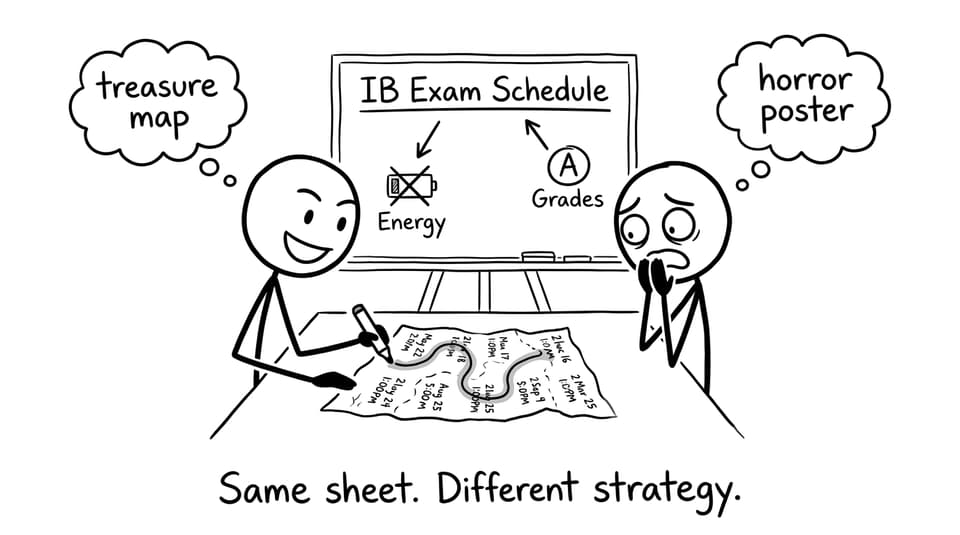
When your IB exam schedule drops, it can feel like a weather forecast you can’t change: a few sunny days, then a storm of back-to-back papers.
But high scorers treat the IB schedule differently. They read it like a map. Not just when exams happen, but where marks are most likely to leak through fatigue, poor pacing, and last-minute learning.
A quick IB exam schedule checklist
Use this checklist to turn the IB timetable into a grade plan:
-
Mark “pressure blocks” (consecutive days, writing-heavy sequences, long stretches)
-
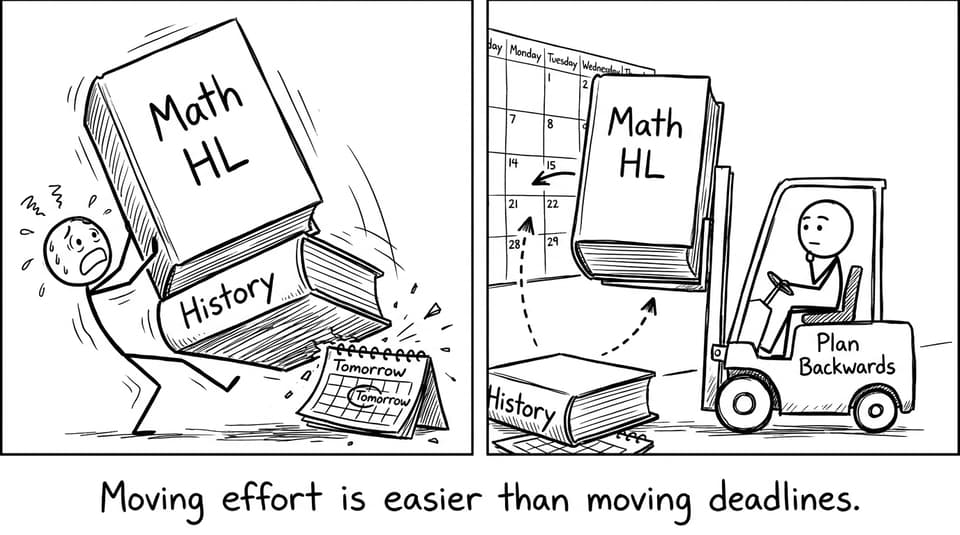
Plan backwards from each exam (content first, technique second, polish last)
-
Match revision intensity to the exam’s demand, not your anxiety
-
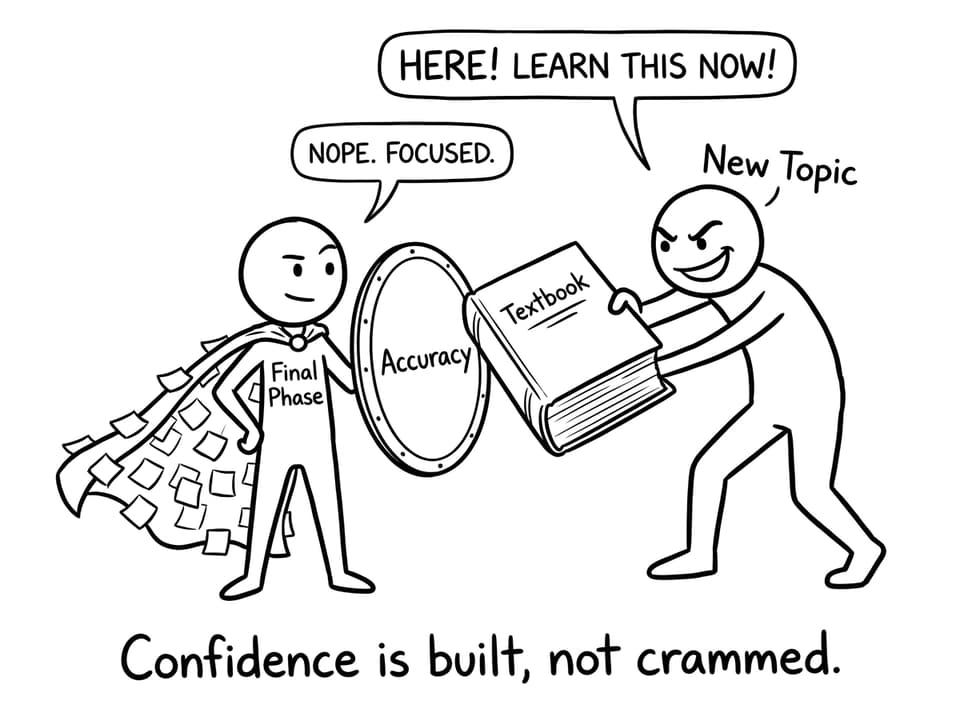
Protect the final 48 hours before each exam for accuracy and calm
-
Build one repeatable loop: notes -> recall -> questions -> timed practice
If you need a structure that holds, pair this with the RevisionDojo Study Planner.
Treat the IB exam schedule as a performance tool
The most useful mindset shift in IB prep is simple: the schedule is not a countdown clock. It’s a performance tool.
A countdown makes you cram. A tool makes you allocate energy.
Start by skimming the official timetable and asking: “Where will I be tired?” That’s where careless errors happen, essay structure gets sloppy, and grade boundaries start feeling personal.
For a deeper planning framework, see How to Plan Final IB Revision Using the Official Timetable.
Find the high-risk blocks where grades slip
In IB, grades are often lost in clusters, not single exams. Look for:
-
Two or more exams on consecutive days
-
A run of writing-heavy papers (essays, data responses, long explanations)
-
A “marathon week” where recovery time disappears
Once you identify these, plan around them, not into them. That might mean moving your hardest content work earlier, and using lighter recall and short technique drills as you approach the block.
If you want a realistic weekly rhythm, borrow ideas from How to Create a Balanced IB Study Schedule and The Ultimate Daily IB Study Schedule.
Finish heavy learning early, then switch to IB scoring skills
If you’re learning new content days before an IB exam, you’re gambling with your grade.
Use the schedule to separate three phases:
-
Content mastery (earlier): use RevisionDojo for IB Study Notes and build understanding before pressure spikes.
-
Exam technique (middle): train command terms, structures, and common question patterns using the Questionbank.
-
Confidence + accuracy (final): tighten mistakes, sharpen timing, and keep your brain fresh.
A strong support read here is How to Study for IB Exams: Step-by-Step Guide.
Use the schedule to manage energy, not just time
Not all IB papers cost the same energy. Two hours of Maths problem-solving can feel different from two hours of essay writing.
So schedule revision like you’d schedule training:
-
Before demanding exam days, do lighter revision (Flashcards, brief mistake review)
-
Avoid stacking heavy subjects in the same 24-hour window
-
Use spaced repetition daily with Flashcards to stay stable without exhausting yourself
If your method feels busy but not effective, read You’re Not Lazy, Your IB Study Method Is Broken.
Protect the final phase before each IB exam
The last stretch isn’t for heroics. It’s for clarity.
In the final 24-48 hours before an IB exam, prioritize:
-
accuracy over volume
-
structure over new content
-
short timed sections over long study marathons
That’s where RevisionDojo’s “connected loop” helps: Study Notes for quick patching, Questionbank for targeted practice, AI Chat for fast explanations, and Grading tools when you need feedback that actually changes your next attempt.
Conclusion: make the IB schedule work for you
Your IB exam schedule isn’t a threat. It’s information.
Spot the pressure blocks, plan backwards, and protect your energy so you can perform consistently from the first paper to the last. If you want one place to run that whole system, with Study Notes, Flashcards, Questionbank, AI Chat, Grading tools, Predicted Papers, Mock Exams, Coursework Library, and Tutors, build your plan inside the RevisionDojo Study Planner.