

If you have ever stared at your Japanese B scores and thought, “Am I close to the grade I need?” you are not alone. In the IB, a few marks can feel like a cliff edge. The calm truth is that grade boundaries are not a mystery weapon -- they are a map. Once you know the 2025 ranges, you can stop guessing and start training the exact skills that move your total.
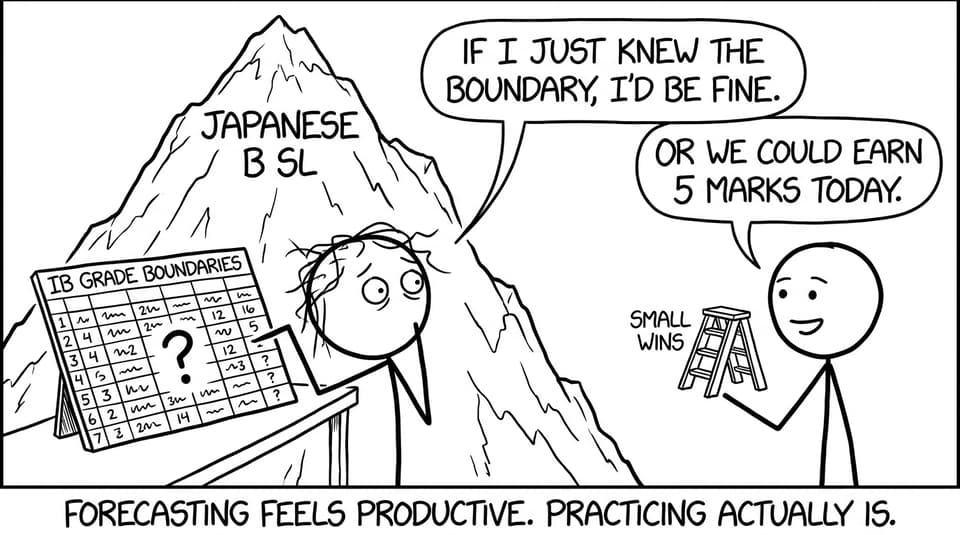
Quick checklist before you use the IB grade boundaries
-
Convert your target grade into component targets (Oral, Paper 1, Listening, Reading).
-
Prioritize the easiest marks to gain this week (usually structure, clarity, and question technique).
-
Practice under time pressure at least once a week.
-
Track your marks in one place, not across random notebooks.
For a bigger picture across subjects, bookmark IB Grade Boundaries and use the IB Grade Calculator to translate practice results into realistic outcomes.
IB Japanese B SL grade boundaries 2025 (full breakdown)
Below are the IB Japanese B SL Grade Boundaries 2025 ranges by component. Use them to set weekly goals, not to stress-scroll.
Internal Assessment (Oral) (out of 30)
-
Grade 7: 27--30
-
Grade 6: 22--26
-
Grade 5: 16--21
-
Grade 4: 11--15
-
Grade 3: 6--10
-
Grade 2: 3--5
-
Grade 1: 0--2
Paper 1 (out of 30)
-
Grade 7: 27--30
-
Grade 6: 23--26
-
Grade 5: 19--22
-
Grade 4: 15--18
-
Grade 3: 10--14
-
Grade 2: 5--9
-
Grade 1: 0--4
Paper 2 Listening (out of 25)
-
Grade 7: 20--25
-
Grade 6: 17--19
-
Grade 5: 14--16
-
Grade 4: 11--13
-
Grade 3: 7--10
-
Grade 2: 4--6
-
Grade 1: 0--3
Paper 2 Reading (out of 40)
-
Grade 7: 33--40
-
Grade 6: 26--32
-
Grade 5: 18--25
-
Grade 4: 11--17
-
Grade 3: 7--10
-
Grade 2: 4--6
-
Grade 1: 0--3
Final IB Japanese B SL grade boundaries (out of 100)
-
Grade 7: 83--100
-
Grade 6: 68--82
-
Grade 5: 52--67
-
Grade 4: 37--51
-
Grade 3: 22--36
-
Grade 2: 11--21
-
Grade 1: 0--10
For the official table on RevisionDojo, see IB Japanese B SL Grade Boundaries 2025, and for context on how the IB sets boundaries, read Understanding IB Grade Boundaries 2025.
How to turn IB boundaries into marks you can actually win
Grade boundaries matter most when they change how you revise.
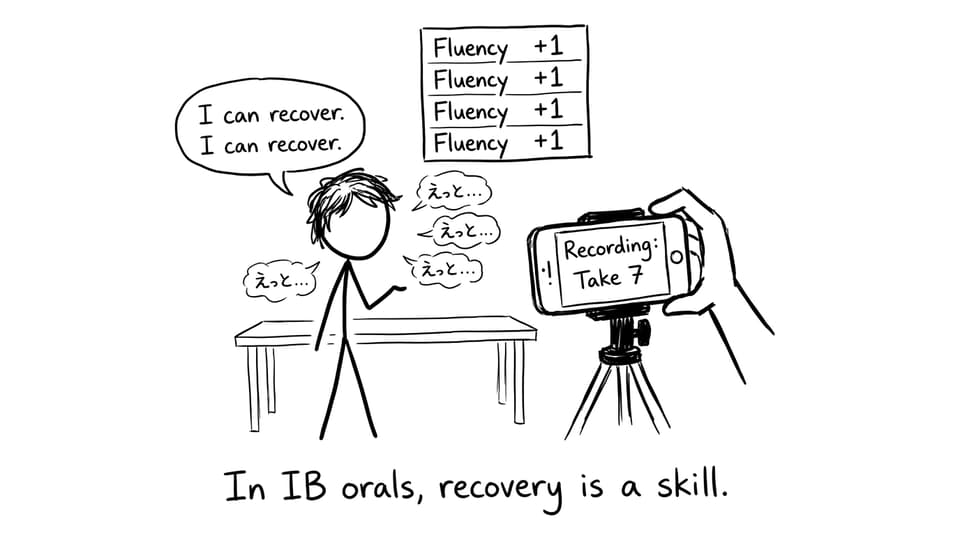
Oral: practice recovery, not perfection
Record yourself, listen back, and train the ability to keep going when you forget a word. RevisionDojo helps by turning weak theme vocabulary into daily Study Notes + Flashcards reps, and then using AI Chat to generate follow-up questions that feel like a real examiner.
Listening: stop trying to rewind your brain
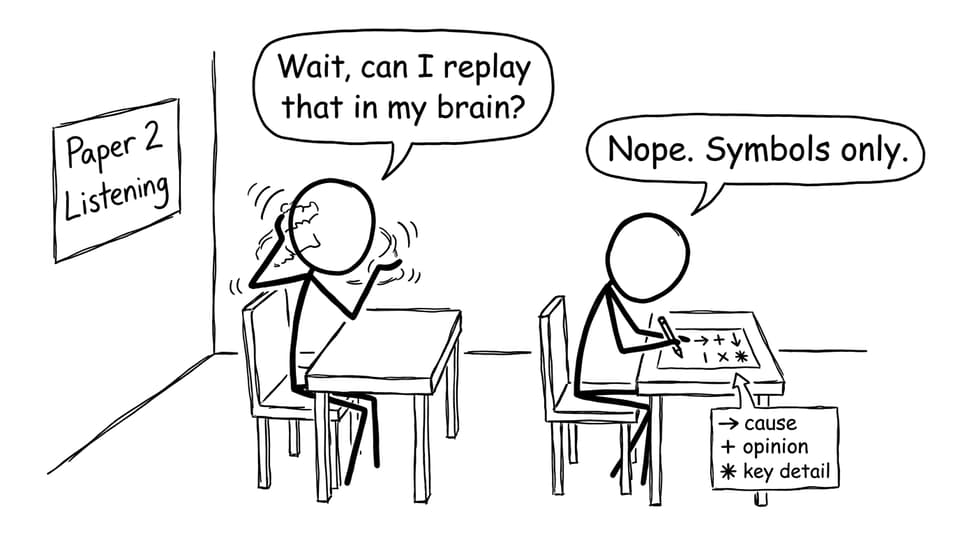
In Paper 2 Listening, you do not get paid for understanding every word. You get marks for extracting meaning fast. Build a symbol system and practice it under time.
Writing: bank a structure you can execute tired
Paper 1 often rewards clarity more than fancy phrasing. A reliable intro, clear paragraph purpose, and accurate register can lift you several marks. For the overall format and timing approach across Language B, use IB Language B Exams: Format, Timing, Strategy and the broader IB Language B Syllabus: Breakdown & Study Strategy.
FAQ
Are these IB Japanese B SL grade boundaries guaranteed for every timezone?
The IB sets grade boundaries by session, and some subjects can vary by timezone. The safest approach is to treat these 2025 ranges as your planning reference, then confirm what your school uses for your cohort. If you are comparing results with friends in different regions, small differences can appear even when everyone sat “the same subject.” That is why it helps to keep one reliable source for boundaries and trends. RevisionDojo makes this easier with its centralized IB Grade Boundaries pages. When in doubt, align your revision to mark-awarding skills, not boundary predictions.
What is the best way to use IB grade boundaries while revising Japanese B SL?
Use boundaries to set targets per component, not just a final number out of 100. For example, if your reading is already near a Grade 6 range but your Paper 1 writing is lagging, your highest return is likely writing structure and accuracy. That mindset keeps you from “revising everything” and instead pushes you toward the few habits that add marks. A good weekly routine is one timed writing, one timed listening block, and one oral recording. Then diagnose mistakes and drill them immediately. RevisionDojo supports this loop with Questionbank, Grading tools, and targeted practice planning.
How can RevisionDojo help me push from a 6 to a 7 in IB Japanese B SL?
A 6 to 7 jump is usually not about learning twice as much Japanese. It is about reducing avoidable losses: unclear task completion in Paper 1, missing inference cues in reading, or hesitating too long in the oral. RevisionDojo’s system is built for that kind of upgrade: use Study Notes for clean explanations, Flashcards for daily retrieval, and AI Chat for fast clarification when you hit confusion. Then simulate the pressure with Predicted Papers and timed practice through Mock Exams, so your pacing becomes automatic. Finally, the Coursework Library and Tutors give you a human safety net when you want feedback that is specific, not generic. Over a few weeks, that feedback loop is what turns “close” into “consistent.”
Final thought: use IB grade boundaries as a compass
The IB Japanese B SL grade boundaries 2025 are useful because they make your goal measurable. But your score still comes from daily choices: one more timed listening set, one more structured Paper 1, one more oral recording where you practice recovery. If you want everything in one place, RevisionDojo is built to carry the whole journey -- Questionbank, Study Notes, Flashcards, AI Chat, Grading tools, Predicted Papers, Mock Exams, Coursework Library, and Tutors. Set your target, run the loop, and let the marks accumulate.


