
IB: How to Get a 7 (A Calm, Repeatable System)
In the IB, a 7 rarely comes from a sudden glow-up in the last week.
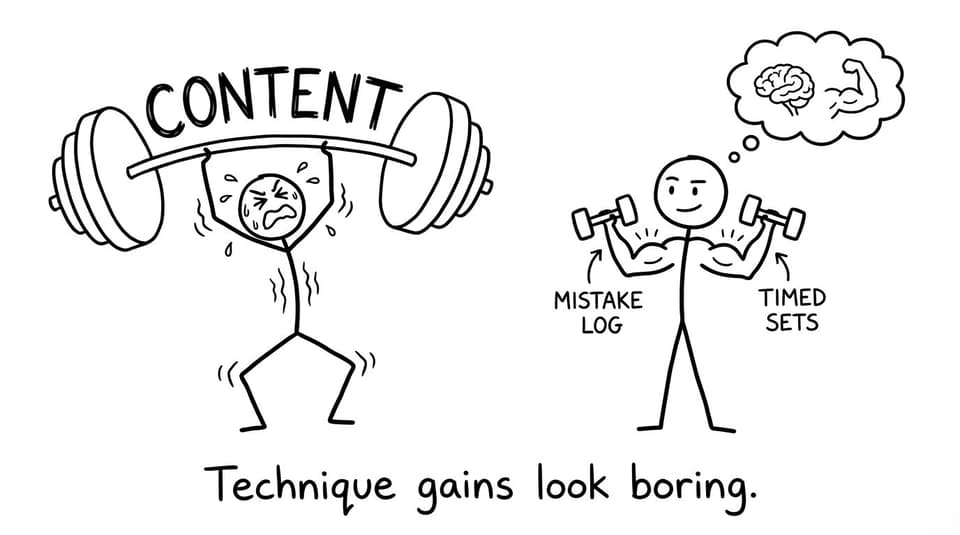
It usually comes from something quieter: a student who stops trying to feel ready, and starts building proof. Proof that they can answer what the examiner is actually asking. Proof that they can do it under time pressure. Proof that their mistakes are shrinking.
Most IB students already work hard. The gap between a 6 and a 7 is often not effort. It is feedback loops. The kind where every study session produces a small, specific upgrade.
This guide gives you that system.
The 7-in-IB checklist (save this)
If you want a fast overview of what a "7 plan" looks like in the IB, keep this checklist:
- Study by paper and question type, not by "subject" in general
- Use active recall daily (Flashcards or self-quizzing)
- Do exam-style questions 4-6 days/week
- Track mistakes as patterns, not one-off failures
- Add timed practice earlier than feels comfortable
- Learn command terms like they are part of the syllabus
- Protect sleep and energy (because recall collapses when you do)
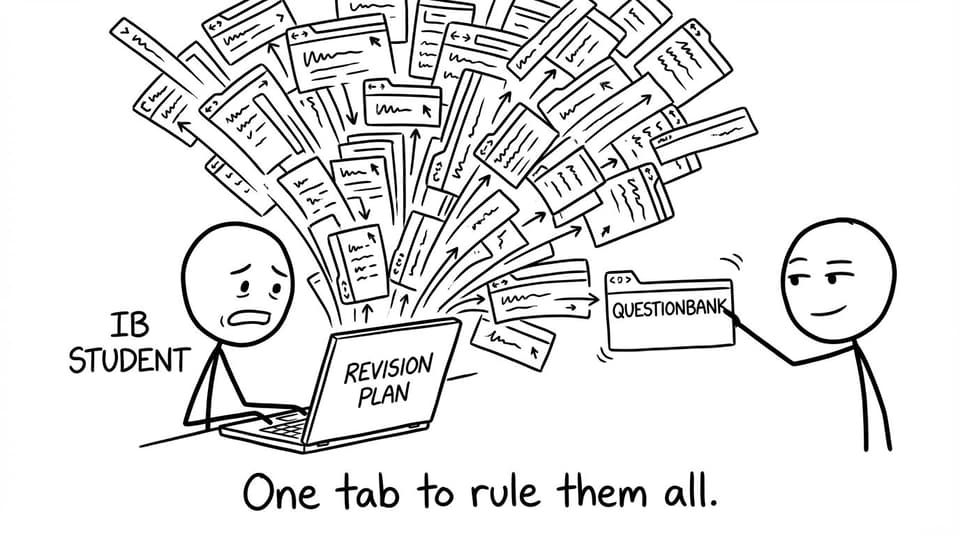
- Use one connected platform (Notes + Questions + Feedback + Timing)
RevisionDojo is designed to keep that entire IB loop in one place: Questionbank, Study Notes, Flashcards, AI Chat, Grading tools, Predicted Papers, Mock Exams, Coursework Library, and Tutors.
What a 7 means in IB (and why it feels "unfair")
A 7 in the IB is not "knowing everything." It is consistently earning marks in the top band.
That difference matters because knowledge can be private. Marks are public. Examiners only reward what is visible on the page.
So the highest-scoring IB students build answers that are easy to mark.
They do three things that look boring until you see the results:
- They answer the command term directly.
- They show method, reasoning, and justification (not vibes).
- They practice in the same shape the exam will demand.
If you want a broader map of what top performance looks like across subjects, see How to Score a 7 in All Subjects in the IBDP.
The IB mistake that blocks most 7s: studying the syllabus instead of the paper
Many students revise like this:
- Read notes
- Highlight
- Rewrite
- Feel calmer
But calm is not the same as competence.
A 7 comes from rehearsing the exam: the timing, the language, the markscheme habits, the structure.
That is why high scorers treat IB questions like the main textbook.
A practical way to switch is to follow a step-by-step routine like How to Study for IB Exams: Step-by-Step Guide, then anchor daily work in a targeted question engine like Questionbank.
The 3-layer system that turns IB revision into a machine
Think of your IB revision as three layers. Each layer supports the next.
Daily layer: recall (10-20 minutes)
This is where IB grades quietly improve.
Daily recall keeps every subject "warm," so you do not relearn the same definitions, formulas, processes, and essay evidence every two weeks.
Use IB Flashcard System: Active Recall for Better Memory as a model for a small, repeatable streak. On RevisionDojo, this is where Flashcards shine: quick, spaced repetition, built for consistency.
Weekly layer: targeted question blocks (4-6 blocks/week)
Each block should be narrow:
- One paper (or section)
- One topic cluster
- One question type
Then do this:
- Read a short slice of Study Notes (only what you need)
- Immediately do exam-style questions in the Questionbank
- Review mistakes and write one-line "error rules"
If you need a bigger set of science-backed habits that make this easier, read 5 Proven IB Revision Hacks Backed by Science.
Monthly layer: timed simulation (1-4 times/month)
Timed practice is where most IB students lose easy marks because they wait too long.
Start small:
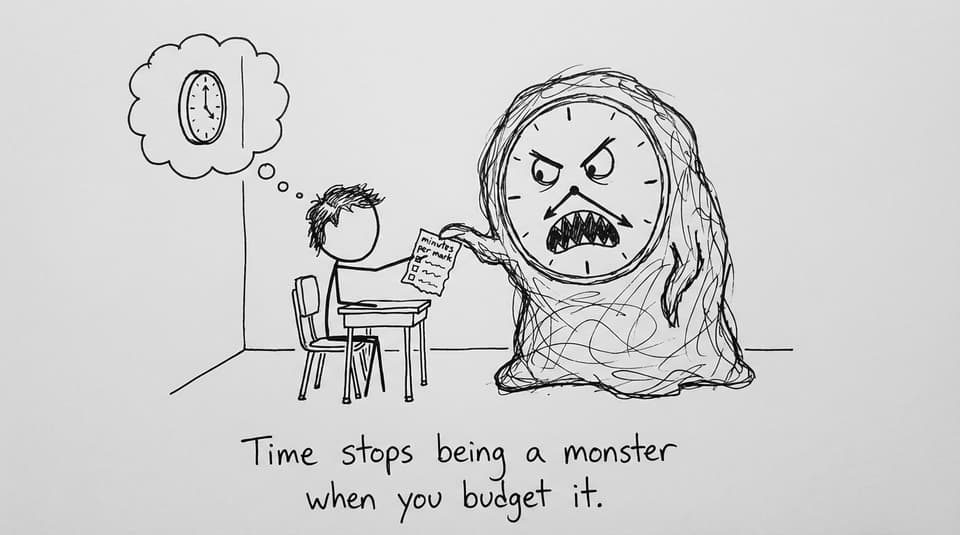
- 15-minute timed set
- 30-60 minute section
- Full paper simulation
If you need a timeline that makes this feel manageable, use Countdown to IB Exams: A Guide to Effective Studying and How to Prepare for IB Final Exams Efficiently.
The IB "mistake log" that separates 6s from 7s
A mistake log is not a diary of pain. It is a shortcut.
In the IB, most marks are lost in repeatable ways:
- Misreading command terms
- Not showing method
- Vague evaluation (no criteria)
- Missing units/significant figures
- Weak structure under time
- Writing too much, then running out of time
After every question set, write 3-5 bullets:
- What happened?
- Why did it happen?
- What rule prevents it next time?
Then retest that weakness within 48 hours.
This is where RevisionDojo becomes more than resources: it becomes a feedback system. You can practice in the Questionbank, ask AI Chat (Jojo AI) why marks were missed, and then immediately redo similar questions.
Command terms: the hidden language of IB 7s
In the IB, the command term is often the whole question.
If you "know the topic" but answer the wrong verb, the markscheme does not care.
Train command terms by making mini-templates. Examples:
- Define: precise term + distinguishing feature
- Explain: cause, mechanism, consequence
- Analyse: break into parts + show relationships
- Evaluate: criteria + balanced judgement + final decision
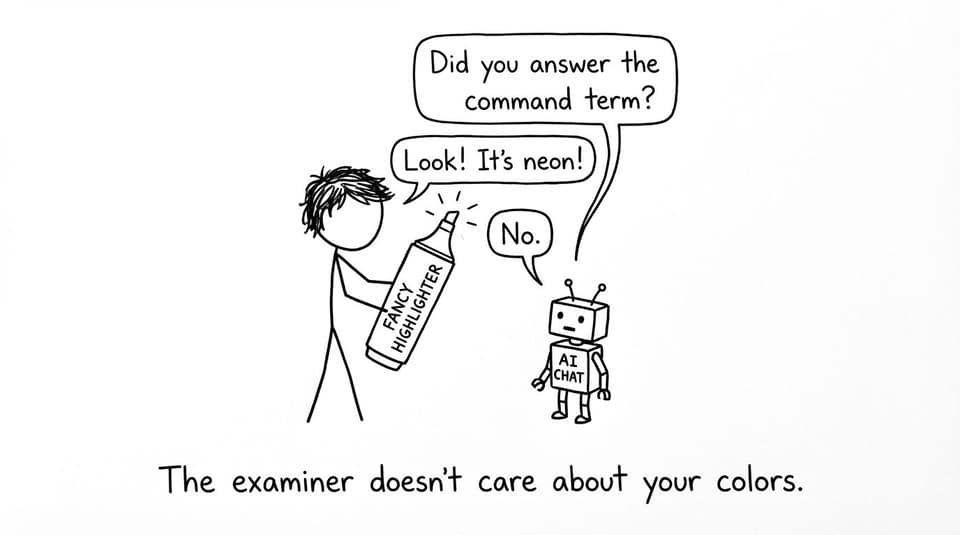
A powerful habit is to finish every practice question by asking: "Did I actually do the verb?"
On RevisionDojo, students use AI Chat as a command-term coach: paste your answer and ask what is missing to reach top-band criteria. Then use Grading tools for rubric-style feedback on longer responses and coursework drafts.
How to practice for IB like a 7 student (without burning out)
The goal is not to study forever. It is to study in a way that compounds.
Use this simple weekly rhythm:
Two "accuracy-first" days
- Untimed questions in the Questionbank
- Focus on clean method and full-mark structure
- End with a short Flashcards session
Two "timed exposure" days
- Short timed sets (15-25 minutes)
- Review longer than you practiced
- Rewrite one answer to top-band quality
One "simulation" day
- Timed section or full paper (depending on schedule)
- Deep review + mistake log
If you struggle with panic or avoidance near exams, pair this with How to Beat IB Exam Anxiety (Without Burning Out) and keep an exam-day script like IB Exam Day Checklist.
A note on coursework: protect your exam season
In the IB, exams do not exist in a vacuum. When coursework is messy, it steals revision oxygen.
So treat coursework like risk management:
- Use the Coursework Library to see what "good" looks like
- Use Grading tools to get criterion-by-criterion feedback early
- Use Tutors when you need a human to raise your ceiling or stabilize your plan
A calm student with clean coursework has more bandwidth for timed practice, and timed practice is where 7s are built.
Closing: the simplest path to a 7 in IB
Getting a 7 in the IB is not about becoming a different person in April.
It is about choosing a loop you can repeat when you are tired:
- Study Notes for quick clarity
- Flashcards for daily recall
- Questionbank for exam-shaped practice
- AI Chat for fast explanations and markscheme thinking
- Mock Exams and Predicted Papers for realism and stamina
- Grading tools and the Coursework Library to keep coursework from leaking into exam stress
- Tutors when you need human strategy and accountability
If you want the most straightforward way to run that entire IB system in one place, start with RevisionDojo App: The Smarter Way to Prep for IB Exams and build your next session around one paper, one topic, and one set of questions.