The quiet panic behind "I can't focus" in IB
The first time it happened to me, it felt like a personal flaw.
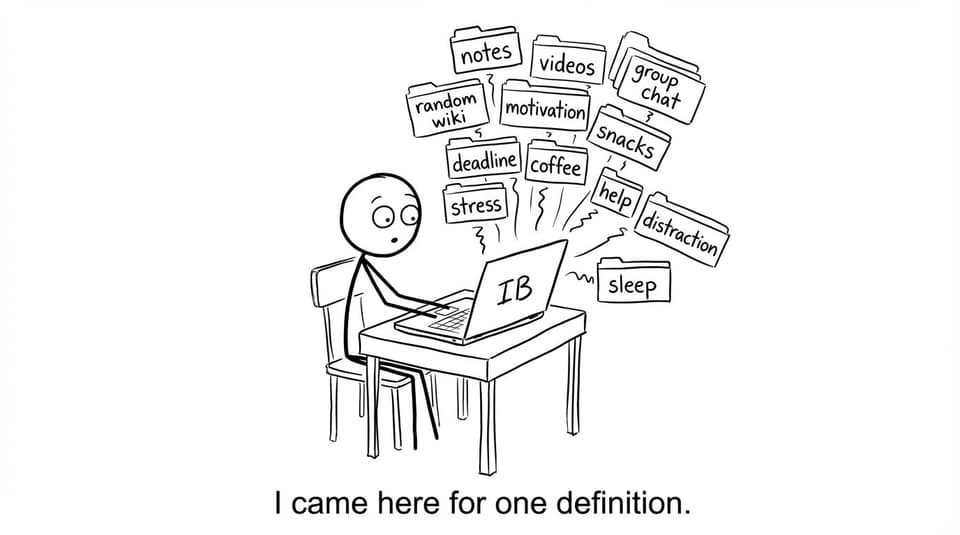
I had my desk cleared, my water bottle filled, and my plan written like a promise: "IB revision, 7:00 to 9:00." Then I opened my laptop and… drifted. A message. A tab. A definition I "should quickly check." Ten minutes became thirty. Thirty became a weird half-studying fog where nothing stuck.
If you're preparing for IB exams and you can't focus, it's rarely because you're lazy. It's because your study system is built for good intentions rather than good behavior under pressure.
In IB, the workload is wide, the stakes feel high, and the day-to-day incentives are messy. Your brain responds by protecting itself. It seeks quick relief (scrolling), vague comfort (rewriting notes), or avoidance disguised as productivity (organizing folders for the fifth time).
The good news: focus is not a personality trait. It's an environment plus a loop.
A fast checklist to fix IB focus today
If you want the quick version before the deeper story, use this IB checklist:
- Choose one IB paper task (not "revise the whole subject").
- Do 10 minutes of recall first (Flashcards or closed-book questions).
- Study one small concept using clear notes, then immediately apply it.
- Do 15-25 minutes of exam-style practice (Questionbank).
- Review mistakes and write one rule that would prevent each mistake.
- Add one timed block per week (mini mock).
- Reduce distraction at the source: phone away, notifications muted, one tab open.
For a complete workflow, keep this guide open as your reference point: How to Study for IB Exams: Step-by-Step Guide.
Why you can't focus while studying IB (the real reasons)
Your brain hates vague goals (and IB goals are often vague)
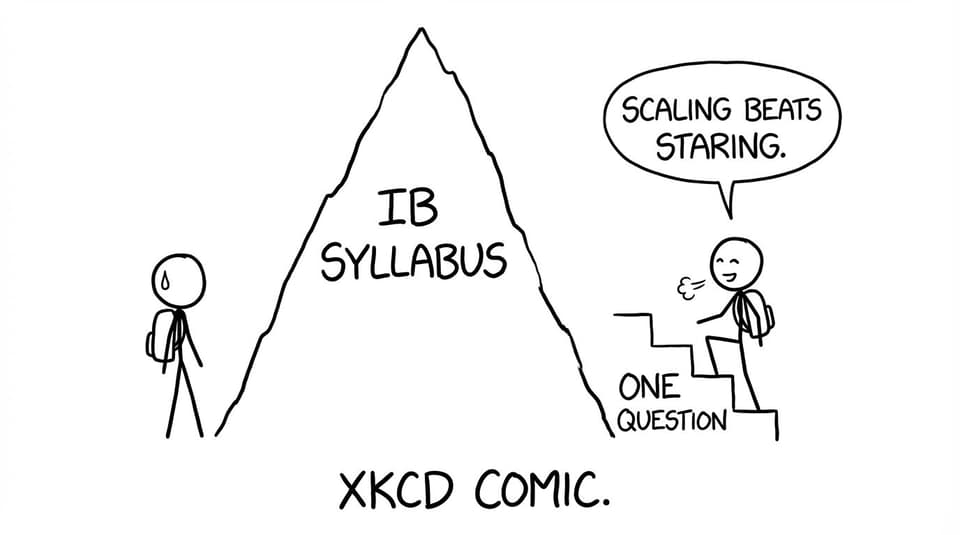
"Study IB Biology" sounds responsible. It's also too large for the brain to grip. When a task has no clear finish line, your mind keeps asking: Where do I start? What counts as done? That question drains energy before you even begin.
In IB, vagueness is everywhere:
- "Revise Topic 4" (which part?)
- "Do more Math" (what skill?)
- "Catch up on History" (which paper style?)
Fix: plan in paper-shaped tasks, not subject-shaped dreams.
Try this:
- "IB Paper 2: 20-mark essay plan, 25 minutes"
- "IB Physics: 15 questions on Topic X, then error log"
This is also why a topic-filtered practice tool matters. When you can pick a topic and immediately answer IB-style questions, you remove the "where do I start?" tax. Start here if you want that structure: Questionbank.
You're doing "comfort study" instead of IB study
Comfort study is work that feels safe because it doesn't test you.
- Rewriting notes
- Re-reading highlighted pages
- Watching solution videos while nodding along
It creates a warm sense of progress without the cold proof.
IB exams, however, reward retrieval and application: producing answers, under timing, with command terms and mark schemes in mind. If you study in ways that never require output, your brain quietly learns that studying is optional.
Fix: build a loop where notes are a bridge, not a home.
A simple RevisionDojo loop:
- Use IB Notes: Comprehensive Revision Guides to understand one concept.
- Convert it into recall using Flashcards.
- Prove it with Questionbank questions.
If you want a broader "science-backed" explanation for why this works, this is worth reading: 5 Proven IB Revision Hacks Backed by Science.
Your attention is being "auctioned" all day
Most IB students try to study after spending the entire day with attention split into tiny pieces.
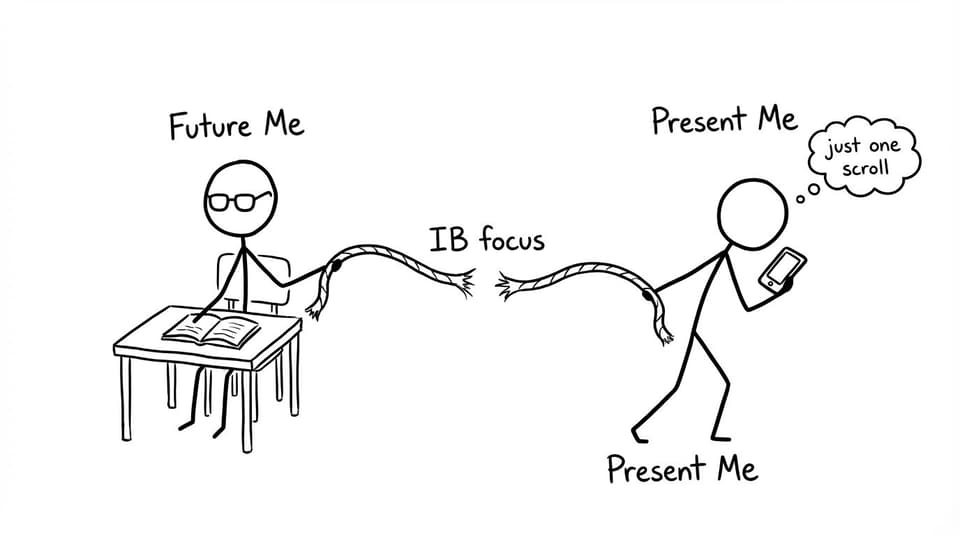
You go from class to hallway to group chat to deadlines to coursework to "just one video." Then you ask your brain for two hours of deep focus.
It's like asking a sprinter to run a marathon after a day of sprints.
Fix: treat focus like a limited resource. Protect it with boundaries, not motivation.
A practical guide you can use to set these boundaries: IB Tech Boundaries: Use Technology Without Losing Control.
How to fix IB focus with a system that survives real life
Use "minimum effective dose" sessions for IB
If your plan requires you to feel amazing, it will fail.
Instead, build an IB session that works even when you're tired:
- 10 minutes: Flashcards (retrieval)
- 35 minutes: Questionbank practice (application)
- 15 minutes: mistake review + one retake set
That's one hour. Not romantic. Very effective.
If you're building an overall IB revision plan, compare your routine to this strategy hub: What's the Best Way to Revise for IB Exams?.
Start with recall to "turn on" your brain
A weird truth: focusing is easier after you start producing answers.
Reading asks your brain to absorb.
Recall asks your brain to retrieve.
Retrieval wakes the system up.
So for IB, don't begin with notes. Begin with a small recall set.
- 10 Flashcards
- 5 short-answer questions
- 1 essay plan from memory
Then patch gaps with notes.
Replace "study longer" with "study more honestly"
Most focus problems in IB are actually feedback problems.
When you don't get fast feedback, your brain can't tell whether effort is working. Then it starts negotiating: Maybe I should do something else. Maybe this isn't the right topic. Maybe I'll start later.
This is why tools that shorten the feedback loop matter.
On RevisionDojo, the loop is designed to be tight:
- Questionbank for exam-style practice
- AI Chat (Jojo) when you're stuck
- Grading tools for coursework drafts
- Mock Exams and Predicted Papers for realism
If you want the full "one platform" explanation, see: RevisionDojo App: The Smarter Way to Prep for IB Exams.
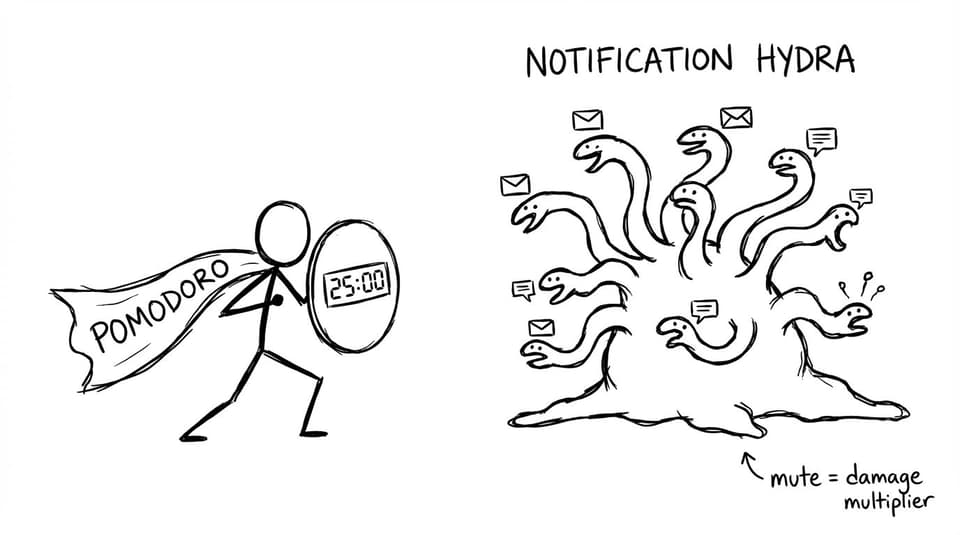
Timebox your study to stop the "infinite tab" problem
Use short, closed sessions:
- 25 minutes work
- 5 minutes break
- repeat 2-4 times
Your goal is not heroic stamina. Your goal is repeatable momentum.
When you timebox, you also reduce perfectionism. Your brain stops asking "Can I finish the whole IB unit?" and starts asking "What can I do well in 25 minutes?"
Use timed practice so IB exam pressure becomes familiar
A lot of IB focus issues are fear in disguise.
When you haven't practiced under time, the exam remains mythical. Your brain treats studying as emotionally risky: What if I'm not ready? So it avoids the feeling by avoiding the task.
Fix: do small timed blocks early.
- 15 minutes timed questions
- 30 minutes timed section
- then bigger mocks
RevisionDojo supports this with Mock Exams and Predicted Papers, so you can practice realism without guessing. For the full setup, use: How 45-Point IB Students Prepare for Exams.
Don't let coursework steal your exam focus
In IB, coursework is not just time-consuming. It's psychologically loud.
A TOK draft sitting unfinished can haunt your exam revision because uncertainty leaks into everything: Is my work good enough? Am I already behind?
Fix: turn coursework into smaller steps with faster feedback.
Use RevisionDojo's Grading tools and Coursework Library to make the "is this good?" question answerable, then return to exam prep with a calmer mind.
If you want a practical "don't disappear" approach to balancing the whole program, this helps: IB Exams Without Pausing Your Life.
A simple IB focus plan for the next 7 days
Day 1-2: reduce friction
- Set up one default study spot.
- Put your phone in another room.
- Choose one IB paper goal per session.
- Do 1 hour per day using the minimum effective dose.
Day 3-5: build the loop
- Daily Flashcards (10-15 minutes).
- Questionbank sets by topic (25-45 minutes).
- AI Chat (Jojo) only to unblock confusion, then immediately retest.
If you want more technique options, use: 10 Proven Study Techniques for IB Students.
Day 6-7: add pressure gently
- One timed block (30-60 minutes).
- Review mistakes longer than you practiced.
- Turn your most common error into a tiny rule list.
Closing: focus is built, not found (and IB rewards builders)
The most frustrating part of IB is how personal it feels when your mind won't cooperate.
But focus isn't something you "have." It's something you design: smaller tasks, faster feedback, fewer escape routes, and a loop you can repeat on ordinary days.
If you want that loop in one place, RevisionDojo is built to carry your IB prep from scattered effort to calm consistency: Questionbank for practice, Study Notes for clarity, Flashcards for daily recall, AI Chat for momentum, Grading tools and a Coursework Library for coursework stress, plus Mock Exams, Predicted Papers, and Tutors when you're ready to raise the bar.
Start with one hour today. One paper task. One set of questions. Then repeat. That's how IB focus becomes real.