
The night you decide to “start properly,” you open your laptop and realize the problem isn’t motivation.
It’s volume.
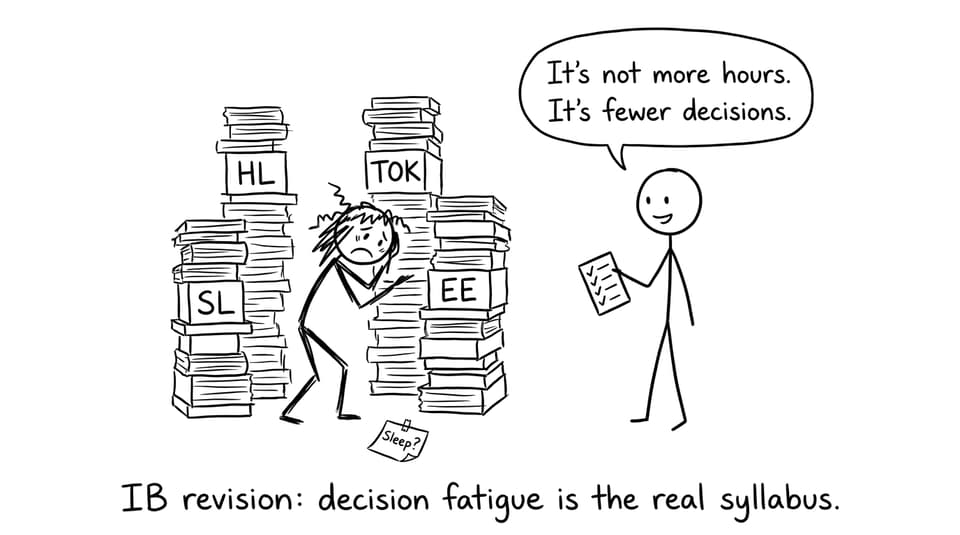
The IB asks you to be many versions of yourself at once: the analyst, the writer, the scientist, the historian, the reflective thinker. And when exams get close, it’s tempting to respond with the simplest plan: study more.
But the students who improve fastest usually do something quieter. They build a system that makes studying feel smaller, clearer, and repeatable. This guide is that system: 10 proven strategies to prepare for IB final exams efficiently, without burning out.
Quick checklist: your efficient IB plan
-
Start with a realistic timeline and weekly targets
-
Translate the IB syllabus into a checklist you can tick off
-
Use active recall daily (Flashcards + self-quizzing)
-
Practice exam-style questions every week (timed)
-
Review mistakes like data, not drama
-
Protect sleep and energy so your work compounds
If you want one hub that supports this whole loop, bookmark RevisionDojo for IB.
10 proven strategies to prepare for IB final exams efficiently
Build a 90-day runway (or the closest version you can)
Efficient IB prep starts earlier than your anxiety wants it to.
Aim to map the final 12 weeks: list exam dates, paper types, and the biggest content blocks per subject. Then assign weekly outputs (for example: “two topic sets + one timed section” rather than “revise Biology”). This flips revision from vague effort into visible progress.
To keep the plan realistic, use tools that reduce setup time: RevisionDojo Questionbank for targeted practice, and IB Flashcards with spaced repetition for daily recall.
Learn IB command terms like they’re a separate topic
In the IB, marks aren’t only about what you know. They’re about what the question asked you to do.
“Describe” and “evaluate” are different tasks. “To what extent” demands a conclusion with conditions. If you repeatedly miss easy marks, it’s often because your answer style doesn’t match the command term.
A great way to train this is to practice with examiner-style prompts. Start with IB exam-style questions practice and notice how wording shapes the markscheme.
Turn each syllabus into a checklist you can finish
Your brain hates infinite tasks.
So make the syllabus finite. Convert every subject into a list of topics and subtopics, then attach one measurable action to each: “Flashcards for definitions,” “10 questions,” “one timed response,” “error log review.”
This is the moment RevisionDojo becomes more than a site you visit. It becomes the structure that keeps your IB revision calm: Questionbank for practice, Flashcards for recall, and Study Notes when you need quick clarity.
Replace rereading with active recall
Rereading feels gentle. Your exam won’t be.
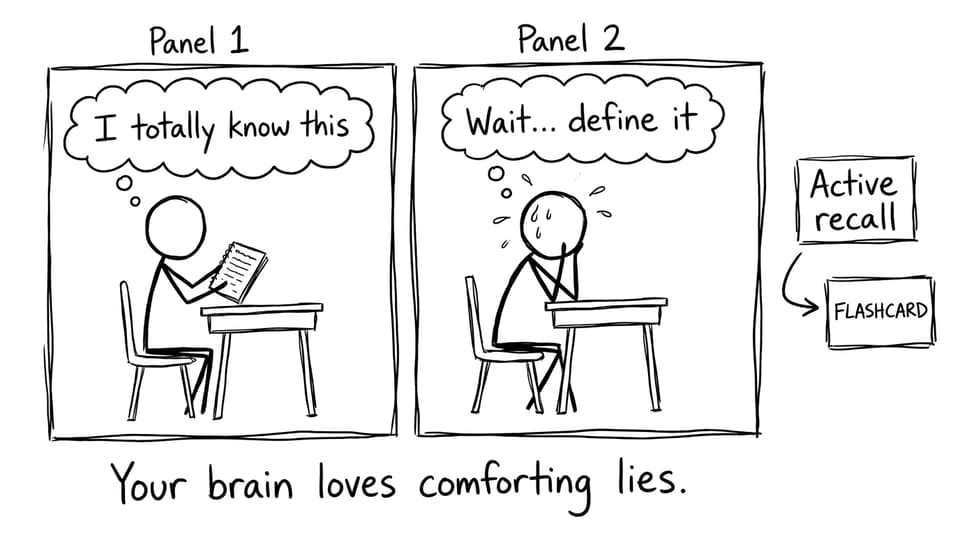
Active recall means forcing your brain to retrieve information without looking. That can be flashcards, blurting, closed-book outlines, or short quizzes. It’s uncomfortable in the right way: it exposes what you don’t know, early enough to fix it.
If you want a strong system, pair daily recall with a tool that schedules review automatically: Flashcards plus the deeper approach in IB flashcard system: active recall for better memory.
Practice exam-style questions weekly (not “when you feel ready”)
You don’t get ready for the IB by waiting. You get ready by practicing and letting feedback shape your next session.
Set a weekly minimum: one timed section per priority subject. Then review with honesty: Where did marks leak? Misread command terms? Weak content? Poor structure? Timing?
Use a question resource that mirrors the real style and gives fast feedback. Start here: IB Question Bank: how to use it effectively, then build volume inside the Questionbank.
Prioritize HL subjects (but don’t neglect easy SL marks)
Most IB students benefit from weighting time toward Higher Level because HL tends to be heavier in content and skills.
A practical split is around 60-70% of your revision time on HL, especially if those subjects drive your university offers. But don’t ignore the SL subjects that can quietly lift your total. Efficiency means securing “reliable points” too.
Train timing like it’s a skill (because it is)
A strong answer that runs out of time becomes a weak answer.
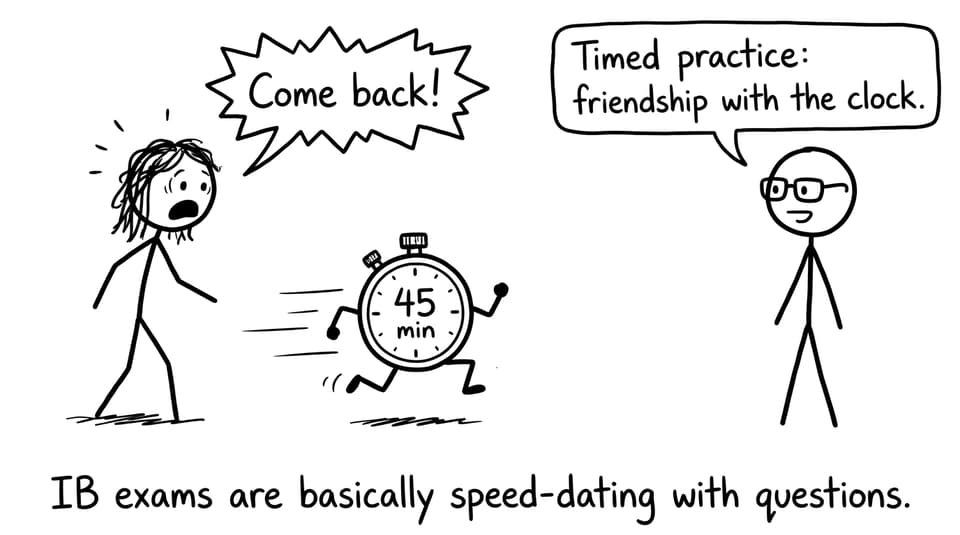
Do timed blocks regularly: start with 25-45 minutes if full papers feel intimidating, then scale up. Train the habit of moving on when you’re stuck. Learn what “good enough” looks like at different mark allocations.
For deeper realism, add structured exam rehearsals with IB Predicted Papers and compare approaches using IB predicted vs specimen papers: what they mean.
Use feedback loops: mistakes list, retake, repeat
The highest ROI habit in IB revision is an error log.
After each practice set, write:
-
what you got wrong
-
why you got it wrong
-
the rule you’ll use next time
Then retake a small set on the same weakness 48 hours later. This is how effort compounds.
RevisionDojo supports this loop naturally: practice in the Questionbank, ask Jojo AI Chat for quick explanations when you’re stuck, then lock the fix with Flashcards.
Reuse your coursework skills (IA, EE, TOK) in exam answers
IB exams reward thinking, not just content.
The evaluation you practiced in the EE, the clarity you needed in an IA method, the perspective-awareness from TOK: these can raise your responses into top bands. When you revise, ask: “What is the examiner rewarding here?” and “What would a clear, criterion-driven answer look like?”
If you’re still refining coursework, the IB Coursework Grader and the Coursework Library inside RevisionDojo can keep feedback specific and actionable.
Protect sleep and energy like they’re part of the IB
Efficiency collapses when you’re exhausted.
Aim for consistent sleep, short movement most days, and breaks every 60-90 minutes. You’re not being “soft.” You’re protecting recall speed, attention, and emotional control under pressure.
For a calmer approach to the final stretch, keep this nearby: IB exams without pausing your life.
A final note: make IB revision feel smaller
The IB rewards students who study with intent, not students who panic with volume.
Build the checklist. Practice the right question styles. Use active recall daily. Do timed sessions weekly. Review mistakes without ego. And when you want one platform that supports the entire loop: Questionbank, Study Notes, Flashcards, AI Chat, Grading tools, Predicted Papers, Mock Exams, Coursework Library, and Tutors, start with RevisionDojo for IB.
Your goal isn’t to “cover everything.”
Your goal is to walk into the IB exams knowing exactly what you do next, and why it works.