

Studying 2 Hours vs 8 Hours for IB -- What Works Better?
At some point in IB, everyone meets the same strange fear.
You look at your to-do list and it doesn't feel like a list. It feels like weather. Something large, moving, and indifferent to your plans.
So you bargain.
"Maybe I just need an 8-hour day."
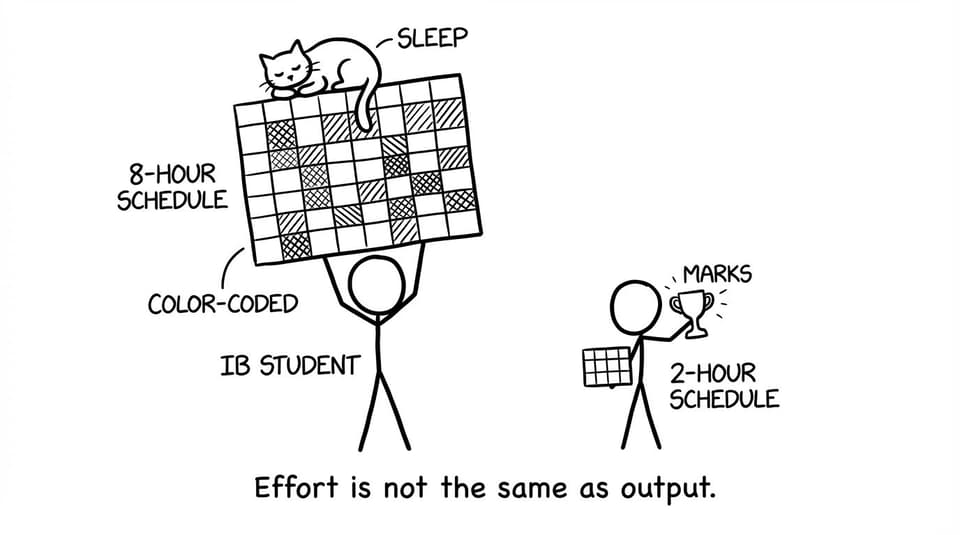
And sometimes you do. But most of the time, the IB doesn't reward the longest day. It rewards the cleanest one: the day where you chose the right tasks, practiced in the right format, and actually learned from your mistakes.
This is the quiet truth that makes exam season easier to manage: in IB, hours are a cost. Output is the goal.
Quick overview checklist (save this)
If you're deciding between 2 hours and 8 hours of IB study, run this checklist first:
- Can I name one paper I'm training for today (not "the whole subject")?
- Will I do active recall (questions/flashcards) more than rereading?
- Do I have a plan to review mistakes and retest them?
- Am I protecting sleep so tomorrow's work isn't weaker?
- If I have 8 hours, can I break it into smaller blocks with real feedback?
If you want one place that supports this whole loop, start with RevisionDojo for IB.
Why the IB doesn't measure time (it measures performance under constraints)
A useful way to think about IB exams is this: they're not a knowledge quiz. They're a performance.
You're asked to produce clear output under time pressure, with command terms steering the shape of your answer, and mark schemes rewarding specific components. That's why "I studied all day" can still produce a disappointing result. Studying all day is not the same thing as rehearsing the performance.
Long sessions often fail for three predictable reasons:
- They drift: you start with intentions and end with rewatching explanations you already understood.
- They avoid discomfort: you spend hours on notes because questions expose gaps.
- They create fatigue debt: tomorrow's recall is worse, so you need more hours to compensate.
In other words, 8 hours can be real training, or it can be 8 hours of anxiety-management.
When 2 hours beats 8 hours (most days)
Two focused hours can outperform eight scattered hours because the brain learns best when effort has edges.
A good 2-hour IB session usually has:
- a narrow target (one topic, one paper style)
- active recall (flashcards or questions)
- fast feedback (mark scheme alignment)
- a mistake loop (tag it, fix it, retest)
That's why tools like Questionbank and the guide on Comprehensive IB Question Bank: Thousands of Practice Questions matter. They make "practice-first" easy.
And if you need content clarity without rewriting your life into color-coded pages, pair it with Study Notes and the companion article Digital IB Study Notes: Access Anywhere, Anytime.
A high-ROI 2-hour IB session template
Use this when you want the "minimum effective dose":
- 10 minutes: skim one subtopic using notes (only what you'll apply)
- 50 minutes: do targeted exam-style questions on that exact subtopic
- 20 minutes: review errors, write 5 "error rules" (specific, not emotional)
- 20 minutes: flashcards on the mistakes/definitions
- 20 minutes: retest 5–10 questions you got wrong or felt shaky on
To make the flashcard part effortless, use Interactive IB Flashcards: Engaging Memory Practice or the deeper method in IB Flashcard System: Active Recall for Better Memory.
When 8 hours actually works (and how to avoid wasting it)
There are times when 8 hours makes sense in IB:
- you're close to exams and need stamina for long papers
- you're behind and need a reset day to rebuild control
- you're doing a full simulation plus deep review
But the rule is simple: if you study 8 hours, you must build structure and recovery into the day.
An 8-hour day without breaks is usually just a slow decline in attention.
The 8-hour day that actually improves IB scores
Try this layout:
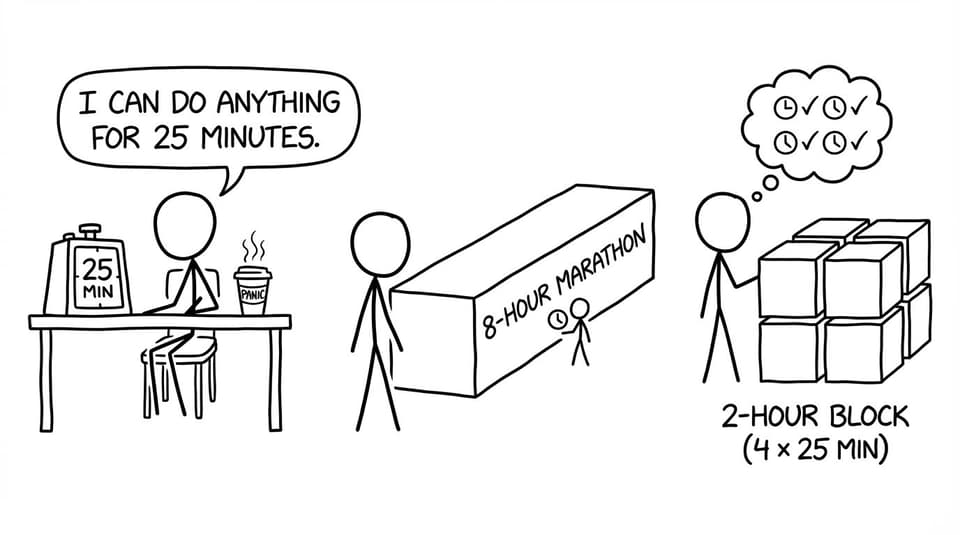
- Block 1 (75–90 min): learn one topic (notes) then immediately apply (questions)
- Break (15 min): walk, water, no scrolling
- Block 2 (75–90 min): mixed question set, accuracy-first
- Lunch (45–60 min): real meal, sunlight if possible
- Block 3 (75–90 min): timed section (pressure training)
- Break (15 min)
- Block 4 (60–75 min): review mistakes, rebuild weak areas with flashcards
- Block 5 (45–60 min): retest + finish with an easy win to lock confidence
To train timing properly, use the workflow guide How to Run Timed IB Mock Exams in RevisionDojo (Exam Mode + Test Builder). And if you want the broader "don't burn out" approach, read IB Exams Without Pausing Your Life.
The real answer: it's not 2 hours vs 8 hours -- it's feedback vs no feedback
In IB, time is only as valuable as the feedback it creates.
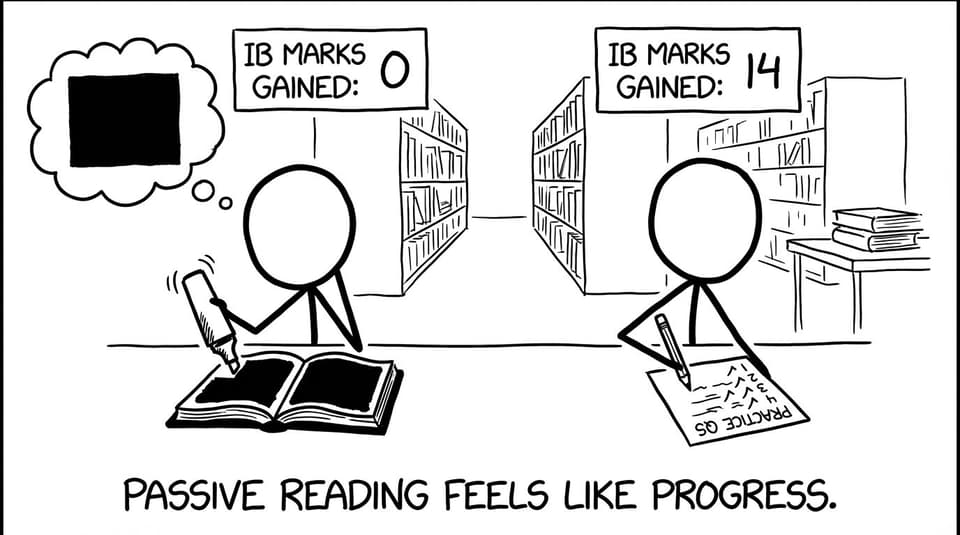
If you spend 2 hours doing exam-style questions, get them graded, study the mark scheme logic, and fix recurring errors, you're building a loop. Loops compound.
If you spend 8 hours rereading notes and highlighting, you might feel calmer, but you're not measuring performance.
This is why RevisionDojo's ecosystem tends to outperform "DIY resource piles." Your work becomes a connected system:
- Study Notes for fast clarity
- Flashcards for daily recall
- Questionbank for exam-style practice
- AI Chat (Jojo AI) to unblock confusion mid-session
- Grading tools to tighten written answers and coursework feedback loops
- Predicted Papers and Mock Exams for realism and stamina
- Coursework Library so you can see what good looks like
- Tutors when you need a human voice and higher accountability
If you want the full "how the pieces connect" overview, see RevisionDojo App: The Smarter Way to Prep for IB Exams and the free-core summary Notes + Flashcards + Question Bank (Free).
A practical decision rule for IB students: choose the smallest block that still includes a retest
Here's a decision rule that keeps IB revision honest:
If your study session doesn't include a retest, it's probably not finished.
A retest can be small. Five questions. Ten flashcards. One paragraph rewrite after feedback. The point is to force your brain to prove it learned something.
This is also why the "2-hour model" often wins: it naturally fits a full loop (learn, practice, review, retest) without dragging you into fatigue.
Closing: the IB rewards the calmer strategy
The uncomfortable lesson of IB is that effort can be sincere and still misdirected.
Two hours wins when it contains a full feedback loop: practice, marking, mistakes, retest. Eight hours wins only when it's built from many smaller loops, with breaks and realism, not just endurance.
If you want a system that makes "smart hours" easier to repeat, RevisionDojo is built for that: Study Notes to cut confusion fast, Flashcards to keep recall alive, Questionbank to train exam technique, AI Chat and Grading tools for instant clarity, and Mock Exams plus Predicted Papers to turn anxiety into familiarity. Add the Coursework Library and Tutors when you need examples or human guidance.
In IB, the best plan is rarely the loudest one. It's the one you can do again tomorrow.