



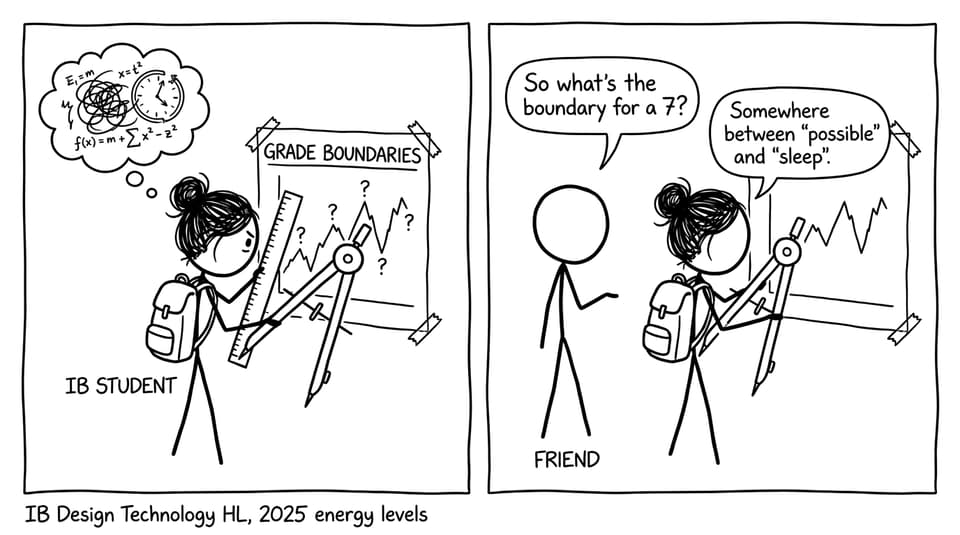
If you have ever walked out of a tough IB Design Technology HL paper thinking, “That could have been amazing or catastrophic,” you are not alone. Grade boundaries are the quiet translator between how an exam feels and what it becomes on results day. When you understand the IB Design Technology HL grade boundaries for 2025, you stop revising blindly and start revising with targets.
Quick checklist: how to use grade boundaries in IB Design Technology
-
Convert each boundary into a target raw mark per component.
-
Prioritize the papers where you can gain marks fastest (often Paper 1 and Paper 2 technique).
-
Treat Practical Work like an ongoing “mark bank” you protect with documentation.
-
Practise under time pressure using mock exams and predicted sets.
-
Close loops: attempt question types, get feedback, then redo.
A good place to keep everything connected is the IB Design Technology Resources hub, where you can move between Study Notes, Flashcards, Questionbank, and AI Chat without losing momentum.
IB Design Technology HL grade boundaries 2025 (by component)
These IB Design Technology HL grade boundaries 2025 are presented as score ranges for each grade.
Paper 1 (MCQ): out of 40
-
Grade 7: 33-40
-
Grade 6: 30-32
-
Grade 5: 26-29
-
Grade 4: 23-25
-
Grade 3: 18-22
-
Grade 2: 11-17
-
Grade 1: 0-10
Paper 2: out of 50
-
Grade 7: 31-50
-
Grade 6: 26-30
-
Grade 5: 22-25
-
Grade 4: 17-21
-
Grade 3: 12-16
-
Grade 2: 6-11
-
Grade 1: 0-5
Paper 3 (HL): out of 40
-
Grade 7: 28-40
-
Grade 6: 24-27
-
Grade 5: 19-23
-
Grade 4: 15-18
-
Grade 3: 12-14
-
Grade 2: 6-11
-
Grade 1: 0-5
Practical Work: out of 54
-
Grade 7: 36-54
-
Grade 6: 30-35
-
Grade 5: 24-29
-
Grade 4: 20-23
-
Grade 3: 14-19
-
Grade 2: 7-13
-
Grade 1: 0-6
Final IB Design Technology HL grade boundaries: out of 100
-
Grade 7: 68-100
-
Grade 6: 58-67
-
Grade 5: 48-57
-
Grade 4: 39-47
-
Grade 3: 29-38
-
Grade 2: 15-28
-
Grade 1: 0-14
What these boundaries mean for your revision plan
The practical insight is simple: boundaries turn revision into a budgeting problem. If your goal is a 7, you are not chasing perfection in every corner of IB Design Technology. You are building reliable marks.
Build fast marks with Paper 1 + definitions
Paper 1 rewards precision. Students often miss marks because they “kind of remember” a term. Use Design Technology Flashcards to make definitions automatic, then immediately pressure-test them with the Design Technology Questionbank.
Turn Paper 2 into a structure game
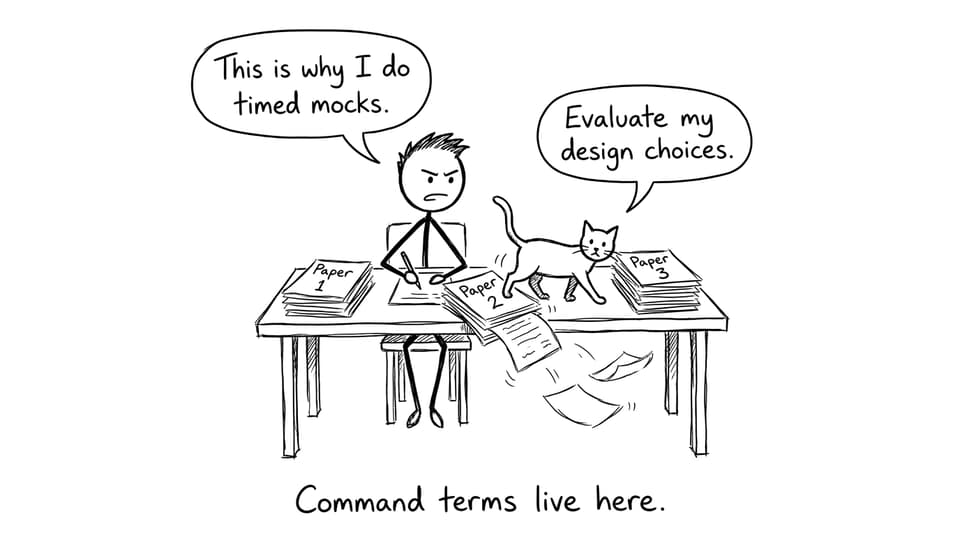
Paper 2 is where command terms decide your ceiling. If you want your answers to sound like an examiner expects, practise with the guidance in What Command Terms Appear Most in IB Design Technology Exams, then run drills using targeted topics from the Questionbank.
Paper 3: learn to evaluate, not describe
HL Paper 3 punishes vague opinion. Train yourself to weigh trade-offs: performance vs sustainability, cost vs manufacturability, user needs vs constraints. A great way to build this habit is reading one case study question, then using AI Chat to challenge your justification, and finally re-writing a tighter evaluation.
Practical Work: protect your marks with evidence
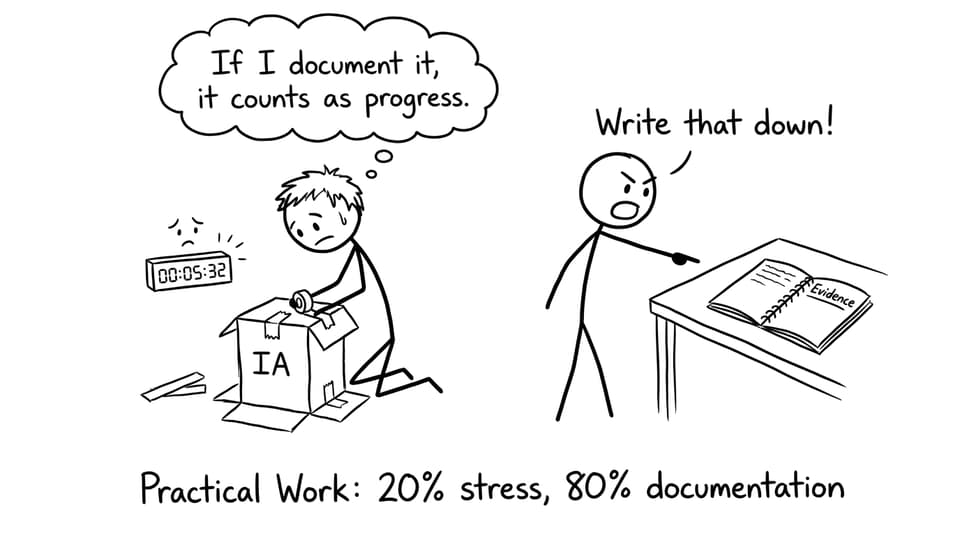
Practical Work is where students lose marks quietly: missing testing data, unclear iteration, thin reflection. If you need a calm strategy, Score a 7 in IB Design Technology: A Calm Strategy pairs well with RevisionDojo’s Coursework Library, Grading tools, and access to Tutors when you want human feedback.
FAQ: IB Design Technology HL grade boundaries 2025
Are IB Design Technology HL grade boundaries 2025 the same for every school?
Grade boundaries are applied consistently within an exam session, not customized per school. Your teacher might set internal tests with different cutoffs, but the final boundary ranges are session-based. That is why it is useful to think in raw marks per paper rather than “how hard the test felt.” In IB Design Technology, difficulty can feel higher when a scenario is unfamiliar, even if the marking is generous. Boundaries help you focus on controllables: definitions, command terms, and evidence-led evaluation. If you want to anchor your practice to exam-style expectations, start from the Complete Guide to IB Design Technology and build practice sets from there.
How should I use these IB Design Technology boundaries when planning revision?
Use the boundaries like a navigation tool. First, pick a target grade and convert it into rough targets for Paper 1, Paper 2, Paper 3, and Practical Work. Next, decide which component gives you the best return on time: many students can gain quick marks in Paper 1 through repeated retrieval and error logs. Then schedule weekly timed practice so you learn pacing, not just content. RevisionDojo makes this loop easier because the Study Notes, Flashcards, and Questionbank sit in one workflow, and Mock Exams plus Predicted Papers help you rehearse under pressure. Over time, you stop guessing and start adjusting.
What is the fastest way to improve in IB Design Technology HL?
The fastest improvement usually comes from fixing repeatable mistakes. In IB Design Technology, those mistakes are often predictable: vague definitions, ignoring command terms, and evaluations without data or trade-offs. Start by doing a short set of questions, then use feedback to write a one-line “rule” (for example: “Evaluate = balanced judgement + evidence + consequence”). Turn those rules into flashcards and review them daily. Once a week, sit a timed paper section so you build speed and stamina, not just knowledge. If you want a ready-to-follow routine, Best Study Strategies for IB Design Technology gives a clear structure you can repeat.
Final thoughts: turn boundaries into a calm target
The point of IB Design Technology HL grade boundaries 2025 is not to make you obsess over thresholds. It is to give your effort a shape. When you know the targets, every Questionbank set, every Flashcards session, every mock you build with RevisionDojo’s tools becomes a step toward a specific number.
If you want the most efficient next move, open the IB Design Technology Resources hub, choose one weak topic in the Study Notes, drill it in the Questionbank, and finish by locking in definitions with Flashcards. Then repeat. That is how IB Design Technology starts to feel less like uncertainty, and more like progress.