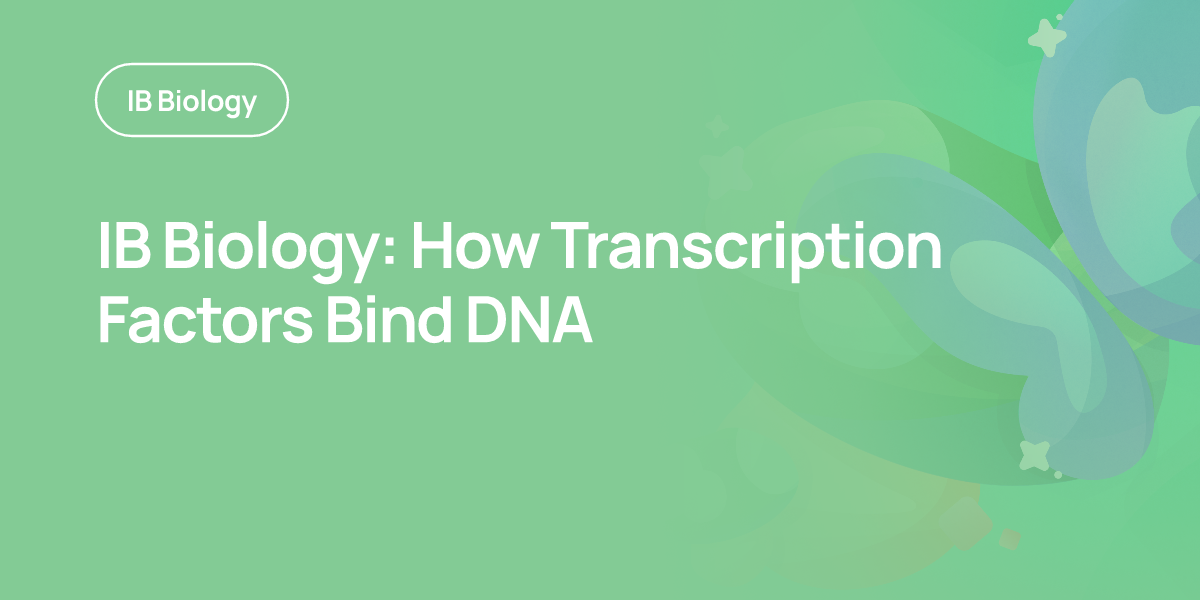

If you have ever stared at a page of genetic code and thought, “How does anything find anything in here?”, you are thinking like a molecular biologist. In IB Biology, transcription factors are the characters that solve that problem. They do not “scan” DNA like a human reads a sentence. They feel shape, charge, and chemical patterns, then make decisions that change what a cell becomes.
A neuron and a muscle cell can share the same genome, yet behave completely differently. The difference is not the DNA itself, but which genes are allowed to speak. Transcription factors are a big part of that permission system, and exam questions love them because they connect structure to function.
IB Biology quick checklist: what examiners want
-
Transcription factors are proteins that regulate gene expression by binding DNA.
-
They bind specific short sequences (often called response elements) in promoters or enhancers.
-
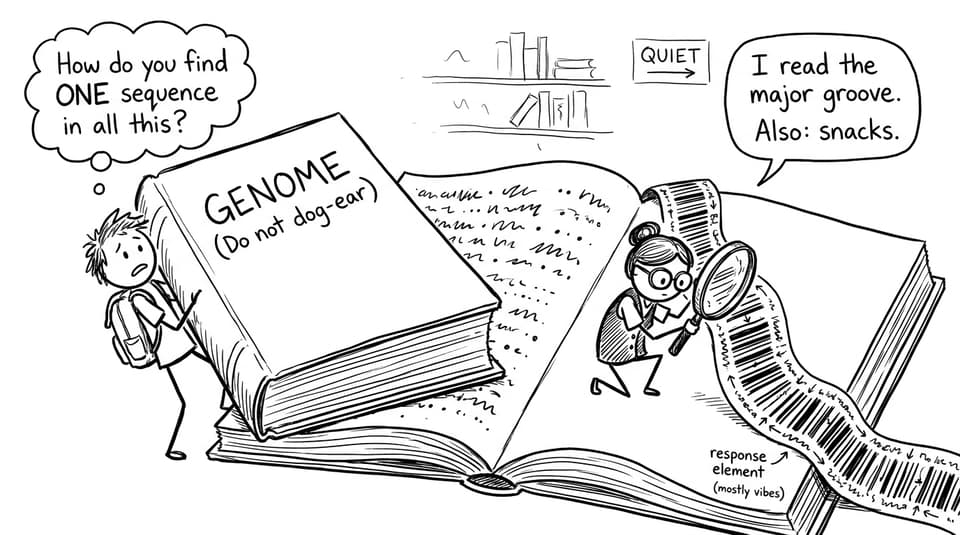
Specificity comes from DNA-binding domains that read patterns in the major groove.
-
Binding can increase transcription (activators) or decrease it (repressors).
-
Many genes use combinatorial control: several transcription factors must bind together.
If you want the bigger picture of how regulators affect transcription rate, pair this article with IB Biology: How Activators & Repressors Control Genes.
How transcription factors “read” DNA (without unzipping it)
A common misunderstanding in IB Biology is thinking a transcription factor must separate the DNA strands to check bases. Most of the time, it does not. Instead, the protein sits in the DNA’s major groove, where the edges of base pairs are exposed.
Each base pair presents a slightly different pattern of:
-
hydrogen bond donors and acceptors
-
shape and width of the groove
-
electrostatic charge
So transcription factors recognize patterns, not single letters. That is why you will often see wording like “specific DNA sequence” rather than “single base.” To revise surrounding context, review Notes for 7.2 Transcription and gene expression - IB.
DNA-binding domains in IB Biology: the motifs to name
In IB Biology, you are not expected to derive protein structures from scratch, but you are expected to recognize the common motif names and connect them to specificity.
Key examples:
-
Helix-turn-helix: classic motif, often described as an alpha helix fitting into the major groove.
-
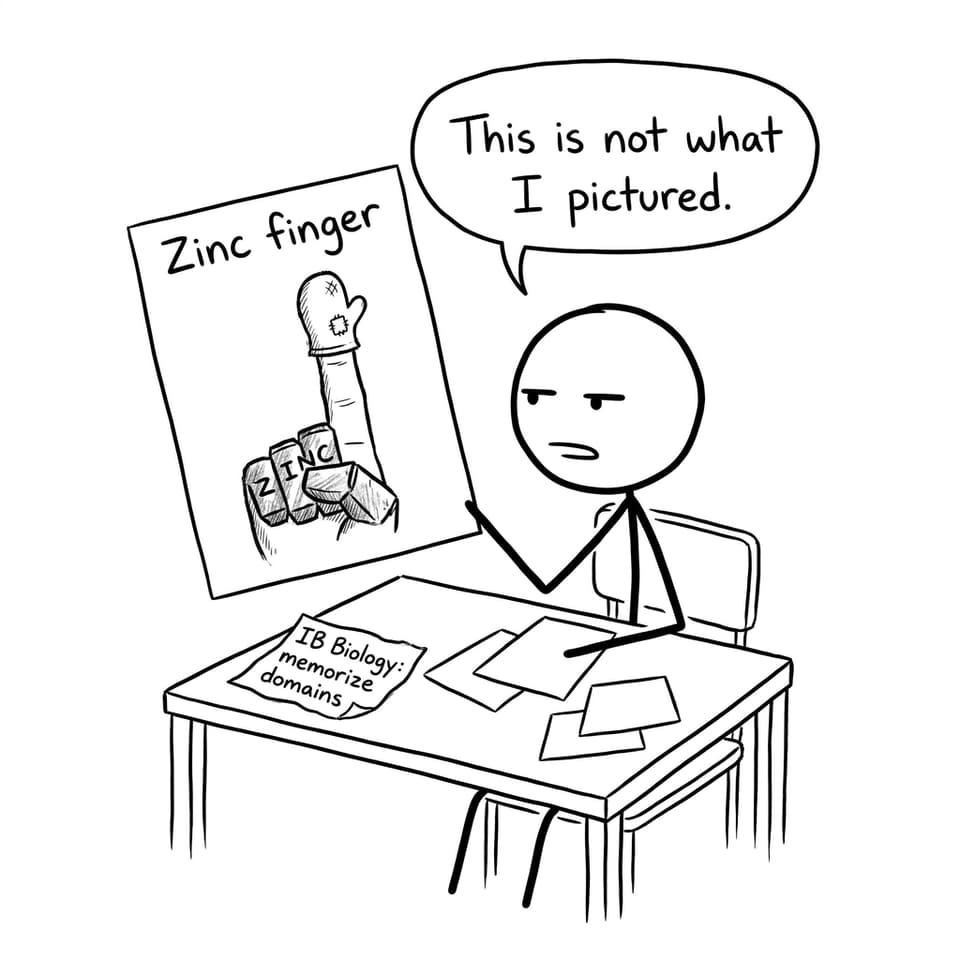
Zinc finger: stabilized by a zinc ion; great for sequence-specific binding.
-
Leucine zipper: two proteins dimerize like a zip, then bind DNA.
-
Helix-loop-helix: often involved in dimer formation and binding.
A useful exam sentence: “Specificity is due to the transcription factor’s DNA-binding domain matching the response element’s major groove pattern.” If you want question practice on this exact idea, use IB Biology Topic D2.2 Gene Expression Questionbank (HL).
Response elements, promoters, enhancers: where binding happens
Transcription factors bind short target sequences called response elements. These sequences appear in:
-
Promoters (near the transcription start site) where RNA polymerase and general transcription factors assemble.
-
Enhancers (which may be far away on the DNA) that work through DNA looping.
Promoters are close. Enhancers can be distant. Both are regulatory DNA. If you tend to mix these up, read How Gene Structure Controls Expression | RevisionDojo and then connect it to How the Structure of DNA Influences Its Ability to Be Transcribed.
What binding actually does: activators vs repressors
Binding is not the end of the story. In IB Biology, the mark-rich part is explaining what happens next.
-
Activators increase transcription by helping recruit RNA polymerase and proteins that open chromatin.
-
Repressors decrease transcription by blocking assembly or recruiting proteins that tighten chromatin.
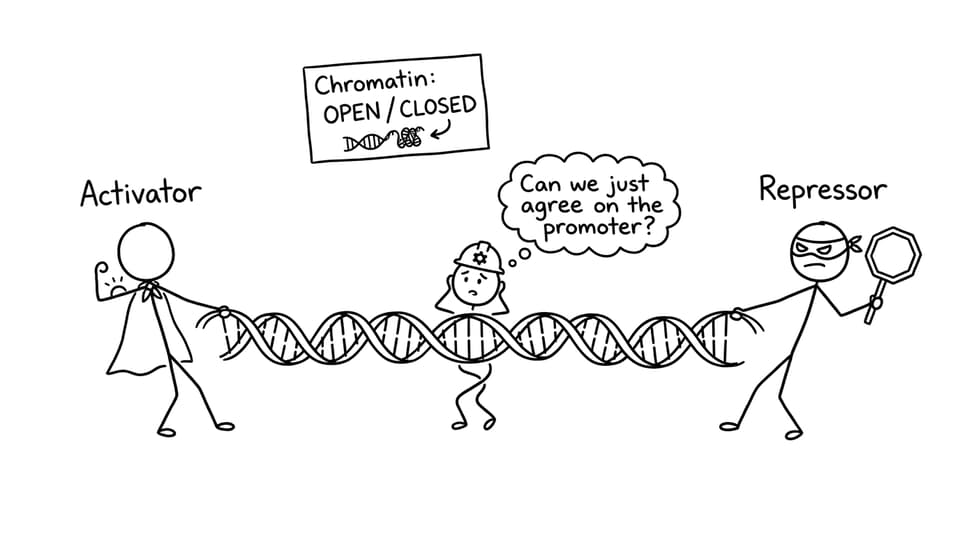
This is also where chromatin becomes the hidden mechanism. If the DNA is wrapped tightly in heterochromatin, it does not matter how “perfect” the response element is: the protein cannot access it. For that connection, see How chromatin packing controls gene expression and, for more detail, How histone modifications control transcription.
Why transcription factors work in teams (combinatorial control)
A single transcription factor rarely acts alone. Many genes require multiple transcription factors to bind before transcription changes meaningfully. This is called combinatorial control.
In IB Biology terms, this teamwork matters because it:
-
increases specificity (fewer accidental “on” switches)
-
integrates signals (nutrients, hormones, stress)
-
allows cell-type differences without changing the DNA sequence
A good real-world anchor is hormones. Steroid hormones can enter cells and influence transcription by forming complexes that act like transcription factors. Review External factors impacting the pattern of gene expression (D2.2.11) or the overview article Regulation of Gene Expression - IB Biology.
Bring it home: how to revise this fast with RevisionDojo
If transcription factors still feel abstract, treat them like an exam skill: define them, locate where they bind, then state the effect on transcription. RevisionDojo makes that loop easier with Study Notes for gene expression, a syllabus-aligned Questionbank, and Flashcards that turn motif names (zinc finger, leucine zipper) into quick recall. When you get stuck on a mechanism, AI Chat can quiz you on promoter vs enhancer language, and Grading tools can tighten your explanations to match IB markschemes. Add Mock Exams and Predicted Papers to practice under time pressure, and use the Coursework Library plus Tutors when you want deeper feedback.
In IB Biology, transcription factors are not just “proteins that bind DNA.” They are the decision-makers that turn a static genome into a living, adaptive system. Learn how they bind, and a huge portion of gene regulation questions starts to feel predictable.