

The moment a cell decides who it is
In IB Biology, gene regulation can feel like a quiet mystery: every cell owns the same DNA, yet a neuron doesn’t behave like a muscle cell. The difference is not the genes themselves, but the decisions made about them. And those decisions are often made by two characters you’ll meet everywhere in the syllabus: activators and repressors.
If you can explain how these proteins switch transcription up or down (and why chromatin matters), you’ll be able to handle a lot of exam-style prompts in the gene expression unit.
Quick checklist for exam answers
Use this as a tight IB Biology paragraph structure:
-
Activators bind enhancers and increase transcription
-
Repressors bind silencers or block other regulatory proteins and decrease transcription
-
Both can recruit proteins that change chromatin structure
-
The promoter must become accessible for RNA polymerase II to begin transcription
-
Many genes are controlled by both activators and repressors at different times
For definitions you can quote cleanly, keep the IB Biology Key Definitions nearby during revision.
How activators increase transcription (IB Biology)
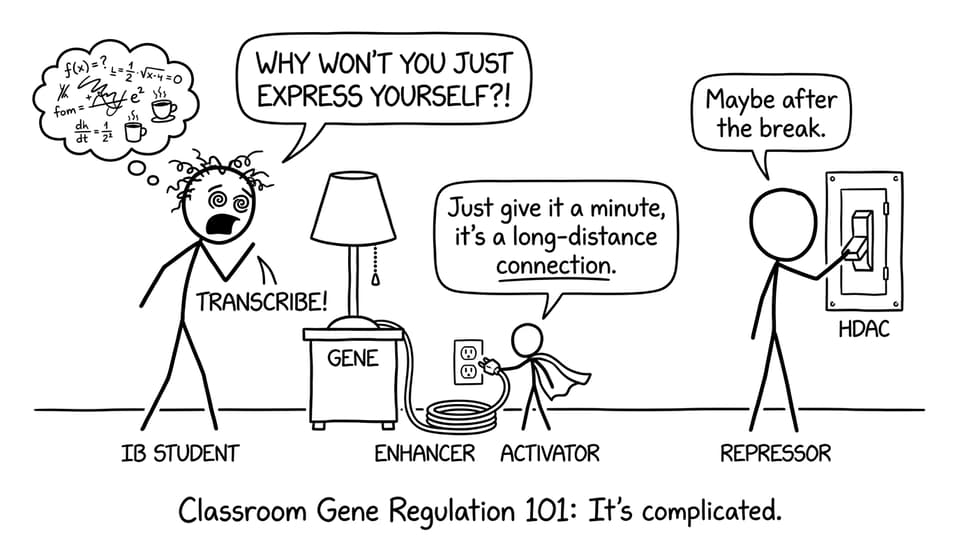
In IB Biology, an activator is a transcriptional regulator that makes a gene more likely to be transcribed. Typically, an activator binds to an enhancer sequence, which can be far from the gene it influences. That distance isn’t a problem because DNA can loop, bringing the enhancer-bound activator into contact with the promoter region.
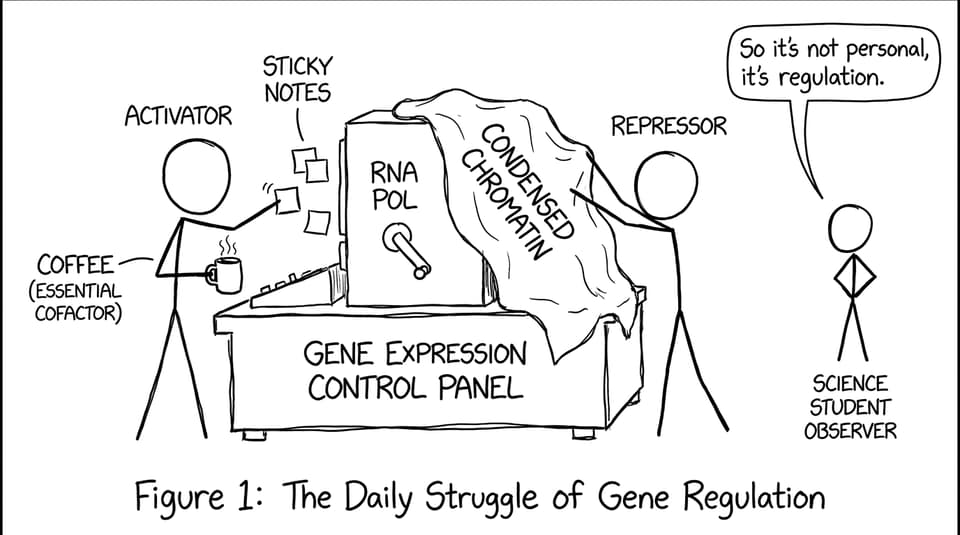
Once positioned, activators help by recruiting helper proteins such as co-activators, mediator complexes, and chromatin-remodelling proteins. The net effect is simple: chromatin becomes more open, the promoter becomes easier to access, and RNA polymerase II can assemble an initiation complex more efficiently.
If you want the syllabus-aligned version of this mechanism, see Regulation of transcription by proteins (D2.2.2) Study Notes.
How repressors reduce transcription (IB Biology)
A repressor does the opposite: it lowers transcription. In IB Biology, repressors may bind to silencer regions, compete with activators for the same binding site, or physically interfere with the transcription machinery.
A common high-mark detail is chromatin tightening. Some repressors recruit enzymes such as histone deacetylases (HDACs), which promote a more condensed chromatin state. Condensed chromatin limits access to promoters and transcription factors, making transcription initiation far less likely.
Chromatin-based control connects closely to epigenetics. If you’re revising tags like methylation, review Methylation of the promoter and histones (D2.2.6) Notes.
Why cells need both: balance, timing, and signals
In real cells (and in IB Biology markschemes), activation and repression often work as a coordinated system. A gene might be activated during early development, then repressed once its product is no longer needed. This prevents waste and keeps cell identity stable.
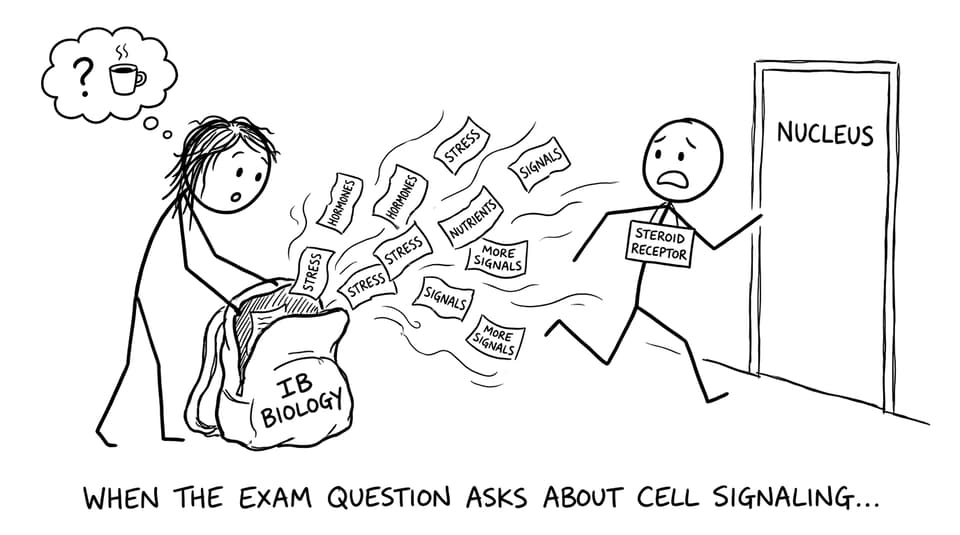
Regulators also respond to signals. Hormones, stress cues, and nutrient levels can change whether certain transcription factors bind DNA. Steroid hormones are a classic example because they bind intracellular receptors that act as transcription factors. For that link between signaling and transcription, see Intracellular receptors that affect gene expression (C2.1.12) Notes.
Practice this the RevisionDojo way
To lock this down for IB Biology, pair understanding with repetition. Build confidence using:
-
The IB Biology Gene Expression (HL) Questionbank for exam-style transcription regulation questions
-
The wider IB Biology Resources hub to combine Study Notes, Flashcards, AI Chat, Grading tools, Predicted Papers, Mock Exams, and Tutors
-
Extra context from How Gene Structure Controls Expression and the contrast case study How the Lac Operon Shows Inducible Expression
Final takeaway
In IB Biology, activators and repressors are the practical answer to a big question: how does the same DNA produce different outcomes? Activators push transcription forward by binding enhancers and opening access; repressors pull it back by blocking binding or condensing chromatin. Master that push-pull story, then drill it with RevisionDojo’s Questionbank, Flashcards, AI Chat, and Mock Exams until the wording feels automatic on exam day.