
The quiet trap: treating IB like a pause button
At some point in the IB, a strange deal gets offered.
It sounds responsible. Even noble.
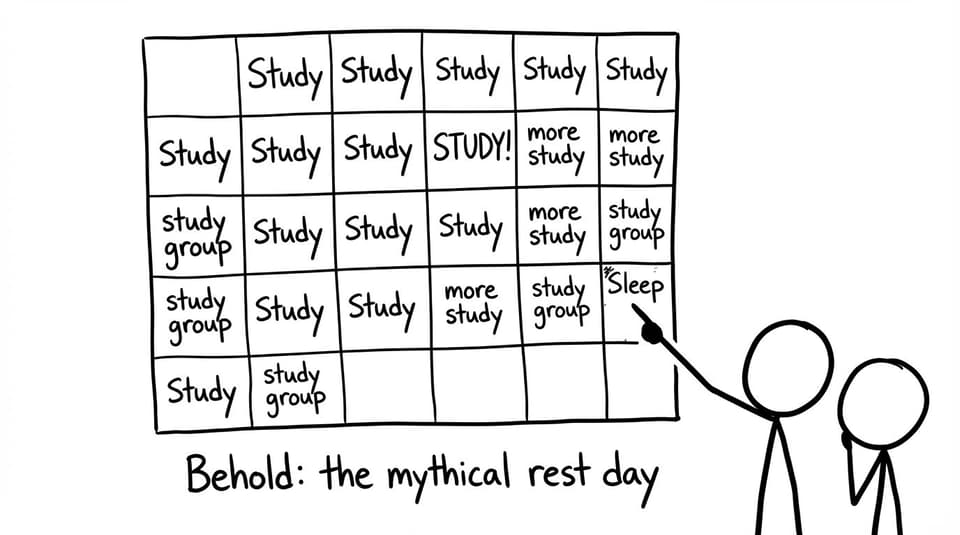
"I'll just disappear for a few months. No sport, no friends, no hobbies, no sleep I'm proud of. After exams, I'll come back."
The problem is that the IB is very good at accepting the deal, and very bad at giving you your life back on schedule.
Because the work expands into whatever space you hand it. And when you hand it your whole life, it takes it. Not out of cruelty, but out of physics.
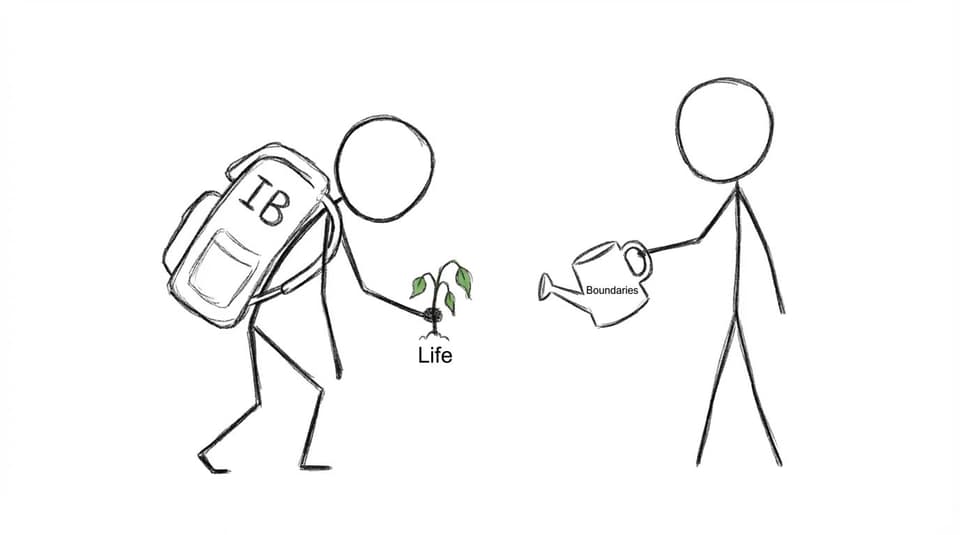
This post is a reminder that you don't need to pause your life for IB success. You need a system that makes revision smaller, clearer, and repeatable. And you need boundaries that turn the IB from an identity into a project.
A quick checklist: how to do IB without disappearing
If you want the short version before the deeper story, use this:
- Keep two non-negotiables each week (one social, one physical)
- Study in time boxes (25-50 minutes), not "until I'm done" sessions
- Build revision around active recall (questions + flashcards), not rewriting notes
- Schedule one timed session weekly to build exam stamina
- Use feedback loops (mistakes list, retakes, targeted drills) so your effort compounds
- Protect sleep like it's a subject (because it is)
The IB rewards consistency. Not martyrdom.
Why pausing your life backfires in IB
Burnout isn't dramatic, it's quiet
Burnout rarely looks like a movie scene. It looks like:
- rereading the same page three times and remembering none of it
- doing "revision" for hours without touching exam-style questions
- feeling guilty while resting, and tired while working
The IB load is heavy because it's wide: multiple subjects, coursework, skills, and deadlines. If you remove every source of recovery, the load doesn't get lighter. You just get weaker.
The IB doesn't measure time spent
The IB measures outputs under constraints: clarity, structure, command terms, and accuracy under time pressure.
That's why the fastest progress often comes from practice that feels smaller:
- one topic
- a handful of exam-style questions
- immediate feedback
- a short review loop
RevisionDojo is built around this exact idea. Instead of making you guess what matters, it nudges you toward a practice-and-feedback cycle using Study Notes, Flashcards, and the Questionbank.
If you want the bigger picture of that workflow, see: RevisionDojo App: The Smarter Way to Prep for IB Exams.
The mindset shift: IB is a project, not your personality
A useful rule: if your whole self-worth is attached to IB performance, every study session becomes emotional. And emotional studying is inefficient studying.
Projects have schedules.
Projects have limits.
Projects can be worked on, then put down.
When you treat IB like a project, you start asking better questions:
- "What's the highest ROI task I can do in 40 minutes?"
- "What topic keeps reappearing in my mistakes?"
- "How can I simulate exam pressure once a week so the real day feels familiar?"
That's the logic behind using a question bank properly. Not random drills, but targeted repetition.
A good starting point is: Comprehensive IB Question Bank: Thousands of Practice Questions and the Questionbank feature page.
A practical IB routine that leaves room for life
Build your week around anchors, not guilt
Pick anchors first. Then fit IB around them.
Two simple anchors work for most students:
- One social anchor: dinner with a friend, a club meeting, a family night
- One physical anchor: gym session, run, sport practice, long walk
These are not rewards for finishing IB work. They are guardrails that keep your brain functioning while you do it.
Use the "minimum effective dose" model for IB revision
Here's a repeatable 60-minute block:
- 10 min: skim one section of Study Notes (only what you'll apply)
- 35 min: do targeted Questionbank practice on that exact topic
- 15 min: turn mistakes into a mini deck (or review an existing deck) using Flashcards
This is how you avoid pausing your life: you study with intent, then stop.
If you want examples of what modern notes can look like when they're built for speed, read: Digital IB Study Notes: Access Anywhere, Anytime and IB Subject Note Collections: Comprehensive Study Materials.
The real secret: you can be social and still do IB
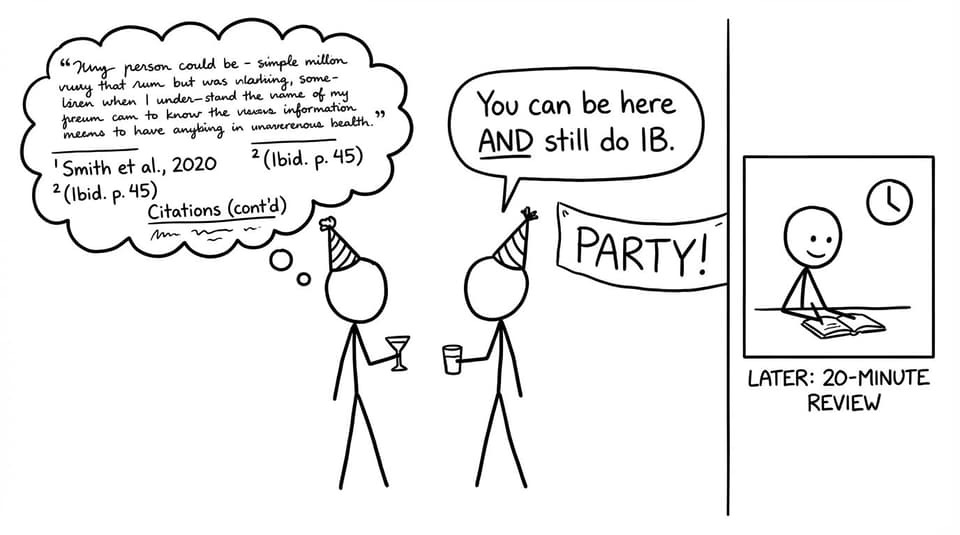
There's a myth that "serious" IB students don't go out.
But the best students often do something more subtle.
They go out, and they return.
They don't need perfect days. They need repeatable weeks.
One night with friends doesn't ruin your IB trajectory. What ruins it is the all-or-nothing spiral:
- "I wasted time, so I'll study until 2am."
- "I studied until 2am, so I can't focus."
- "I can't focus, so I'll need to cancel everything to catch up."
Instead, plan your social life the way you plan revision: time-boxed, intentional, and guilt-free.
Don't let coursework eat your entire exam season
Coursework can quietly become the reason students pause their lives. It's open-ended, which makes it feel like it's never finished.
This is where tools matter.
RevisionDojo's Coursework Grader and Grading tools are useful because they create boundaries. You upload a draft, get rubric-calibrated feedback, apply the top fixes, and stop.
That is healthier than endlessly tweaking in the dark.
If coursework stress is part of why you feel you must pause life for IB, start here: IB Coursework Grader.
And if you want a broader view of how RevisionDojo handles feedback and integrity, see: Inside Jojo AI: How RevisionDojo's Curriculum-Tuned Tutor Grades and AI usage principles for schools.
Use timed practice so the IB exam stops feeling mythical
Many students "study" for months, then do their first truly timed paper far too late. That's when panic starts.
A calmer approach is simple:
- once a week, run a timed block
- review like an analyst, not a judge
- drill weak areas immediately afterward
RevisionDojo supports this with Mock Exams, Predicted Papers, and exam-style grading loops.
If you want a structured method, use: How to Run Timed IB Mock Exams in RevisionDojo.
You can also explore predicted sets by subject, like: Math AI Papers.
A healthier definition of "working hard" in IB
Working hard in IB isn't maximizing suffering.
It's minimizing waste.
Waste looks like:
- rewriting notes because it feels safe
- highlighting because it feels like progress
- avoiding questions because they reveal gaps
Hard work looks like:
- answering questions when you'd rather reread
- checking markscheme expectations
- logging mistakes and returning to them
That's why the combination of Study Notes, Flashcards, Questionbank, and AI Chat matters. It keeps your effort pointed at the behaviors that raise marks.
If you want a quick overview of free core tools, see: Notes + Flashcards + Question Bank (Free).
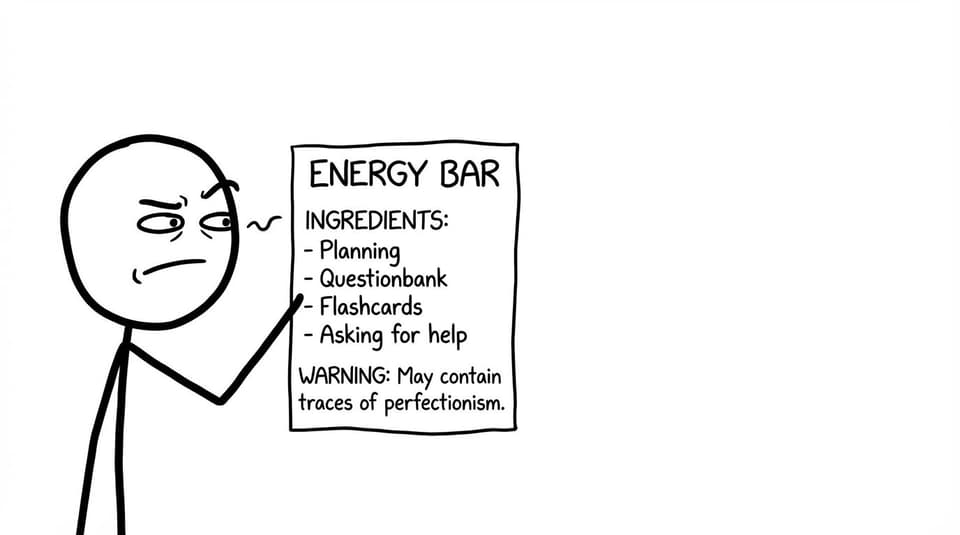
Closing: don't pause your life for IB, build a system
The IB is demanding, but it's not supposed to erase you.
If you pause your life for IB, you don't become more disciplined. You become more brittle. And brittle is the opposite of what exams require.
A better path is quieter: keep your anchors, study in time boxes, and let feedback guide you. Use RevisionDojo to make that easy: Study Notes to reduce noise, Flashcards to compound memory, AI Chat to get unstuck, Questionbank practice to build technique, and Mock Exams and Predicted Papers to make the exam feel familiar.
Your goal isn't to survive IB by disappearing.
Your goal is to finish IB while still being someone who has a life worth returning to.