
The moment every IB student recognises
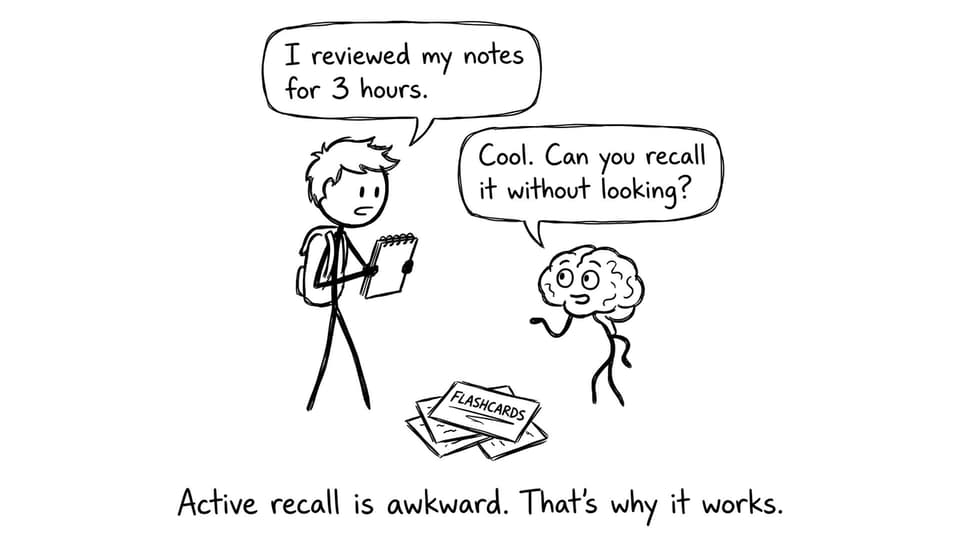
You sit down to revise, reread your notes, and feel productive. Then a practice question appears and your mind goes strangely quiet. That gap between “I’ve seen this” and “I can produce it under time pressure” is where most IB stress lives.
A solid IB flashcard system fixes that problem by design. It turns revision into active recall (pulling information out of your brain) instead of passive review (letting information wash over you). Add spaced repetition, and you get a calmer kind of consistency: the right facts, at the right time, with less panic.
Quick IB flashcard checklist (save this)
-
Make cards that ask a question, not cards that show a paragraph
-
Prefer “define, compare, explain why” prompts over “copy the textbook”
-
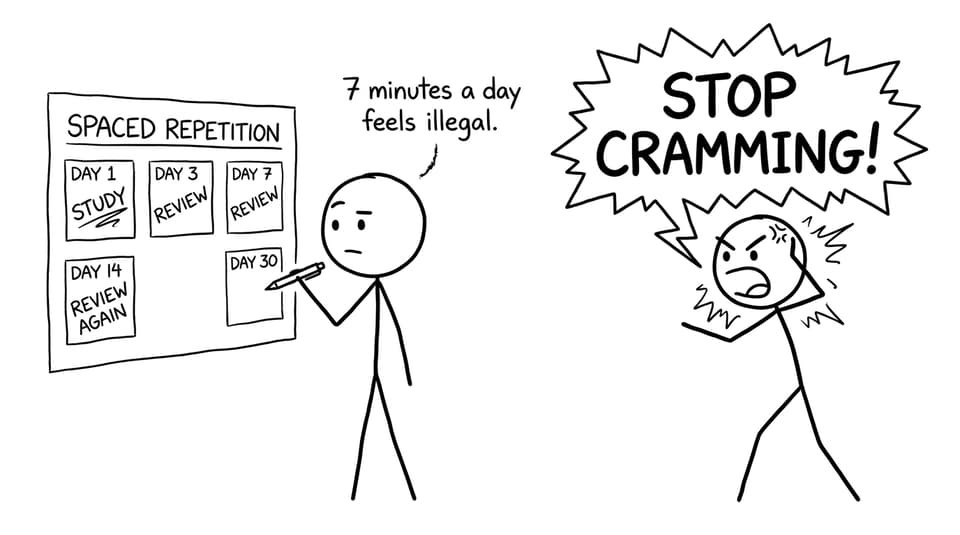
Review in short sessions daily (even 7-10 minutes)
-
Use spaced repetition so hard cards return more often
-
After practice questions, turn mistakes into new flashcards
If you want a ready-to-use setup, start with RevisionDojo Flashcards or the hub page for IB Flashcards with Spaced Repetition (SRS).
Why an IB flashcard system works (and rereading doesn’t)
The IB rewards retrieval. Definitions, processes, command terms, key evidence, and formula use all need fast access. Flashcards force that access.
Active recall feels harder because it is harder. You attempt an answer, notice the gaps, then correct them. That tiny struggle is what builds memory you can actually use in an IB exam.
Spaced repetition is the second half of the system. Instead of reviewing everything equally, you revisit material just before it fades. Your study time goes to the cards that still wobble, not the ones you already know.
How to build an IB flashcard system inside RevisionDojo
A good system is simple enough that you’ll keep doing it in Week 3, not just Week 1.
Use Jojo AI to create cards from what you’re already learning
Instead of spending hours writing cards, you can generate them quickly and get straight to the part that matters: answering them. RevisionDojo’s Flashcards are powered by Jojo AI, so your notes can become review-ready prompts without friction. Pair this with Study Notes when you need quick clarity, then return to flashcards for retrieval.
Mix recall with application so IB marks follow
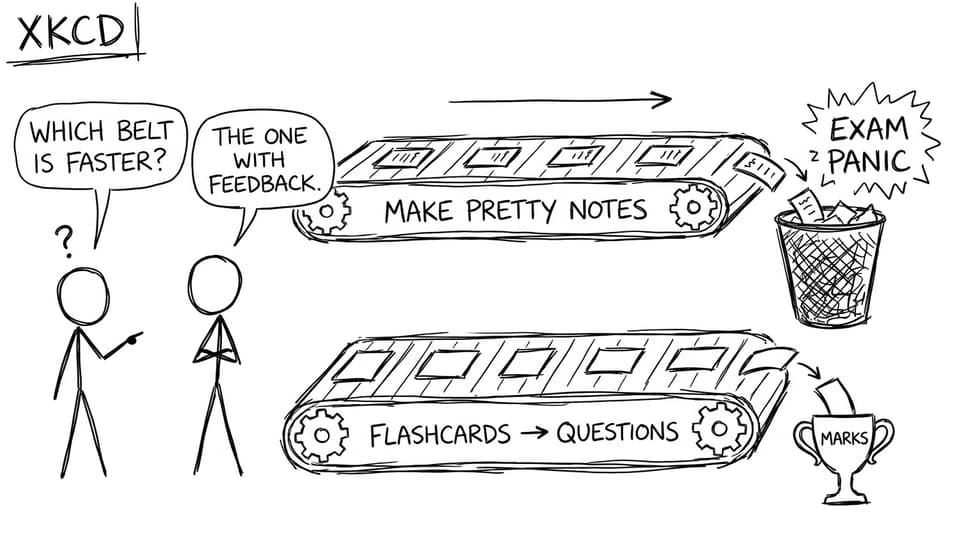
Flashcards train access. Practice questions train marks. The fastest improvement comes from cycling between both.
Try this loop:
-
Review flashcards for 7-12 minutes
-
Do a short set from a question bank
-
Convert every mistake into 1-3 new flashcards
To build that loop, use Questionbank | RevisionDojo and the guide IB Flashcards vs Practice Questions: Score Higher Fast.
Real IB examples you can steal today
-
For IB ESS content like biomes and succession, use topic decks such as Flashcards for 2.4 Biomes, zonation and succession - IB and then reinforce the understanding with a quick read of IB ESS: What Is Ecological Succession? Ecosystem Guide.
-
For IB Psychology, start from IB Psychology Topic Group Dynamics and pull in recall prompts from the Group Dynamics Questionbank.
-
For language-heavy subjects, see how decks are structured in The Ultimate Guide to the Best Flashcards for IB English Language and Literature.
FAQ
Are RevisionDojo flashcards free for IB students?
Yes, RevisionDojo offers flashcards that IB students can start using without paying, which matters because consistency beats fancy tools. Free access lowers the friction of starting today rather than “after I’m organised.” It also means you can experiment with active recall before committing to a bigger revision setup. Once the habit is built, the system becomes the advantage, not the subscription. For the latest details and what’s included, see RevisionDojo Flashcards. The key is to treat “free” as permission to begin, not permission to keep things casual.
How many minutes per day should my IB flashcard system take?
Most IB students do better with short daily sessions than long weekend marathons. If you can manage 7-15 minutes a day, you’ll create enough spacing for memory to actually consolidate. The win is not the size of one session, but the number of returns across a week. When the session feels too small to matter, that’s usually a sign it’s sustainable. On harder weeks, even a five-minute review keeps the chain unbroken. Then, closer to exams, you can scale up without rebuilding the habit from scratch. Spaced repetition works best when you show up often.
Should I use flashcards or practice questions for IB exams?
Use both, but give each tool a job. Flashcards are for rapid recall: definitions, steps in a process, key theories, and common confusions. Practice questions are for marks: applying ideas, structuring responses, and matching markscheme expectations. If you only use flashcards, you can become “knowledgeable” without becoming “exam-ready.” If you only do questions, you may repeat the same errors because the underlying recall is shaky. The strongest IB workflow is a loop: flashcards to load the knowledge, questions to pressure-test it, and then new flashcards built from mistakes. For a clear breakdown, read IB Flashcards vs Practice Questions: Score Higher Fast.
Build your IB memory system (then protect it)
An IB flashcard system is not about being a “flashcard person.” It’s about making your revision measurable, repeatable, and calm. Start with IB Flashcards with Spaced Repetition (SRS), connect it to Study Notes, and reinforce it with Questionbank | RevisionDojo.
If you want the full RevisionDojo advantage, keep everything in one place: Flashcards for active recall, Questionbank for application, AI Chat for quick explanations, Grading tools for feedback, Predicted Papers and Mock Exams for exam pressure, plus the Coursework Library and Tutors when you need extra support. Your future self will feel the difference the first time a question lands and the answer is simply there.