
The moment your EE stops being “a draft”
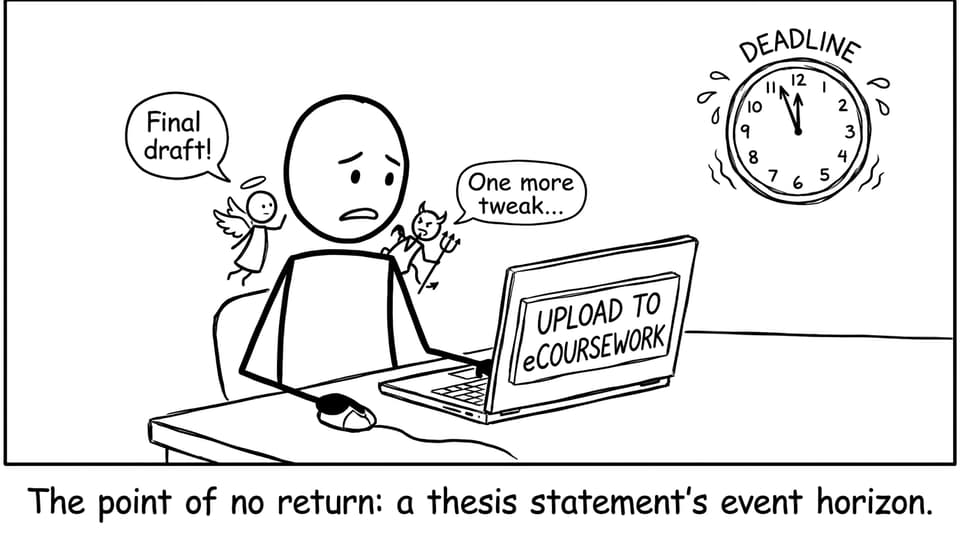
There’s a specific kind of quiet panic that only an IB student knows: the cursor hovering over Submit, your EE open in one tab, your RPPF open in another, and your brain whispering that one more tiny tweak will finally make the whole thing perfect.
But the truth about the EE is this: perfection is not the finish line. Authentication is.
When your school uploads your EE and RPPF to the IB eCoursework system, your work becomes officially authenticated. That’s the point of no return. From that moment, no retraction for modification is permitted unless there has been an administrative error. Not “I spotted a typo.” Not “I found a better source.” Not “my conclusion suddenly feels weak.”
So what actually happens when you submit your EE? Who checks what? What does your supervisor confirm? And what do you do if authenticity is questioned before submission?
This guide walks you through the real sequence, step by step, so you can submit your EE with calm confidence.
EE authentication checklist (save this)
Before your EE reaches eCoursework, you want a simple checklist you can trust:
- Your EE file is final (format, citations, word count, appendices).
- Your RPPF reflections are complete and honest.
- Your supervisor has monitored your process (check-ins, draft review, reflection sessions).
- Your citations match the original sources you used.
- You can explain your research decisions in your own words.
- You have done a last integrity scan (missing citations, patchwriting, accidental copying).
If you want a structure check before the final upload, use How to Format Your EE According to IB Guidelines alongside your final proofread.
What “EE authentication” really means in IB
Authentication is the IB’s way of saying: this work is the student’s own, completed under appropriate supervision, and submitted as final.
In practice, EE authentication has two pillars:
Student responsibility
You are confirming that the EE is your own writing and your own thinking, supported by properly credited sources. That includes honest representation of your research process in the RPPF.
Supervisor responsibility
Your supervisor must confirm, to the best of their knowledge, that your EE is authentic. This is not a casual signature. It’s grounded in the supervisor having monitored you through the process: check-ins, draft review, and reflection sessions.
If you want to understand the bigger integrity picture, read What Are IB's Expectations for Academic Honesty in the Extended Essay (EE). It frames why this step is treated so seriously.
What happens when you submit: the real timeline
The submission moment feels instant. The process behind it is not.
Your school uploads the EE and RPPF to eCoursework
Your EE and the RPPF are uploaded to the IB eCoursework system. This matters because it is the point at which the work becomes treated as final and authenticated.
Once uploaded, no retraction for modification is permitted unless there is an administrative error. In other words, you can’t request to swap in a new PDF because you suddenly rewrote a paragraph.
That’s why final checks should happen before upload, not after.
Supervisor confirmation: what they are actually “signing off”
When supervisors confirm authenticity, they are confirming to the best of their knowledge that:
- they have monitored the student’s progress
- the EE reflects the student’s own work
- guidance given stayed within acceptable boundaries (advice, questioning, general feedback; not rewriting)
- the RPPF reflections align with the student’s real process
This is also why consistent supervisor interaction is not just helpful, it’s protective. A student who has documented check-ins and reflection sessions looks like a student who owns their EE.
If authenticity is questioned before submission
This is the part students rarely hear explained clearly.
If authenticity is in doubt at any stage, the supervisor should:
-
Discuss it with the student first
This is not meant to be a “gotcha.” It’s meant to clarify what happened. Sometimes a missing citation is simply a rushed edit. Sometimes a student used a tool incorrectly. Conversation comes first.
-
Compare writing style against known work
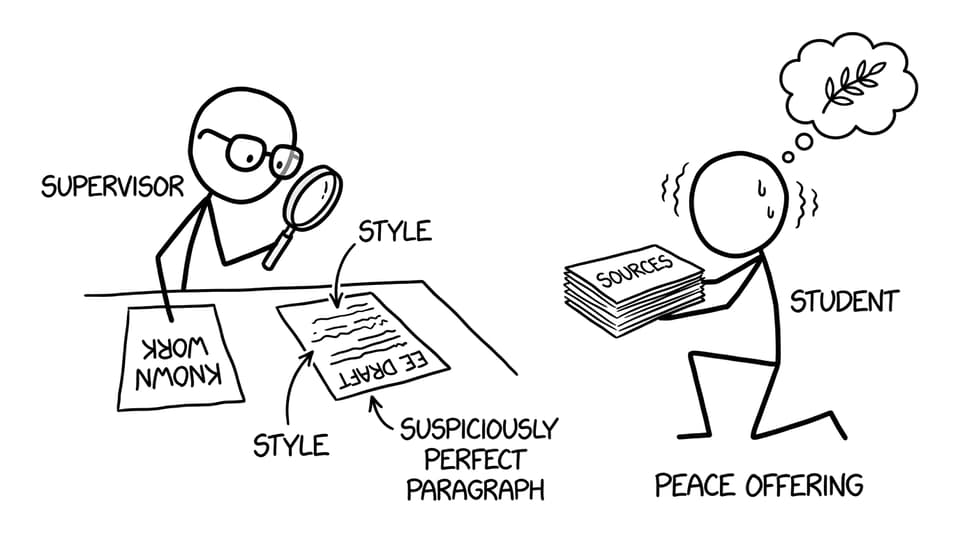
Supervisors can compare your EE voice to your in-class writing, earlier drafts, or other assessed work. Consistency matters: not because you must sound the same forever, but because sudden, unexplained shifts raise questions.
-
Check cited references against originals
A key authenticity test is simple: do your citations lead to real sources, and do those sources actually contain what you claim? In strong EE work, references are traceable and used accurately.
-
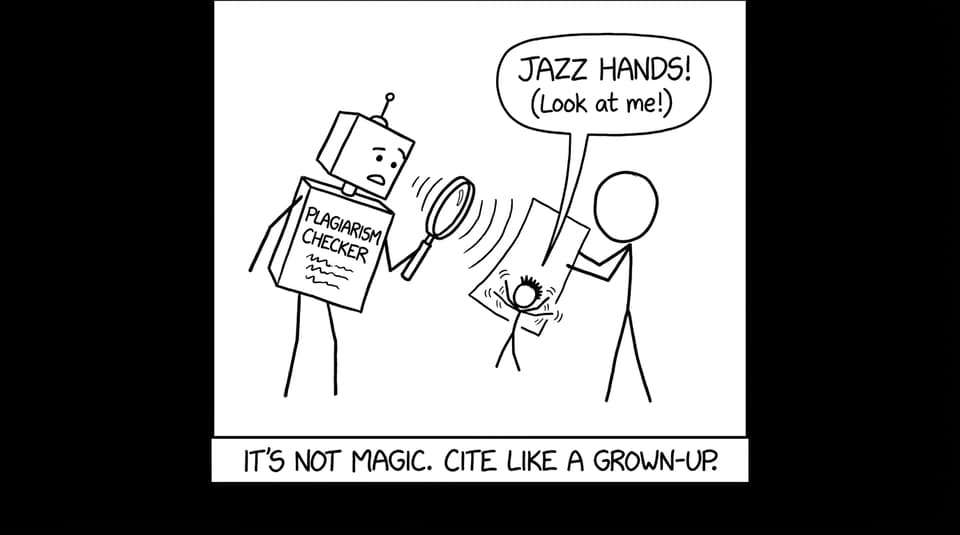
Use plagiarism detection software if necessary
If doubts remain, plagiarism detection software may be used. This is typically a final step, not the first one.
If you want a practical, student-friendly explanation of what counts as misconduct and how to avoid it, IB Academic Misconduct Explained: How to Avoid Plagiarism and Collusion is a helpful companion.
The RPPF: why it matters for EE authentication
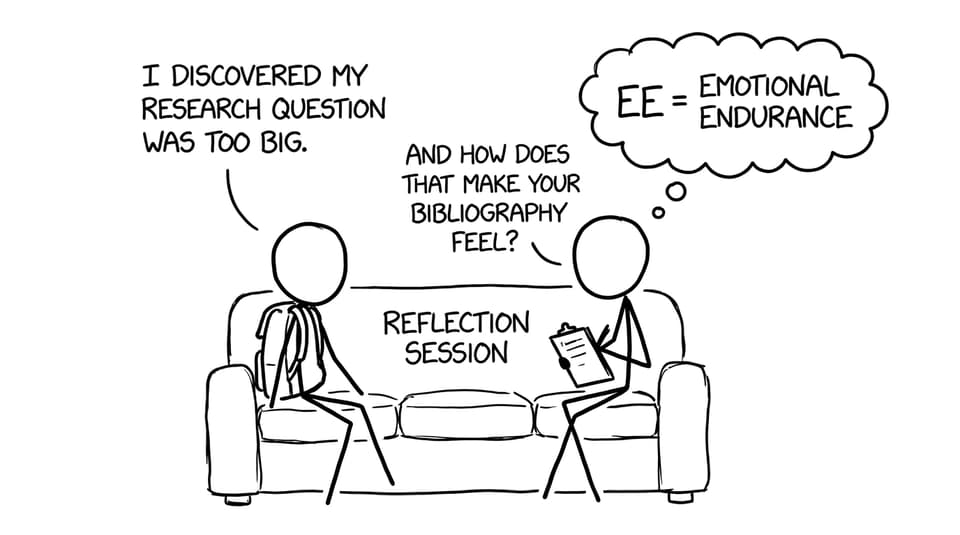
Students sometimes treat the RPPF like a formality. For EE authentication, it’s evidence.
Your reflections show:
- that your research question evolved naturally
- that you made decisions and faced trade-offs
- that you can articulate challenges and solutions
- that the final EE came from a real process, not a sudden upload
Honest reflections are often more convincing than “perfect” reflections. The IB is not awarding marks for pretending the process was smooth. They’re rewarding engagement and thinking.
If you’re still building your process, Mastering IB Extended Essays: How to Research, Write, and Revise gives a solid end-to-end workflow.
How to protect your EE authenticity (without getting paranoid)
Most authenticity problems are not caused by “bad students.” They’re caused by pressure plus messy workflows.
Here are habits that keep your EE safe and clean:
Keep a living bibliography from day one
If you’re adding sources at the end, you’re inviting mistakes. Build your citations as you go. Track page numbers early. Save PDFs or screenshots of key pages.
For a practical citation mindset (especially the small mistakes that add up), Integrity in the IB Extended Essay: Honest Research and Original Argumentation is worth reading.
Don’t copy text “temporarily”
A common student move is pasting a quote or explanation into the draft “just for now.” Then “now” becomes “final.”
If you must paste anything, immediately wrap it in quotation marks and attach a citation in that same minute.
Be careful with exemplars
Exemplars are for calibration, not copying. They help you see what strong structure looks like, what analysis feels like, and what academic tone sounds like.
If you use examples ethically, RevisionDojo’s IB Coursework Examples and the Coursework feature hub are useful for benchmarking your EE against real student standards.
Use feedback tools that don’t replace your voice
RevisionDojo is strongest when it helps you learn faster while keeping authorship yours.
- Use the Coursework Grader to see rubric-aligned strengths and gaps: IB Coursework Grader
- Use Jojo AI Chat to clarify concepts, improve structure, and test your logic (then rewrite in your own words)
- Use Study Notes to rebuild shaky subject knowledge so your analysis is genuinely yours
If your goal is a high-scoring EE, you also need to avoid the classic traps. Mistakes to Avoid in IB Extended Essays pairs well with a final draft review.
How RevisionDojo supports EE students (and your exam prep)
The EE can feel like it lives in a separate universe from your exams. In reality, it trains the same muscles: clarity, discipline, and the ability to think under constraints.
RevisionDojo supports that whole ecosystem:
- Coursework Library: model EE work to calibrate quality and structure
- Grading tools: rubric-aligned feedback that tells you what to fix next
- AI Chat: a calm place to pressure-test ideas without rewriting your work for you
- Study Notes and Flashcards: rebuild content knowledge so your essay analysis has depth
- Questionbank: keep your exam skills sharp while your EE is consuming attention
- Mock Exams and Predicted Papers: maintain timing and stamina as deadlines pile up
- Tutors: targeted help when you need a human eye on argument quality
If you’re juggling everything at once, RevisionDojo App: The Smarter Way to Prep for IB Exams lays out a sustainable weekly rhythm.
The calm way to finish your EE
The best feeling in the EE process is not “I made it perfect.” It’s “I made it mine.”
Before your school uploads your EE and RPPF to eCoursework, do the boring checks that protect you: citations, consistency, clarity, and a final read-through where you can explain every paragraph out loud. Because once that upload happens, your EE is authenticated, and there is no retraction for modification unless an administrative error occurred.
If you want a clean final stretch, use RevisionDojo as your steady companion: run a rubric check with the IB Coursework Grader, benchmark structure with the IB Extended Essay Guide, and keep your exam momentum with Study Notes, Flashcards, the Questionbank, Mock Exams, and Predicted Papers.
Your EE is a long project. Submitting it is a single click. Make that click feel earned.