
Choosing a sensitive EE topic can feel like standing at the edge of two cliffs at once.
On one side is curiosity: the question you can’t stop thinking about, the issue you’ve seen up close, the topic that matters. On the other side is responsibility: the quiet understanding that some questions involve real people, real pain, real privacy, and real consequences.
The IB doesn’t tell you to avoid meaningful topics. It tells you to approach them like a researcher, not a tourist. That means planning for safety, dignity, consent, confidentiality, cultural context, and the possibility that your EE might affect others (or you) more than you expect.
This guide explains what the IB advises when you’re choosing a sensitive EE topic, and how to turn “I care about this” into “I can research this ethically.”
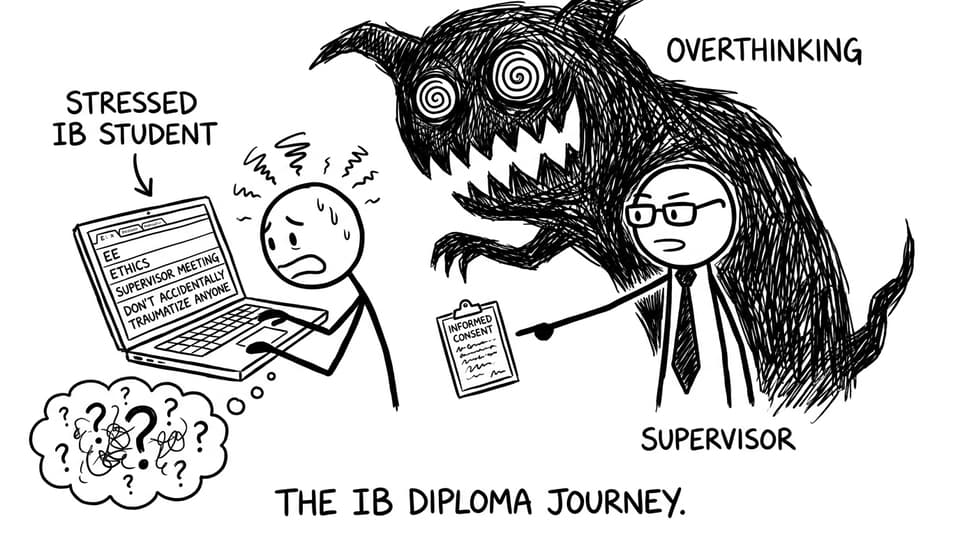
A quick sensitive EE checklist (save this)
Use this checklist before you commit to a sensitive EE topic:
- Can I research this without harming participants, communities, animals, or the environment?
- Do I need informed consent? If yes, can I realistically obtain it and document it?
- Can I protect privacy and confidentiality (anonymization, secure storage, minimal data collection)?
- Does the topic require cultural or community knowledge I don’t yet have (and could misrepresent)?
- Could this topic be personally triggering or emotionally heavy for me over months of work?
- Have I discussed it with my supervisor and (if needed) the DP coordinator?
- Can I reshape the question to use secondary sources instead of direct data collection?
If any item feels uncertain, don’t panic. In many cases, you don’t need a new topic. You need a safer design for the same curiosity.
What the IB advises about sensitive EE topics
The IB’s position is essentially this: your EE is academic research, and academic research has ethical obligations.
The IB’s Ethical Guidelines for Extended Essays Research and Fieldwork highlight principles you should treat as non-negotiable when your EE touches sensitive areas:
- Physical and mental comfort of participants: your methods should not distress, pressure, or expose people to harm.
- Cultural contexts: your framing, language, and interpretation should not stereotype, exploit, or misunderstand communities.
- Privacy and confidentiality: identity and personal data must be protected, and only collected when truly necessary.
- Informed consent: participants should understand what they’re agreeing to, what data is collected, how it’s used, and their right to withdraw.
- Evaluating impact: students are expected to evaluate circumstances and take preventative action regarding the research impact on people, animals, and the environment.
In practice, this means the best sensitive EE topics aren’t the most shocking. They’re the most thoughtfully bounded.
Sensitive EE topics: what usually makes a topic “sensitive”
A topic becomes sensitive when it meaningfully increases the risk of harm, exposure, or misrepresentation.
Common sensitive EE categories include:
- Mental health, self-harm, eating disorders, trauma, addiction
- Sexuality, gender identity, intimate relationships
- Domestic violence, abuse, harassment
- Religion, extremism, discrimination, racism
- Migration status, refugee experiences, political persecution
- Crime (especially involving minors)
- Medical information, disabilities, genetic data
- Indigenous knowledge or culturally protected material
- Anything involving animals or environmental disruption through fieldwork
A useful mindset: sensitivity isn’t only about the topic. It’s also about methods. A careful literature-based EE can be far less risky than an interview-based EE on the same theme.
The safest move: talk early (and document the decision)
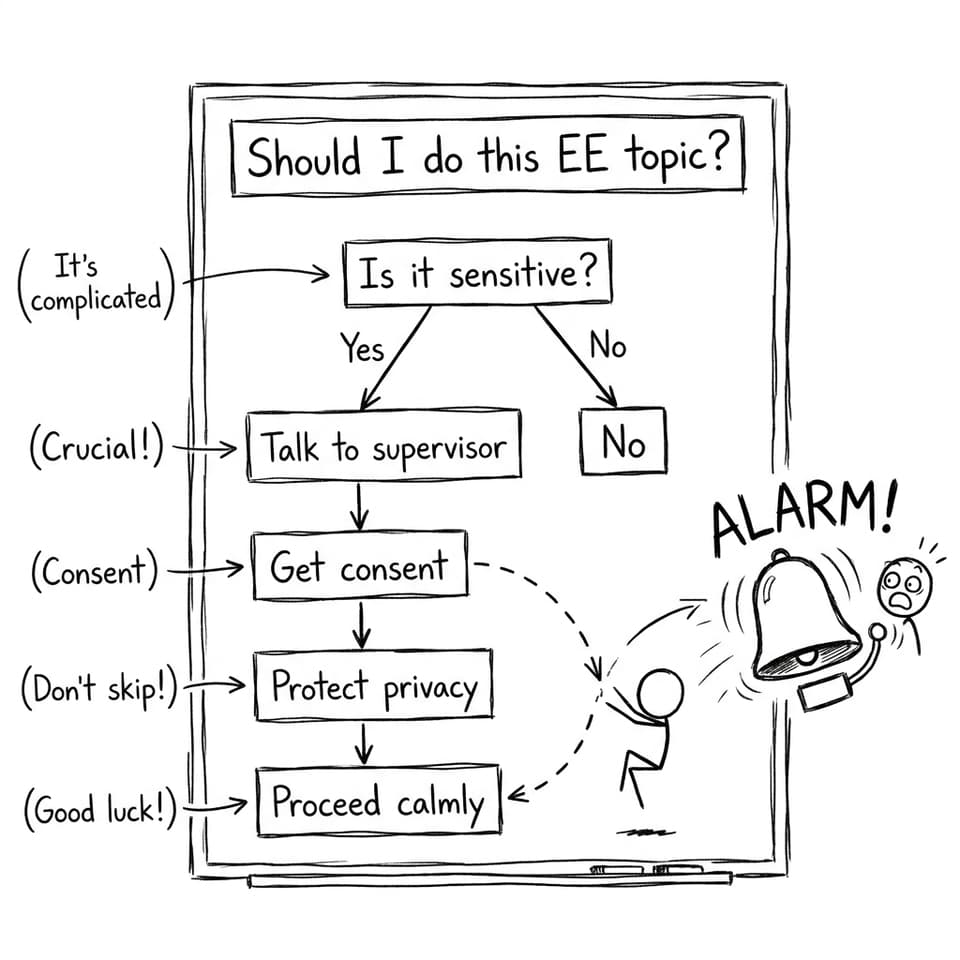
If your EE topic is sensitive, the IB strongly recommends discussing it with your supervisor and coordinator.
Do it earlier than you think you need to. Not because you’re “in trouble,” but because sensitive research has moving parts: permissions, consent forms, revised instruments, alternative methods, and sometimes a complete pivot.
Bring a one-page brief to the meeting:
- Working research question
- Why it matters (one paragraph)
- Proposed method (survey, interview, experiment, text analysis)
- Who/what is involved (participants, organizations, locations)
- Risks you can already see
- Your initial safeguards (consent, anonymization, opt-out)
Then write a short summary of what was decided and why. That habit will help you later when you reflect in your EE process.
If you’re still shaping your question, RevisionDojo’s EE resources can help you narrow without losing meaning, starting with IB Extended Essay Guides and the practical breakdown in Mastering IB Extended Essays: How to Research, Write, and Revise.
How to redesign a sensitive EE so it stays ethical
A sensitive EE becomes manageable when you reduce risk while increasing clarity.
Shift from “people as data” to “texts as data”
If your topic involves vulnerable groups or personal experiences, ask whether you can answer your question using:
- peer-reviewed studies
- policy documents
- anonymized public datasets
- court judgments (where appropriate and responsibly handled)
- media discourse analysis (with careful methodology)
- literary or cultural texts (for Language A)
This often improves your EE too. Secondary-source research tends to be more rigorous, easier to cite, and less likely to collapse because someone withdraws consent.
Make the research question narrower and less invasive
Sensitive topics get riskier when questions become broad and personal.
Try moving:
- from “Why do teenagers self-harm?” to “How do two public health campaigns frame self-harm prevention, and what assumptions about help-seeking do they embed?”
- from “How does immigration affect mental health?” to “To what extent do two OECD policy reports represent the relationship between asylum procedures and psychological wellbeing?”
Narrowing is not watering down. It’s what makes a sensitive EE defensible.
For question design help, use How to Craft the Perfect IB Extended Essay Research Question.
Design for privacy and confidentiality from the start
If you truly need primary data for your EE, build protection into the method:
- Collect the minimum personal data possible.
- Use anonymous response tools where feasible.
- Remove identifiers immediately.
- Store data securely (password protection, access limits).
- Describe your anonymization process in your methodology.
A good check: if your document leaked, would someone be identifiable? If yes, you need stronger safeguards.
For a deeper ethical walkthrough aligned to IB-style coursework, read How to Handle Ethical Issues in Your EE or IA Research.
What “informed consent” really means for an EE
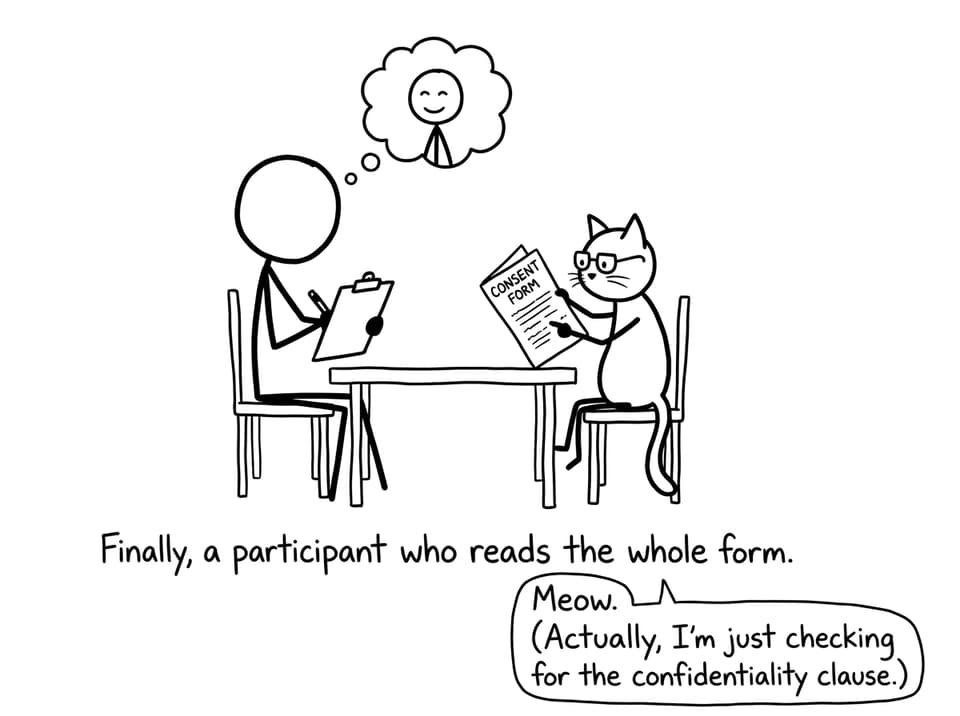
Informed consent is not a signature you collect at the last minute. In a sensitive EE, it’s a process.
At minimum, participants should understand:
- what the research is about (in plain language)
- what they will be asked to do (time, format, topics)
- any foreseeable risks or discomfort
- that participation is voluntary
- that they can withdraw without consequences
- how data will be stored, used, and anonymized
If participants are minors or vulnerable, your school may require additional safeguards or may prohibit the method entirely. That’s exactly why the supervisor/coordinator conversation matters.
If you need an ethics refresher that explains consent, confidentiality, and protection from harm clearly, RevisionDojo’s psychology ethics notes are surprisingly helpful even for non-psychology EE students, such as Ethical responsibility in research (notes).
Protecting your own wellbeing while writing a sensitive EE
The IB’s ethics emphasis isn’t only about participants. It’s also about you.
A sensitive EE can be personally challenging because it requires you to spend months reading, thinking, and writing about material that may be distressing. Students often underestimate the emotional workload until they hit the drafting phase.
Practical safeguards:
- Choose a question that allows analytical distance (policy, discourse, literature, theory).
- Set boundaries: time-box reading and avoid late-night deep dives.
- Tell your supervisor if the topic is getting heavy.
- Build a plan B question that uses secondary sources only.
Being honest about this is not weakness. It’s risk management, which is part of what the IB expects in a responsible EE process.
A note for exam-focused IB students: keep the EE from stealing revision time
Many students choose a sensitive EE topic during the same months they’re trying to prepare for exams. The danger isn’t only ethical mistakes. It’s time collapse.
Two habits keep your EE from consuming your whole term:
- Work in small, scheduled blocks (60-90 minutes) with a clear goal.
- Use tools that reduce decision fatigue: templates, checklists, structured feedback.
RevisionDojo is built for that kind of calm structure. Students often use:
- Study Notes to ground background understanding fast
- Flashcards for key definitions and theories you’ll reuse in writing
- the Questionbank to keep exam practice moving while coursework happens
- AI Chat to clarify concepts without losing an afternoon
- Grading tools to pressure-test drafts against rubric expectations
- Mock Exams and Predicted Papers to protect exam readiness
- the Coursework Library for exemplars and structure models
- Tutors when a sensitive topic needs a careful human conversation
If you need a broad study system alongside your EE, start with How to Study for IB Exams: Step-by-Step Guide and keep your practice loop steady.
When you should change your EE topic (not just refine it)
Sometimes the most responsible choice is to stop.
Consider switching your EE topic if:
- You cannot obtain informed consent in a real, documented way.
- The method requires asking people to relive trauma or disclose private information.
- Your school’s policies prohibit the data collection you need.
- You cannot protect confidentiality (small communities, identifiable contexts).
- The topic is affecting your mental health or daily functioning.
Changing direction can feel like failure. It’s usually the opposite. It’s what competent researchers do when the costs exceed the value.
If you need help choosing a new direction without starting from zero, use 10 Powerful Tips to Choose a Strong EE Topic and the practical evaluation in How Do You Know If Your EE Topic Is Good Enough?.
Closing: a sensitive EE should feel careful, not secretive
The best sensitive EE topics have a particular tone: steady, respectful, and intentional. They don’t try to shock. They try to understand. They show the IB what mature research looks like: awareness of impact, preventative action, and honest collaboration with supervisors and coordinators.
If your topic is sensitive, don’t handle it alone. Use your supervisor meeting as part of the research design, not as a rubber stamp. Build consent, confidentiality, and cultural awareness into the plan from day one. And if you need to pivot, pivot early.
When you’re ready to make your EE both ethical and high-scoring, RevisionDojo can hold the whole process together: Questionbank practice for exams, Study Notes for fast clarity, Flashcards for retention, AI Chat for getting unstuck, Grading tools for rubric-aligned feedback, Mock Exams and Predicted Papers to protect exam readiness, plus the Coursework Library and Tutors when the work needs a human touch. Start with IB Extended Essay Guides and build from there.