
Learning a language usually starts with a high: new sounds, new phrases, the quiet thrill of understanding a meme without translating it.
Then a normal week arrives. You miss one practice day. Then two. Suddenly IB Languages feels less like a door opening and more like a treadmill that speeds up when you look away.
Here’s the calm truth: motivation isn’t a personality trait. It’s a response to proof. When you can see progress, you want to continue. When progress is invisible, you stall. This guide is about making progress visible again, so IB Languages stays sustainable all the way to exams.
Quick checklist: a motivation system for IB Languages
-
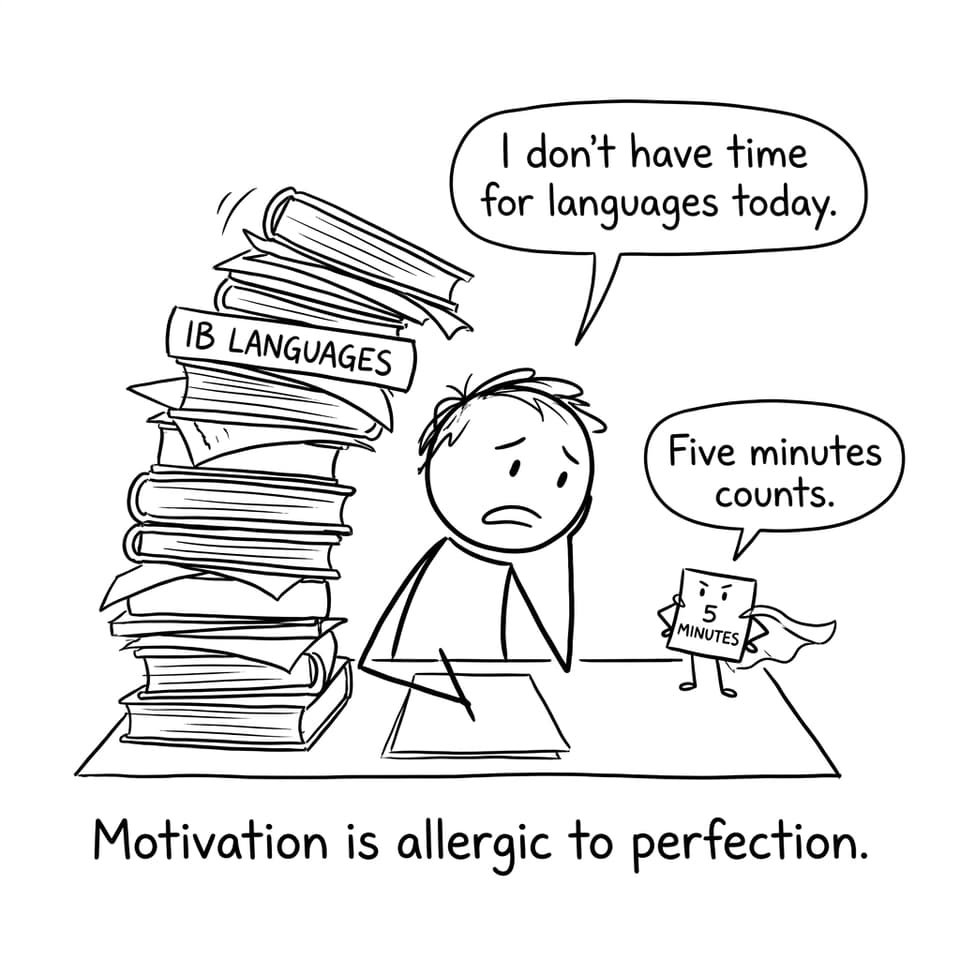
Set a daily minimum you can do on your worst day (5-15 minutes).
-
Rotate skills: vocab, listening, speaking, writing.
-
Track outputs (recordings, paragraphs, question sets), not “hours.”
-
Build tiny rewards that make consistency feel lighter.
-
Use one home base for practice and feedback (RevisionDojo helps here).
Why motivation drops in IB Languages (and why it’s not your fault)
Most students plan language practice like it’s math: study hard now, results appear later. But IB Languages is closer to training: improvement shows up through repetition, exposure, and small corrections.
A slump often happens when:
-
The “beginner gains” disappear.
-
You’re revising themes and text types, and everything blends together.
-
You can’t tell if you’re actually getting better.
If this is you, start by making the next session measurable. A short set from the RevisionDojo IB hub or a focused routine from How to Study for IB Exams: Step-by-Step Guide gives your brain the proof it’s been missing.
Set goals that your future self will thank you for
Motivation rises when goals are specific enough to finish.
Try a two-layer goal:
-
Daily goal (tiny): 10 flashcards + 3 spoken sentences using today’s connector.
-
Weekly goal (real): one timed writing plan or one recorded oral response.
If you’re studying Language B, anchor goals to the course demands. Use What You Need to Know About the Language B IB Syllabus to match your practice to what actually gets assessed.
Build a routine that survives busy weeks
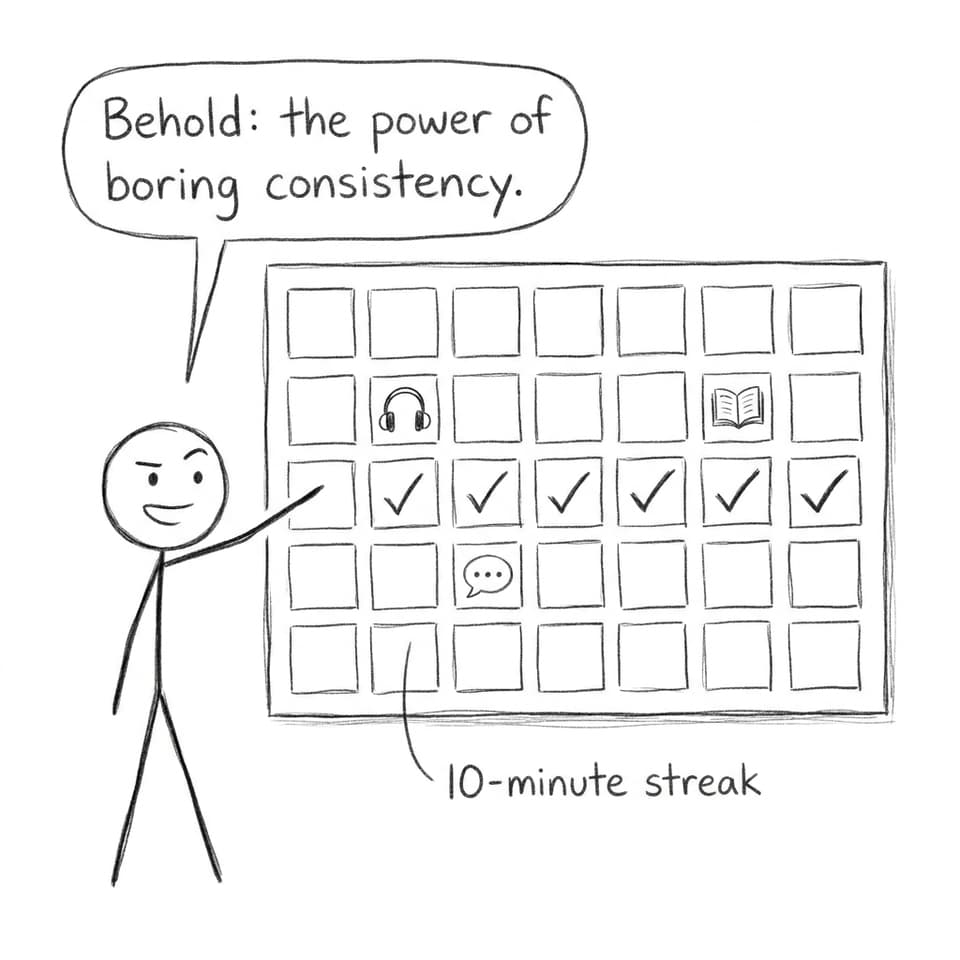
Consistency beats intensity in IB Languages. The best routine is the one you can keep when CAS, IAs, and deadlines pile up.
Steal this structure:
-
Mon-Thu (micro): 10 minutes of RevisionDojo Flashcards + 10 minutes of listening.
-
Fri (output): one short written response (even a plan).
-
Weekend (depth): one speaking recording + correction.
If your schedule is chaotic, this article helps you design around reality: Balancing Language Learning with Work, School, and Extracurriculars.
Mix methods so your brain doesn’t rebel
Motivation dies when every session feels identical. Rotate formats while staying aligned with IB Languages tasks:
-
Vocabulary that sticks: Use themed sets and spaced repetition. Start with Effective Ways to Review Vocabulary and build a small deck in RevisionDojo Flashcards.
-
Listening without overwhelm: Use short clips and focus on gist, attitude, and key details. For exam alignment, see How to Effectively Revise for Language B Exams.
-
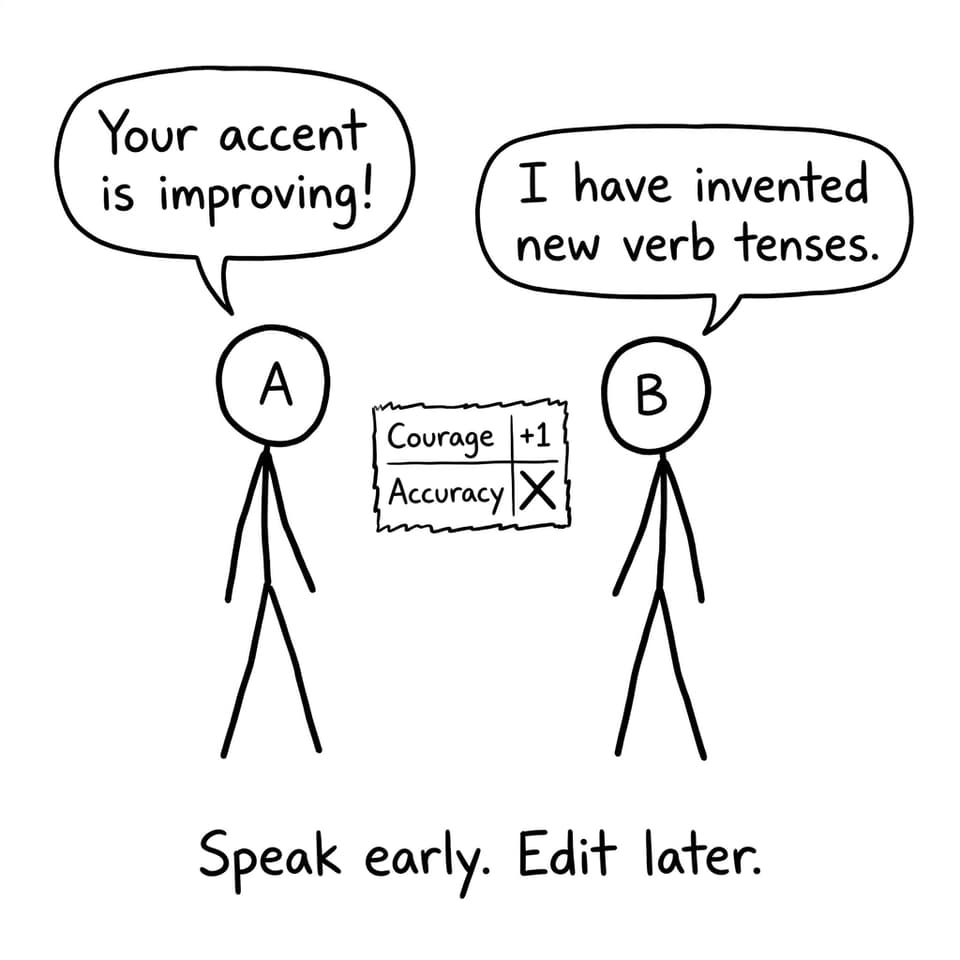
Speaking practice that’s low-pressure: Record 2 minutes, then redo it once with three improvements. For targeted speaking strategy, use How to Improve Your Language B Speaking Skills.
If you get stuck mid-sentence, that’s exactly when RevisionDojo AI Chat helps: ask for three ways to say your idea (formal, neutral, idiomatic), then reuse them in your next recording.
Track progress in a way that feels motivating
A language journal doesn’t need to be poetic. Make it practical:
-
One “error rule” after each practice (e.g., “When I describe past events, I need the correct auxiliary.”)
-
One phrase you used successfully.
-
One next-step task.
On RevisionDojo, students often combine Study Notes for clarity, Questionbank for targeted practice, and Grading tools to understand rubrics. When it’s time to simulate pressure, Mock Exams and Predicted Papers add realism without guesswork.
A closing thought (and a practical next step)
Staying motivated in IB Languages isn’t about feeling inspired every day. It’s about building a small system that keeps moving when inspiration disappears.
Pick your daily minimum, choose one skill to focus on this week, and make your progress visible. Then use RevisionDojo as your home base: Questionbank, Study Notes, Flashcards, AI Chat, Grading tools, Mock Exams, Predicted Papers, plus the Coursework Library and Tutors when you need extra support.
Do the next five minutes today. Motivation usually arrives after that.