

Social media doesn't usually ruin an IB grade in one dramatic moment.
It does it quietly.
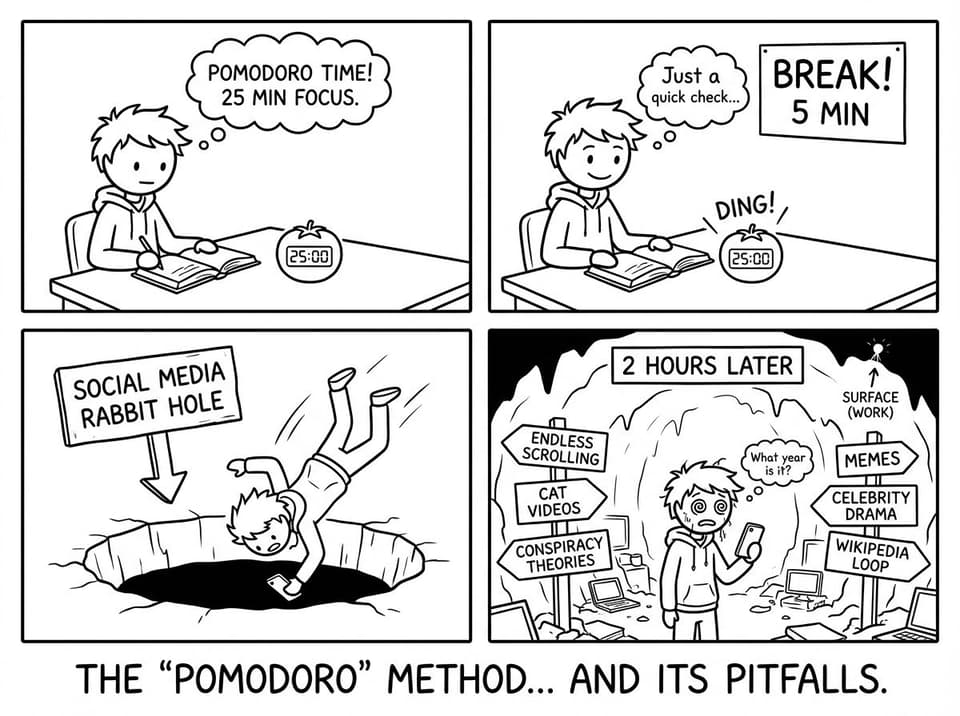
One notification turns into a "quick check," which turns into a scroll, which turns into a strange kind of tiredness that isn't solved by sleep. You sit down to revise, but your mind keeps reaching for a different room--the one where everyone else seems to be studying harder, living better, and somehow still having time to be funny.
If you're an IB student preparing for exams, the problem isn't that social media exists. It's that it can steal the exact things the IB rewards: sustained attention, calm repetition, and the ability to think clearly under time pressure.
This guide is about how social media affects IB students in real life--not in a moralizing way, but in a practical one. We'll talk about attention, anxiety, comparison, memory, and a simple system to keep your phone from becoming the invisible seventh subject.
The quick checklist: make social media work for your IB
If you want the short version before we go deeper, here's a simple checklist many IB students can actually follow:
- Set two daily social windows (example: 20 minutes at lunch, 20 minutes in the evening).
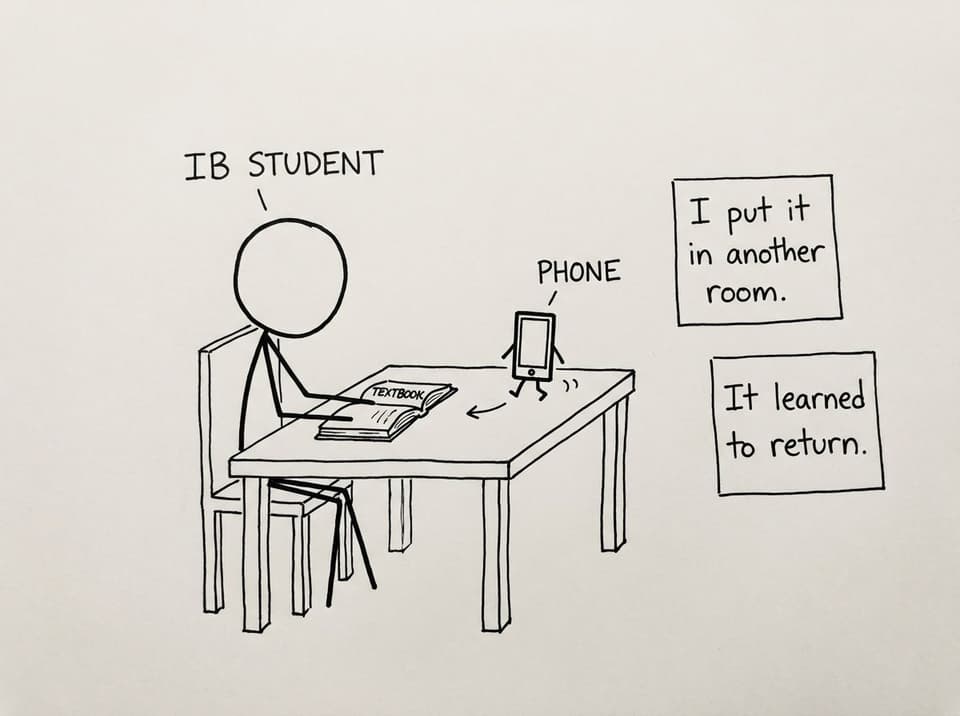
- Study in blocks where your phone is physically far away (another room beats "Do Not Disturb").
- Replace "scroll to feel productive" with a 10-minute IB win: Flashcards or a short Questionbank set.
- Keep one notes-to-practice loop: Study Notes -> Questionbank -> Flashcards.
- Use a weekly timed session to reduce exam panic.
If you're building a whole revision routine, the clearest overview is: RevisionDojo App: The Smarter Way to Prep for IB Exams.
How social media affects IB focus: the hidden cost is switching
The biggest academic cost of social media for an IB student isn't the minutes you spend on it.
It's the switching.
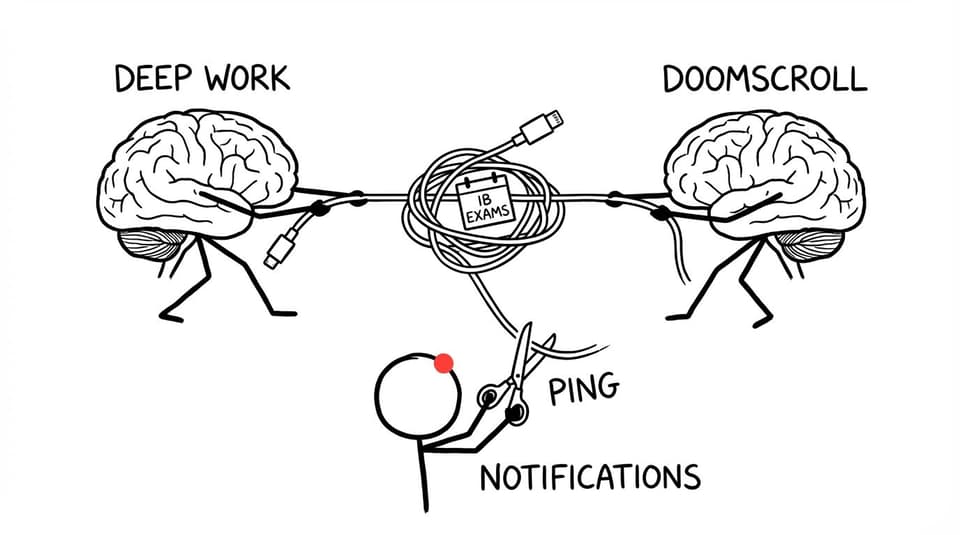
Your brain pays a fee every time you change contexts: from stoichiometry to a meme, from a history essay plan to a group chat, from reading a text to checking who viewed your story. The fee is subtle. It feels like "warming up," except you keep restarting the warm-up.
In IB revision, focus isn't just a nice-to-have. It's how you reach the deeper layer where exam performance is made:
- you hold a multi-step argument in your head
- you recognize patterns in questions
- you remember what a command term is actually asking
That layer needs uninterrupted time.
A practical move: when you begin a study block, don't fight your phone with willpower. Change the environment. Put it outside the room. If you need "music," use a non-social device, or pre-download what you need.
And when you do sit down to practice, make it exam-relevant. A focused set inside a good question bank is the opposite of scrolling: it gives you feedback.
Try anchoring your sessions with: Questionbank.
How social media affects IB stress: comparison feels like information
The IB already creates a comparison machine: predicted grades, rank talk, "what did you get," and the constant sense that time is running.
Social media adds a second machine.
It compresses everyone else's life into highlights and turns it into a scoreboard. You don't just compare grades. You compare:
- how early they started revising
- how aesthetic their notes look
- how confident they sound
- how "together" their life seems
Here's the psychological trap: comparison feels like information. It feels like you're learning what "good" looks like.
But most of the time, you're not learning. You're absorbing pressure.
A calmer IB strategy is to get your "what good looks like" from places designed to teach, not perform. Use structured resources that reduce ambiguity: clear Study Notes, practice questions with mark-scheme-aligned feedback, and a way to track progress.
Two pages that help you build that calmer structure:
The surprising way social media affects IB memory: passive intake crowds out retrieval
A lot of social media is passive intake: watching, reading, absorbing.
It can make you feel busy without strengthening memory.
The IB doesn't reward recognition. It rewards retrieval: producing the definition, the method, the link, the evaluation, the structure--under time.
That's why your most reliable antidote to "scroll fatigue" is active recall. Not forever. Not heroically. Just consistently.
A simple swap:
- When you feel the urge to scroll, do 5 minutes of IB Flashcards.
- When you want to "check something quickly," do 3 Questionbank questions.
This works because it changes your brain's reward system: you get a small hit from completion and clarity, not from novelty.
If you want a practical guide to make that habit easier, read: IB Flashcard System: Active Recall for Better Memory.
Social media affects IB sleep (and sleep affects everything else)
Most IB students don't lose points because they didn't care.
They lose points because they become cognitively unreliable: foggy recall, slower reading, weaker concentration, more emotional reactivity. Sleep is the base layer for all of those.
Social media pushes sleep later in a few predictable ways:
- "One last video" turns into a time jump.
- Emotional content raises stress right before bed.
- Blue-light and stimulation keep your brain online.
A practical rule many IB students can keep: make a hard stop time for social media, then replace the last 15 minutes with something that prepares tomorrow's focus (pack bag, choose first task, set materials).
If you need a whole exam-season stability plan, this is worth bookmarking: How to Stay Sane During IB Exam Season.
Use social media for IB instead of against it: a "curate and convert" system
It's not realistic to tell an IB student to delete everything during exam season.
It is realistic to give social media a job.
Here's a system that works because it's simple:
Curate
Pick a small number of accounts that actually teach: subject explainers, exam technique, short concept breakdowns. Unfollow the ones that trigger comparison spirals.
Convert
When you find something useful, convert it into a revision action within 24 hours:
- a Flashcard
- a short set of practice questions
- a one-paragraph explanation you write yourself
Conversion matters because saved content is still passive. Converted content becomes yours.
RevisionDojo supports this "convert" step naturally: Study Notes clarify quickly, Flashcards lock it in, and Questionbank practice proves it.
You can also explore the broader IB hub here: International Baccalaureate (IB).
Group chats, drama, and the IB problem of ambient anxiety
There's a specific kind of stress that social media creates for IB students: ambient anxiety.
It's not a single crisis. It's the constant background buzz:
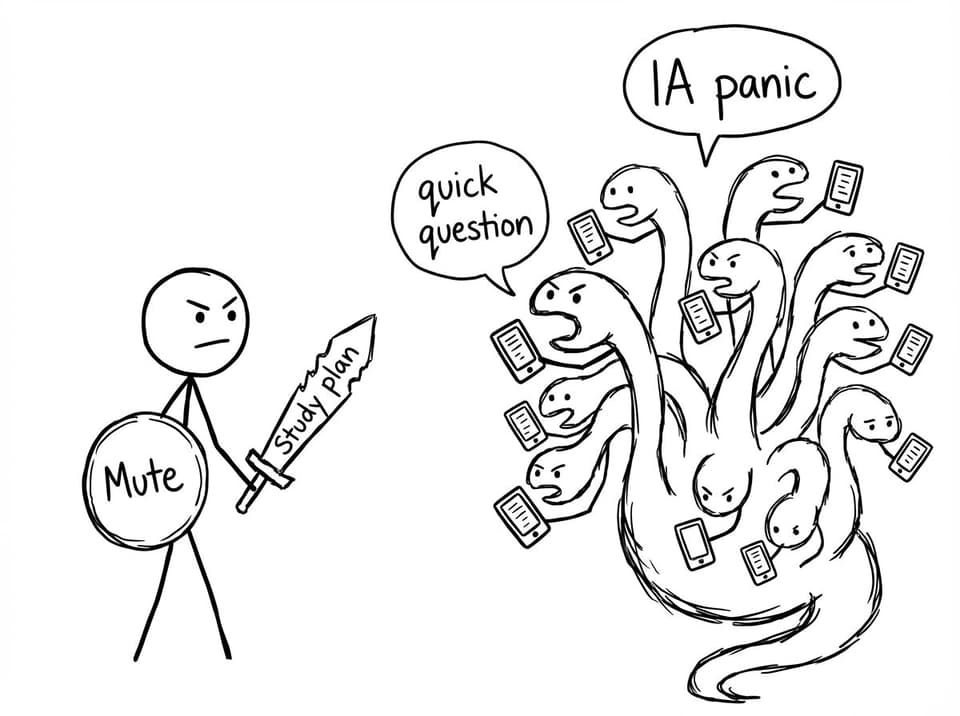
- "Did you start the IA?"
- "What topics are you doing?"
- "Our teacher said this is important."
- "I'm so behind."
Even when you don't reply, you read it. Your nervous system treats it like a task.
Two boundaries help without making you antisocial:
- Mute group chats during study blocks. Not forever. Just during your scheduled work.
- Have one weekly check-in where you intentionally read and respond.
Your goal in the IB is not to be the most informed person in the group chat. It's to be the person who can still think clearly in the exam hall.
When you feel stuck, don't spiral in chat threads. Use a tool that's designed for unblocking learning: RevisionDojo's AI Chat and Tutors. Ask one precise question, get unstuck, then go back to practice.
For the all-in-one workflow (Study Notes, Flashcards, AI Chat, Questionbank, Mock Exams, Predicted Papers, Grading tools, Coursework Library, Tutors), start here: Expert-Written Exam Prep, All in One Place.
A practical weekly plan for IB students who use social media
This is a realistic rhythm for an IB student preparing for exams, without pretending your phone will disappear.
Daily (30--60 minutes total, split across the day)
- 10--15 minutes Flashcards
- 15--30 minutes Questionbank practice
- 5 minutes mistake log (write the rule you missed)
3--5 times per week (45--90 minutes)
- Study Notes on one topic
- Immediate Questionbank set on that topic
- Add 5--10 Flashcards from what you missed
Weekly (1 session)
- Timed practice using Mock Exams or Predicted Papers
- Review longer than you practiced
If you want a step-by-step guide to build this schedule, use: How to Study for IB Exams: Step-by-Step Guide.
And if you want a deeper explanation of why timed practice changes anxiety, read: Best IB Mock Exam Platform: Why Students Choose RevisionDojo.
Closing: make social media smaller so your IB gets bigger
The hardest part about social media during the IB isn't that it wastes time.
It's that it makes your life feel noisier than it already is.
Your job in exam season is to get quieter--not emotionally, but cognitively. Fewer inputs. More feedback. Less comparison. More practice.
If you want a simple path forward, make social media a scheduled activity, not a background activity. Then build your IB days around a loop that's hard to break: Study Notes for clarity, Flashcards for daily recall, Questionbank for exam-style practice, AI Chat for quick unblocking, Grading tools and the Coursework Library for coursework pressure, Predicted Papers and Mock Exams for realism, and Tutors when you need a human voice.
That's what RevisionDojo is for: a calm control panel for IB students who want their attention back.