

The last stretch before IB exams has a particular kind of intensity. It’s not the loud panic of the start of the year. It’s quieter. You’ve covered the content. You’ve sat mocks. You’ve highlighted pages until the ink started to feel like a substitute for understanding.
And then you look at the calendar and realize the real question isn’t “Can I learn more?” but “Can I retrieve what I already know quickly under pressure?”
That’s why IB revision notes matter so much in the final days. Not as a record of effort, but as a tool for performance.
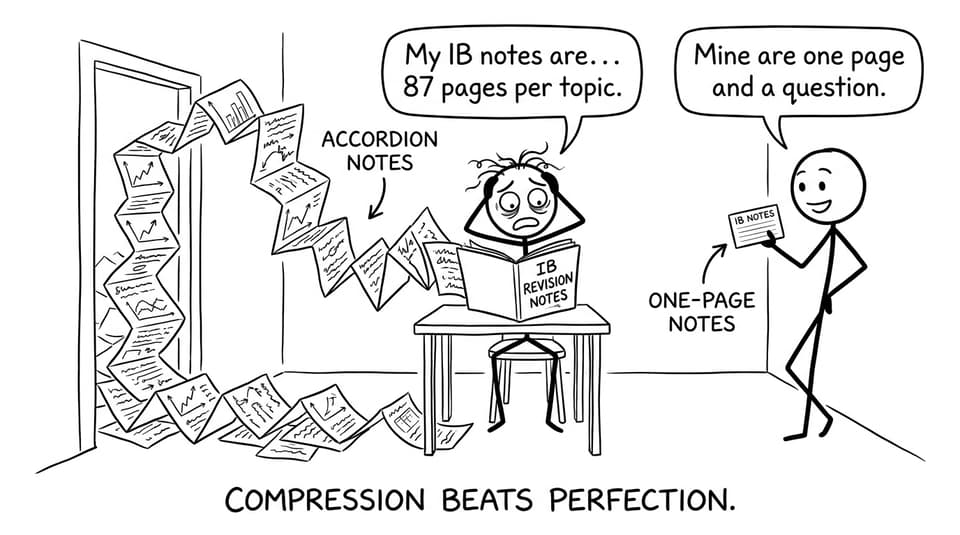
A quick IB revision notes checklist (save this)
Before you rewrite anything, sanity-check your IB revision notes against these points:
-
They match the IB syllabus structure (topic-by-topic, not textbook-by-textbook).
-
They are short enough to review in one sitting (10-20 minutes per topic).
-
They include triggers for active recall (questions, prompts, or command terms).
-
They include at least one example or application per section (not just definitions).
-
They lead directly into practice (a question set, timed drill, or short response).
If your notes don’t do those things yet, you don’t need prettier notes. You need notes that behave like a test.
What good IB revision notes actually look like
Strong IB revision notes aren’t mini-textbooks. They are deliberately incomplete, in a good way. They leave space for your brain to do the work of remembering.
A useful mental model: your notes should feel like a set of handles. In the exam, you grab a handle and pull out the full idea.
Example layout: IB Biology HL (process-heavy topics)
A fast-review page for something like respiration might include:
-
Key terms list (the words examiners expect): glycolysis, Krebs cycle, ETC
-
One simple diagram you can redraw from memory
-
One sentence per stage (what goes in, what comes out, where it happens)
-
One comparison that commonly appears in questions (aerobic vs anaerobic)
-
One “explain why” prompt to force reasoning, not memorization
If you want a model of syllabus-aligned organization across subjects, the IB Subject Note Collections on RevisionDojo show what that structure looks like when it’s built for exams.
Example layout: IB TOK (idea-heavy topics)
TOK notes work best when they resemble argument scaffolding:
-
A clear knowledge question written in your own words
-
A real-world example you can explain in 3-4 sentences
-
A counterclaim that feels plausible (not a strawman)
-
A “link sentence” back to the prompt (the part students skip)
-
A micro-summary: “So what?” in one line
In other words, your IB revision notes shouldn’t just say what the topic is. They should suggest how you would write with it.
How to use IB revision notes in the final days
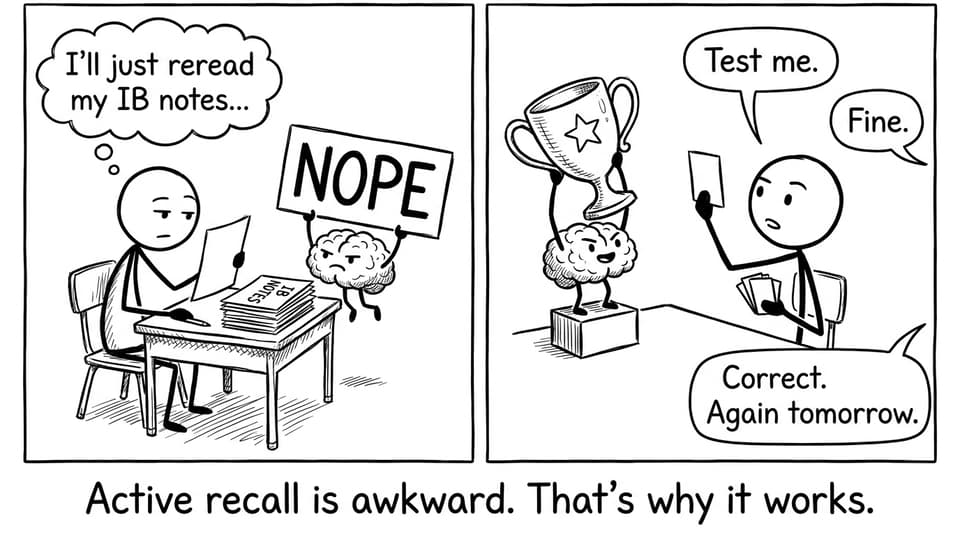
The mistake most IB students make at the end is confusing exposure with readiness. Reading can feel calm. Testing yourself feels messy. The exam rewards the messy part.
Follow the IB syllabus, not your mood
When stress rises, revision gets random. You revise what feels comfortable, not what’s examinable.
Anchor your notes to syllabus points and use that as your navigation system. If you’re building a clean workflow, start with Study Notes on RevisionDojo and keep your own additions in the same topic order.
Use time blocks that force recall
Try 45-60 minute sessions:
-
15 minutes: review one topic page of IB revision notes
-
10 minutes: close notes and write what you remember (blurting)
-
20 minutes: do targeted practice questions
-
10 minutes: patch your notes with only what you missed
This is where RevisionDojo becomes more than a notes site. You can review, then immediately apply using the Questionbank to keep the loop tight.
Teach it back (out loud, badly, then better)
Pick a subsection and explain it as if you’re teaching a younger student. No terminology flexing. Just clarity.
When you stumble, don’t restart from the beginning. Identify the missing link and fix only that part in your IB revision notes. Then do one more “teach it back” run.
Convert notes into flashcards (fast)
Use flashcards for:
-
definitions and command terms
-
processes and sequences
-
formulas and conditions
-
case studies, quotes, or examples
Spaced repetition turns a short daily habit into compounding memory. RevisionDojo’s IB Flashcards with Spaced Repetition make that daily loop easier to sustain, especially when your schedule is chaotic.
How RevisionDojo supports quick IB review before exams
In the last phase of IB prep, your goal is to reduce friction. Every extra tab, every “where did I put that?” moment, every mismatched resource costs energy you don’t have.
RevisionDojo is built for that final stretch:
-
Study Notes for syllabus-aligned clarity (so you stop rewriting the same chapter)
-
Flashcards for active recall that fits into small pockets of time
-
AI Chat to resolve confusion before it hardens into a blind spot
-
Questionbank for exam-style practice and instant feedback
-
Grading tools to see what earns marks, not just what sounds right
-
Mock Exams to build stamina
-
Predicted Papers to rehearse under realistic constraints (without gambling your entire plan on them)
-
Coursework Library and Tutors when you need examples or targeted support
If you want to connect these pieces into one system, the RevisionDojo App guide for IB exam prep lays out a clean workflow.
FAQs about IB revision notes
Are IB revision notes better than textbooks at the end?
For final IB review, revision notes usually beat textbooks because they are designed for speed and retrieval. A textbook is great when you’re learning something for the first time and need context, depth, and extended explanations. But in the final days, your main enemy is time and cognitive overload, not lack of information. Good IB revision notes compress the topic into triggers: key terms, diagrams, and prompts that force you to recall. They also make it easier to spot what you don’t know yet, because gaps appear quickly when the page is short. If you still need depth on a weak topic, use notes first to locate the gap, then briefly return to longer explanations.
How do I stop my IB revision notes from turning into rewritten chapters?
Start by setting a hard limit: one page per subtopic, or one screen-length per section. Your job is to capture what the IB tends to assess, not everything you’ve ever heard in class. Write in exam language: command terms, comparisons, “explain why” lines, and common misconceptions. Add one worked example or application, because that’s where marks are won. Then move immediately to practice, because practice reveals what needs to be added back into the notes. A useful reference for building this loop is The Best Note-Taking Systems for IB Students, which focuses on notes that stay reviewable.
How should I combine IB revision notes with practice questions?
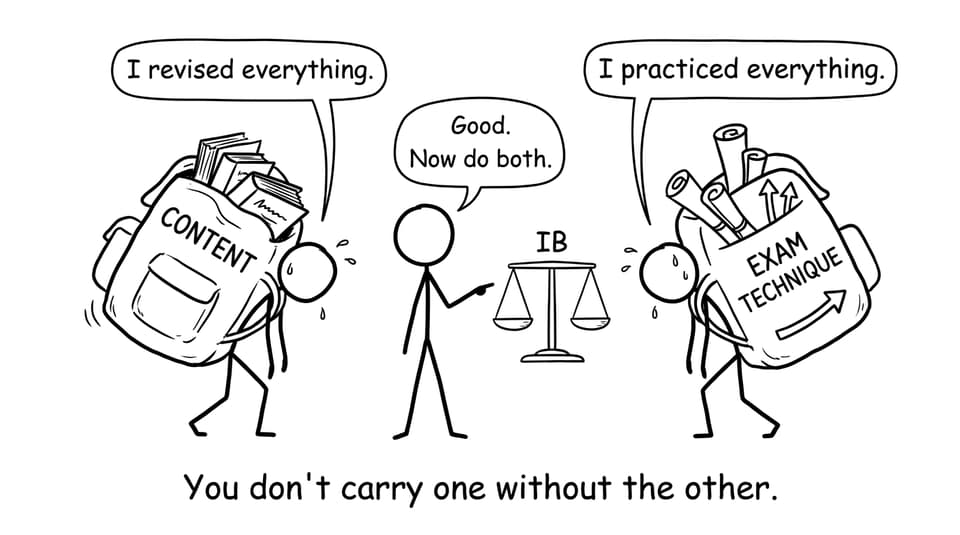
Treat IB revision notes as the setup, not the finish. Review one small section, then test it with questions that match the topic and difficulty. When you get something wrong, don’t just read the solution and move on; write a tiny “patch” into your notes: the missing definition, the condition, the phrase examiners reward, or the step you skipped. Then do another question immediately to confirm the fix worked. If you want a structured approach, use a topic-filtered practice set via the IB Question Bank guide and keep your notes open only for the review step, not during the attempt. Over a week, this builds a feedback loop where your notes become sharper and your errors become rarer.
Final thought: walk into IB exams with recall, not hope
The exam hall doesn’t reward the student who studied the most. It rewards the student who can recognize, retrieve, and apply under time pressure.
That’s the real role of IB revision notes in the final days: turning months of learning into something you can access on demand.
If you want that process to feel calmer and more automatic, build your final review loop inside RevisionDojo: start with IB Cheatsheets, reinforce with Flashcards, and prove it with the Questionbank. Your future self, sitting at a desk with a ticking clock, will notice the difference.